What Skin ToneSuits Rust?
Rust is warm and earthy — golden, tan, and autumn skin glow in it. Cool very fair skin may need a softer terracotta or skip rust near the face.
Rust is red with earth in it — orange-brown warmth that echoes spice, clay, and autumn leaves. That warmth flatters warm and deep skin, especially golden, tan, and autumn coloring. Cool very fair skin can feel overwhelmed when rust sits at the neckline because the color's depth and warmth exceed delicate cool contrast. Rust is not only for one season, but it is firmly on the warm side of the spectrum.


3,000+
happy clients
Why Rust Is a Warm-Skin Power Color
Rust is red with earth in it — orange-brown warmth that echoes spice, clay, and autumn leaves. That warmth flatters warm and deep skin, especially golden, tan, and autumn coloring. Cool very fair skin can feel overwhelmed when rust sits at the neckline because the color's depth and warmth exceed delicate cool contrast. Rust is not only for one season, but it is firmly on the warm side of the spectrum.
True cherry red is cool and vivid. Rust is warm and muted-deep — closer to terracotta and brick than to crimson. Warm undertones (golden, peachy, olive-warm, caramel) reflect rust's orange-brown base cleanly. The skin often looks glowing, as if the color continued the skin's natural warmth rather than sitting on top of it.
Depth matters as much as temperature. Rust has visual weight. Deep warm skin and medium tan skin carry that weight beautifully. Very fair cool skin with low contrast may find rust dominates the face — not because rust is "too orange," but because the color's depth outpaces the skin's natural softness. Cool fair types often need lighter terracotta or rust as a small accent, not a neckline hero.
Seasonal coloring maps closely: warm autumn, deep autumn, and soft autumn live inside rust's family. Cool summers and cool winters generally need blue-based reds instead. The most common rust mistake is wearing it on cool fair skin without softening — the fix is usually a cooler, lighter red or rust away from the face. Rust also behaves differently by fabric: matte wool rust reads softer than glossy satin rust, which can help medium warm skin try the color without the neckline feeling too loud.
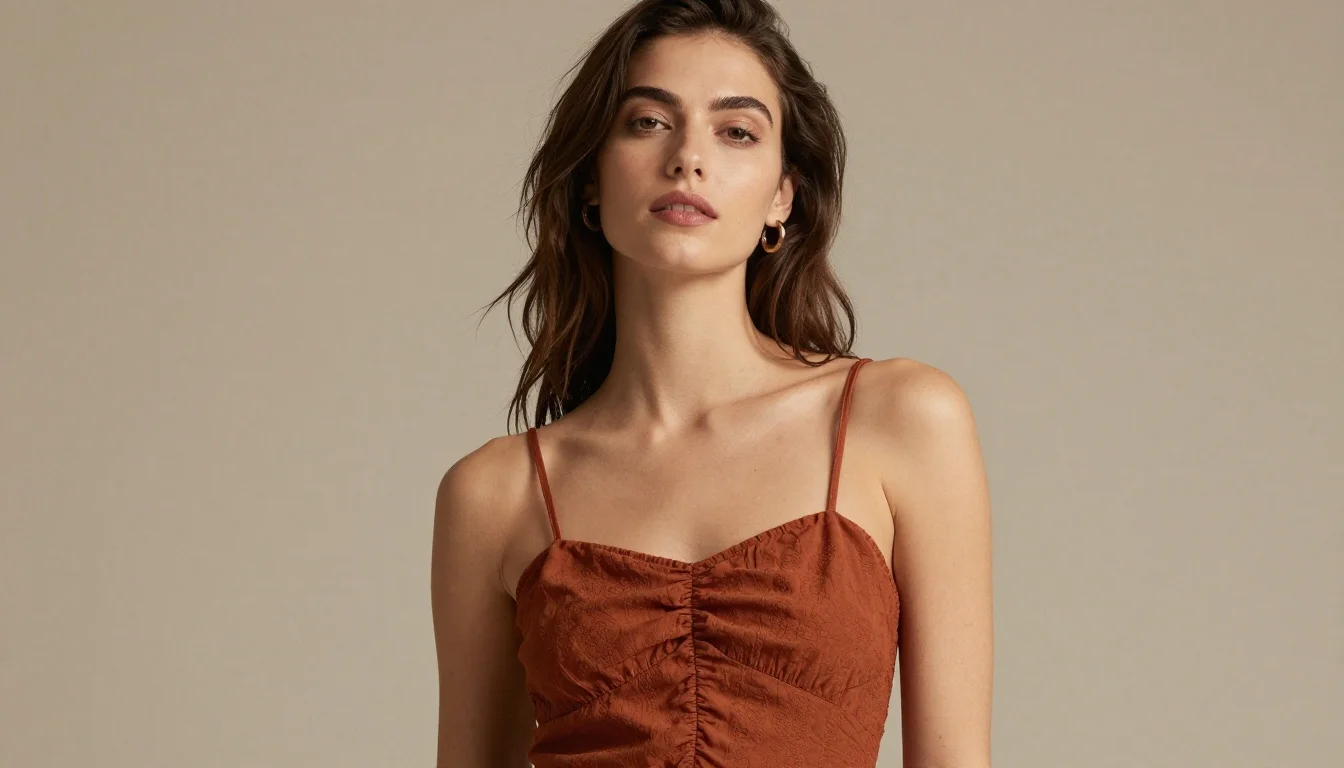
What skin tone suits rust?
Rust suits warm and deep skin tones: golden, tan, caramel, olive-warm, and autumn coloring. Warm autumn, deep autumn, and soft autumn are especially aligned. Cool very fair skin often finds deep rust overwhelming at the neckline and does better in cool cherry, berry, or rust only as a small accent. Temperature and depth must match.
Skin Tones That Suit Rust
Warm & Deep Skin: True Rust & Spice Red
Warm deep skin — golden brown, caramel, rich tan — is rust's strongest partner. True rust and spice red create earthy richness that mirrors warm depth. Deep terracotta adds brown softness for soft autumn types. Warm brick sits slightly redder for warm autumn and deep autumn when you want rust with more red presence.
Golden & Tan Skin: Copper-Rust & Warm Terracotta
Medium golden and tan skin tones glow in copper-rust and warm terracotta. The colors pick up golden undertones and add sophistication without neon brightness. Burnt sienna and amber rust are slightly lighter — useful when true rust feels heavy at the neckline but you still want warmth.
Olive & Warm Neutral: Earth Rust & Muted Brick
Olive-warm and warm neutral skin harmonizes with earth rust and muted brick — reds with brown and green warmth that respect olive's complexity. Clay red avoids cool blue bases that fight olive. Warm cinnamon-red is a softer entry point if full rust feels strong on medium olive skin.
Soft Autumn: Dusty Rust & Soft Terracotta
Soft autumn is warm but muted — neon rust overwhelms. Dusty rust and soft terracotta deliver the same family at lower saturation. Muted spice and warm taupe-red keep autumn warmth without overpowering low-contrast features. This is rust calibrated for softness, not for winter vividness.
Not sure yet? See it on your face
Start my color analysisHow to Wear Rust for Your Skin Tone
Compare rust to cherry red at your jaw
Hold rust and true cherry red in daylight. If rust brightens you and cherry looks slightly harsh or cool-grey, you are warm enough for earthy red. If cherry wins clearly, prioritize cool reds and keep rust away from the neckline or choose it only in small accents.
Wear rust at the neckline on warm skin
Rust blazer, knit, or scarf near the face is where warm golden and tan skin looks most radiant. Rust trousers with a cream top still work, but the undertone test is weaker. Warm autumn and deep warm types should experiment at the neckline first.
Pair rust with warm neutrals
Camel, cream, warm ivory, chocolate brown, and olive green frame rust beautifully on warm skin. Cool fair skin pairing rust with cool grey can split temperature — if you wear rust as accent on cool skin, keep the face frame in cool or neutral-cool colors.
Choose lighter terracotta if depth overwhelms
If you love rust's warmth but not its weight, step to warm terracotta or burnt sienna — same family, less depth. Medium warm skin and soft autumn often live here. You keep earthy red without the heavy neckline effect of deepest rust.
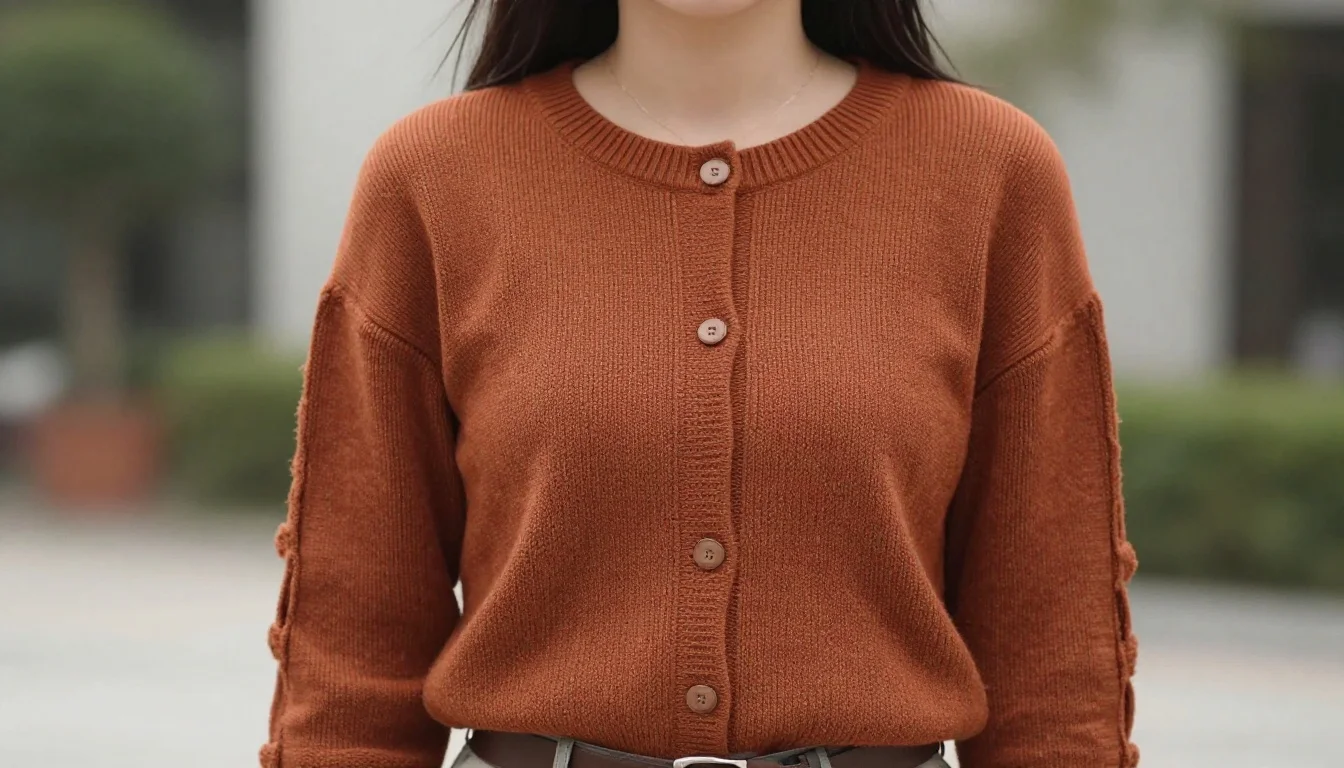
When Rust Works Against You
Deep rust on cool very fair skin
Cool very fair skin with pink or blue undertones and low contrast often looks overwhelmed by deep rust at the neckline. The warm orange-brown depth fights cool delicacy and can make the face look slightly flushed or heavy. Cool fair skin is usually better in blue-based red, soft berry, or rust only as a distant accent.
Orange-heavy rust on cool undertones
Cool undertones need blue-based reds — cherry, berry, cool crimson. Orange-heavy rust introduces warmth that clashes with cool skin's base and can create a ruddy or sallow cast. If you are cool but love earthy red, try cool berry or muted wine instead of terracotta rust.
Bright rust on soft muted cool coloring
Soft summer cool types are muted and cool — bright rust is doubly wrong in temperature and saturation. The face can look tired or discordant. Soft cool pinks, dusty rose, and blue-grey suit far better than earthy warm rust near the skin.
Rust head-to-toe on bright cool winter
Bright cool winter needs clear cool colors — vivid cherry, fuchsia, icy pink. Rust's earthiness looks muddy on crisp cool winter coloring. A rust accessory with a cool top is possible; rust as the main face-adjacent color usually fails.
Stop guessing — discover your exact palette
See myself in my colorsFind Your Earthy Red
If rust overwhelmed you, you may need less depth or a cooler red family.
Cool fair skin needs blue-based or soft cool red. Berry and cherry harmonize without earthy orange-brown weight.
Soft autumn needs muted warmth. Dusty rust keeps the family at the right saturation for low contrast.
Cool winter clarity fights earthy rust near the face. Cool berry delivers red with the right temperature.
Deep warm skin needs depth to balance pigmentation. True rust and spice red create rich contrast pale terracotta cannot.
Warm rust clothing pairs best with warm nude or spice-toned lips. Cool pink lip splits temperature at the neckline.
Clay red and earth rust respect olive's green-gold complexity better than loud orange rust.
Your Season, Your Rust
Rust is anchored in autumn palettes — warm, deep, and soft. Your season tells you whether true rust, dusty rust, or a cooler red is your earthy red.
Warm Autumn
Learn moreWarm Autumn's rust is earthy and rich: true rust, spice red, warm brick, and terracotta. These mirror golden autumn warmth. Cool cherry red looks thin; vivid fuchsia fights the palette. Rust is Warm Autumn's natural red.
Deep Autumn
Learn moreDeep Autumn wears deep rust, burnt sienna, and warm brick with intensity — depth matches deep autumn's contrast. Pale terracotta looks weak; deep spice rust near the face looks powerful and grounded.
Soft Autumn
Learn moreSoft Autumn needs dusty rust, soft terracotta, and muted spice — warm reds with brown softness, not neon orange-rust. Bright rust overwhelms; dusty rust harmonizes with soft autumn's gentle contrast.
Find Your Exact Rust
Rust is one shade in the earthy red line — terracotta, brick, spice, and berry all serve different undertones and contrast levels. Your season shows whether true rust, dusty rust, or cool berry belongs near your face. Personalized color analysis maps your exact warm red depth so rust feels glowing, not heavy.
Stop guessing — preview every color on you
Preview Yourself In Your Palette
Get my personalized analysisStop guessing — preview every color on you
Preview Yourself In Your Palette

Related Guides for What Skin Tone Suits Rust?
Explore more personalized color advice based on your features.
Want to see these colors on you? What Colors Look Good on Me — free to try.
Frequently Asked Questions About What Skin Tone Suits Rust?
What skin tone suits rust?
Rust suits warm and deep skin tones: golden, tan, caramel, olive-warm, and autumn coloring. Warm autumn, deep autumn, and soft autumn are especially aligned. Cool very fair skin often finds deep rust overwhelming at the neckline and does better in cool cherry, berry, or rust only as a small accent. Temperature and depth must match.
Can cool undertones wear rust?
Cool undertones generally suit blue-based reds better than earthy rust. Some cool-neutral medium depth skin can wear muted wine or soft berry as an earthy option. If rust makes you look ruddy or sallow, you are likely cool — try berry or cool crimson instead of terracotta rust near the face.
Does rust suit pale skin?
Warm pale skin with peach or golden undertones can wear soft terracotta or light burnt sienna. Cool pale skin often fights deep rust and looks better in cool reds. The paler and cooler the skin, the lighter and less orange-heavy your earthy red should be if you wear rust at all.
Is rust the same as terracotta?
Terracotta is closely related — often slightly lighter and more brown. Rust usually has more red and spice. Both are warm and earthy. Soft autumn may prefer terracotta; deep warm autumn may prefer true rust. Test both at the jawline.
What colors pair with rust on warm skin?
Camel, cream, warm ivory, olive, chocolate brown, and gold jewelry frame rust on warm skin. Denim works for casual rust. Cool grey with rust near the face can split temperature on warm types — keep the face frame warm when rust is at the neckline.
Why does rust make me look tired?
Rust usually makes cool or very soft fair skin look tired when depth and warmth exceed your natural contrast. The earthy orange-brown fights cool undertones or overwhelms delicate features. Try cooler red, softer terracotta, or wear rust only below the waist or in small accents.
Can I wear rust in summer?
Yes — rust linen, cotton, and lightweight knits work in warm weather on warm and tan skin. Keep rust near the face only if your undertone test passed; otherwise wear rust shorts or a skirt with a cream or soft white top. Summer rust is often terracotta or burnt sienna rather than the deepest spice rust of winter.