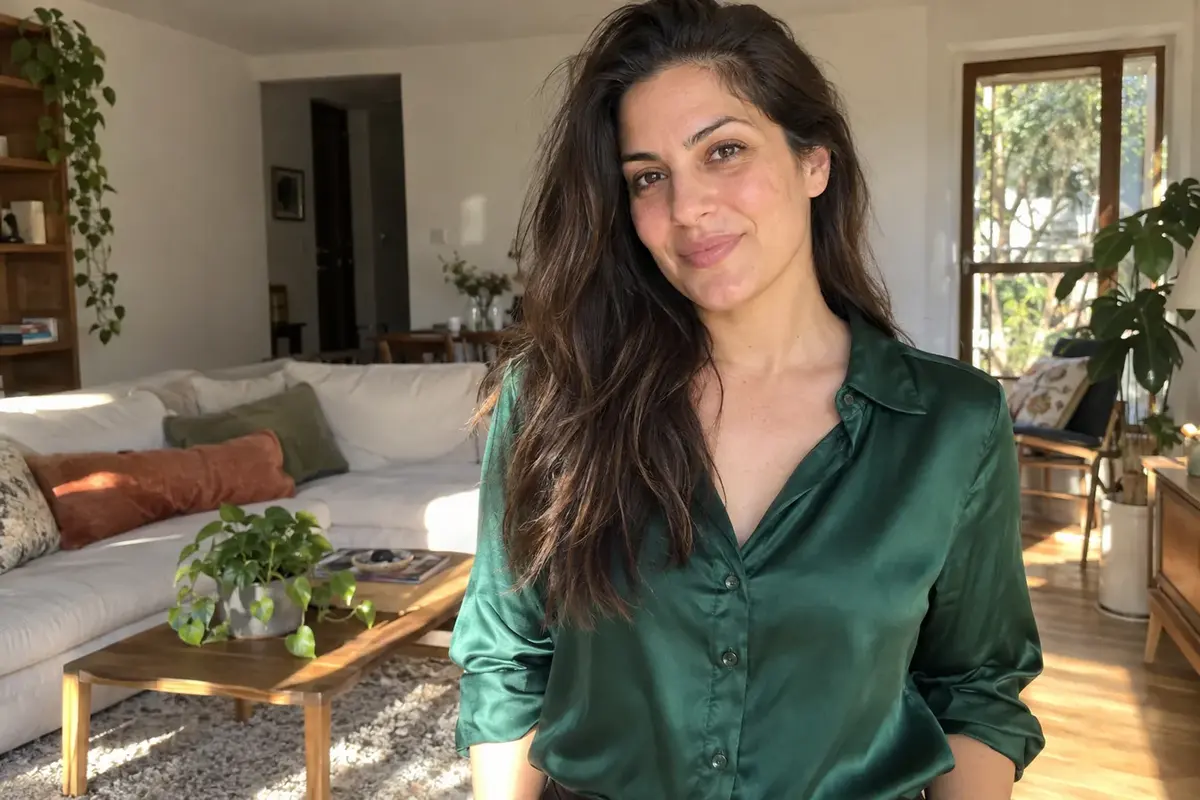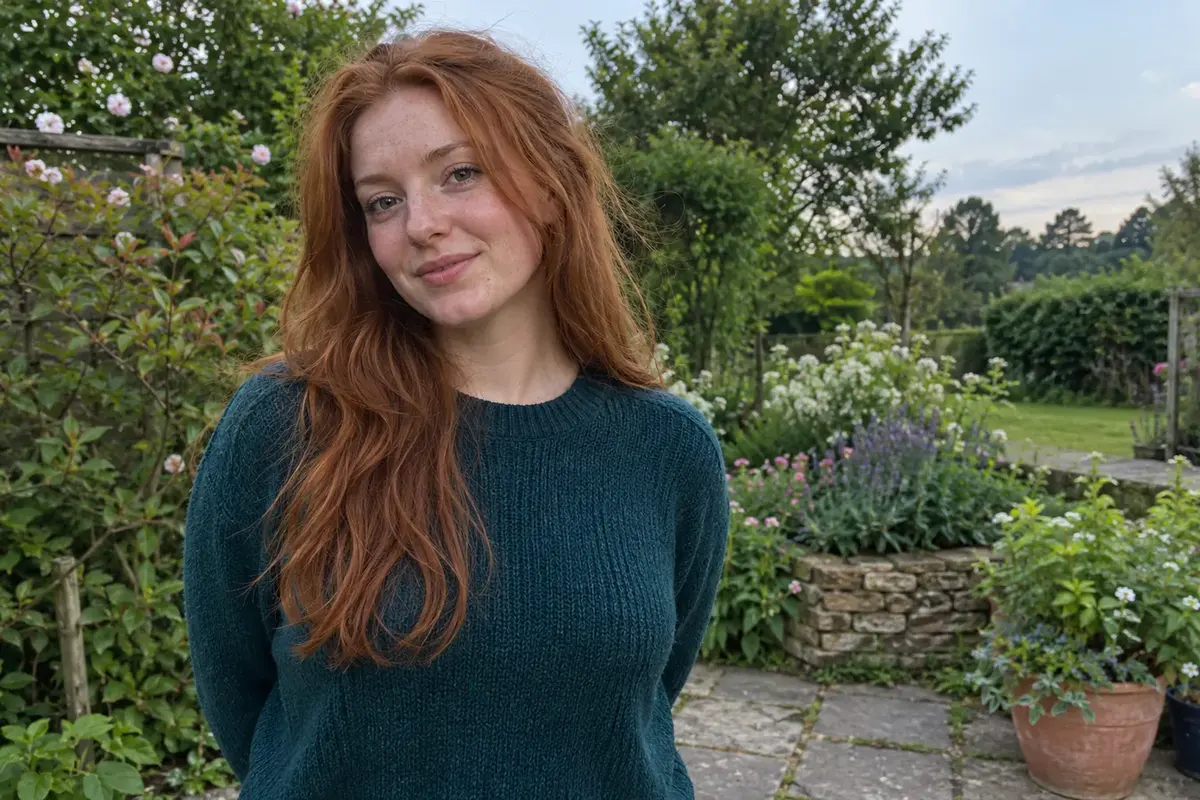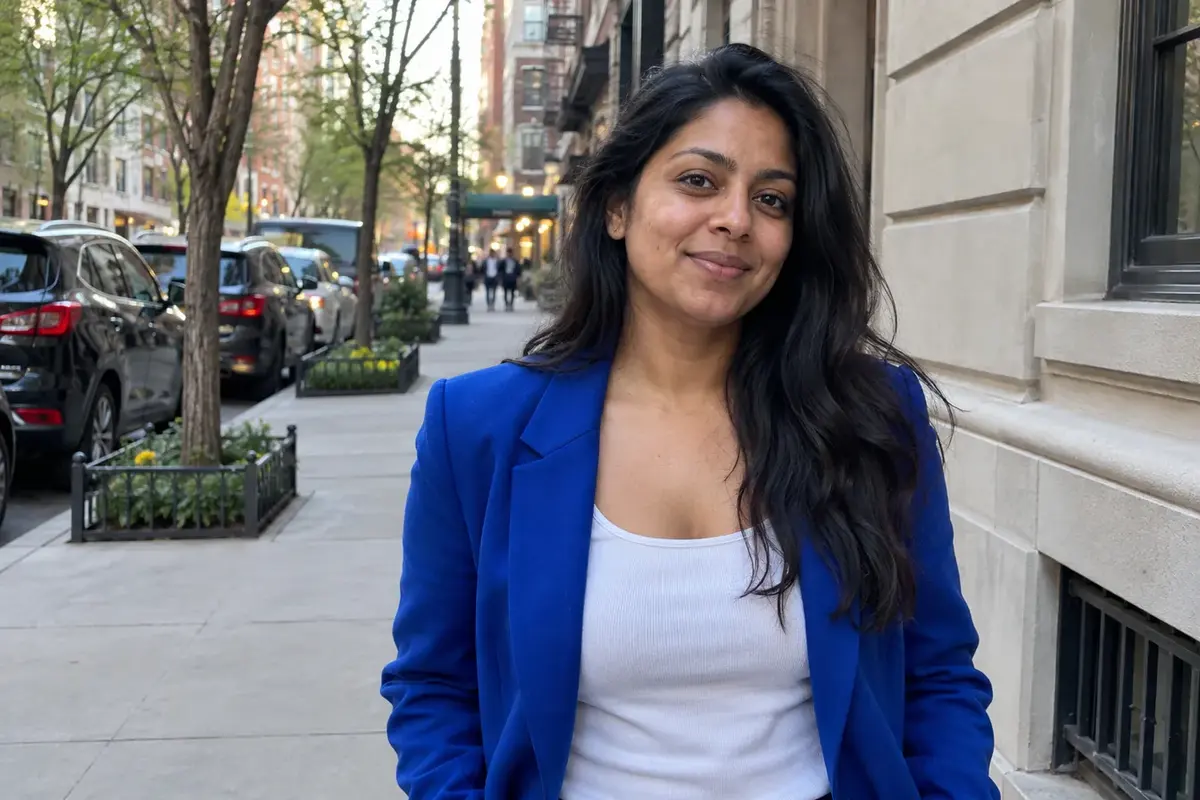





 Warm undertone
- Wrist veins
- Greenish
- Jewelry that flatters
- Gold
- Best blondes
- Golden, honey, strawberry
- Best browns
- Caramel, chestnut, golden brown
- Best reds
- Copper, auburn, cinnamon
- Shades that fight you
- Ash, icy platinum, blue-black
Answer 5 quick questions about your undertone, eyes, and contrast to get your most flattering hair color family — with real shades you can try on your own photos with AI. 100% free, no sign-up needed.
Find your colors. Try on your next look.

Check your wrist veins in daylight: greenish = warm, blue or purple = cool
Colorists weigh the same handful of signals in every consultation. Run these five checks yourself before booking — they are the logic behind the quiz above. Start with two shades at a similar depth: one warmer, one cooler. Compare them beside your face in daylight, then judge whether a lighter or deeper version balances your natural contrast. Skin depth alone does not tell you which hair color looks best on you.
Look at the veins on the inside of your wrist. Greenish veins point to a warm undertone, blue or purple veins to a cool one, and a mix of both to neutral. This single check rules half the hair color spectrum in or out.
Hold gold and silver jewelry next to your bare face in natural light. If gold makes your skin glow and silver looks flat, you are warm-toned — golden, caramel, and copper shades will suit you. If silver wins, ash and cool shades are your lane.
Your natural hair depth evolved with your skin and brows. Shades within roughly two levels lighter or darker keep that harmony, which is why a level-7 caramel reads natural on a level-6 brunette but platinum may need extra work.
Look at a black-and-white photo of yourself. High contrast between skin and hair means you can carry deep, saturated color like espresso or blue-black. Low contrast favors softer, blended shades like sandy blonde or mushroom brown.

Rules narrow it down; your face decides. Hold fabric or swatches near your face — or skip the guesswork and upload a photo to an AI try-on that renders the exact shade on you in realistic light.
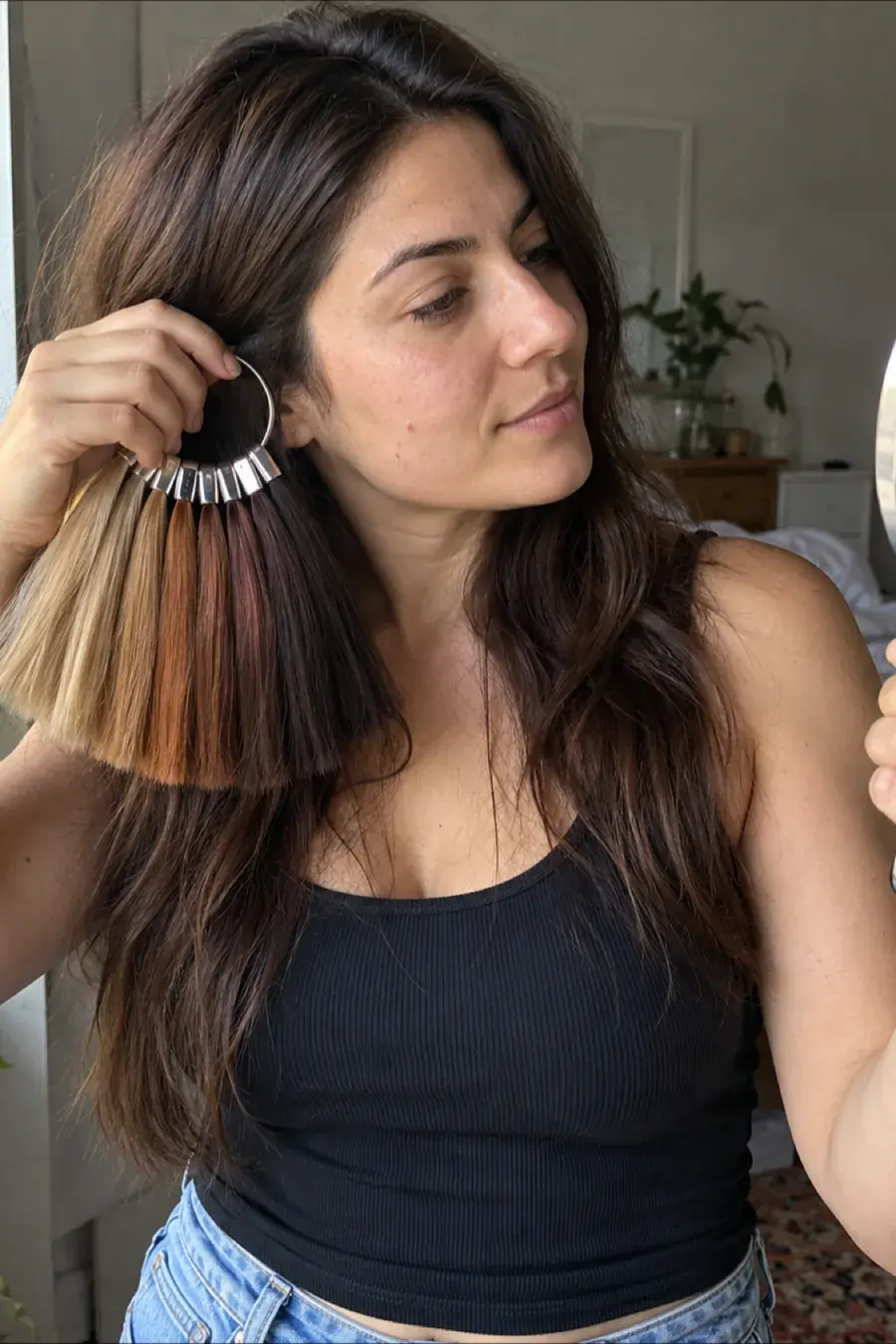
Undertone is the single biggest factor in whether a hair color flatters you or fights you. Here is the cheat sheet.
Warm undertone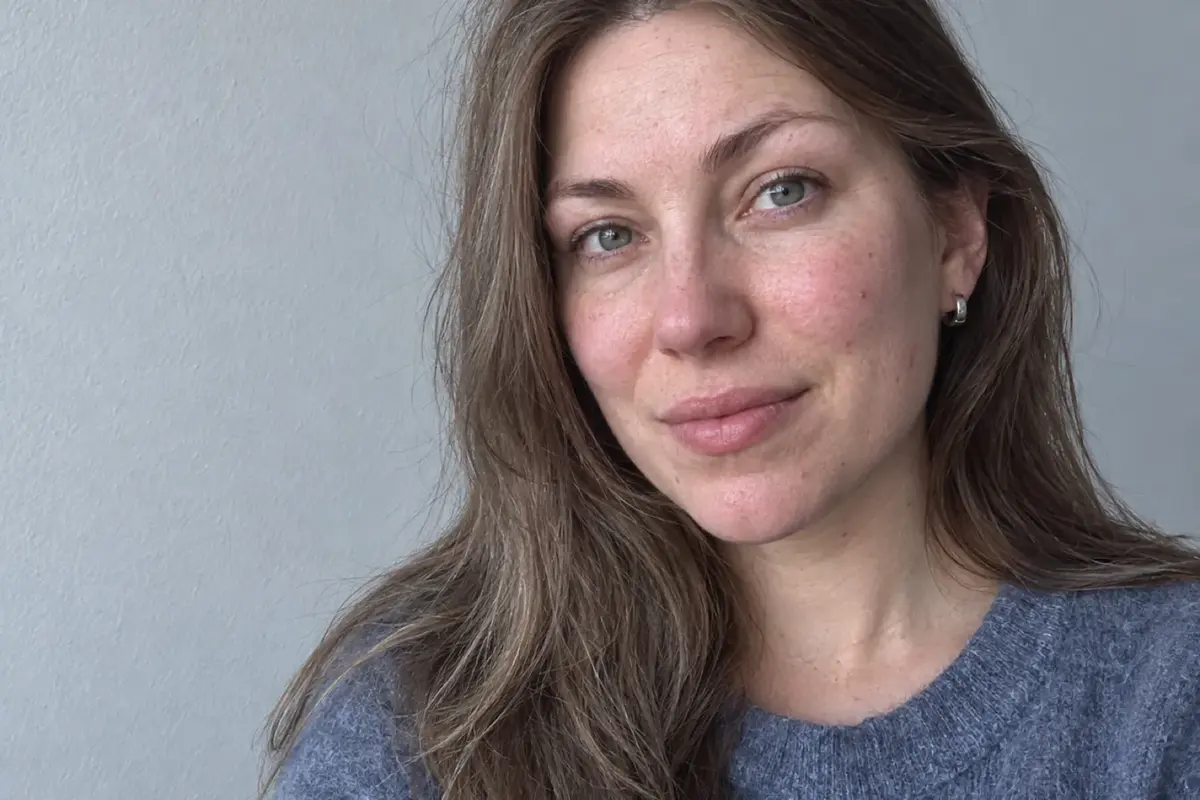 Cool undertone
Neutral undertone? You sit between the columns — soft, blended shades like sandy blonde, walnut, and taupe brown are your safest bets.

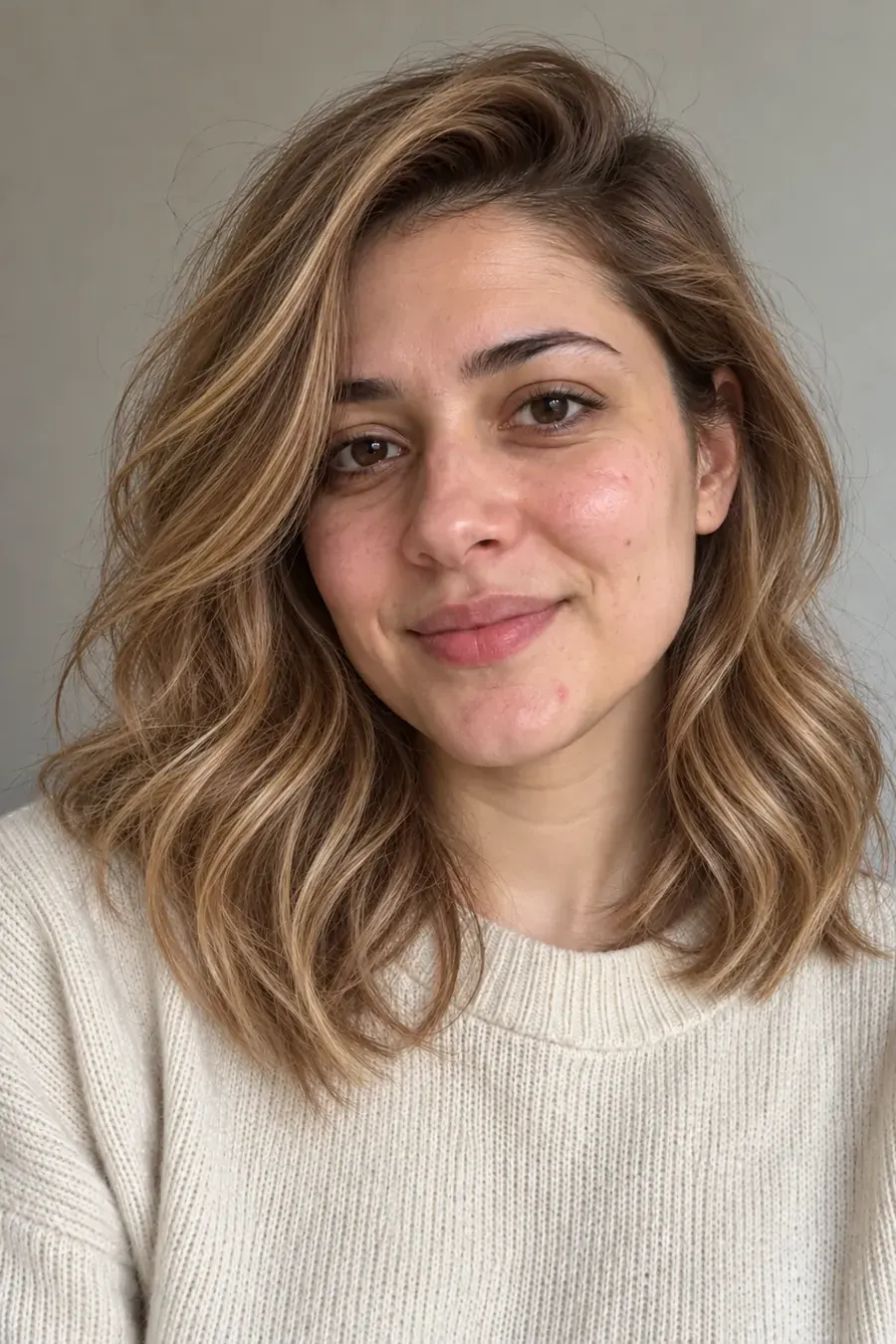





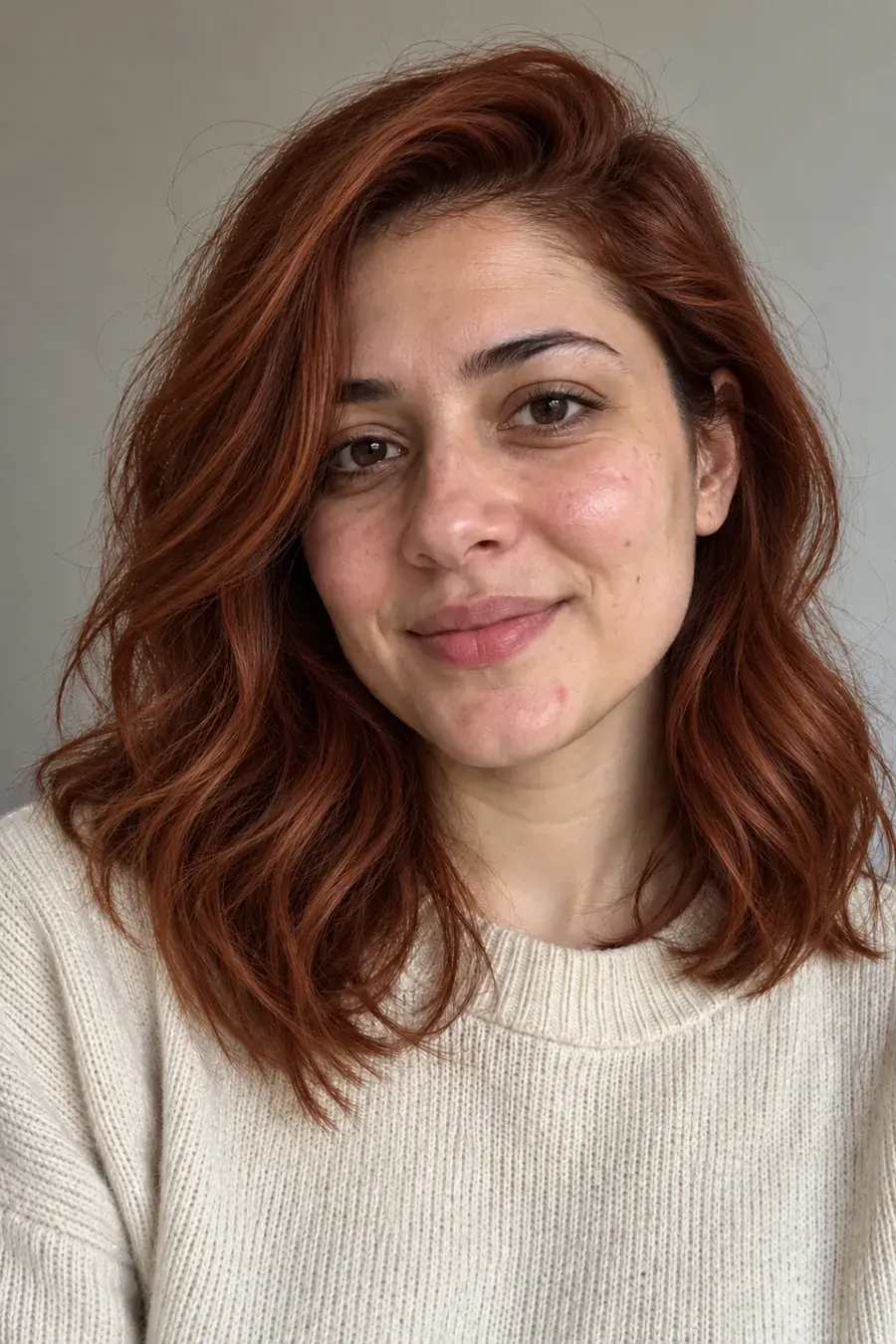
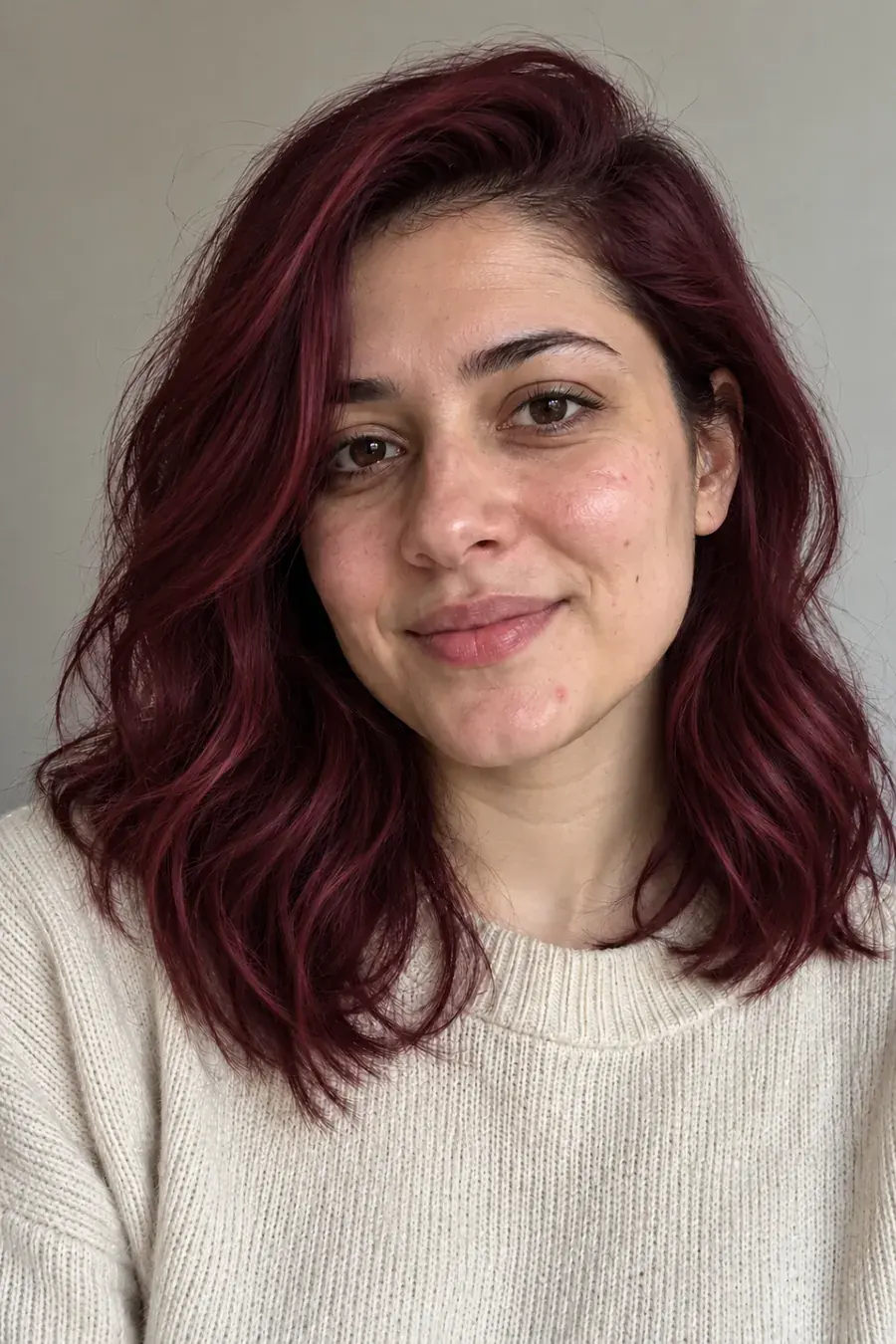
 Chestnut
Quizzes and vein tests narrow it down — but the only way to really know what hair color suits you is to see it on your own face. Upload a few photos and Palette Hunt's AI generates realistic images of you in any of 36+ shades, from icy blonde to copper to blue-black. Same face, same light, different hair.
One face, the same light, three completely different answers — that's the decision you get to make from your sofa instead of in the salon chair.
Try shades on my photoReady to see it on you? Virtual Hair Color Try-On — free to start.
The hair color that suits you best matches your skin undertone and stays within about two levels of your natural depth. Warm undertones (greenish veins, gold jewelry flatters) suit golden blondes, caramel browns, copper, and auburn. Cool undertones (blue veins, silver jewelry flatters) suit ash blondes, mushroom browns, espresso, and blue-based reds like burgundy. Neutral undertones can wear soft, in-between shades like sandy blonde, walnut, and taupe brown. Our free quiz narrows it down to four specific shades in 60 seconds.
Use four checks: 1) Vein test — greenish wrist veins mean warm undertones, blue or purple mean cool. 2) Jewelry test — if gold clearly flatters you more than silver, you are warm; if silver wins, you are cool. 3) Depth rule — colors within two levels of your natural hair depth almost always work. 4) Drape test — hold warm (orange, gold) and cool (blue, silver) fabric near your face and see which makes your skin look brighter. The most reliable check is seeing the actual shade on your own face, which is what an AI hair color try-on does.
Hair color analysis compares the warmth or coolness of your skin, your natural hair depth, and the contrast between your hair, eyes, and skin to suggest a flattering color family. Skin tone alone cannot choose the exact shade: a light complexion can suit either warm or cool hair colors. A quiz helps you shortlist shades; a photo try-on lets you compare their effect on your face. Take your preferred preview to a colorist to discuss what is achievable from your current hair color.
Compare warm and cool versions of the same hair depth before changing how light or dark your hair is. For brown hair, try golden brown beside ash brown; for blonde hair, compare honey with beige or ash. Keep the lighting and photo the same so the shade is the main difference. If both temperatures look good, try a neutral option such as walnut brown or sandy blonde. Vein and jewelry tests are clues rather than a final answer, so choose neutral or not sure in the quiz when the signals conflict.
Yes. Palette Hunt analyzes your uploaded photos with AI and then lets you try on 36+ hair color shades — from icy blonde to copper to blue-black — on your own face in the AI studio. Unlike filter apps that tint a live camera feed, it generates realistic photos of you with each shade, so you can judge the color in natural-looking light before you commit at the salon.
Yes — upload a few photos and Palette Hunt generates realistic images of you with different hair colors and styles. This is the most accurate way to answer "what hair color suits me" because it shows the shade interacting with your actual skin tone, eye color, and features instead of relying on general rules.
The quiz uses the same factors a colorist assesses in a consultation — undertone, natural depth, eye color, and contrast — so it reliably points you to the right color family. It is a starting point, not a verdict: the AI photo analysis confirms your exact palette from your actual photos and shows you each shade on your own face.
Colorists call two levels lighter or darker than your natural depth the "no-regret zone" — the color still harmonizes with your eyebrows, skin, and eye contrast. Going beyond that can absolutely work (platinum on dark hair, for example) but it is higher maintenance and depends heavily on undertone. If you have warm undertones, lighten toward golden and caramel tones; if cool, toward ash and beige; this keeps lighter hair from turning brassy.
Softer shades close to your natural depth with a touch of warmth around the face tend to read younger — harsh, flat colors (solid jet black or over-ashy platinum) emphasize fine lines and pallor. Warm undertones look fresher with honey, caramel, or soft copper ribbons; cool undertones with creamy beige or soft ash tones rather than stark ice. Dimension matters more than the shade itself: multi-tonal color mimics the natural variation of youthful hair.
Find the clothing colors that flatter it most.

Your personalized color analysis in minutes — then see yourself in every look on your real face. One-time payment, no subscription.
Your personalized color analysis in minutes — then see yourself in every look on your real face. One-time payment, no subscription.