Body Shape CalculatorFind your body type
Enter three measurements and find out in seconds whether you are a pear, hourglass, apple, inverted triangle, or rectangle — then get a styling guide built for your exact proportions.





Around the fullest part of your chest
The narrowest part, usually just above the navel
Around the fullest part of your bottom
How the Body Shape Calculator Works
Your body shape is decided by how your bust, waist, and hips relate to each other — not by your size or weight. The calculator compares those three measurements and matches you to one of the five classic shapes.
- 01
It compares proportions, not numbers
A size 6 and a size 16 can both be hourglasses. What matters is the ratio between your bust, waist, and hips — so the same shape holds as your weight changes.
- 02
The waist is the deciding line
How much smaller your waist is than your bust and hips separates an hourglass from a rectangle, and an apple from the rest. That single ratio does most of the work.
- 03
Most people are a blend
You will get one primary shape, but almost everyone leans toward a second. Read your result guide first, then peek at the runner-up — the styling advice often overlaps.
How to Measure Yourself Accurately
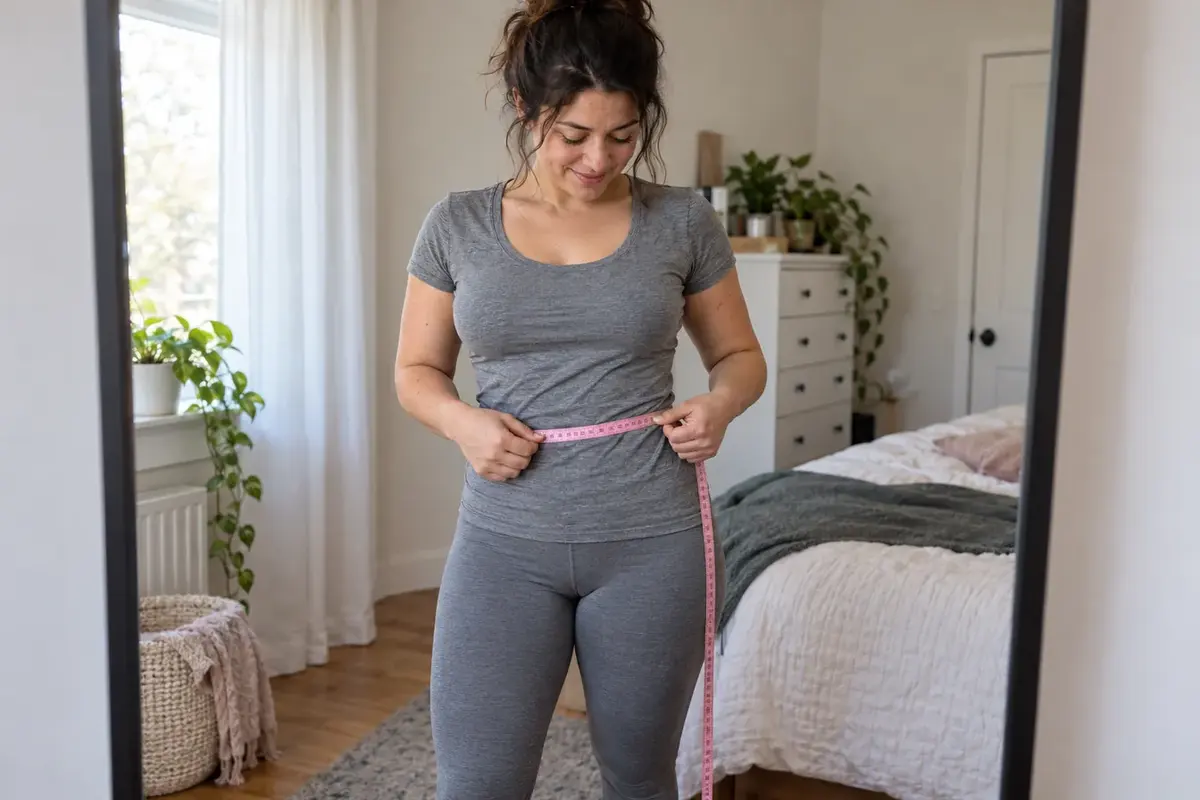
You only need a soft tape measure and a mirror. Measure over close-fitting clothing or bare skin, keep the tape level and snug but not tight, and stand relaxed — do not suck in.
- 1
Bust
Wrap the tape around the fullest part of your chest, across the shoulder blades, keeping it parallel to the floor.
- 2
Waist
Find your natural waist — the narrowest point, usually an inch above your navel — and measure there. Bend to the side; the crease is your waistline.
- 3
Hips
Measure around the fullest part of your hips and bottom, feet together, with the tape level all the way around.
The Five Body Shapes
Not sure yet? Read any guide to compare — the traits make it obvious.
 HourglassBust and hips roughly equal, with a clearly defined, much narrower waist.
 PearHips wider than your shoulders and bust, with a defined waist and fuller thighs.
 AppleFuller bust and midsection with little waist definition, and slim hips and legs.
 Inverted TriangleShoulders and bust wider than your hips, with a straight waist and slim lower body.
 RectangleShoulders, waist, and hips at similar widths, with little natural waist definition.
Example Measurements and Their Shape
Seeing real numbers helps more than any definition. Each row below was run through this calculator, so you can find the set closest to yours and see why it lands where it does.
| Bust | Waist | Hips | Shape | Why |
|---|---|---|---|---|
| 36 in (91 cm) | 24 in (61 cm) | 36 in (91 cm) | Hourglass | Bust and hips match, and the waist is a third smaller than both. This is the classic 36-24-36 figure. |
| 34 in (86 cm) | 25 in (64 cm) | 35 in (89 cm) | Hourglass | Bust and hips are within an inch of each other and the waist is clearly defined. |
| 34 in (86 cm) | 26 in (66 cm) | 35 in (89 cm) | Rectangle | Same balance as the row above, but the waist falls just short of the definition the hourglass needs. |
| 36 in (91 cm) | 31 in (79 cm) | 37 in (94 cm) | Rectangle | Bust and hips are balanced and the waist is only gently smaller. |
| 34 in (86 cm) | 27 in (69 cm) | 38 in (97 cm) | Pear | Hips are about four inches wider than the bust. |
| 36 in (91 cm) | 27 in (69 cm) | 38 in (97 cm) | Pear | A two-inch gap is enough: hips pass the bust by just over five percent. |
| 40 in (102 cm) | 32 in (81 cm) | 36 in (91 cm) | Inverted Triangle | Bust is clearly wider than the hips. |
| 38 in (97 cm) | 37 in (94 cm) | 38 in (97 cm) | Apple | The waist is nearly as wide as the bust, so the midsection carries the volume. |
These are sample figures, not targets. Shape describes proportion, so a larger or smaller body with the same ratios gets the same result.
High Hip and Shoulder Measurements
Some guides add a high hip or a shoulder measurement to separate shapes that look alike on three numbers. They can help you read your own body, but they work as extra context, not as part of this calculator.
High hip
The high hip sits about three to four inches below your waist, where the hip bones are widest. It is useful when your waist and full hip look similar on paper but your shape feels more like a straight line, a shape some guides call a spoon when the high hip is fuller than the rest. To measure it, keep the tape level and snug around that spot.
Shoulders
Shoulder width is taken around the outside of the shoulders, over the widest point, with your arms relaxed at your sides. It explains why two people with the same bust number can read differently: broader shoulders lean toward a top hourglass or an inverted triangle, narrower ones toward a bottom-heavy line.
When they matter
If your result sits between two shapes, the extra measurements tell you which neighbor you resemble more. A fuller high hip points toward rectangle or pear styling, and broad shoulders point toward inverted triangle styling.
What the calculator does: it uses only bust, waist, and hips, and it classifies you into one of five shapes. It does not ask for a high hip or shoulder width, so treat those two measurements as a way to understand a borderline result, then read the guide for the shape you fall on and the one beside it.
Waist-to-Hip Ratio, Explained
Waist-to-hip ratio is a simple proportion you can work out yourself in under a minute, and it is often confused with body shape.
How to calculate it
Divide your waist measurement by your hip measurement, using the same unit for both. A 24 inch waist and 36 inch hips gives 24 divided by 36, which is about 0.67. A 31 inch waist and 37 inch hips gives about 0.84. A lower number means a bigger step in from hips to waist, and a number close to 1 means the two are nearly the same width.
What it tells you
It describes one relationship, waist against hips. That is part of what separates an hourglass from a rectangle, which is why people reach for it when they try to work out their shape.
What it does not tell you
It says nothing about your bust or shoulders, so it cannot tell a pear from an inverted triangle on its own. It also is not a verdict on anyone. Waist and hip measurements are sometimes used alongside other information in health settings, but a single ratio from a tape measure at home cannot diagnose anything. If you have questions about your health, a doctor or other qualified professional is the right person to ask.
How to Dress Your Shape
These are starting points, not rules. Use them to find cuts that feel good on you, then adjust for your own taste and comfort.
Pear
Pick up interest at the shoulders with boat necks, puff sleeves, or a bold print on top. Straight-leg or wide-leg trousers in a mid-weight fabric skim the hips without clinging, and an A-line skirt that starts at the waist follows your natural proportions.
Read the full styling guide: PearHourglass
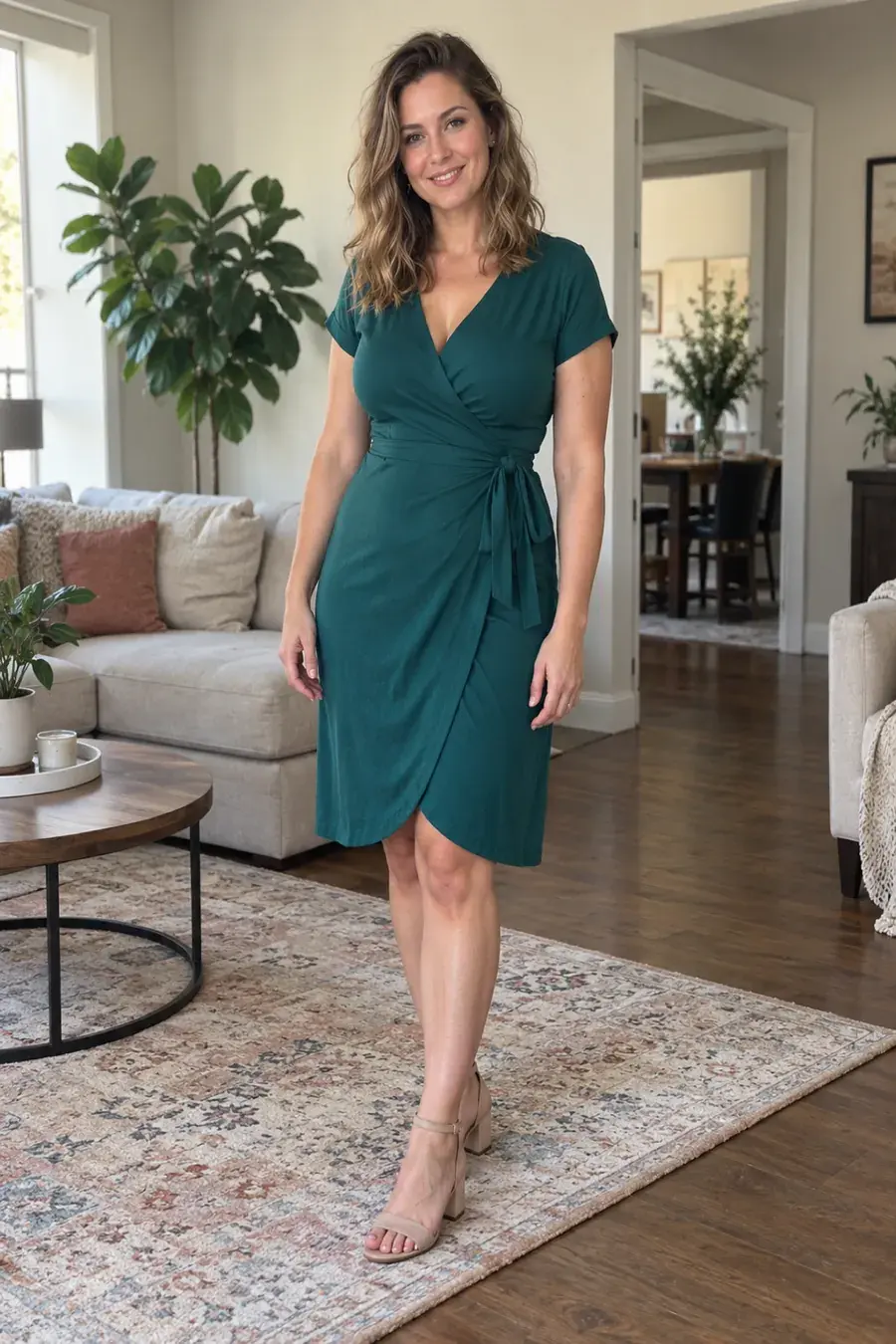
Fabrics with some drape and cuts that follow your waist, like wrap dresses and high-rise trousers, let your proportions show. A belt over a longer cardigan or blazer keeps the waist visible, and fitted shirts in stretch cotton avoid pulling at the bust.
Read the full styling guide: HourglassApple
V-necks and open collars draw the eye up and lengthen the neckline. Empire-waist dresses and tops that flow from just under the bust move easily over the midsection, and straight or bootcut trousers with a comfortable stretch waistband keep the line smooth.
Read the full styling guide: AppleInverted Triangle
Add volume to the lower half with A-line or pleated skirts and wide-leg trousers. Softer necklines such as scoop or square keep the top half calm, and a raglan or set-in sleeve avoids stacking extra width at the shoulder.
Read the full styling guide: Inverted TriangleRectangle
Create curves with layers and texture: a peplum top, a ruched dress, or a belted trench all add shape at the waist. High-waisted trousers with a tucked top and cropped jackets give you a clear waistline to play with.
Read the full styling guide: Rectangle
Body Shape, Body Type, and Kibbe: What Is the Difference?
Three terms get used interchangeably online, and they measure different things.
Body shape
The outline created by your bust, waist, and hips. This is what the calculator above works out, and it is the most practical for choosing the cut of clothes.
Body type (somatotype)
An older system that sorts people into ectomorph, mesomorph, and endomorph groups, based on frame, muscle, and how the body tends to store weight. It is used in fitness conversations and is separate from your outline.
Kibbe
A styling system that looks at bone structure, facial features, and overall balance of yin and yang lines, and sorts people into thirteen types. It goes beyond three measurements to recommend a whole style identity.
Body Shape Calculator: FAQ
How do I calculate my body shape?
Measure your bust, waist, and hips, then compare them. If your hips are widest you are a pear; if your bust and shoulders are widest you are an inverted triangle; if your bust and hips are balanced with a much smaller waist you are an hourglass; if they are balanced with little waist definition you are a rectangle; and if your midsection is your widest point you are an apple. This calculator does the comparison for you.
What are the five body shapes?
The five classic female body shapes are pear (triangle), hourglass, apple (round), inverted triangle, and rectangle (straight). They describe how your bust, waist, and hips relate to one another, which is what determines the silhouettes that flatter you.
Is body shape based on weight?
No. Body shape is about proportion, not size. Two people at very different weights can share the same shape because it depends on the ratio between the bust, waist, and hips rather than the actual measurements.
What is the most common body shape?
The pear (triangle) shape is generally the most common, followed by the rectangle. That said, most people are a blend of two shapes rather than a textbook example of one.
Can my body shape change over time?
Your underlying bone structure stays the same, but weight changes, pregnancy, and age can shift where you carry volume and move you between neighboring shapes — for example from rectangle toward apple, or hourglass toward pear. It is worth re-measuring every few years.
Does body shape change with weight?
Your shape is based on proportion, so it often stays the same when you gain or lose weight, because your frame and the way you carry volume tend to change gradually. Large changes can shift the proportions, and the shape you get may move to a neighboring one. Measuring again is the easiest way to check.
Does body shape change with age?
It can. Hormonal changes, pregnancy, activity levels, and posture can all move where you carry volume over the years, and many people find their waist definition changes. Your bone structure stays the same, so most people drift toward a neighboring shape instead of a completely different one.
What is a 36-24-36 figure?
It is a way to write bust, waist, and hip measurements in inches: 36 inch bust, 24 inch waist, 36 inch hips. Run through this calculator it gives an hourglass, because the bust and hips match and the waist is much smaller. It is one example of a proportion, not an ideal to aim for.
Can you change your body shape?
Your bones, including the width of your shoulders and hips, stay fixed. Training, weight changes, and posture can shift where you carry muscle and softness, which can nudge your measurements. Clothing is the more reliable tool, since cut and structure change how a silhouette reads in seconds.
Is this body shape calculator for men too?
The calculator does not ask for gender, and it will accept any bust, waist, and hip measurements. However, the five shapes and the styling guides are written around the classic women's silhouettes, so the advice is designed for them. Men's shape systems usually use different categories, such as a trapezoid or triangle build.
Does my body shape decide my colors too?
No — those are two separate systems. Body shape decides which silhouettes and cuts flatter you; your color season decides which colors do. For a complete styling profile you want both, which is why we pair this calculator with a free color analysis.
Keep going
Tools and guides to complete your styling profile.

Meet the colors made for you
Your personalized color analysis in minutes — then see yourself in every look on your real face. One-time payment, no subscription.

Meet the colors made for you
Your personalized color analysis in minutes — then see yourself in every look on your real face. One-time payment, no subscription.