The 16 color seasons, explained
Every complexion fits a color season — a palette of shades that make your skin, eyes, and hair look their best. Browse all 16 seasons and their palettes, or find yours in minutes.
What is a color season?
A color season is the group of colors that harmonize with your natural coloring. Seasonal color analysis reads three things about you — your undertone (warm or cool), your value (light or deep), and your chroma (soft or clear) — and matches them to a season.
The four classic seasons — Spring, Summer, Autumn, and Winter — each split into four sub-seasons, giving the 16-season Sci\ART system. Picture a color season wheel: warm seasons on one side, cool on the other, light at the top, deep at the bottom. Your spot on that wheel is your season.
Want the framework first? Read what color analysis measures, then use the skin tone color chart to compare depth and undertone before choosing a season.
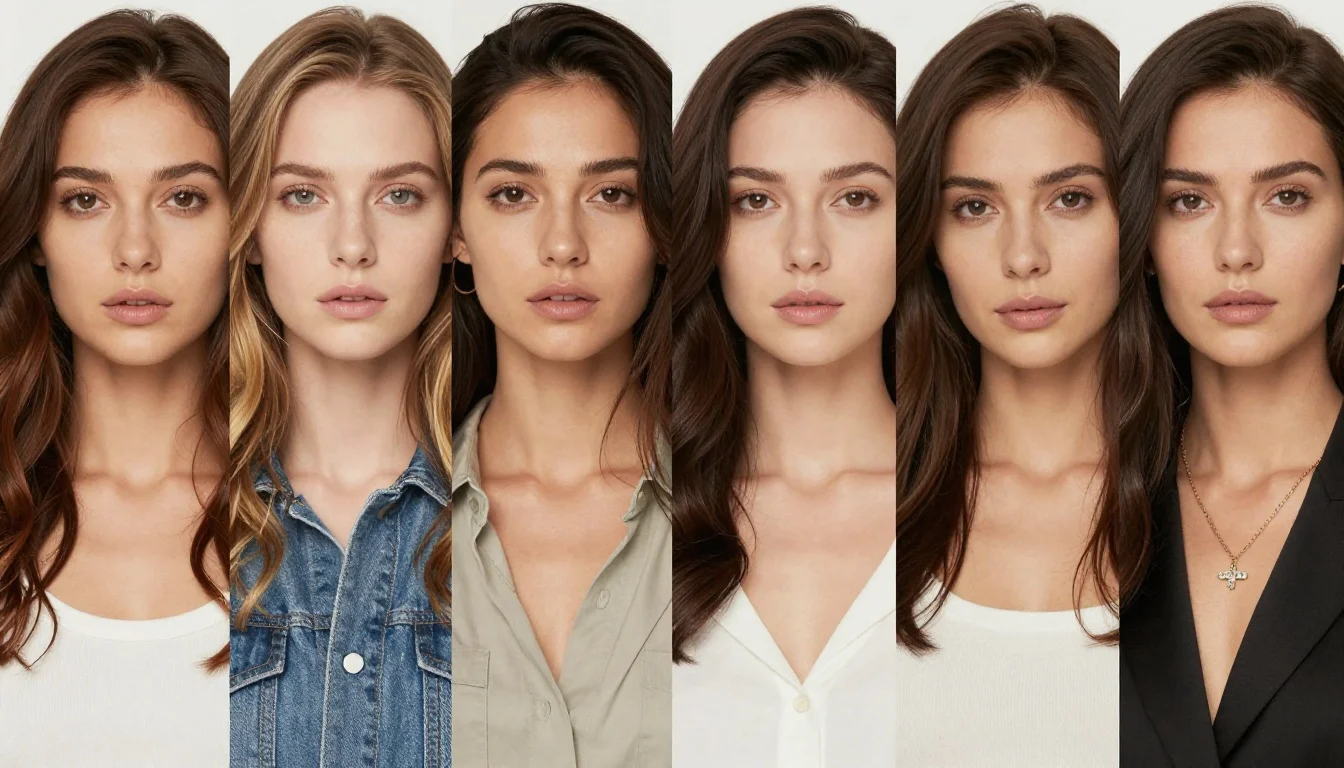
All 16 color seasons
Four parent seasons, four sub-seasons each. Tap any season to see its analysis, traits, and best colors.
Spring
Warm & bright
Golden undertones with fresh, clear warmth — think coral, warm yellow, and turquoise.
Summer
Cool & soft
Blue undertones with gentle, muted softness — powder blue, lavender, and dusty rose.
Autumn
Warm & deep
Golden undertones with rich, earthy depth — rust, olive, camel, and mustard.
Winter
Cool & bright
Blue undertones with high contrast — sapphire, magenta, emerald, and true red.
Color palettes by season
In-depth palette guides for each sub-season — the exact shades to wear, plus makeup and outfit ideas.

How to find your color season
- 1
Find your undertone
Look at the veins on your inner wrist in natural light. Blue or purple points cool; green points warm; a mix is neutral. Cool undertones lean Summer or Winter; warm lean Spring or Autumn.
- 2
Judge your value
How light or deep is your overall coloring (skin, hair, and eyes together)? Light, delicate coloring leans Light Spring/Summer; deep, rich coloring leans Deep Autumn/Winter.
- 3
Read your chroma
Is your coloring soft and blended, or clear and high-contrast? Muted, low-contrast features point Soft Summer/Autumn; vivid, high-contrast features point Bright/Clear Spring/Winter.
- 4
Confirm your season
Undertone, value, and chroma together land you in one of the 16 seasons. The fastest way to confirm is a quick quiz or an AI photo analysis that reads all three from your actual coloring.
The color season chart
Every season at a glance, by undertone, value, and chroma.
| Season | Undertone | Value | Chroma |
|---|---|---|---|
| Light Spring | Warm-neutral | Light | Bright |
| Warm Spring | Warm | Medium | Bright |
| Bright Spring | Warm-neutral | Medium | Clear |
| Clear Spring | Neutral-warm | Medium | Clear |
| Light Summer | Cool-neutral | Light | Soft |
| Cool Summer | Cool | Medium | Soft |
| Soft Summer | Cool-neutral | Medium | Muted |
| Warm Summer | Neutral-cool | Light-medium | Soft |
| Soft Autumn | Warm-neutral | Medium | Muted |
| Warm Autumn | Warm | Medium-deep | Muted |
| Deep Autumn | Warm-neutral | Deep | Muted |
| Cool Autumn | Neutral-warm | Medium-deep | Muted |
| Deep Winter | Cool-neutral | Deep | Clear |
| Cool Winter | Cool | Medium-deep | Bright |
| Bright Winter | Cool-neutral | Medium-deep | Clear |
| Clear Winter | Neutral-cool | Deep | Clear |
Color season FAQs
What is a color season?
A color season is a group of colors that harmonize with your natural coloring. Seasonal color analysis sorts people by undertone (warm vs cool), value (light vs deep), and chroma (soft vs clear) into a season — Spring, Summer, Autumn, or Winter — and, in the modern system, into one of 16 more precise sub-seasons. Wearing colors from your season makes your skin look even, your eyes brighter, and your overall look more cohesive.
How many color seasons are there?
The classic model from Carole Jackson's "Color Me Beautiful" (1980) uses four seasons. The modern Sci\ART system expands those into 16 sub-seasons — four variations of each season (for example Light, Warm, Bright, and Clear Spring) — by factoring in value and chroma alongside undertone. Palette Hunt uses the 16-season system.
What is the difference between the 4-season and 16-season systems?
The 4-season system only looks at warm vs cool. The 16-season system adds value (how light or deep you are) and chroma (how soft or clear your coloring is), so it can tell a Light Spring from a Bright Spring. The extra precision means a palette that fits much more closely than a single broad season.
How do I find my color season?
Check three things: your undertone (look at your wrist veins and whether gold or silver flatters you more), your value (how light or deep your coloring is overall), and your chroma (whether your features are soft and blended or clear and high-contrast). Those three together point to your season. A color analysis quiz or an AI photo analysis confirms it from your actual coloring in a few minutes.
Is a color season the same as a skin undertone?
No — undertone is just one of the three inputs. Two people can both have cool undertones but belong to different seasons because one is light and soft (Light Summer) and the other is deep and clear (Deep Winter). Your season is the combination of undertone, value, and chroma.
Can my color season change over time?
Your underlying undertone stays the same, but value can shift as your hair greys or you change your hair color, which can move you toward a softer or deeper neighboring season. Most people stay within the same season family their whole life.

Meet the colors made for you
Your personalized color analysis in minutes — then see yourself in every look on your real face. One-time payment, no subscription.

Meet the colors made for you
Your personalized color analysis in minutes — then see yourself in every look on your real face. One-time payment, no subscription.