What Skin ToneSuits Mustard?
Mustard is warm and earthy — golden and olive skin often glow in it. Very fair cool skin may look sallow; ochre or butter yellow might be kinder.
Mustard sits in the warm, muted corner of the yellow family — golden, earthy, and slightly browned rather than bright lemon or icy pastel. That warmth is why it flatters warm undertones, olive and golden skin, and the autumn seasonal palettes built on spice and earth. Very fair skin with cool pink undertones often fights mustard near the face: the yellow-brown mute can pull a sallow or tired cast because the skin's cool pink base clashes with the color's golden direction. Once you know whether your skin reads warm-golden or cool-fair, mustard versus clearer yellow becomes an easy choice.


3,000+
happy clients
Why Mustard Flatters Warm Skin More Than Cool Fair Skin
Mustard sits in the warm, muted corner of the yellow family — golden, earthy, and slightly browned rather than bright lemon or icy pastel. That warmth is why it flatters warm undertones, olive and golden skin, and the autumn seasonal palettes built on spice and earth. Very fair skin with cool pink undertones often fights mustard near the face: the yellow-brown mute can pull a sallow or tired cast because the skin's cool pink base clashes with the color's golden direction. Once you know whether your skin reads warm-golden or cool-fair, mustard versus clearer yellow becomes an easy choice.
Mustard's defining traits are warm temperature and muted saturation. The brown-gold in mustard resonates with golden, peachy, and olive undertones — the same warmth that makes camel, terracotta, and warm brown feel native on warm skin. When mustard sits at the neckline on warm or olive skin, the face often looks vivid, healthy, and harmoniously spiced. Cool very fair skin carries pink or blue in the undertone; mustard's golden mute competes with that cool base and can yellow the complexion without adding glow.
Depth matters alongside undertone. Medium to deep warm skin — caramel, golden tan, rich amber brown — carries mustard with authority because the pigment depth balances the color's visual weight. Fair cool skin has less depth to anchor mustard; even a 'soft' mustard can read heavy at the jaw. Light warm skin (warm spring, light autumn) can wear clearer, brighter yellows — marigold, clear gold — while still enjoying wheat-mustard when the mute stays gentle.
Mustard is not interchangeable with every yellow. Butter yellow and clear gold are lighter and often kinder to cool-fair types who want yellow without earth. Neon yellow fights almost everyone at the neckline. The jawline test: hold mustard and butter yellow side by side in daylight. If mustard clears your skin, you are in the warm-mute yellow family. If butter yellow wins, keep mustard for accessories or skip it near the face.
Seasonal color analysis maps mustard precisely: Warm Autumn, Deep Autumn, and Soft Autumn wear different depths — from classic spice mustard to wheat ochre. Cool summers and icy winters usually reach for lemon, butter, or icy yellow instead. Your wardrobe can still use mustard as a trouser or bag on cooler types; the rule is about temperature at the face.
Investment pieces in mustard — wool coat, corduroy blazer, silk scarf — reward warm and olive wearers for years when the mute is true brown-gold, not neon yellow. Cool fair readers can still build autumn-adjacent outfits with mustard accessories and camel trousers while keeping butter yellow or cream at the face. Seasonal analysis clarifies whether your yellow is mustard, ochre, marigold, or lemon so every warm neutral in your closet agrees with your skin.
Prints and patterns that mix mustard with navy, chocolate, or cream often flatter warm skin more than solid mustard blocks because the eye breaks up the yellow-brown at the face. Photographs of autumn weddings and outdoor events show mustard on warm guests looking sun-kissed while cool bridesmaids in mustard sometimes need lighter yellow instead — same color name, different undertone outcome. Your takeaway: mustard is a warm-mute yellow family, not a universal 'autumn' default.
Vintage and thrift mustard varies in brown-gold depth — some pieces read ochre, others read almost tan. Warm skin can hunt thrift mustard knits successfully when the mute is earthy, not neon. Cool skin thrifting mustard should default to accessories or confirm against butter yellow at home before committing to a coat.
Food and beverage branding uses mustard yellow in packaging — the same warmth that sells honey and mustard condiments is the warmth that flatters golden skin in clothing. Cool fair skin is not 'wrong' for liking the color aesthetically; it may simply need butter yellow in fabric while enjoying mustard in graphic prints far from the face.
School spirit wear sometimes defaults to mustard-gold — warm-toned students glow; cool-toned students might request butter yellow or gold-leaning cream in the same design layout.
Mustard ties on warm skin at graduation are a classic win; cool valedictorians often choose navy or butter yellow instead.
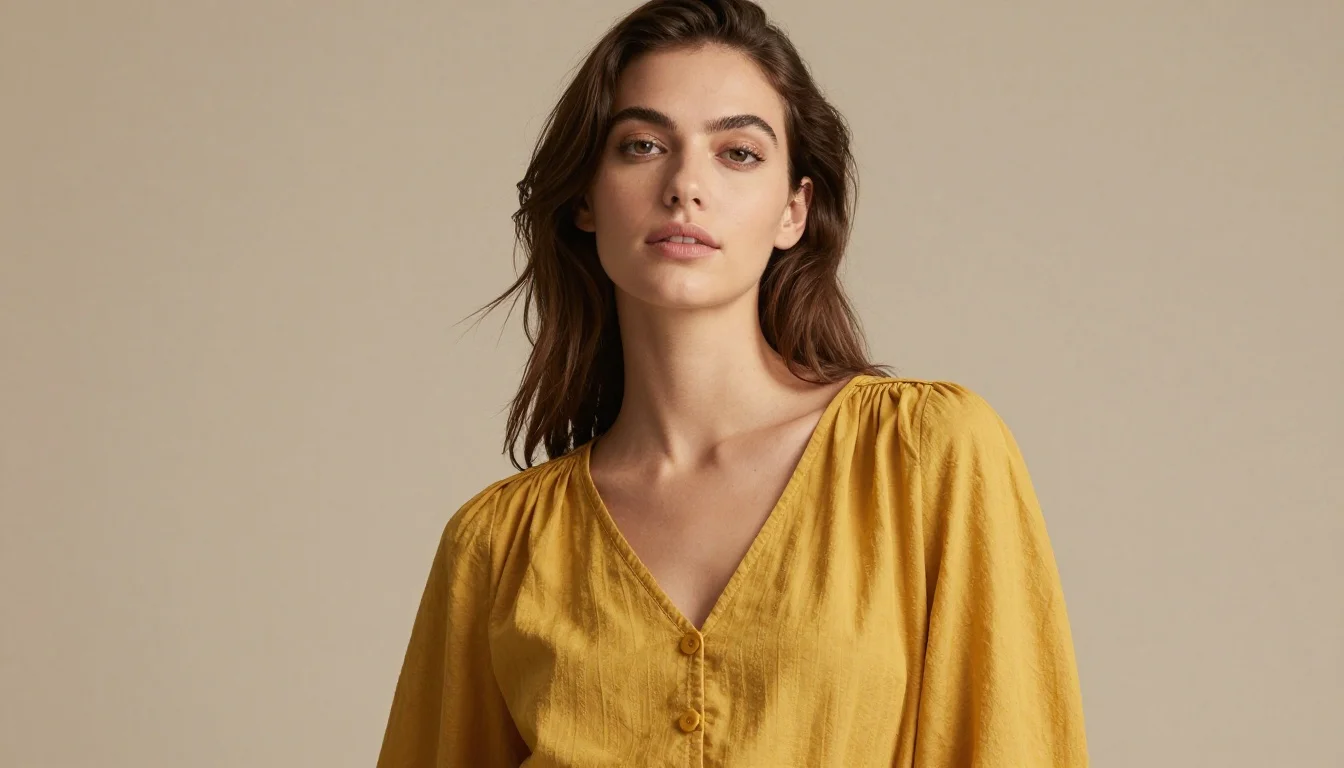
What skin tone suits mustard?
Warm undertones, olive and golden skin, and autumn seasonal coloring suit mustard best. Very fair cool skin often looks sallow in mustard near the face and does better in butter yellow or soft lemon. Medium to deep warm skin carries classic and deep mustard with the most impact.
Skin Tones That Mustard Flatters
Warm & Golden Skin: Classic Mustard
Golden and peachy warm skin mirrors mustard's undertone. Classic mustard blouses and knits make warm skin look sun-kissed rather than sallow. Spiced gold and amber yellow add richness for medium warm depth. These shades work in suiting, scarves, and coats for everyday polish.
Olive & Warm-Olive Skin: Earth Mustard
Olive undertones — green-gold in the skin — harmonize with mustard's earthiness. The color feels like an extension of the skin's natural warmth rather than a foreign yellow. Ochre and earth mustard are especially strong on medium olive. Avoid icy lemon or cool pastel yellow at the neckline on olive skin.
Autumn Coloring: Deep & Soft Mustard
Autumn types (warm, muted, or deep) are mustard's core audience. Deep autumn wears bronze mustard and deep amber; soft autumn needs wheat mustard and soft ochre that do not overpower gentle contrast. The saturation stays muted — never neon — and the warmth stays definite.
Medium Warm Tan Skin: Balanced Mustard
Medium tan with warm undertones bridges fair and deep warm. Balanced mustard and warm maize hold enough depth without the heaviness of deep amber. If mustard ever dulls the face, lighten one step to warm maize or move mustard to skirts and bags while wearing cream or warm white at the neckline.

Not sure yet? See it on your face
Start my color analysisHow to Wear Mustard for Your Skin Tone
Test mustard versus butter yellow at the jaw
Hold mustard and butter yellow in window light. Mustard brightening you confirms warm-mute yellow. Butter yellow winning means keep yellows clearer and lighter near the face; use mustard below the waist or in small accents.
Wear mustard at the neckline when you are warm
Warm and olive types gain the most from mustard blouses, knits, and scarves. The golden mute lifts golden undertones. Cool fair types: try mustard trousers with a cool white or soft rose top before giving up on the color entirely.
Build autumn capsules around mustard
Mustard with camel, chocolate, warm navy, and cream creates a coherent autumn wardrobe for warm types. One mustard knit plus neutral bottoms is an easy uniform. Add texture — wool, corduroy — so mustard reads rich, not flat.
Coordinate makeup with mustard clothing
Warm skin in mustard: peach, coral, or warm nude lips and bronze or peach blush. Cool fair skin near mustard accents: keep blush and lip in cool rose or neutral pink so the face does not yellow. Avoid cool mauve lip with heavy mustard top — split temperatures show in photos.

When Mustard Fights Your Skin Tone
Classic mustard on very fair cool skin
Very fair skin with pink or blue undertones often looks sallow in mustard at the neckline — the golden-brown yellow greys the cool base. Butter yellow, soft lemon, or cream clothing near the face is usually safer. Mustard can remain a belt or print accent if you love the color.
Heavy deep mustard on soft low-contrast skin
Soft autumn and soft warm types need wheat-mustard, not heavy spice mustard. Over-deep values overpower soft hair and eyes and make the face look swallowed by the color. Lighten the mute before you lighten the outfit structure.
Neon or clear lemon sold as 'mustard'
Neon yellow and clear lemon are not mustard — they are bright warm or cool yellows with different rules. Cool skin in neon yellow looks harsh; warm skin in icy lemon looks drained. True mustard has visible brown-gold earth in the mix.
Mustard with cool grey or icy pink at the neckline
Styling mustard next to cool grey or icy pink splits temperature at the jaw — the face reads slightly uneven in photos. Pair mustard with cream, camel, chocolate, warm navy, or warm white for cohesion on warm skin.
Stop guessing — discover your exact palette
See myself in my colorsMustard Swaps When the Shade Is Wrong
Usually you need a different yellow temperature or depth — not a different outfit formula.
Cool fair skin needs clearer, lighter yellow; mustard's earth mute causes sallow cast.
Soft features need gentler mustard depth; deep amber overwhelms low contrast.
Warm undertones glow in earth yellow; icy lemon drains golden skin.
Neon fights olive's muted depth; earth mustard harmonizes with green-gold undertones.
Icy pink splits temperature at the neck; warm neutrals support mustard on warm skin.
Texture and quality keep mustard looking intentional; flat jersey can look dingy on any skin tone.
Your Season, Your Mustard
Mustard anchors warm autumn palettes — but depth and mute shift from soft wheat to deep amber. Your season identifies your exact yellow-brown.
Warm Autumn
Learn moreWarm Autumn wears classic mustard, spiced gold, and muted amber as signature yellows. These shades match golden-beige skin and medium warm contrast. Icy lemon and cool pastel yellow create temperature clash; mustard feels native.
Deep Autumn
Learn moreDeep Autumn's mustard is deep amber, bronze mustard, and rich ochre — darker values that match striking warm depth and dark hair. Pale wheat mustard can look insubstantial; deep amber near the face is powerful and polished.
Soft Autumn
Learn moreSoft Autumn needs wheat-mustard, soft ochre, and gentle gold — never harsh spice or neon. The mute must stay soft to match low contrast. Deep classic mustard can overpower; wheat versions frame the face calmly.
Find Your Exact Mustard
Mustard is a warm, muted yellow — magnificent on golden, olive, and autumn skin, tricky on very fair cool undertones. Your seasonal palette identifies whether classic mustard, wheat ochre, or butter yellow is your yellow, plus every other color calibrated to your face. Personalized color analysis replaces sallow guesswork with the exact yellow depth and temperature that makes your skin look most awake.
Stop guessing — preview every color on you
Preview Yourself In Your Palette
Get my personalized analysisStop guessing — preview every color on you
Preview Yourself In Your Palette

Related Guides for What Skin Tone Suits Mustard?
Explore more personalized color advice based on your features.
Want to see these colors on you? What Colors Look Good on Me — free to try.
Frequently Asked Questions About What Skin Tone Suits Mustard?
What skin tone suits mustard?
Warm undertones, olive and golden skin, and autumn seasonal coloring suit mustard best. Very fair cool skin often looks sallow in mustard near the face and does better in butter yellow or soft lemon. Medium to deep warm skin carries classic and deep mustard with the most impact.
Can cool undertones wear mustard?
Cool undertones generally struggle with mustard at the neckline because of temperature clash. Some neutral-cool medium skin can wear mustard as trousers or accents. Near the face, cool types usually prefer butter yellow, soft lemon, or cool white instead of golden-brown mustard.
Does mustard suit olive skin?
Yes — olive skin often glows in earth mustard and ochre because the color echoes green-gold warmth in the undertone. Avoid icy lemon at the neckline on olive skin. Test earth mustard versus butter yellow at the jaw to confirm.
Why does mustard make me look sallow?
Usually cool undertone on fair skin meeting warm golden-brown yellow — the mustard pulls warmth unevenly and greys the cool base. Sometimes the mustard is too deep for soft contrast. Try butter yellow near the face or lighten to wheat-mustard if you are soft autumn.
Is mustard the same as gold?
No — mustard is muted and brown-gold; clear gold is brighter and often clearer on light warm skin. Deep autumn may wear both; cool fair skin usually prefers lighter yellow than mustard. Test swatches at your neckline.
What season wears mustard best?
Warm Autumn, Deep Autumn, and Soft Autumn wear mustard as a core yellow. Cool summers and bright winters typically use different yellows — butter, lemon, or icy yellow. Your analysis maps the exact shade.