What Skin ToneSuits Turquoise?
Turquoise is vivid and cool — clear, bright, and deep tan skin often glow. Soft-muted types may need dusty aqua instead of jewel turquoise.
Turquoise sits at the bright, cool intersection of blue and green — saturated, clear, and unmistakably jewel-toned rather than dusty or earthy. That clarity is why it flatters skin with clear, bright coloring, cool undertones, and deep tan complexions that can balance vivid pigment near the face. Very soft-muted coloring — low contrast, gentle features, golden-beige softness — often finds full-strength turquoise too loud; dusty aqua, soft blue-green, or misty teal delivers the same blue-green story at a gentler volume. Once you know whether your face reads vivid-clear or soft-muted, choosing turquoise versus a softer aqua becomes straightforward.


3,000+
happy clients
Why Turquoise Flatters Clear and Bright Skin More Than Soft-Muted
Turquoise sits at the bright, cool intersection of blue and green — saturated, clear, and unmistakably jewel-toned rather than dusty or earthy. That clarity is why it flatters skin with clear, bright coloring, cool undertones, and deep tan complexions that can balance vivid pigment near the face. Very soft-muted coloring — low contrast, gentle features, golden-beige softness — often finds full-strength turquoise too loud; dusty aqua, soft blue-green, or misty teal delivers the same blue-green story at a gentler volume. Once you know whether your face reads vivid-clear or soft-muted, choosing turquoise versus a softer aqua becomes straightforward.
Turquoise is defined by cool temperature and high saturation — a blue-green with jewel clarity, not grey mute or yellow-brown earth. Cool undertones with clear contrast share that cool base, so turquoise blouses, scarves, and knits often make skin look crisp, awake, and editorial. Deep tan and golden-tan skin with vivid contrast can wear saturated turquoise with striking impact because depth balances the color's brightness. Soft-muted coloring lacks the contrast to hold that saturation at the neckline; the face can look slightly overwhelmed while the color still reads beautiful on its own.
Depth and clarity matter alongside undertone. Medium-to-deep skin with clear, high-contrast features — rich tan, deep brown, or deep neutral with striking eyes and hair — carries jewel turquoise and bright aqua beautifully. Fair cool skin with clear contrast glows in medium turquoise and cyan-leaning aqua. Fair or medium soft-muted skin (soft summer, soft autumn, gentle warm-beige) usually needs lighter, dustier aqua: the family stays blue-green, but the dial turns down. Testing jewel turquoise against soft aqua at your jaw reveals which volume your coloring can balance.
Turquoise is not teal in every shop. Teal often runs deeper and slightly more balanced between blue and green; turquoise skews brighter and more cyan-forward. It is also not mint or sage — those are muted and quieter. If turquoise has felt harsh, you may have worn neon cyan or a yellow-green labeled turquoise. True turquoise should look like clear Caribbean water: cool, bright, definite. Warm golden skin without much contrast may prefer teal with more green or periwinkle-blue instead of electric turquoise at the face.
Seasonal color analysis maps turquoise to clear, bright palettes. Bright Winter and Bright Spring wear the clearest, most saturated turquoise and aqua. Warm Spring can wear turquoise when it leans slightly green or is worn as an accent with warm neutrals. Soft summers and soft autumns typically reach for dusty aqua and sea-glass blue-green rather than jewel turquoise near the face. Your wardrobe can still use vivid turquoise in skirts, bags, and shoes on softer types — the guideline is saturation at the neckline, not banning the hue entirely.
Styling temperature keeps turquoise polished. Pair vivid turquoise with crisp white, navy, charcoal, or cool grey on cool-clear skin. Warm-deep tan in turquoise often looks best with cream, warm white, or soft espresso rather than icy pink at the jaw, which can split temperatures in photos. Silver and white gold support cool turquoise; brushed gold can bridge warm tan skin wearing aqua accents without making the outfit feel cold.
Resort and summer wardrobes lean on turquoise for good reason: it photographs vividly against tan skin and reads fresh on cool-clear faces in sunlight. Soft-muted travelers should pack dusty aqua cover-ups and sea-glass shirts while leaving jewel turquoise for hats, bags, and sandals. The vacation lesson mirrors everyday dressing — match cyan brightness to how loudly your natural coloring speaks without makeup.
Bridesmaids and event dressing often offer turquoise when the palette is 'coastal.' Cool-clear attendants glow; soft-muted attendants may need the designer's aqua swatch, not the brightest cyan in the lineup. If you are shopping online, compare product photos on cool-toned and warm-toned models; your undertone is more predictive than the dress silhouette.
Athleisure and swimwear in bright aqua sell year-round; treat them like jewel turquoise at the neckline — vivid contrast required. Soft-muted buyers should choose sea-glass swim and dusty aqua athleisure so the face stays balanced beside neon trim.
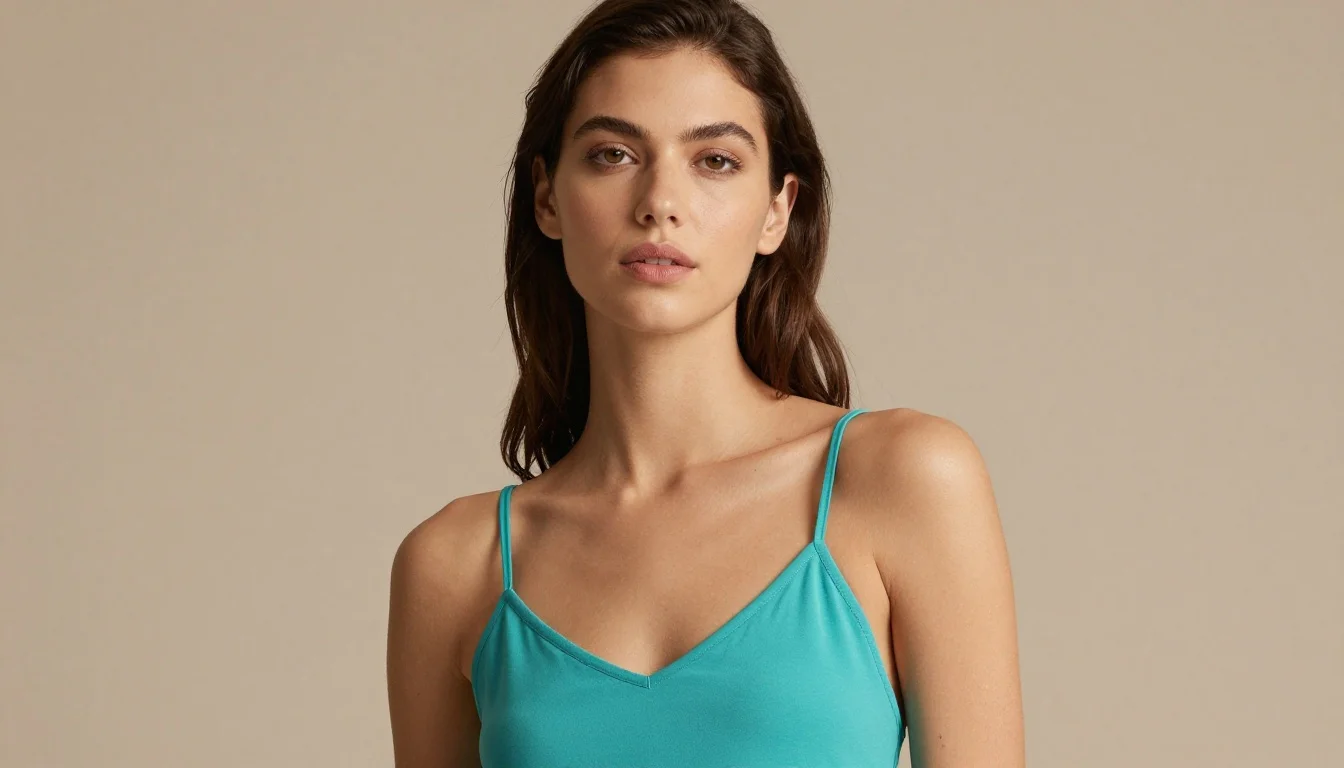
What skin tone suits turquoise?
Clear cool undertones, bright high-contrast coloring, and deep tan skin with vivid contrast suit turquoise best. Very soft-muted low-contrast skin often does better in dusty aqua or soft blue-green near the face. Match turquoise's saturation to your natural contrast level.
Skin Tones That Turquoise Flatters
Clear & Bright Cool Skin: Jewel Turquoise
Clear cool skin — fair to medium with pink, rose, or blue undertones and definite contrast — is turquoise's natural partner. Jewel turquoise near the face creates magazine-level clarity without warmth clash. Bright aqua and cyan turquoise suit medium cool depth. These shades excel in silk blouses, knit tanks, and statement earrings.
Deep & Tan Skin with Vivid Contrast
Deep and golden-tan skin with clear, high-contrast coloring carries saturated turquoise with authority. The brightness does not wash out against rich pigmentation — it creates jewel-box impact. Deep aqua works in evening wear and knit dresses. Avoid pale, chalky aqua on deep vivid skin; it lacks the saturation your depth deserves.
Bright High-Contrast Coloring
If your natural coloring is vivid — dark hair, clear eyes, strong feature contrast — electric turquoise often looks intentional rather than loud. Bright Winter and Bright Spring types live here. Soft-muted coloring in the same depth range may still prefer dusty aqua; brightness must match facial contrast or the outfit wins and the face recedes.
Medium Cool-Neutral & Tan: Balanced Aqua
Medium cool-neutral and medium tan skin with moderate contrast can wear medium turquoise and teal-leaning aqua without full jewel intensity. Soft bright aqua is gentler at the neckline for medium contrast. If jewel turquoise overwhelms, lighten one step or move vivid turquoise to trousers while wearing cream or soft white at the face.

Not sure yet? See it on your face
Start my color analysisHow to Wear Turquoise for Your Skin Tone
Test jewel turquoise versus soft aqua at the jaw
Hold saturated turquoise and dusty aqua side by side in daylight. Turquoise brightening you confirms clear or vivid contrast. Soft aqua winning means keep blue-green gentler near the face and reserve jewel tones for accents or lower body.
Wear turquoise at the neckline when contrast is vivid
Clear cool and deep tan vivid types gain the most from turquoise blouses, knits, and scarves. Soft-muted types: try turquoise trousers with a soft white or dusty rose top, or aqua jewelry while keeping the chin area quieter.
Build bright spring and winter capsules around aqua
Turquoise with navy, charcoal, crisp white, and cool grey creates a coherent vivid-cool wardrobe. One turquoise knit plus neutral bottoms is an easy uniform. Add texture — silk, satin rib — so turquoise reads luxe, not costume.
Coordinate makeup with turquoise clothing
Cool skin in turquoise: rose, berry, or cool pink lip and soft taupe or cool bronze eyes. Warm-tan skin in aqua accents: peach or coral lip and warm bronze lids prevent the face from looking cold. Avoid heavy orange bronzer with cyan turquoise at the neckline on cool skin — temperature clash shows in photos.
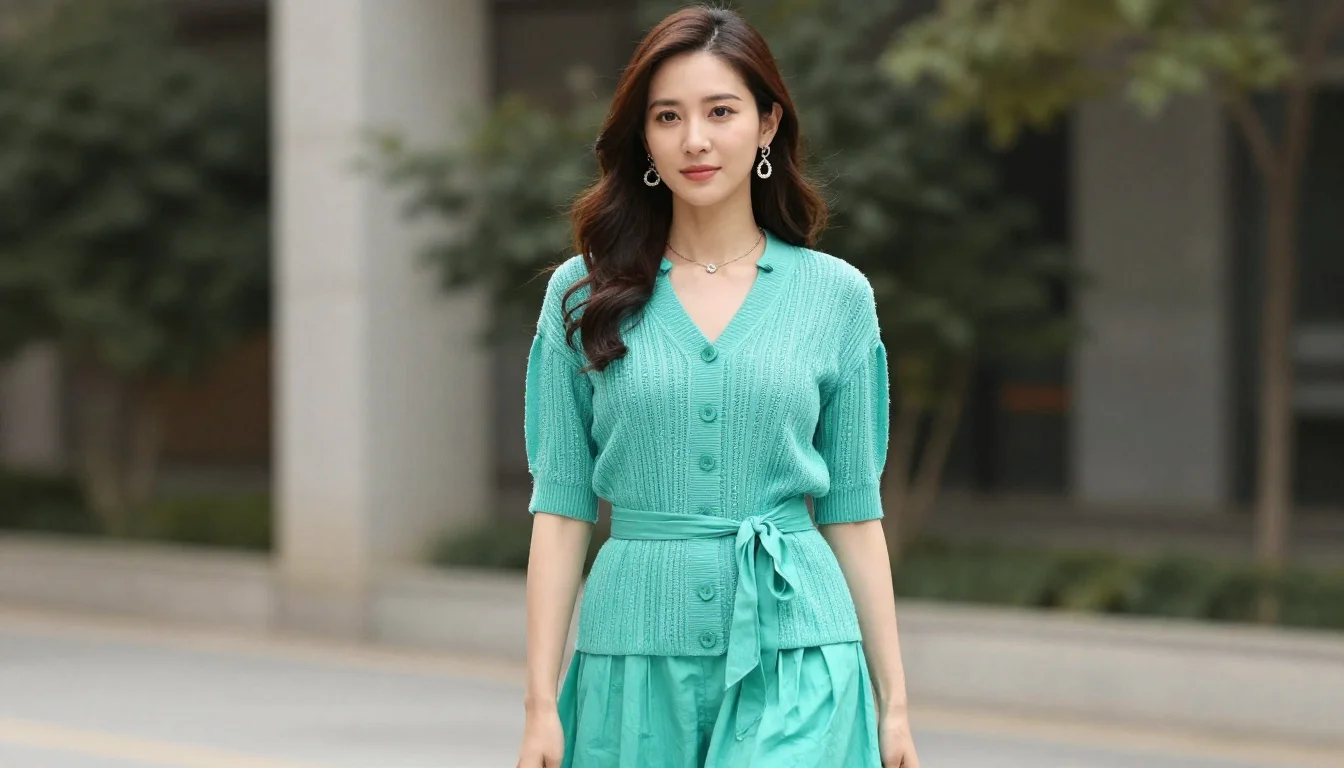
When Turquoise Fights Your Skin Tone
Jewel turquoise on very soft-muted low-contrast skin
Soft-muted coloring — gentle contrast, soft hair and eyes, golden-beige or dusty cool-beige skin — often looks swallowed by jewel turquoise at the neckline. The saturation competes with delicate features. Swap to dusty aqua, misty blue-green, or soft sea-glass near the face; keep jewel turquoise in accessories or below the waist.
Neon yellow-green sold as turquoise
Neon chartreuse and lime-green are not turquoise — they lack turquoise's blue balance and clash with most undertones at the neckline. Cool-clear skin looks harsh; warm skin looks sallow. True turquoise retains a visible cool blue component and reads water-clear, not fluorescent.
Chalky pale aqua on deep vivid skin
Very pale, washed aqua disappears against deep vivid pigmentation and looks unintentional. Deep tan and deep cool skin deserve saturated turquoise, deep aqua, or bright cyan-teal. Pale aqua works on soft fair skin, not on rich depth.
Turquoise with muddy warm olive at the neckline on cool skin
Pairing vivid turquoise next to warm khaki or muddy olive at the jaw splits green temperatures — cool skin can look slightly grey-yellow. Cool types: pair turquoise with navy, crisp white, or cool grey. Warm-tan types: cream or warm white is safer than icy pink with heavy turquoise tops.
Stop guessing — discover your exact palette
See myself in my colorsTurquoise Swaps When the Shade Is Wrong
Usually you need a different blue-green saturation — not a different outfit formula.
Soft-muted contrast needs gentler aqua; jewel saturation overwhelms gentle features.
Warm golden soft skin often needs blue with less neon cyan; periwinkle bridges warmth and cool.
Deep vivid skin needs saturation; pale aqua vanishes against rich pigmentation.
True turquoise is cool and blue-based; yellow-green fights cool undertones.
Icy pink splits temperature at the neck on many tan and cool faces; navy and cream support turquoise.
Quality and true blue-green pigment keep turquoise professional; neon jersey reads casual and harsh.
Your Season, Your Turquoise
Turquoise anchors bright winter and bright spring palettes — but warm spring wears aqua with a slightly different balance. Your season identifies your exact blue-green clarity.
Bright Winter
Learn moreBright Winter wears the clearest jewel turquoise and electric aqua — maximum saturation with cool clarity. Dusty sea-glass looks dull on Bright Winter; true turquoise near the face is signature-level flattering paired with icy white or true black.
Bright Spring
Learn moreBright Spring's turquoise is vivid and warm-clear — bright aqua and clear blue-green with cheerful clarity, not grey mute. Neon lime fails; clean aqua with a touch of green warmth harmonizes with Bright Spring's golden clarity and dark hair.
Warm Spring
Learn moreWarm Spring can wear turquoise when it leans slightly green or appears in accents — lagoon aqua, warm aqua, clear blue-green with cream and coral. Icy cyan at the neckline can fight golden undertones; warmer aqua and teal-leaning turquoise feel more native.
Find Your Exact Turquoise
Turquoise is a bright cool blue-green — magnificent on clear, bright, and deep tan vivid skin, often too loud for very soft-muted coloring at the neckline. Your seasonal palette identifies whether jewel turquoise, medium aqua, or dusty sea-glass is your blue-green, plus every other color calibrated to your face. Personalized color analysis replaces guesswork with the exact saturation and temperature that makes your skin look most awake.
Stop guessing — preview every color on you
Preview Yourself In Your Palette
Get my personalized analysisStop guessing — preview every color on you
Preview Yourself In Your Palette

Related Guides for What Skin Tone Suits Turquoise?
Explore more personalized color advice based on your features.
Want to see these colors on you? What Colors Look Good on Me — free to try.
Frequently Asked Questions About What Skin Tone Suits Turquoise?
What skin tone suits turquoise?
Clear cool undertones, bright high-contrast coloring, and deep tan skin with vivid contrast suit turquoise best. Very soft-muted low-contrast skin often does better in dusty aqua or soft blue-green near the face. Match turquoise's saturation to your natural contrast level.
Can warm undertones wear turquoise?
Warm undertones with vivid contrast can wear aqua and teal-leaning turquoise as accents. Soft warm golden skin often prefers periwinkle or soft teal over electric cyan at the neckline. Warm Spring types wear warmer aqua successfully.
Does turquoise suit tan skin?
Yes — deep and medium tan skin with clear contrast often looks striking in vivid turquoise and deep aqua. Muted soft tan may need softer aqua. Test jewel turquoise versus dusty aqua at your jaw to confirm your volume.
Why does turquoise overwhelm me?
Usually softness or low contrast meeting jewel saturation — your coloring needs dusty aqua, not electric turquoise, near the face. Sometimes the fabric is neon yellow-green mislabeled turquoise. Lighten saturation before abandoning blue-green entirely.
Is turquoise the same as teal?
No — turquoise is typically brighter and more cyan-forward; teal is often deeper and more balanced between blue and green. Many faces wear both by adjusting depth. Test bright aqua versus deep teal at your neckline.
What season wears turquoise best?
Bright Winter, Bright Spring, and Warm Spring (warmer aqua) wear turquoise as a core blue-green. Soft summers and soft autumns usually prefer dusty aqua. Your analysis maps the exact shade.