How to Color Block forWarm Undertones
Color blocking — the technique of wearing two or more solid. Discover how to wear them confidently — matched to your undertone.
Color blocking — the technique of wearing two or more solid, contrasting color sections in one outfit — is a powerful styling tool. For warm undertones, the key is choosing blocks of color that either echo your natural warmth or create contrast without pulling in a cool direction. Done right, color blocking for warm undertones is bold, cohesive, and undeniably flattering.


3,000+
happy clients
Why Undertone Matters in Color Blocking
Color blocking — the technique of wearing two or more solid, contrasting color sections in one outfit — is a powerful styling tool. For warm undertones, the key is choosing blocks of color that either echo your natural warmth or create contrast without pulling in a cool direction. Done right, color blocking for warm undertones is bold, cohesive, and undeniably flattering.
Color blocking creates visual impact through contrast. But for that contrast to flatter rather than fight your complexion, the colors in the block need to share a relationship with your undertone. For warm undertones, this means choosing bold combinations from the warm or earth-tone spectrum — colors that harmonize with the golden or peachy cast of your skin.
When warm undertones attempt color blocking in cool, blue-based hues, the result is a clash not just between the colors but between the outfit and the person wearing it. The cool blocks can make warm skin look sallow or ashy by contrast. Warm-toned color blocks, on the other hand, amplify the golden luminosity that warm undertones carry naturally.
The most successful color blocking for warm undertones involves contrasting within the warm spectrum: pairing rich rusts with deep olives, or warm yellow with chocolate brown, creates the high-impact visual contrast that defines color blocking while keeping the warm relationship with your complexion intact.
What is the easiest color block for warm undertones to start with?
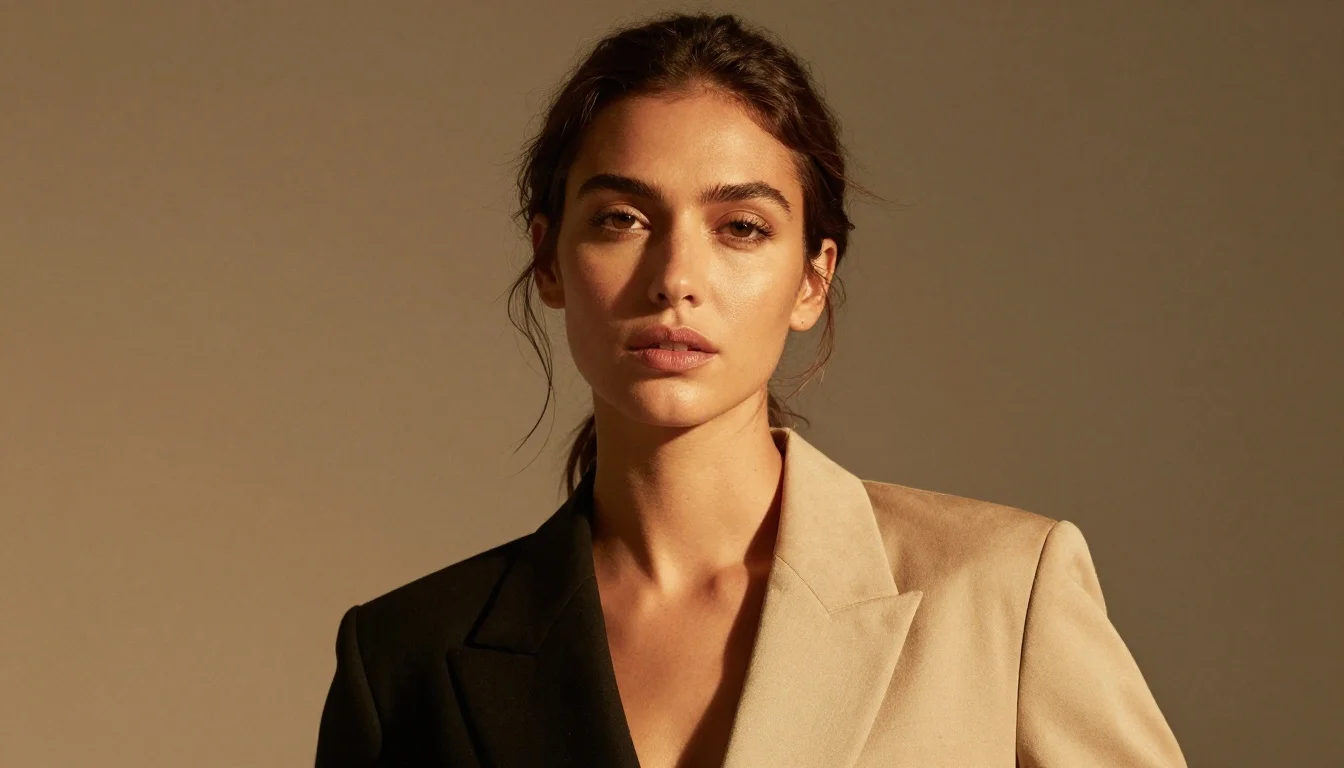
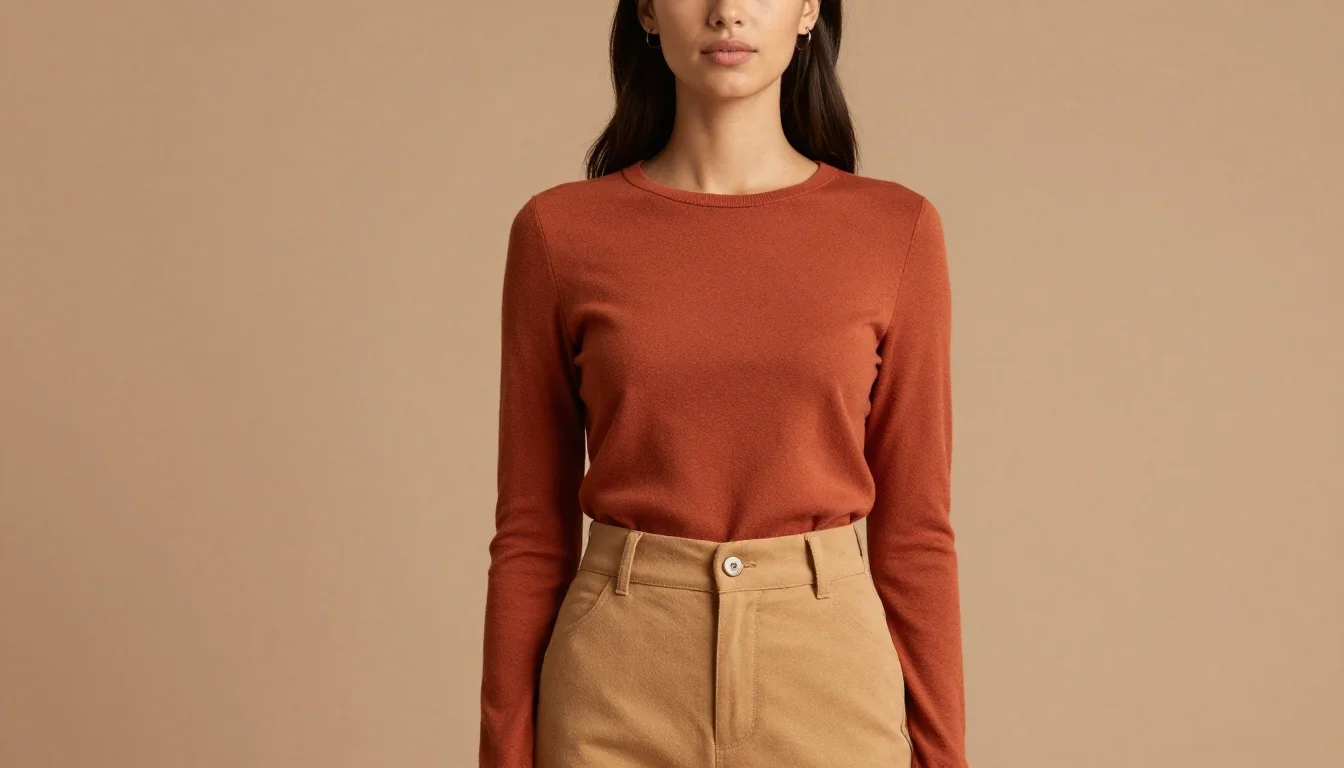
A rust or terracotta top with camel or olive trousers is the easiest entry point. Both colors are approachable, the combination is fashion-forward but wearable, and both work beautifully with warm undertones.
Best Color Block Combinations for Warm Undertones
Rust + Olive
The complementary relationship between orange-based rust and warm green-based olive creates one of the most visually striking warm-toned color blocks. Both colors have warm undertones, so they enhance each other and your complexion simultaneously.
Mustard + Chocolate
Warm yellow against deep brown creates a rich, earthy color block that echoes natural earth tones. Both colors sit in the warm spectrum, making this combination particularly harmonious for warm complexions.
Warm Red + Camel
A warm red with orange undertones paired with a neutral camel or tan creates a bold but grounded color block. The camel prevents the red from overwhelming, while the red gives the camel direction and purpose.
Burgundy + Burnt Orange
Two deeply warm, autumn-inspired hues create a sophisticated, moody color block. Both burgundy (with warm red undertones) and burnt orange sit firmly in the warm spectrum, making this combination especially harmonious for warm undertones.

Not sure yet? See it on your face
Start my color analysisHow to Execute Color Blocking for Warm Undertones
The Top and Bottom Block
The simplest color block is a different color top and bottom. Try a burnt orange top with olive trousers, or a mustard blouse with chocolate brown pants for effortless warm-toned color blocking.
The Colorblocked Dress
Look for dresses or coordinate sets with built-in color blocking in warm hues. A terracotta and camel blocked dress is a single-piece solution for stunning warm-toned color blocking.
The Third Neutral
When two warm colors feel too bold together, add a warm neutral (camel, tan, warm beige) as a third element — in shoes, a bag, or a belt — to ground the color block and create cohesion.
The Color Block Coat
A color-blocked coat in warm hues — rust and camel, or olive and chocolate — over a neutral outfit is a sophisticated way to experiment with warm-toned color blocking without full commitment.
Color Block Pairings to Avoid for Warm Undertones
Cobalt Blue + Fuchsia
These are classic cool-toned color block combinations that clash directly with warm undertones, creating an unflattering contrast with the golden cast of warm skin.
Icy Lavender + Pale Blue
Cool, pale color blocks lack the warmth that warm undertones need. They can make warm skin appear sallow by contrast.
Bright Lime + Cool Yellow
Colors with a distinctly cool or blue-based green component work against the warm undertone, creating a jarring rather than flattering contrast.
Black + Pure Cool White
While bold, the high-cool contrast of black and stark white can look harsh against warm undertones. Swap for black + cream or dark chocolate + ivory instead.
Stop guessing — discover your exact palette
See myself in my colorsWarm Color Block Swaps
Replace cool or neutral color blocks with warm-toned alternatives that flatter your complexion.
Rust and cream maintain the high-contrast nature of a color block while staying warm and flattering for warm undertones.
These two warm-based bold hues create a striking, fashion-forward block that works with rather than against warm undertones.
Two warm neutrals create a sophisticated, tonal block that is particularly flattering and wearable for warm complexions.
The warm, yellow-based tones of olive and mustard create a nature-inspired color block that resonates beautifully with warm undertones.
For evening, deep burgundy with gold accents creates a sophisticated warm-toned color block suited to formal occasions.
Two warm, sun-kissed tones create a summery color block that echoes the warmth of the season and your undertone simultaneously.
Seasonal Color Blocking for Warm Undertones
Your warm undertone color blocks can shift with the seasons while maintaining warmth throughout.
Autumn
Learn moreThe most natural season for warm-undertone color blocking: rust + olive, mustard + chocolate, camel + burgundy. Autumn's earthy palette was built for warm undertones.
Spring / Summer
Learn moreLighten the warm color block in warm months: peach + warm yellow, sage + warm cream, coral + sandy beige. Keep the warmth but lift the depth.
Color Blocking with Confidence as a Warm Undertone
Color blocking is one of the most impactful ways to dress intentionally. For warm undertones, the rule is simple: stay warm. Choose your blocks from the earthy, golden, autumn-inspired side of the color wheel and the results will always feel cohesive and flattering. Rust and olive, mustard and chocolate, burnt orange and camel — these are your signature combinations. Once you start seeing color in these warm pairings, color blocking becomes one of the most natural and joyful ways to get dressed.
Stop guessing — preview every color on you
Preview Yourself In Your Palette
Get my personalized analysisStop guessing — preview every color on you
Preview Yourself In Your Palette

Related Guides for How to Color Block for Warm Undertones
Explore more personalized color advice based on your features.
Want to see these colors on you? Skin Undertone Test — free to try.
Frequently Asked Questions About How to Color Block for Warm Undertones
What is the easiest color block for warm undertones to start with?
A rust or terracotta top with camel or olive trousers is the easiest entry point. Both colors are approachable, the combination is fashion-forward but wearable, and both work beautifully with warm undertones.
How many colors can I include in a color block outfit?
Two to three colors is the classic color block formula. For warm undertones, keep all three in the warm spectrum and vary the depth — one light, one medium, one dark — for balance.
Can I color block with neutrals if I have warm undertones?
Absolutely. Warm neutrals like camel, tan, chocolate brown, and warm beige are perfect for color blocking. A camel top with chocolate brown trousers is technically a color block and suits warm undertones beautifully.
Is color blocking appropriate for workwear with warm undertones?
Yes — choose sophisticated warm pairings like olive + camel, burgundy + warm gray (with warm beige instead of cool gray), or chocolate + rust for professional color blocking that is polished and appropriate.
What shoes work best with warm-toned color block outfits?
Warm neutrals in shoes — tan leather, camel suede, cognac, or warm brown — ground a warm-toned color block and create a cohesive look from head to toe.
Can I use patterns in a warm-toned color block outfit?
Keep one piece solid when color blocking with patterns. A printed warm-toned piece (floral with rust and olive) with one solid block color creates interest without confusion.