What Skin ToneSuits Red?
Red suits every skin tone — but not every shade of red. Discover how to find your perfect shade — and skip the ones that wash you out.
Red suits every skin tone — but the wrong red can look jarring, harsh, or simply off. The question isn't whether you can wear red, it's which red is yours. The temperature (warm vs. cool), the depth (vivid vs. deep), and the base (orange-red vs. blue-red) all shift dramatically who a particular red flatters. Once you know your skin tone's temperature and season, finding the right red is straightforward.


3,000+
happy clients
Why Not Every Red Works on Every Skin Tone
Red suits every skin tone — but the wrong red can look jarring, harsh, or simply off. The question isn't whether you can wear red, it's which red is yours. The temperature (warm vs. cool), the depth (vivid vs. deep), and the base (orange-red vs. blue-red) all shift dramatically who a particular red flatters. Once you know your skin tone's temperature and season, finding the right red is straightforward.
Red is not a single color. It spans a spectrum from warm orange-red (think tomato, coral-red, warm brick) to cool blue-red (think raspberry, cherry, true crimson). Each position on that spectrum interacts differently with skin tone. Warm skin tones — golden, peachy, or olive — are flattered by warm reds that resonate with their undertone. Cool skin tones — pink, blue, or silver-based — are flattered by cool reds with a blue base. A warm orange-red on cool skin can look harsh; a cool blue-red on warm skin can look muddy.
Depth matters too. Very saturated, vivid reds work best on skin tones with a clear, high-contrast quality — Deep Winter, Bright Spring, and high-contrast cool coloring all carry vivid red with impact. Muted or earthy versions of red — brick, warm terracotta-red, deep rust — suit muted seasons better: Soft Autumn, Warm Autumn, Deep Autumn. The mistake is wearing the wrong depth version: wearing vivid cherry-red when your coloring calls for deep rust, or wearing muted brick when your coloring needs vivid true red.
Skin depth is a third variable. Fair skin and very deep skin both wear red powerfully — the contrast is vivid in both cases. Medium skin tones may find that the richness and depth of the red matters more than on very fair or very deep skin, because the contrast is more moderate. For medium skin tones, choosing a red with clear contrast against the skin (either by being vivid or by being very deep) ensures the red reads as intentional rather than tonal.
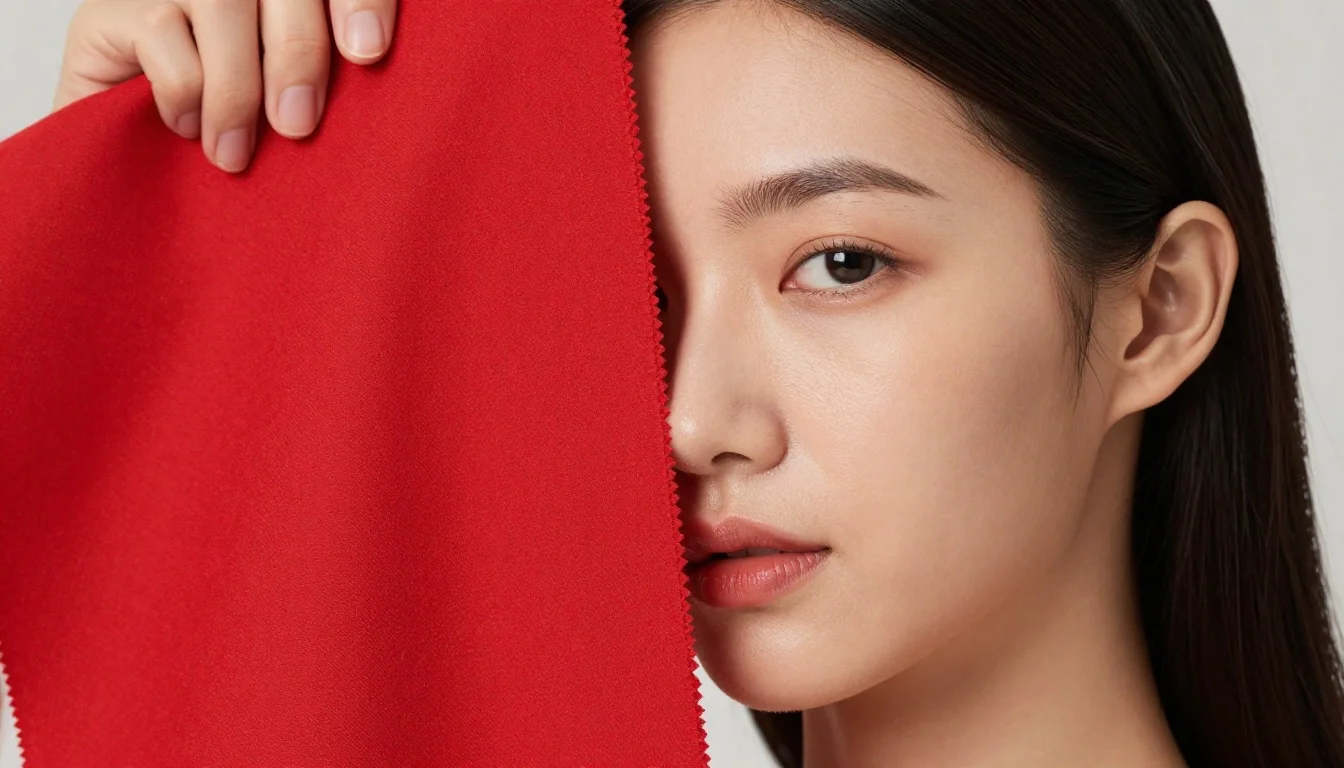
What skin tone suits red?
Every skin tone suits red — the key is the right type of red. Warm skin tones (golden, olive, peachy) suit warm orange-reds: tomato, brick, rust. Cool skin tones (pink, blue-based) suit cool blue-reds: cherry, raspberry, true crimson. Deep skin tones suit vivid, saturated reds with depth. Fair skin suits vivid reds that create high contrast. Muted coloring suits earthy, muted reds. The temperature match is the most important variable.
The Right Red for Each Skin Tone
Warm Skin Tones: Warm & Earthy Reds
Warm skin tones — golden, olive, or peachy — are flattered by reds with a warm orange base. Tomato red is the most universally flattering warm red: vivid, saturated, and unambiguously warm. Warm brick sits in a slightly earthier register that works particularly well for Warm Autumn and Soft Autumn coloring. Rust red has the warmth of terracotta pushed into the red range — deeply flattering for warm golden skin. The key is a red with a distinctly orange-warm quality rather than a blue-cool base.
Cool Skin Tones: Cool & True Reds
Cool skin tones — pink, blue, or silver-based — are flattered by reds with a blue or neutral base. True blue-red (the classic 'fire engine' red with no orange) is the most reliable cool red for any cool skin tone. Cherry red is vivid and slightly blue-based — excellent for high-contrast cool coloring like Deep Winter or Bright Winter. Raspberry-red sits at the red-purple edge and is particularly effective for cool summer and cool winter skin. Deep crimson is the dark version of this family.
Deep Skin Tones: Deep & Rich Reds
Deep skin tones — deep warm brown to deep cool-neutral — are served best by reds with depth and richness rather than pale or muted reds. Vivid, deep reds create the contrast needed to stand apart from deep skin. Warm-undertoned deep skin: deep warm red and rich burgundy-red. Cool-undertoned deep skin: vivid cobalt-red and deep scarlet. The depth and saturation is the unifying requirement; the temperature varies by undertone.
Fair Skin Tones: Vivid or Deep Reds
Fair skin can carry red with dramatic impact because the high contrast between vivid or deep red and very light skin creates a striking, intentional look. True vivid red — saturated and clear, neither muted nor dusty — is the most reliably flattering red for fair skin because the vividness creates maximum contrast. Deep cherry-red works for cool fair skin specifically. Warm tomato works for warm fair skin. The one red to avoid for fair skin: muted or dusty versions that lose contrast against light skin.

Not sure yet? See it on your face
Start my color analysisHow to Wear Red for Your Skin Tone
Identify your red by temperature first
Before looking at depth or vividness, determine your skin's temperature. Look at the inside of your wrist in natural light. Blue or green-tinted veins suggest cool undertones → your red is blue-based (true red, cherry, raspberry). Green-tinted veins with some warmth suggest warm undertones → your red is orange-based (tomato, brick, warm coral-red). Both? Your undertone is neutral and you have more flexibility. The temperature match is the most impactful variable.
Test depth against your overall coloring
Hold a vivid red and a muted/earthy red next to your face. The one that makes your skin look clear and vivid is the right depth for your coloring. If vivid red looks striking and intentional, your coloring is clear enough to carry it. If it overwhelms or makes your features look harsh, a deeper or more muted version of red suits you better. This test tells you more than any general rule.
Use red as a neckline focal point
Red is most impactful near the face — as a top, blouse, scarf, or dress rather than below the waist where it competes less with your features. A red silk blouse against fair or medium skin creates maximum color-skin contrast at the zone where your eyes and features are visible. Red trousers work, but the color impact is less connected to your personal coloring. For the most flattering effect, use red at the neckline.
Match red lip to clothing red
When wearing red clothing, either match the lip (same temperature of red) or go neutral. A warm tomato dress with a cool raspberry lip creates a temperature conflict that makes both look slightly off. A warm tomato dress with a warm coral-red lip creates cohesion. A warm tomato dress with a nude-warm lip lets the clothing be the statement. What doesn't work: mixing warm and cool reds in the same outfit without intention.
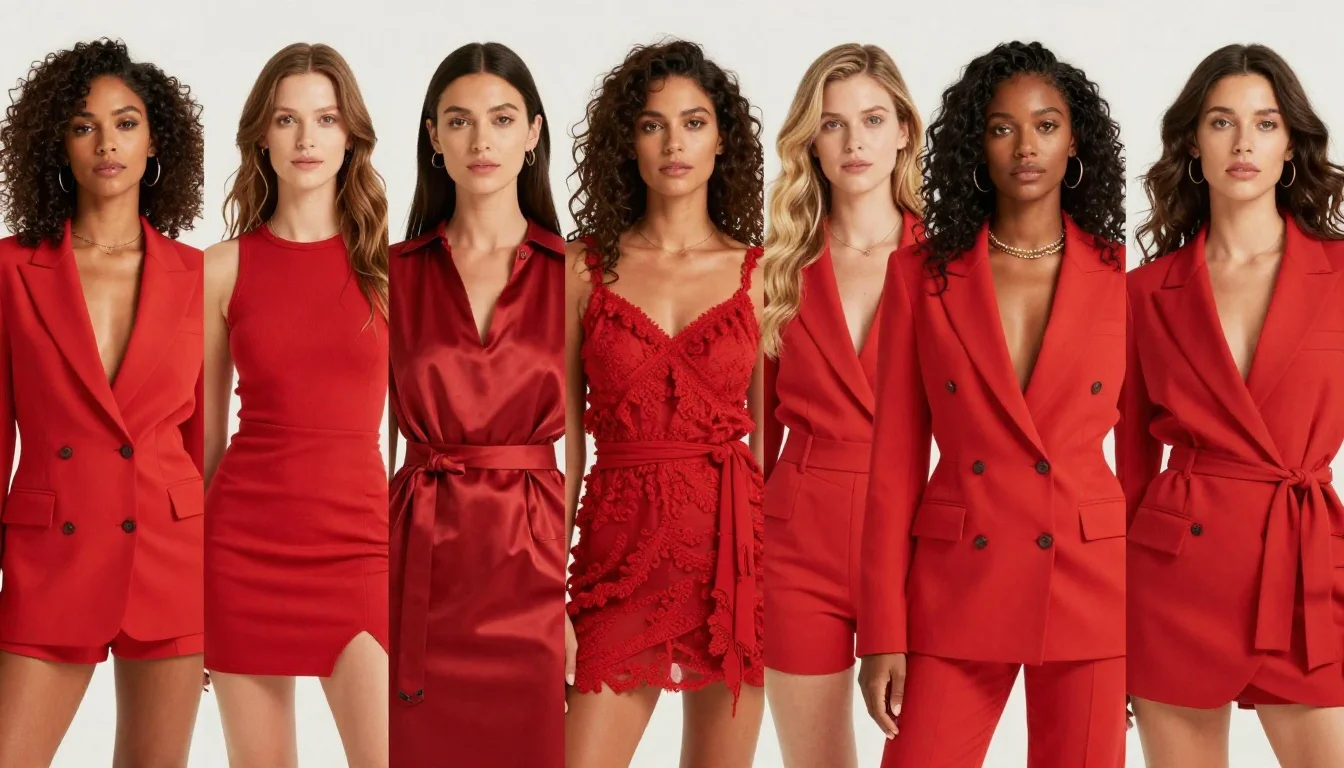
Reds That Fight Your Skin Tone
Orange-red on cool skin tones
Cool-undertoned skin has a pink or blue base. Orange-red — the warm, tomato-adjacent reds — introduce a warm orange quality that clashes with cool skin's base, creating a slightly harsh, ruddy contrast. The skin can look pink or flushed rather than complemented. Cool-based cherry-red and true red are the better versions for cool skin.
Cool blue-red on warm or olive skin tones
Warm and olive skin tones have yellow or golden undertones. Cool blue-red introduces a bluish quality that creates temperature conflict — the warm skin and cool red fight each other rather than harmonizing. The result is that the red looks slightly purple-adjacent on warm skin rather than vivid and clean. Warm tomato-red and rust-red are the versions that serve warm skin.
Muted or dusty red on clear or vivid coloring
Dusty brick and muted terracotta-red work beautifully for muted seasons (Soft Autumn, Soft Summer), but look flat and underwhelming on vivid or high-contrast coloring. If your natural coloring is clear and high-contrast, you need vivid, saturated red rather than earthy muted red. The same color that looks intentional on Warm Autumn looks unfinished on Bright Winter.
Very vivid red on soft or muted coloring
The reverse problem: high-saturation true reds can overwhelm soft, muted coloring (Soft Summer, Soft Autumn). When the red is more vivid than your overall coloring, it looks like the red is wearing you rather than the other way around. For muted coloring, a deep earthy red — brick, rust, terracotta-red — creates better balance than vivid cherry-red.
Stop guessing — discover your exact palette
See myself in my colorsFind Your Red
If red hasn't worked for you before, the temperature was probably wrong — not the color.
Warm orange-red clashes with cool skin's pink or blue base. True blue-red harmonizes with cool undertones and creates clean, striking contrast.
Cool blue-red creates temperature conflict on warm golden skin. Warm tomato-red resonates with warm undertones and creates vivid, harmonious impact.
Very vivid red overwhelms soft coloring. Deep brick and earthy rust-red have the right depth to create balance — vivid enough to be intentional, muted enough not to overpower.
Muted reds lose contrast against pale skin and look flat. Vivid true red creates the high contrast that makes fair skin look luminous and the red look intentional.
Temperature mismatch between red clothing and red lip looks slightly chaotic. Match the temperature of your red in both places, or wear a nude lip and let the clothing be the statement.
A red scarf or bag near your face interacts with your skin the same way a red blouse does. The temperature matching matters even for accessories — especially those worn near the neckline.
Your Season, Your Red
Each seasonal palette has a signature version of red. Your season tells you the exact depth, temperature, and base that creates the most flattering red for your individual coloring.
Warm Autumn
Learn moreWarm Autumn's red is earthy and warm: deep rust, warm brick, and terracotta-red. These muted, orange-warm reds resonate with Warm Autumn's earthy, muted warmth without overwhelming it. Vivid tomato-red or cool crimson both fight Warm Autumn's softer, earthier register.
Deep Winter
Learn moreDeep Winter's red is deep, cool, and intensely saturated: true deep red, deep cherry, and deep cool crimson. Deep Winter can carry the most vivid, saturated reds of any season — the depth and contrast in Deep Winter coloring requires that level of intensity. Muted brick-red looks flat; vivid cool-based red creates the impact this season demands.
Warm Spring
Learn moreWarm Spring's red is clear, warm, and medium-vivid: warm coral-red, vivid warm tomato, and clear warm scarlet. These are warm and clear — not muted like Autumn, not as intensely deep as Winter. Warm Spring's lighter, fresher warmth is served best by warm reds with clarity and brightness rather than depth.
Find Your Exact Red
Every skin tone can wear red — but not every red works for every skin tone. Your exact season identifies the specific temperature, depth, and base of red that makes your coloring look most vivid. A personalized color analysis moves you from 'red sometimes works on me' to the exact red that always works — and the confidence to wear it.
Stop guessing — preview every color on you
Preview Yourself In Your Palette
Get my personalized analysisStop guessing — preview every color on you
Preview Yourself In Your Palette

Related Guides for What Skin Tone Suits Red?
Explore more personalized color advice based on your features.
Want to see these colors on you? What Colors Look Good on Me — free to try.
Frequently Asked Questions About What Skin Tone Suits Red?
What skin tone suits red?
Every skin tone suits red — the key is the right type of red. Warm skin tones (golden, olive, peachy) suit warm orange-reds: tomato, brick, rust. Cool skin tones (pink, blue-based) suit cool blue-reds: cherry, raspberry, true crimson. Deep skin tones suit vivid, saturated reds with depth. Fair skin suits vivid reds that create high contrast. Muted coloring suits earthy, muted reds. The temperature match is the most important variable.
What is the most flattering red for warm skin tones?
Tomato red — vivid, warm, and unambiguously orange-warm — is the most universally flattering red for warm golden, olive, and peachy skin. Warm brick, deep rust, and warm coral-red are all in the same family. Avoid cool blue-based reds (raspberry, cherry, crimson) on warm skin — they create temperature conflict that makes warm skin look slightly muddied or sallow.
What red suits cool undertones?
True blue-red, cherry red, and raspberry-red are the most flattering for cool undertones. These reds have a blue or neutral base that harmonizes with cool skin's pink or blue undertone rather than clashing with it. Avoid orange-red and warm brick on cool skin — the warm orange base fights the cool undertone and can make skin look flushed or ruddy.
Can olive skin wear red?
Yes — and olive skin wears warm reds particularly well. The warm-orange reds (tomato, rust, warm brick) resonate with olive's yellow-warm undertone while creating vivid contrast against the medium skin depth. Cool blue-reds create more temperature conflict on olive skin. Deep warm reds and terracotta-reds are especially flattering for deeper olive complexions.
What shade of red is best for pale skin?
Vivid, saturated reds — both warm tomato and cool cherry — work well for fair skin because the high contrast between vivid red and pale skin creates a striking, intentional look. The temperature should match your undertone: warm tomato for warm fair skin, cool cherry-red for cool fair skin. Avoid muted or dusty reds on fair skin — they lose contrast and look flat against pale skin.
How do I know if a red suits me?
The simplest test: hold a swatch of the red under your chin in natural light. If your skin looks clear, vivid, and awake, it's your red. If you look slightly ruddy, flushed, grey, or the color seems to overwhelm you, the temperature or depth is wrong. Try a warmer or cooler version of the same red depth, or try a more saturated or muted version. The right red will make your complexion look like its best version.