Colors That MakePorcelain Skin Glow
Porcelain skin is the coolest, most luminous very-fair complexion — and it carries true, clear color most fair skin can't. Discover the shades that flatter you.
Porcelain skin gets treated like a fragile thing to protect from color — soften everything, keep it pale, don't overpower it. That's exactly backwards. Porcelain is the coolest, clearest, most luminous very-fair complexion there is, and that translucent coolness is precisely what lets you carry true, clear, jewel-bright colors that wash out warmer or softer fair skin. Your skin isn't a limitation to dress around — it's a clean, cool canvas built for contrast. The trick is wearing colors that are as clear and true as your skin is.


3,000+
happy clients
Why Porcelain Skin Carries Color That Fair Skin Can't
Porcelain skin gets treated like a fragile thing to protect from color — soften everything, keep it pale, don't overpower it. That's exactly backwards. Porcelain is the coolest, clearest, most luminous very-fair complexion there is, and that translucent coolness is precisely what lets you carry true, clear, jewel-bright colors that wash out warmer or softer fair skin. Your skin isn't a limitation to dress around — it's a clean, cool canvas built for contrast. The trick is wearing colors that are as clear and true as your skin is.
Porcelain skin is defined by three things at once: it's very fair, it's distinctly cool (pink, rose, or blue-neutral rather than golden), and it's unusually clear and translucent — light seems to pass into it rather than bounce off a matte surface. That combination is what sets porcelain apart from the broader 'fair skin' category. Ordinary fair skin can run warm and peachy; porcelain almost never does. Its coolness is its signature, and it changes everything about which colors work, because cool, clear color sits in perfect harmony with cool, clear skin instead of fighting it.
This is the crucial difference between porcelain and softer fair complexions. A peachy-fair or neutral-fair person often looks best in muted, slightly dusty mid-tones — and true jewel brights can overwhelm them. Porcelain is the opposite. Its clarity means it can stand up to fully saturated, true-hued color: a real emerald, a true poppy red, a clean sapphire. Where those shades would 'wear' a softer person, they meet porcelain as an equal. Many porcelain complexions also pair with dark hair and clear eyes, creating naturally high contrast — and high-contrast coloring is built to carry bold, pure color rather than gentle pastels.
The other defining trait is sensitivity to warmth and muddiness. Because porcelain skin is cool and high-reflectivity, it picks up the temperature of whatever sits near your face — and a warm or muddy color reflects badly. Orange, warm earth tones, and greyed-out beige can pull a sallow, greyish, even slightly unwell cast across porcelain skin in a way they never would on golden complexions. So your guiding rule is simple: keep it cool, and keep it clear. True hues and clean cool tones make porcelain luminous; warm, dull, or muddy shades drain it.

What colors look best on porcelain skin?
Porcelain skin looks best in clear, cool, true colors. Jewel tones like true emerald, sapphire, ruby, and royal purple are exceptional because their clarity matches porcelain's translucence. True cool reds and cool fuchsias create striking high-contrast drama, and crisp cool neutrals — pure white, true navy, charcoal — frame the face beautifully. Softer, lower-contrast porcelain can wear cool pastels like soft rose and cool lavender. The constant rule is to keep colors cool and clear rather than warm or muddy.
Colors That Flatter Porcelain Skin
True, Clear Jewel Tones
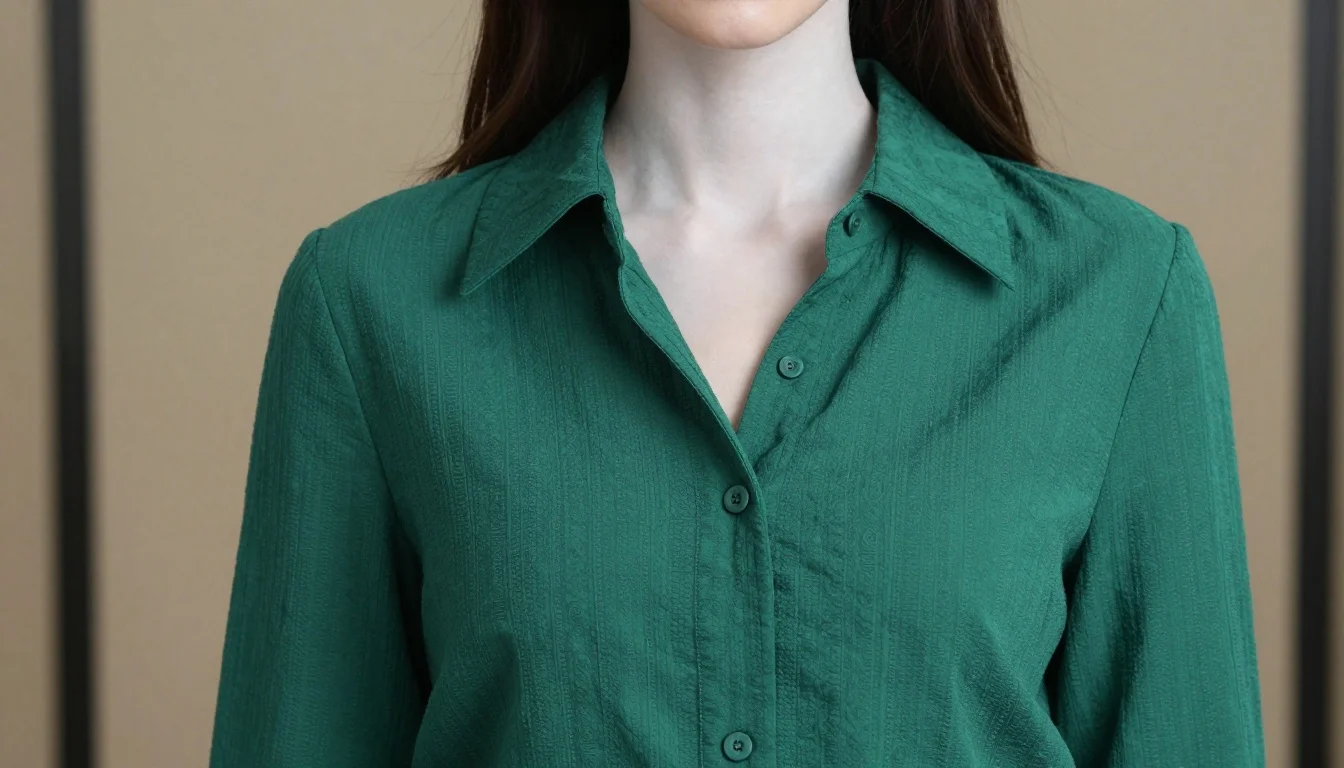
This is the family porcelain skin owns more than almost any other complexion. Clear, fully-saturated jewel tones have the cool clarity to meet porcelain's translucence as an equal — they don't overwhelm it, they complete it. True emerald (a clean, slightly cool green, not olive) makes porcelain skin look luminous and alive. Sapphire and royal purple create rich, cool contrast that reads as elegant and intentional. Ruby — a true cool-leaning red — frames a porcelain face beautifully. The key word is 'true': choose hues that are pure and clear rather than muddied or earthy.
Clear Cool Reds & Fuchsias
Porcelain skin can wear a true, clear red the way few complexions can. A genuine fire-engine red — neither orange-warm nor dusty — creates striking, high-contrast drama against cool fair skin and looks unmistakably deliberate. Cool fuchsia and raspberry pick up the natural rosiness in porcelain skin and amplify it into something vivid and fresh. Cherry red sits in the same cool, clear, saturated zone. Avoid brick and tomato reds that lean orange — your reds want a blue-cool edge.
Cool Crisp Neutrals
Where warmer fair skin needs ivory, porcelain can wear pure, optic white — its coolness keeps white crisp and luminous rather than washing it out, and the clean contrast looks sharp against translucent skin. True navy is your most versatile cool neutral, more flattering than warm browns and endlessly wearable. Charcoal and true black create the high-contrast, cool framing that porcelain coloring (especially with dark hair) carries effortlessly. Cool grey — a clean, blue-leaning grey rather than a warm greige — is the quiet hero neutral for porcelain skin.
Soft Cool Tones (for low-contrast porcelain)
Not every porcelain complexion is high-contrast — if your hair is light and your overall look is gentle, full jewel intensity can be too much, and softer cool shades suit you better. The temperature rule stays the same: stay cool, just turn the volume down. Soft rose and cool lavender harmonize with porcelain's pink undertone without overpowering delicate coloring. Powder blue and dusty mint stay clean and cool while reading as soft and refined. Choose cool pastels with a little saturation — chalky, washed-out versions can disappear against fair skin.

Ready to see true emerald & sapphire on your face?
Start my color analysisHow to Wear Color With Porcelain Skin
Own the contrast
The biggest mistake with porcelain skin is playing it safe with pale, timid colors — it's the one complexion built to carry bold, true color, so use that. Put a clear jewel tone or a true red right at your neckline: an emerald silk blouse, a sapphire knit, a true-red coat collar. The high contrast between vivid color and translucent skin is exactly what makes porcelain look striking rather than fragile. Keep the strongest color near your face, where the contrast does its work — depth in your trousers won't create the same effect.
Confirm you're cool, not just fair
Porcelain is specifically cool fair skin, so verify your temperature before you build a wardrobe. Check the veins on your inner wrist in daylight: blue or purple veins confirm the cool undertone that defines porcelain. Hold a true white next to an ivory near your face — if pure white looks fresh and ivory looks slightly dingy, you're cool. Most porcelain skin will read clearly cool. Once that's confirmed, you can commit fully to cool, clear colors and stop second-guessing the warm 'skin-tone' shades that never quite work.
Match your contrast level
Porcelain comes in two modes. High-contrast porcelain — pale skin with dark hair and clear eyes — can carry the full force of true jewel tones, charcoal, and pure white with crisp black. Low-contrast porcelain — pale skin with light hair and soft features — looks best in the same cool temperature at lower volume: soft rose, powder blue, cool lavender. Dressing against your contrast (heavy jet black on delicate low-contrast coloring, or washed-out pastels on dramatic high-contrast coloring) is what makes an outfit feel slightly off even when the temperature is right.
Keep makeup cool too
Cool clothing wants cool makeup. Porcelain skin glows with cool-toned berry, raspberry, and true-red lips, cool-pink or rosy blush, and a cool or silvery highlighter rather than a golden one. A warm bronze, terracotta lip, or peachy blush will clash with your cool clothing and reintroduce the warmth your wardrobe is carefully avoiding. Keeping skin, clothes, and makeup all in the same cool, clear key is what makes a porcelain look feel deliberate and pulled-together.
Colors That Drain Porcelain Skin
Orange and warm coral
Orange is the single most unflattering color family for porcelain skin. Its warmth fights directly against cool, pink-toned skin, casting a sallow, almost greenish shadow that makes you look tired or unwell. Even warm coral and peachy-orange tones — flattering on golden complexions — clash with porcelain's coolness. If you want warmth near a red, reach for a true cool red or raspberry instead; if you love a sunset shade, a cool-leaning fuchsia gives you brightness without the warm clash.
Warm earth tones
Mustard, rust, terracotta, warm olive, and golden browns are built on yellow-orange warmth — exactly what porcelain skin can't carry. Against cool fair skin they look heavy and muddy and pull a dull, sallow cast across your face. These earthy warm tones flatter warm-fair and tan complexions, but on porcelain they drain the natural luminosity. If you want depth in that range, swap to true navy, charcoal, or a deep cool plum instead.
Muddy, greyed-out beige and taupe
Warm beige, greige, camel, and muddy taupe are a classic porcelain mistake — they're often sold as 'neutral,' but their warm muddiness reflects badly against cool, clear skin, flattening it and making it look dull and indistinct. Because they sit close to porcelain in value and clash in temperature, they create a washed-out, low-energy look with no contrast. When you want a neutral, choose cool and clean: pure white, cool grey, true navy, or charcoal — never a muddy warm beige.
Dusty, washed-out pastels
Chalky, desaturated pastels — faded peach, muddy lilac, washed-out buttercream — lack the clarity that porcelain skin thrives on, and their low saturation creates an undifferentiated, low-contrast look where pale fabric and pale skin blur together. The problem is doubled when they also lean warm. If you love a soft palette, choose cool pastels with genuine clarity and a touch of saturation — soft rose or cool lavender rather than a dusty, greyed version.
Stop guessing — preview every shade on you
See myself in my colorsYour Wardrobe, Upgraded
Swaps that trade warm, muddy choices for the cool, clear colors porcelain skin was built to wear.
Warm beige reflects a dull, sallow cast on cool porcelain skin. Pure white and cool grey stay crisp and luminous against translucent fair skin.
Warm earth tones drain porcelain skin and make it look tired. Clear jewel tones meet its clarity as an equal and frame the face with cool, rich contrast.
Orange-leaning reds clash with porcelain's coolness. A true blue-cool red creates the striking, high-contrast drama porcelain skin carries better than almost anyone.
Muddy warm neutrals flatten cool fair skin. Navy and charcoal give clean, cool depth that reads as polished and sharp against porcelain.
Warm, washed-out pastels disappear against porcelain skin. Their cool, clearer cousins harmonize with your pink undertone while keeping definition.
Warm nudes read as skin-toned and vanish against porcelain. True jewel tones create the vivid, cool contrast that makes porcelain skin look luminous in evening light.
Which Seasonal Palette Fits Porcelain Skin?
Porcelain skin sits firmly on the cool side of the seasonal system — its coolness rules out the warm Spring and Autumn families. Your exact season comes down to contrast level: high-contrast porcelain leans Winter, while softer, lighter porcelain leans cool Summer.
Cool Winter
Learn moreIf your porcelain skin is very fair with a clear cool or pink undertone, paired with dark hair and vivid eyes that create high contrast, Cool Winter is your most likely home. This is the classic 'cool porcelain with dark hair' coloring, and it carries the full force of clear, cool, saturated color — true red, icy white, jet black, cobalt, and rich emerald all look striking on you.
Bright Winter
Learn moreIf your porcelain skin reads especially clear and bright, with high contrast and vivid features, Bright Winter may be yours. You look most alive in the boldest, purest, most electric cool colors — true fuchsia, clear sapphire, vivid emerald, and sharp black-and-white contrast. The clarity of your skin is matched by the clarity of your palette.
Cool Summer
Learn moreIf your porcelain skin is cool but your overall coloring is softer and lower in contrast — lighter hair, gentle features — Cool Summer fits better than Winter. You keep the cool temperature but turn the intensity down: soft rose, cool blue, dusty lavender, and muted cool teal flatter you, while the harshest jewel brights can feel a touch heavy.
Find Your Exact Colors
Porcelain skin is built to carry clear, cool, jewel-bright color — but your precise palette depends on exactly how cool you run and how much contrast your hair and eyes create. These guidelines get you most of the way, yet the difference between Cool Winter and Cool Summer (and which specific reds, blues, and pastels truly sing on you) comes down to detail. A personalized color analysis maps the exact shades that make your porcelain complexion look its most luminous — so you can own your contrast with total confidence.
Stop guessing — preview every color on you
Preview Yourself In Your Palette
Get my personalized paletteStop guessing — preview every color on you
Preview Yourself In Your Palette

Related Guides for Best Colors for Porcelain Skin
Explore more personalized color advice based on your features.
Want to see these colors on you? What Colors Look Good on Me — free to try.
Frequently Asked Questions About Best Colors for Porcelain Skin
What colors look best on porcelain skin?
Porcelain skin looks best in clear, cool, true colors. Jewel tones like true emerald, sapphire, ruby, and royal purple are exceptional because their clarity matches porcelain's translucence. True cool reds and cool fuchsias create striking high-contrast drama, and crisp cool neutrals — pure white, true navy, charcoal — frame the face beautifully. Softer, lower-contrast porcelain can wear cool pastels like soft rose and cool lavender. The constant rule is to keep colors cool and clear rather than warm or muddy.
Is porcelain skin warm or cool?
Porcelain skin is almost always cool. That's part of what defines it — porcelain is the coolest, clearest, most luminous very-fair complexion, with pink, rose, or blue-neutral undertones rather than golden ones. This cool clarity is exactly why porcelain skin can carry true jewel tones and clean cool colors that warmer fair skin can't. If your fair skin runs peachy or golden, it's warm-fair rather than true porcelain.
How is porcelain skin different from fair skin?
Fair skin is a broad category that can run warm-peachy, neutral, or cool. Porcelain is the specific, coolest end of that range — very fair, distinctly cool, and unusually clear and translucent, often paired with dark hair for naturally high contrast. The practical difference is dramatic: softer or warmer fair skin often suits muted, dusty mid-tones, while porcelain thrives on true, clear, fully-saturated cool color. Porcelain can carry a real emerald or a true red where warmer fair skin would be overwhelmed.
Can porcelain skin wear bright colors?
Yes — and it carries true brights better than almost any other complexion. The cool clarity of porcelain skin lets it stand up to fully saturated jewel tones and clear cool reds that would wash out softer skin. The key is choosing cool, true brights rather than warm ones: a true emerald, sapphire, cool fuchsia, or fire-engine red rather than mustard, orange, or warm coral. If your porcelain coloring is low-contrast, you may prefer those same cool hues in a slightly softer form.
What colors should porcelain skin avoid?
Porcelain skin should avoid warm and muddy colors. Orange and warm coral are the worst offenders — they cast a sallow, greenish shadow against cool skin. Warm earth tones (mustard, rust, terracotta, golden brown) drain its luminosity, and muddy warm neutrals like camel, greige, and warm beige flatten it. Dusty, washed-out pastels also disappear against fair skin. Replace all of these with cool, clear alternatives like navy, charcoal, true emerald, or cool grey.
What is the best color for porcelain skin and dark hair?
Porcelain skin with dark hair is high-contrast cool coloring — and it's built for bold, clear color. True red, emerald, sapphire, royal purple, and the crisp contrast of charcoal or black with pure white all look striking. This 'cool porcelain with dark hair' combination is often a Cool Winter or Bright Winter, and it can carry more saturation and contrast than almost any other complexion. Lean into vivid, cool, true hues and let your natural contrast do the work.