Best Colors forHispanic Skin
Hispanic skin spans fair Spanish-European to golden mestizo to deep Afro-Latino and Indigenous tones. Use your undertone as the compass to find your colors.
Hispanic skin spans the widest range of any single group in personal color analysis. Under that one word sit fair Spanish and European complexions, warm golden mestizo tones, deep Afro-Latino skin, rich Indigenous coloring, and every blend in between — heritage drawn from Iberia, the Americas, Africa, and beyond, mixed in countless combinations across more than twenty countries. No single swatch can represent all of it. What can guide you across the whole spectrum is a compass: your undertone. The majority of Hispanic complexions lean warm-golden or olive, and that warmth is the single most useful thing to know when choosing color — but plenty of Hispanic people have cool or neutral undertones too. This guide maps the full range, band by band, so you can find where you sit and which colors light you up.


3,000+
happy clients
Why Hispanic Skin Needs a Map, Not a Single Answer
Hispanic skin spans the widest range of any single group in personal color analysis. Under that one word sit fair Spanish and European complexions, warm golden mestizo tones, deep Afro-Latino skin, rich Indigenous coloring, and every blend in between — heritage drawn from Iberia, the Americas, Africa, and beyond, mixed in countless combinations across more than twenty countries. No single swatch can represent all of it. What can guide you across the whole spectrum is a compass: your undertone. The majority of Hispanic complexions lean warm-golden or olive, and that warmth is the single most useful thing to know when choosing color — but plenty of Hispanic people have cool or neutral undertones too. This guide maps the full range, band by band, so you can find where you sit and which colors light you up.
The reason generic 'best colors for your skin tone' advice fails Hispanic people is that the label covers an enormous range of depth and undertone at once. A fair Spanish-heritage complexion with cool-neutral undertones and a deep Afro-Latino complexion with warm undertones are both accurately called Hispanic, yet they need almost opposite color strategies. Depth tells you how much saturation and contrast you can carry; undertone tells you which temperature of color harmonizes with your skin. You need both coordinates to navigate, which is why a map serves you far better than a single recommended palette.
Undertone is the compass because it stays consistent even as depth changes. The most common Hispanic undertone pattern is warm-golden to olive — a golden or yellow-green quality that makes warm, rich, saturated colors sing and makes cool, ashy, desaturated colors fall flat. If your undertone is warm-golden, terracotta and emerald will flatter you whether your skin is fair, medium, or deep; the depth just shifts how intense a version you wear. This is why we organize this guide around undertone first and depth second: once you know your undertone direction, you can evaluate any color quickly by asking whether it shares that warmth or fights it.
Crucially, warm is the majority pattern but not the rule. Some Hispanic people — particularly those with predominantly Spanish or European heritage — have genuinely cool or neutral undertones, where blue-pink rather than golden quality sits beneath the surface. Olive undertones, very common across the Hispanic range, are their own category: they read neither cleanly warm nor cleanly cool, carry a yellow-green cast, and can look sallow in pale or ashy colors while glowing in rich, saturated ones. Knowing whether you sit in the warm-golden majority, the olive middle, or the cooler edge of the Hispanic range is the difference between color advice that works for you and color advice that works for someone who merely shares your label.
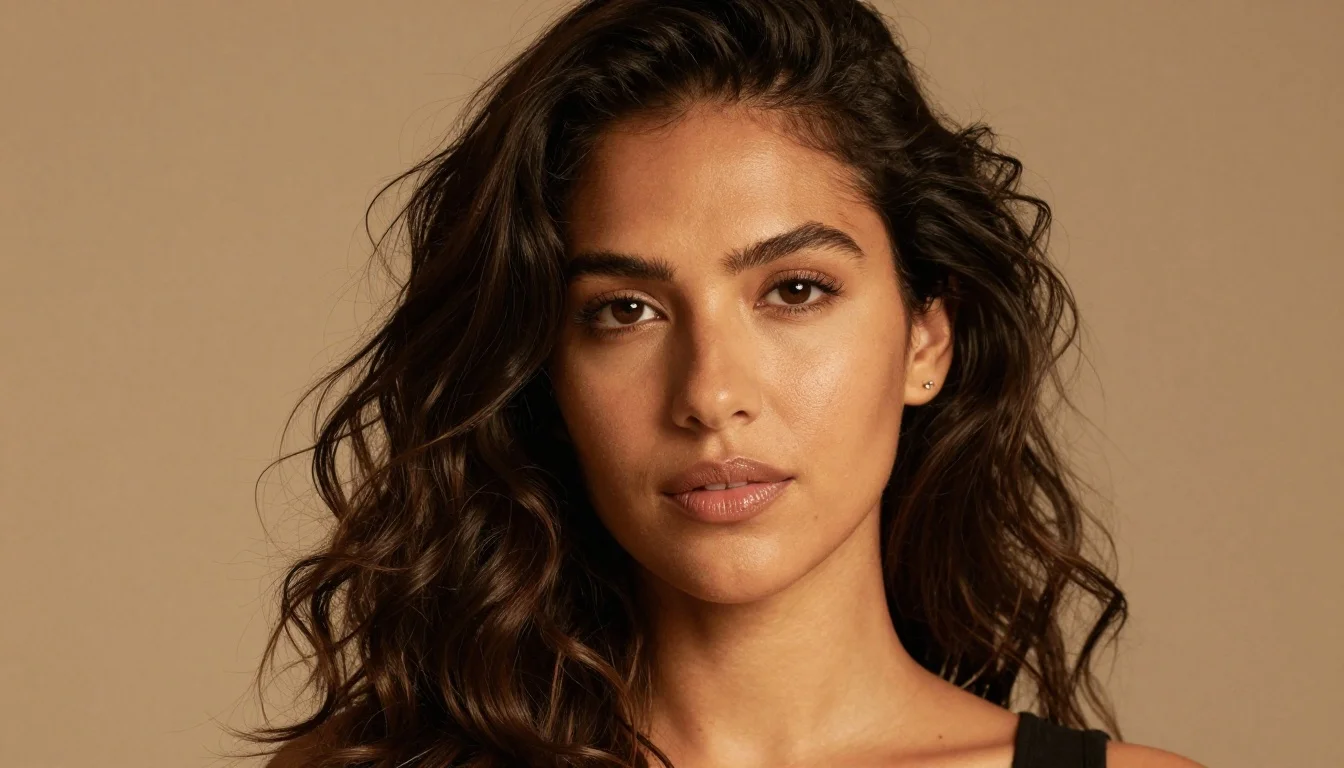
What colors look best on Hispanic skin?
For the warm-golden majority of Hispanic complexions, warm earth brights (terracotta, rust, saffron, burnt orange) and rich warm jewel tones (deep emerald, plum, warm sapphire) are broadly flattering across fair, medium, and deep skin. Vivid warm pinks, corals, and true red are especially striking on golden-medium and deep tones. Because Hispanic skin spans a huge range, depth changes the intensity you wear — but warmth, richness, and saturation beat cool, ashy, and pale at almost every point on the map.
Your Most Flattering Color Families
Warm Earth Brights (the golden-warm core)
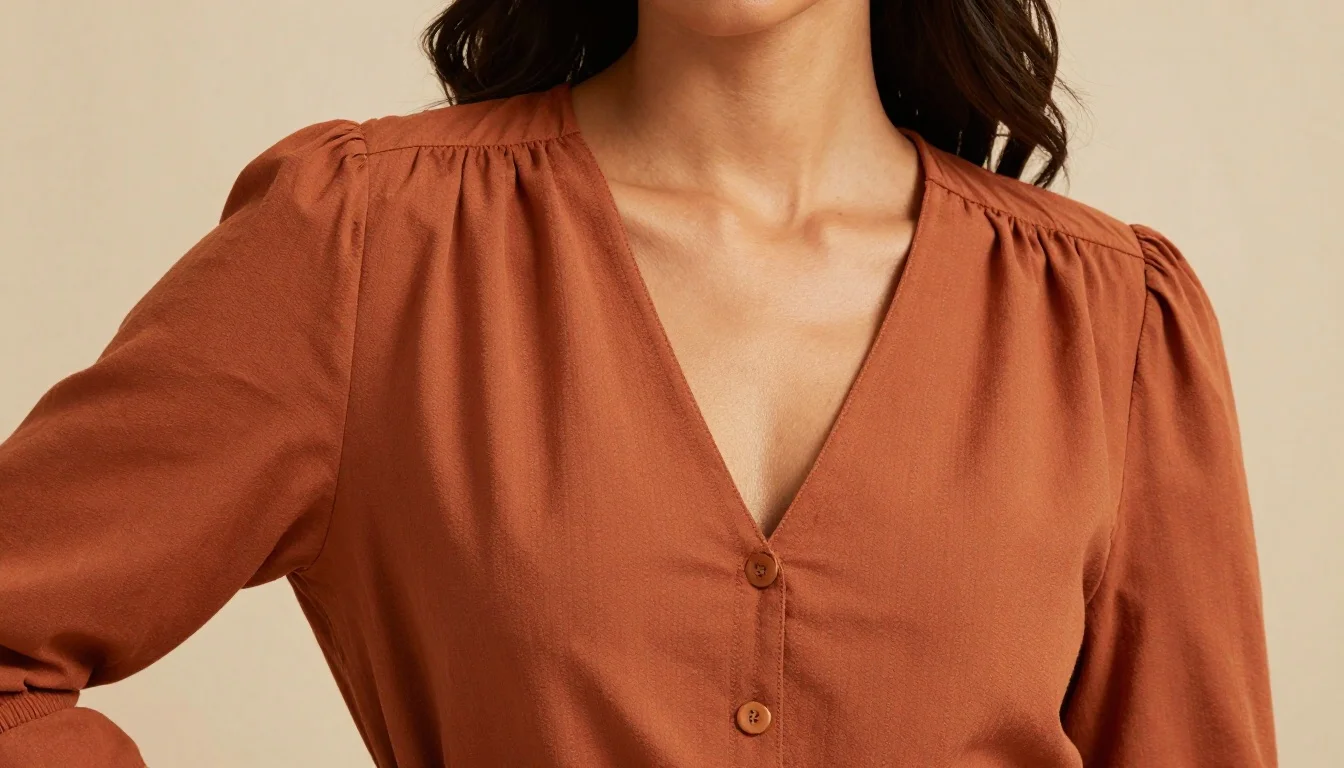
For the warm-golden majority of Hispanic complexions — and that spans fair, medium, and deep skin — warm earth brights are the most reliably flattering family of all. Terracotta is close to universal: its red-orange warmth resonates with golden undertones to create a lit-from-within glow rather than a sallow cast. On fair warm Hispanic skin, a softer apricot-terracotta works; on golden medium skin, full terracotta and saffron come alive; on deep warm skin, the richest burnt orange and brick red look spectacular. The depth shifts the intensity, but the warmth carries across the whole band.
Rich Jewel Tones
Jewel tones with warm depth flatter Hispanic skin across the entire spectrum, which is why they're the most inclusive family in this guide. Deep emerald against warm or olive skin is a standout — green meeting golden warmth creates striking, luminous contrast at every depth. Warm sapphire (indigo quality rather than icy grey) illuminates fair and medium tones. Plum and rich amethyst give depth to cooler-leaning Hispanic complexions without harshness. Even fair Spanish-heritage skin with cooler undertones can wear these — they simply lean toward the cleaner, cooler versions, while warm skin leans toward the richer, warmer ones.
Vivid Warm Pinks, Corals & Reds
Warm, saturated pinks and reds are made for Hispanic coloring, particularly golden-medium and deep skin. Hot coral against caramel skin is a luminous harmony; warm fuchsia and vivid magenta carry enough warmth to flatter olive undertones where icy pinks would clash. True clear red — neither too orange nor too blue — is broadly flattering across the whole Hispanic range, which is partly why red is so beloved in Latin fashion. Fair, cooler Hispanic complexions get the same effect from raspberry and clear cherry, while deeper skin can carry the full vivid magenta and berry.
Warm Neutrals (your foundation across every depth)
The neutrals that anchor a Hispanic wardrobe should lean warm rather than cool, and this holds whether you're fair, golden, or deep. Warm ivory beats stark white for most Hispanic skin because it shares the golden warmth instead of contrasting against it. Camel and rich chocolate build tonal harmony with warm and olive complexions where cool grey would create temperature conflict. Bronze and warm gold metallics are striking at every depth. Fair Hispanic skin uses the lighter end (ivory, soft camel); deep skin uses the richest end (chocolate, bronze) — same warm family, different intensity.

Curious where you land on the Hispanic skin-tone map?
Start my color analysisHow to Dress Hispanic Skin with Intention
Find your undertone, then your band
Because Hispanic skin covers so much ground, start by locating yourself on the map. First undertone: look at the veins on your inner wrist in natural daylight — green veins and golden quality mean warm; blue-purple veins mean cool; a mix or a yellow-green sallow cast in silver means olive or neutral. Then depth: are you fair, golden-medium, or deep? Those two coordinates tell you which version of each color family to wear — a fair-warm person wears soft apricot where a deep-warm person wears burnt orange, but both are in the same warm family.
Build warm neutrals as your everyday base
Whatever your depth, warm neutrals are your most dependable foundation: warm ivory over stark white, camel over cool grey, chocolate over charcoal. Build your basics — tees, trousers, blazers, knitwear — in these warm neutrals, then layer your color statements on top: a terracotta top, an emerald blouse, a vivid magenta scarf. This gives you a wardrobe that works with your undertone by default. A camel blazer flatters most Hispanic skin where a cool grey one quietly drains it.
Lean into Latin color confidence
Latin fashion's love of bold, saturated color combinations isn't just cultural — it's optically correct for warm and olive Hispanic skin. Coral with emerald, saffron with cobalt, terracotta with gold: these vivid pairings flatter golden undertones precisely because they bring warmth and saturation. If your skin sits in the warm-golden or deep band, you can carry intensity that washes other complexions out. Don't shrink your palette to neutrals out of caution — your skin is built to hold rich, confident color.
Match metals to your undertone
Gold is the safest, most flattering metal for the warm-golden majority of Hispanic skin because it shares and amplifies the complexion's natural warmth; yellow gold for full warmth, rose gold for warmth with a soft pink lift. If your Hispanic skin leans cool or neutral — more common in fair Spanish-heritage complexions — silver and white gold work beautifully and may even flatter you more. Deep Hispanic skin carries bold statement metals at full scale; the richness of the skin makes an excellent backdrop for large, sculptural gold or bronze pieces.
Colors That Work Against Hispanic Skin
Ashy cool greys
Ashy, cool-toned mid-greys have no warmth to meet the golden-olive quality that runs through most Hispanic complexions, so they tend to leave warm skin looking sallow, dull, or tired at any depth. The grey reads muddy against golden undertones. If you want a grey-family neutral, reach for charcoal (which has enough depth to create clean contrast) or a warm greige rather than a flat ashy mid-grey. Cooler-undertoned Hispanic complexions tolerate grey better, but even they look sharper in charcoal than in dishwater grey.
Icy cool pastels
Very pale, cool pastels — powder blue, icy lavender, chalky mint — conflict with warm and olive Hispanic undertones and wash the skin out, especially on fair-warm and golden-medium complexions. Their ashy-cool quality fights the skin's warmth and drains the face. If you love pastels, choose warm ones: peach instead of cool pink, warm mint instead of icy aqua, golden butter instead of lemon. The exception is genuinely cool-undertoned fair Hispanic skin, which can carry clean cool pastels that have real clarity.
Stark cool white
Pure blue-white creates a temperature mismatch with warm Hispanic undertones, making golden and olive skin look sallow by comparison — a common culprit behind the basic white tee that somehow looks off. Warm ivory and cream flatter most Hispanic complexions far more because they share the warmth. The big exception is depth: on very deep Hispanic skin, crisp cool white can create a bold, beautiful high-contrast effect, so the deeper your skin, the more stark white earns its place.
Muddy desaturated earth tones
Earth tones are a strength for warm Hispanic skin, but the muddy, desaturated versions — dirty khaki, dull mushroom brown, murky greyed olive — blend straight into golden and olive complexions without adding any definition or glow. The lack of saturation means the color simply disappears against the skin. Keep your earth tones clear and vivid (bright terracotta, clean rust, rich camel, true olive) and they flatter; let them go dull and muddy and they flatten.
Stop guessing — preview every shade on your face
See myself in my colorsSwaps That Let Hispanic Skin Shine
Trading colors that fight warm and olive undertones for ones that celebrate them — adjust the intensity to your depth.
Cool white clashes with warm Hispanic undertones and reads sallow on fair-to-medium skin. Warm ivory shares the golden warmth and makes the complexion glow (very deep skin can keep crisp white for contrast).
Ashy grey fights warm and olive undertones. Camel harmonizes, emerald gives rich contrast, and terracotta resonates with golden warmth — pick the depth-appropriate intensity for your skin.
Powder pink lacks the warmth and saturation olive and warm Hispanic skin needs. Coral, fuchsia, and berry carry the warmth and depth that make the complexion luminous.
Cool grey creates a sallow base against warm undertones. Warm khaki, tobacco, and clear olive align with the golden-olive quality of most Hispanic skin.
Cool pale tones wash warm complexions out under evening light. Rich jewel tones and warm gold create the luminous, striking effect — deeper skin can go to the most saturated versions.
Cool, washed denim can fight olive undertones. Deep indigo-navy and warm rust both carry enough warmth to work with rather than against Hispanic complexions at every depth.
Which Palette Might Be Yours?
Hispanic skin spans multiple seasonal palettes depending on where you sit on the map — your undertone direction, depth, and contrast level. Because warm-golden and olive undertones dominate the range, most Hispanic complexions land in the Autumn or Spring families, with the specific season set by depth and clarity.
Warm Autumn
Learn moreIf your Hispanic skin sits in the golden-medium band with clear but muted warm undertones — caramel or warm-olive, with dark hair and warm eyes — Warm Autumn often fits. Your palette is earthy and warm: terracotta, warm rust, true olive, burnt orange, deep camel. Colors that feel rooted and rich rather than icy or neon.
Deep Autumn
Learn moreIf your Hispanic skin sits in the deeper band with rich warm undertones — deep mahogany, warm brown, or deep Afro-Latino tones — with very dark hair and dark eyes, Deep Autumn often fits. Your palette holds the richest warm earths: chocolate, deep rust, warm burgundy, forest green, dark gold, and saturated jewel tones.
Warm Spring
Learn moreIf your Hispanic skin is in the fair-to-medium band with clear, bright golden warmth — a lit glow rather than muted earthiness, lighter warm hair or eyes — Warm Spring may fit. Your palette is warm and bright: coral, warm yellow, golden peach, clear orange, and warm vivid green.
Soft Autumn
Learn moreIf your Hispanic skin is medium with gentle, muted warm-neutral undertones and lower contrast — soft olive with medium brown hair and eyes that don't read sharply dark — Soft Autumn may fit. Your palette is warm but softened: dusty terracotta, sage, soft teal, muted gold, warm taupe, and gentle berry rather than vivid brights.
Find Your Exact Spot on the Map
Hispanic skin is the broadest spectrum in personal color — from fair Spanish-European to golden mestizo to deep Afro-Latino and Indigenous tones — so the colors that truly flatter you depend on your exact undertone, depth, and contrast level rather than on the label alone. The warm-golden and olive undertones that run through most of the range give you a strong starting compass, but a personalized color analysis pins down your precise season and hands you a palette built for your individual complexion instead of a one-size-fits-all guess.
Stop guessing — preview every color on you
Preview Yourself In Your Palette
Get my personalized paletteStop guessing — preview every color on you
Preview Yourself In Your Palette

Related Guides for Best Colors for Hispanic Skin
Explore more personalized color advice based on your features.
Want to see these colors on you? What Colors Look Good on Me — free to try.
Frequently Asked Questions About Best Colors for Hispanic Skin
What colors look best on Hispanic skin?
For the warm-golden majority of Hispanic complexions, warm earth brights (terracotta, rust, saffron, burnt orange) and rich warm jewel tones (deep emerald, plum, warm sapphire) are broadly flattering across fair, medium, and deep skin. Vivid warm pinks, corals, and true red are especially striking on golden-medium and deep tones. Because Hispanic skin spans a huge range, depth changes the intensity you wear — but warmth, richness, and saturation beat cool, ashy, and pale at almost every point on the map.
Do Hispanic people have warm or cool undertones?
Most Hispanic complexions lean warm-golden or olive, reflecting the heavy mix of Indigenous, African, and Mediterranean heritage across Latin America and Spain — so warm is the majority pattern and a good default starting compass. But Hispanic skin is not uniform: people with predominantly Spanish or European heritage often have cool or neutral undertones, and olive undertones (very common in the range) read neither cleanly warm nor cool. The reliable move is to check your own undertone — vein color in daylight and how your skin reacts to warm versus cool fabric — rather than assume from the label.
Why is Hispanic skin so hard to pin down for color?
Because 'Hispanic' covers the widest range of any single group in color analysis — from fair Spanish-European to golden mestizo to deep Afro-Latino and Indigenous tones — it bundles enormous variation in both depth and undertone under one word. That's why generic 'skin tone' advice fails: a fair cool-neutral complexion and a deep warm one are both Hispanic yet need nearly opposite palettes. The fix is to treat it as a map with two coordinates — your undertone (the compass) and your depth — instead of expecting one universal answer.
What colors should Hispanic people avoid?
Ashy cool greys, icy pale pastels, stark cool white, and muddy desaturated earth tones tend to work against warm and olive Hispanic complexions, which is most of the range. They either clash with golden undertones and create a sallow cast, or lack the saturation to do anything against the skin. The guiding rule is to avoid cool, ashy, and dull-muted tones near your face. Two caveats: cooler-undertoned fair Hispanics tolerate cool tones better, and very deep skin can carry stark white for striking contrast.
Is gold or silver better for Hispanic skin?
For the warm-golden and olive majority of Hispanic complexions, yellow gold is the most flattering metal because it shares and amplifies the skin's natural warmth, with rose gold a lovely warm-but-soft alternative. If your Hispanic skin leans cool or neutral — more common in fair Spanish-heritage tones — silver and white gold can flatter you just as well or better. When in doubt, gold is the safer default for most of the range, but let your undertone, not your last name, make the call.
What color season is Hispanic skin?
Hispanic skin most often lands in the Autumn or Spring families because warm-golden and olive undertones dominate the range. Golden-medium skin with muted warmth tends toward Warm Autumn or Soft Autumn; deep warm skin tends toward Deep Autumn; fair-to-medium skin with bright clear warmth tends toward Warm Spring. Cooler-leaning or very deep high-contrast Hispanic complexions can fall into Winter seasons instead. The exact season depends on your undertone direction, depth, and contrast — which a personalized color analysis pins down precisely.