Best Colors forBlack Skin
Black skin spans light to deepest with warm, cool, and neutral undertones. Find your undertone direction first — then pick colors that truly flatter.
Black skin carries saturated color more brilliantly than almost any other complexion — that part is true, and it's worth celebrating. But the colors that genuinely flatter you depend on something more specific than depth alone: your undertone direction. Black skin spans an enormous range, from lighter golden-honey to the deepest cool blue-black, and within that range your skin leans warm, cool, or neutral. That lean is what decides whether warm earth tones or cool jewel tones make you glow. This guide's real job is helping you find YOUR undertone — so you stop guessing and start choosing colors that were built for your exact complexion.


3,000+
happy clients
Why Undertone — Not Just Depth — Decides Your Best Colors
Black skin carries saturated color more brilliantly than almost any other complexion — that part is true, and it's worth celebrating. But the colors that genuinely flatter you depend on something more specific than depth alone: your undertone direction. Black skin spans an enormous range, from lighter golden-honey to the deepest cool blue-black, and within that range your skin leans warm, cool, or neutral. That lean is what decides whether warm earth tones or cool jewel tones make you glow. This guide's real job is helping you find YOUR undertone — so you stop guessing and start choosing colors that were built for your exact complexion.
There's a common shortcut that treats all Black skin as a single category: deep, melanin-rich, and able to wear anything. The first half is empowering and accurate — rich depth genuinely does carry saturated color with a brilliance lighter complexions can't match. But 'wears anything' quietly erases the most useful distinction of all. Black skin ranges from light golden-brown and warm honey-caramel through rich mahogany and chestnut to the deepest espresso and cool blue-black. Across that spectrum, two people at the very same depth can have completely opposite undertone directions — and therefore completely different best colors.
Undertone is the temperature beneath the surface of your skin. Warm Black skin has a golden, amber, reddish, or caramel quality — sunlight seems to live just under the surface. Cool Black skin has a blue, rosy, or true espresso-black quality, sometimes with an almost violet depth. Neutral Black skin sits in between, with neither warmth nor coolness dominating. This direction is independent of how light or deep your skin is: there are warm light-honey complexions and warm deep-mahogany ones, cool medium-brown complexions and cool blue-black ones. Depth tells you how much saturation you can carry; undertone tells you which family of colors to reach for.
Get the undertone right and the difference is dramatic. Warm undertones light up in earthy, golden colors — terracotta, saffron, warm bronze — and can look slightly sallow in icy cool shades. Cool undertones come alive in clean, frosty jewel tones — sapphire, true emerald, fuchsia, crisp white — and can look muddied by orange-heavy warms. Neutral complexions enjoy the widest range but still have a gentle lean worth honoring. So before any color list, the most valuable thing you can do is determine which direction your skin leans. That's exactly what the rest of this guide is built to help you do.
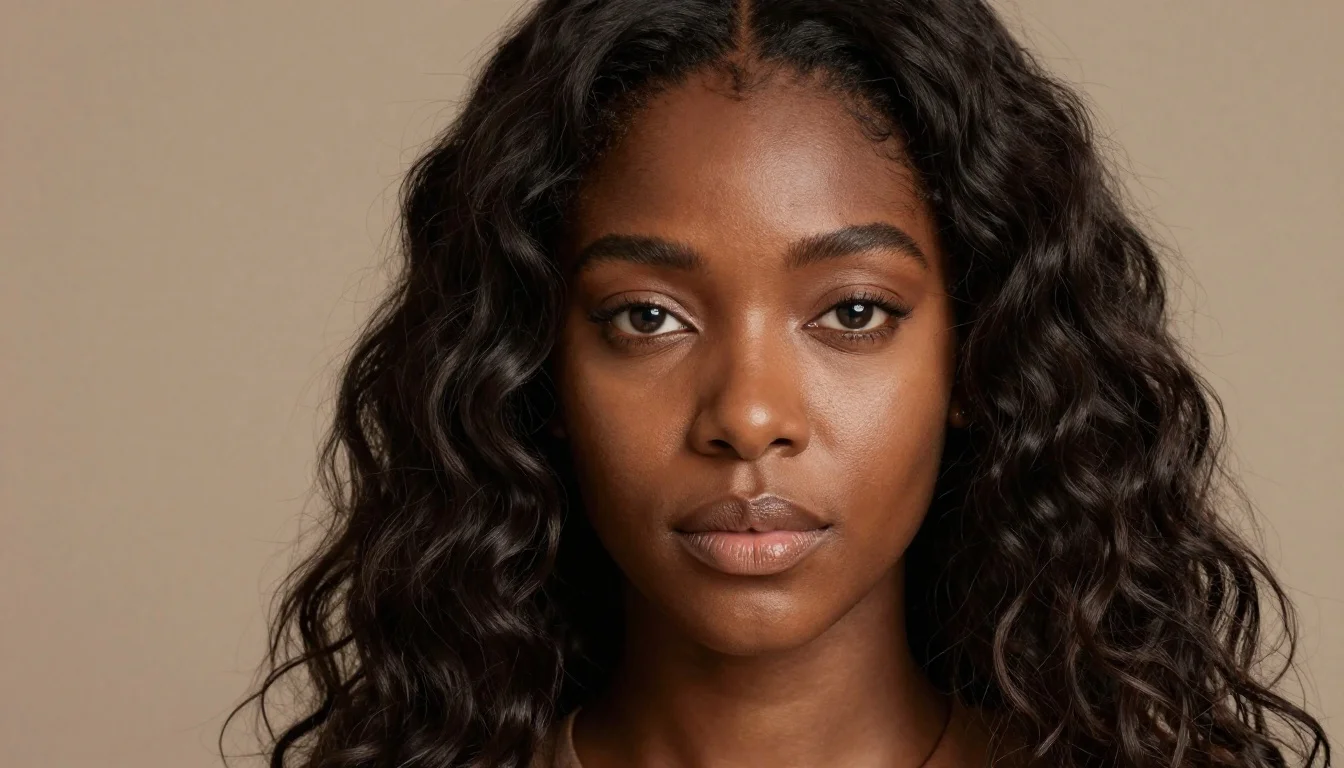
What colors look best on black skin?
It depends on your undertone, not just your depth. Warm-undertoned black skin glows in earthy golden tones — terracotta, saffron, warm bronze, cognac. Cool-undertoned black skin comes alive in frosty jewel tones — sapphire, true emerald, fuchsia, royal purple, and icy white. Universal brights like true red, royal blue, and vivid coral flatter almost every black complexion, and deep neutrals like chocolate, burgundy, and eggplant work for everyone.
Your Most Flattering Color Families
Warm Earth & Golden Tones (for warm undertones)
If your Black skin leans warm — golden, amber, or caramel — earthy golden tones are where you look most luminous. Terracotta and burnt sienna echo the reddish warmth beneath warm complexions, creating a cohesive, sun-drenched harmony. Saffron yellow, which overwhelms many lighter complexions, radiates against warm brown skin. Bronze and cognac pick up your natural glow and amplify it. A warm cognac leather jacket or a saffron knit reads as intentional and rich on warm-undertoned Black skin rather than loud.
Cool Jewel Tones (for cool undertones)
If your Black skin leans cool — blue-black, espresso, or rosy — clean, frosty jewel tones are your power family. Sapphire and true emerald (the blue-green kind, not the warm yellow-green) sit in stunning harmony against cool deep skin, a pairing photographers have chased for decades. Fuchsia and royal purple bring vivid, frosty energy without warmth getting in the way. Icy white creates one of the most striking contrasts in fashion against cool blue-black skin. A sapphire blouse or a fuchsia dress looks editorial and alive on cool-undertoned complexions.
Universal Brights (for any undertone)
Some saturated colors flatter Black skin across the warm-cool divide because they're balanced enough to suit a wide range of undertones. True red — neither too orange nor too blue — looks powerful on almost every Black complexion. Royal blue and deep teal straddle the temperature line and carry beautifully against depth. Vivid coral brings warmth and joy without tipping fully into earth tones. If you're still working out your undertone, these are the safest brights to reach for first — they rarely miss.
Rich Deep Neutrals (for everyone)
Deep, saturated neutrals create tonal richness against Black skin rather than the flatness that pale neutrals cause. Chocolate brown builds a seamless, sophisticated monochrome. Deep burgundy has enough red warmth to flatter warm skin while staying rich enough for cool skin. Eggplant — a purple-brown — adds quiet depth, and charcoal reads far more elegantly than washed-out grey. These are your dependable foundations; layer your undertone-specific brights on top of them.

Not sure if you're warm or cool? Find out in minutes
Analyze my undertoneHow to Find Your Undertone and Dress For It
The vein and jewelry self-test
Start with the two quickest checks. In natural daylight, look at the veins on the inside of your wrist: a blue or violet cast suggests cool undertones, a greenish cast suggests warm, and a hard-to-read mix suggests neutral. Then compare gold versus silver jewelry against your skin — if gold makes you glow and silver looks flat, you're likely warm; if silver looks crisp and gold looks brassy, you're likely cool; if both look good, you're neutral. On deep skin these tests can be subtle, so do them in real daylight near a window, not under warm indoor bulbs.
The white t-shirt test
Fabric near your face is the most honest test of all. Hold a stark blue-white t-shirt under your chin, then a warm golden ivory one. Warm undertones look fresher and more even against the golden ivory and slightly sallow against the stark white; cool undertones look crisp and luminous against the blue-white and a touch dull against the golden ivory. Whichever shirt makes your skin look clearer and your eyes brighter is pointing you toward your undertone direction. Repeat it with a saffron scarf versus a sapphire one to confirm.
Dressing warm undertones
Once you've confirmed a warm lean, build your wardrobe around golden and earthy color. Lead with terracotta, saffron, warm bronze, cognac, and deep forest, and choose golden ivory or warm chocolate as your everyday neutrals instead of stark white or cool grey. Yellow gold and bronze jewelry will amplify your glow. Save your most saturated warm pieces — a burnt-orange coat, a saffron dress — for the moments you want maximum impact, because warm Black skin carries them effortlessly.
Dressing cool undertones
If you've confirmed a cool lean, frosty and clean is your direction. Lead with sapphire, true emerald, fuchsia, royal purple, and crisp icy white, and let cool charcoal, true black, and deep plum be your neutrals. Silver and white-gold jewelry will read sharper than yellow gold. Cool blue-black skin in particular handles the highest-contrast looks in fashion — icy white against deep skin, jewel tones at full saturation — so lean into that clarity rather than softening it with muted shades.

Colors That Work Against Black Skin
Muddy, greyed-out mid-tones
Desaturated, murky shades — greige, dusty mauve, muted khaki, putty — lack the color energy to interact with deep complexions and tend to make Black skin read ashy rather than luminous. The problem isn't the hue, it's the lack of saturation: there's nothing for your rich depth to play against. If you love muted tones, choose deeper, richer versions — warm taupe over beige, dusty olive over khaki — so there's still pigment doing the work.
Skin-match beige nudes
Pale 'nude' beige marketed as universally neutral closely echoes no real Black complexion and offers no contrast, so it disappears and makes an outfit look unfinished. True nudes for Black skin lean caramel, warm brown, mahogany, or golden honey — actual extensions of your tone. Reaching for a department-store 'nude' that's really a fair-skin beige is one of the most common mismatches, and it flattens even the deepest, most beautiful complexions.
Icy cool shades on warm undertones
If your Black skin leans warm, very cool, frosty colors — icy pastel blue, cold lavender, stark blue-white — can create a temperature clash that dulls your natural golden glow. The coolness fights your warmth and can leave the skin looking slightly grey or sallow. Warm complexions are better served by warm versions: golden ivory instead of stark white, peach instead of cool pink, warm teal instead of icy blue.
Orange-heavy warms on cool undertones
If your Black skin leans cool, strongly orange or rust-heavy warms can muddy your clean, frosty quality and conflict with the blue depth of your undertone. The orange warmth tugs against your coolness and can make the complexion look less crisp. Cool-undertoned Black skin is better off with the frosty side of the spectrum — true red over orange-red, berry over rust, sapphire over warm bronze.
See your exact palette on your own face
See myself in my colorsSwaps That Honor Your Undertone
Trade colors that flatten Black skin for ones matched to your warm or cool direction.
Beige disappears against Black skin. Golden ivory flatters warm undertones; crisp white creates striking contrast for cool undertones.
Pale grey sits flatly against deep skin. Cognac echoes warm undertones; sapphire gives cool undertones rich, clean contrast.
Muted mauve has no energy to play against your depth. Terracotta glows on warm skin; fuchsia electrifies cool skin.
Pale cool pink muddies warm undertones. Saffron radiates on warm skin; royal purple brings frosty richness to cool skin.
Pale champagne washes out next to deep skin. Warm gold echoes warm depth; icy white delivers cool skin's most dramatic contrast.
Camel is safe but flat. Burnt orange amplifies warm undertones; deep teal makes a vivid statement on cool undertones.
Which Seasonal Palette Fits Your Undertone?
Once you know your undertone direction, the seasonal system narrows your colors even further. Black skin spans several deep palettes — your undertone and contrast level decide which one is yours.
Deep Winter
Learn moreIf your Black skin leans cool or neutral-cool — blue-black, espresso, or cool brown — Deep Winter is the most common fit. You carry icy contrast and frosty jewel tones with ease. True black, sapphire, crisp white, fuchsia, and deep plum are your power colors, worn at full saturation.
Deep Autumn
Learn moreIf your Black skin leans warm — golden-brown, mahogany, or chocolate with reddish depth — Deep Autumn often fits. You look most alive in warm, deep, saturated tones: burnt sienna, cognac, deep forest green, warm burgundy, and dark gold all feel natural and luminous on you.
Warm Autumn
Learn moreIf your Black skin is medium-to-deep with strong golden or amber warmth and a softer, less icy contrast, Warm Autumn may be yours. You suit earthy color with a sun-drenched quality — terracotta, warm olive, saffron, and cognac feel like a second skin rather than a statement.
Find Your Exact Undertone
Black skin is one of the most powerful canvases for color in the entire spectrum — but its real secret is undertone, not just depth. The self-tests here point you in the right direction, yet your exact lean, contrast level, and depth deserve a precise read. A personalized color analysis pinpoints whether you're warm, cool, or neutral and maps the specific shades built for your individual complexion, so you can dress with total confidence instead of guesswork.
Stop guessing — preview every color on you
Preview Yourself In Your Palette
Get my personalized paletteStop guessing — preview every color on you
Preview Yourself In Your Palette

Related Guides for Best Colors for Black Skin
Explore more personalized color advice based on your features.
Want to see these colors on you? What Colors Look Good on Me — free to try.
Frequently Asked Questions About Best Colors for Black Skin
What colors look best on black skin?
It depends on your undertone, not just your depth. Warm-undertoned black skin glows in earthy golden tones — terracotta, saffron, warm bronze, cognac. Cool-undertoned black skin comes alive in frosty jewel tones — sapphire, true emerald, fuchsia, royal purple, and icy white. Universal brights like true red, royal blue, and vivid coral flatter almost every black complexion, and deep neutrals like chocolate, burgundy, and eggplant work for everyone.
How do I find my undertone on black skin?
Use three quick tests in natural daylight. Check your wrist veins — blue/violet suggests cool, green suggests warm, a mix suggests neutral. Compare gold versus silver jewelry — gold flatters warm, silver flatters cool, both flatter neutral. Then hold a stark blue-white shirt and a golden-ivory shirt under your chin and see which makes your skin look clearer. On deep black skin these signs are subtle, so do them near a window rather than under warm indoor light.
Does black skin look better in warm or cool colors?
Neither is universally better — it comes down to your undertone direction. Black skin with golden, amber, or reddish-caramel warmth looks best in warm colors like terracotta, saffron, and bronze. Black skin with a blue-black, espresso, or rosy quality looks most striking in cool colors like sapphire, emerald, fuchsia, and icy white. Neutral black skin can move comfortably between both, with a gentle lean worth honoring.
What colors should people with black skin avoid?
Muddy, greyed-out mid-tones like greige, putty, and dusty mauve tend to make black skin look ashy because they lack saturation. Skin-match beige nudes disappear and look unfinished. Beyond that, the answer is undertone-specific: warm complexions should be cautious with icy, frosty cool shades, while cool complexions should go easy on orange-heavy warms. These are tendencies, not strict rules.
Can black skin wear bright and bold colors?
Yes — often better than any other complexion. The melanin richness in black skin provides a vibrant base that makes saturated, bold colors look intentional and striking rather than overwhelming. The key is matching the brightness to your undertone: vivid coral and saffron for warm skin, fuchsia and sapphire for cool skin, and balanced brights like true red and royal blue for everyone.