Hair finish
Bright silver
- Best clothing colors
- Cobalt, violet, cool red, emerald
- Best neutrals
- Navy, charcoal, crisp white
- Use carefully
- Mustard and yellow beige
Choose clothing colors for silver, white, or salt-and-pepper hair without losing your skin undertone and natural contrast.
The best clothing colors for gray hair depend on your skin undertone and on whether your hair reads silver, white, warm grey, or salt-and-pepper. Clear color and deliberate contrast usually work better than beige camouflage. Start with the hair finish below, then adjust the palette for the warmth or coolness in your skin.


3,000+
happy clients
Cobalt, teal, berry red, plum, navy, crisp white, and charcoal are reliable clothing colors for gray hair because they create clean contrast. Silver-white hair often suits clear cool shades; warm grey hair can carry cranberry, petrol blue, and richer neutrals; salt-and-pepper hair handles graphic navy, white, red, and deep green. Your skin undertone still decides the exact temperature.
The best clothing colors for gray hair depend on your skin undertone and on whether your hair reads silver, white, warm grey, or salt-and-pepper. Clear color and deliberate contrast usually work better than beige camouflage. Start with the hair finish below, then adjust the palette for the warmth or coolness in your skin.
When hair transitions to grey, it loses warm pigment. This shifts the overall warmth of your coloring — colors that looked natural against warm brunette or auburn hair may now fight a cooler, more neutral backdrop. At the same time, grey hair creates a light, reflective quality near your face that amplifies nearby colors more than dark hair does. A vivid cobalt blouse worn against dark hair looks bold; worn against grey hair, it looks like a fashion decision.
Not all grey is the same. Cool grey has blue or violet undertones — it reads as silver and looks best with cool or clear colors. Warm grey has yellow or golden undertones — it looks more like faded brown and needs the warmth strategies that work for warm undertones generally. Salt-and-pepper (mixed grey and natural color) creates natural high contrast that changes the dynamic again: the contrast in your hair means the clothes don't need to work as hard to create it.
One specific issue many grey-haired people notice: grey can look yellowish, especially in artificial light. The fix is simple color theory — violet and lavender tones neutralize yellow. This is why purple shampoo works on silver hair, and it's why wearing lavender or violet near grey hair makes it look crisper and more genuinely silver. This toning effect through clothing is underused and immediately effective.
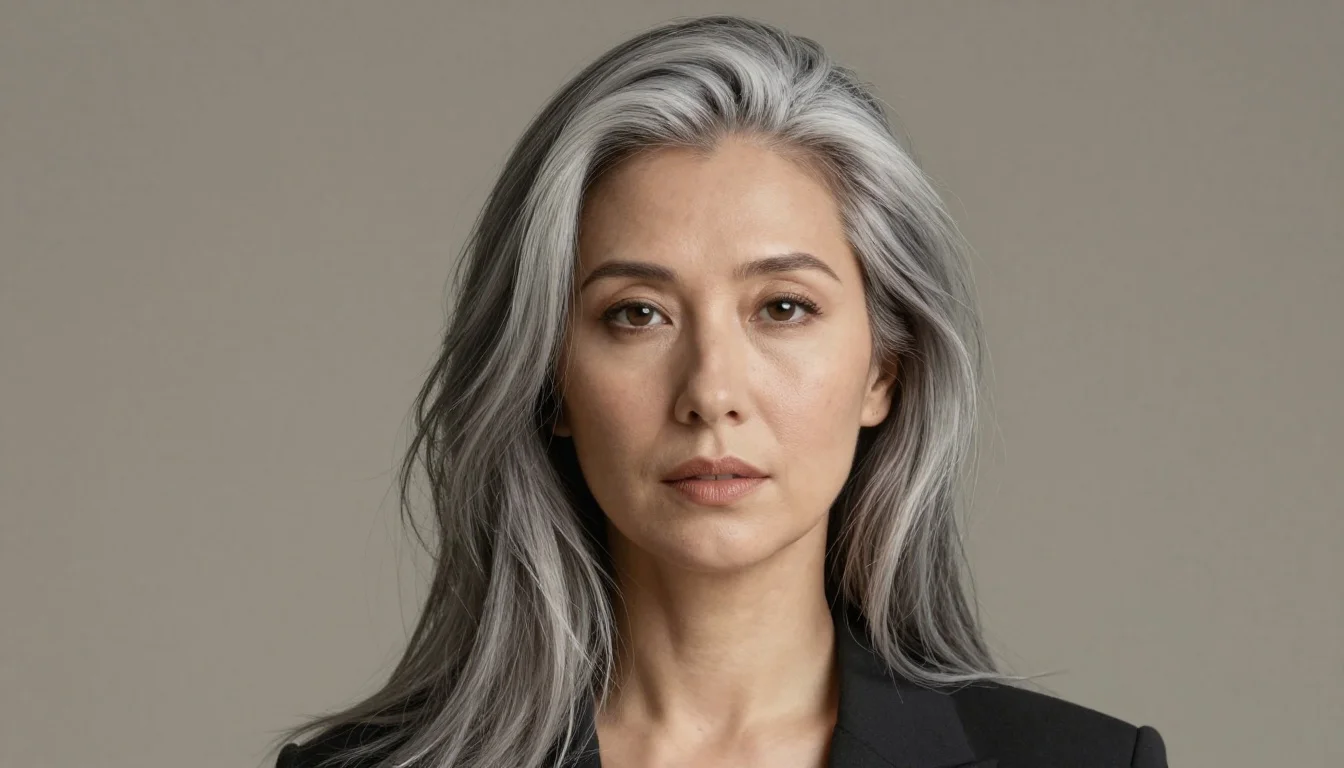
Rich, vivid reds create the most striking warmth contrast against grey hair's neutral-cool quality. Cherry red near grey hair looks intentional and modern — it's one of the few warm-vivid colors that makes grey hair appear more silver rather than more yellow. Cranberry and deep raspberry sit in the warm-red register with enough depth to avoid clashing; they create richness and warmth without competing with the cool quality of grey hair. This is the warm color family that flatters grey hair most reliably.
Violet and lavender have a toning effect on grey hair: the purple wavelengths neutralize any yellow in grey tones, making the hair look crisper, brighter, and more deliberately silver. This is the same reason violet-based toning shampoos work — the color cancels yellow. A soft violet blouse or lavender knit near grey hair makes the hair look cleaner and more luminous. Beyond toning, lavender-purple creates a beautiful cool-warm bridge for grey hair's neutral quality.
Deep, cool colors create maximum contrast against the light, reflective quality of grey hair and make it look intentionally silver rather than faded. Midnight navy is the classic: it has the cool depth that resonates with grey hair's temperature while providing crisp visual contrast. Deep teal and forest green work through a similar mechanism — the depth makes grey hair look luminous by contrast. These are your power neutrals for any occasion.
Grey hair functions as the perfect third element in high-contrast graphic dressing. A crisp white blouse against grey hair looks clean and modern — it amplifies the hair's light quality by providing a bright, clear backdrop. Black creates maximum contrast that makes grey hair look vividly silver against a dark field. The combination of black, white, and grey hair creates a graphic, editorial quality that makes the whole look feel deliberate and polished. This contrast-first approach is one of grey hair's greatest style advantages.
Use your current hair—not the color it used to be—as the frame, then keep your skin undertone in charge of the final choice.
Hair finish
Hair finish
Hair finish
Hair finish
| Hair finish | Best clothing colors | Best neutrals | Use carefully |
|---|---|---|---|
| Bright silver | Cobalt, violet, cool red, emerald | Navy, charcoal, crisp white | Mustard and yellow beige |
| Soft white | Periwinkle, berry, teal, soft plum | Pewter, soft navy, winter white | Very pale chalky pastels |
| Warm grey | Cranberry, petrol blue, forest, aubergine | Cocoa, warm navy, cream | Icy blue-grey near the face |
| Salt-and-pepper | True red, sapphire, deep green, magenta | Black, white, ink navy | Low-contrast muddy taupe |
If a favorite color now feels flat, keep it below the waist or add a scarf, collar, or jacket in a stronger face-framing shade.

Grey hair is a sophisticated neutral — it gives vivid colors more room to breathe and more intentionality than dark hair does. A cherry red coat worn against grey hair looks like a fashion moment. The same coat on brunette hair looks less deliberate. Use this to your advantage: vivid cobalt, rich cranberry, deep forest green all look more refined and intentional against grey than against pigmented hair. This is the grey-hair paradox: the more vivid the color, the more flattering and modern the combination.
Violet tones neutralize yellow in grey hair — it's the same principle as violet-toning shampoo, applied through your clothing. A soft violet blouse or lavender cashmere near your face makes grey hair look cleaner, brighter, and more distinctly silver. This works particularly well under warm artificial lighting (office lights, restaurant lighting) where grey hair can look yellowed. Keep at least one great violet or lavender piece specifically for enclosed settings where artificial light is involved.
If your hair is salt-and-pepper rather than fully grey, you have natural high contrast already built into your look. Your clothes don't need to do the heavy lifting on contrast — you can afford to explore richer, more complex palettes rather than relying purely on dark-vs-light. Deep warm tones (cognac, warm wine, rust) work particularly well for salt-and-pepper coloring because the remaining warm pigment in your hair harmonizes with them. This is a different strategy than fully grey hair.
The instinct to soften, neutralize, or match near grey hair is the wrong instinct. Grey hair looks its best with contrast: a midnight navy turtleneck, a vivid teal blouse, a cherry red structured blazer. Even when dressing casually — a simple crisp white tee under a black jacket against grey hair looks intentionally cool. Any time you reach for a neutral near grey hair, ask whether it has enough depth or contrast to make the hair look silver. Warm beige and dusty mid-tones almost never do.
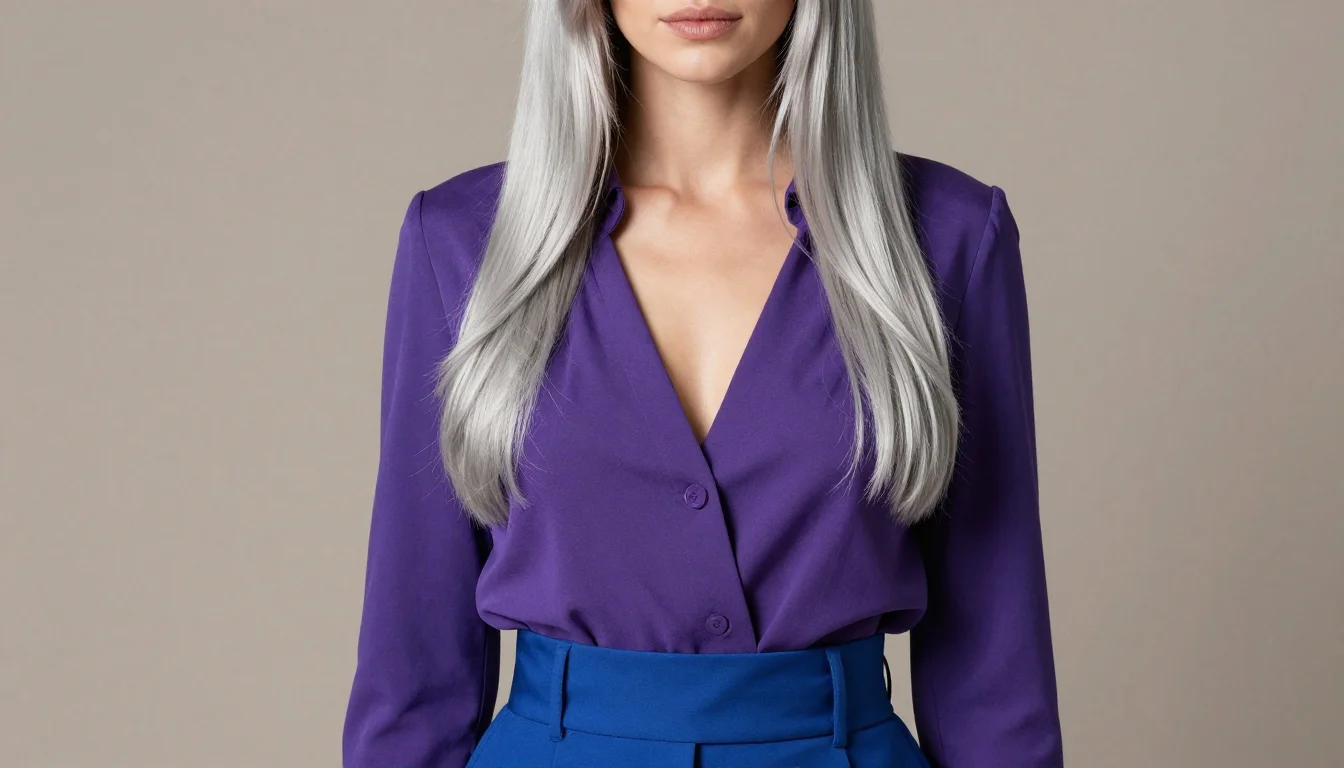
Hair color changes your contrast even when your skin undertone stays the same. Use the free color analysis quiz to identify the seasonal direction that fits your current coloring.
Warm beige and sandy tones sit in a yellow-warm register that fights grey hair's cool-neutral quality without creating useful contrast. They also can make pale or cool skin look sallow. Most importantly, they create a non-contrast effect near grey hair — the hair and fabric both exist at a similar low-saturation level, and neither feature looks intentional. Grey hair needs depth or saturation near the face. Beige provides neither.
Very chalky, desaturated pastels — dusty peach, faded pink, pale sage without depth — sit in the same low-saturation register as grey hair without providing contrast or complementary energy. They're not as warm as beige, but they have the same flattening effect. Pastels can work for grey hair, but they need a slight grey-cool depth or clarity to them. Chalky versions that look like they've faded in the wash drain grey hair's remaining luminosity.
Warm yellow-green and olive tones can make grey hair look greenish or yellowed by reflected color. Grey hair is highly reflective — nearby yellow-green tones can cast a warm, unflattering hue onto the hair itself. Cool forest green (which has enough depth to avoid this) is fine; olive and yellow-sage near the face are problematic for grey hair specifically.
Vivid orange and warm coral create a jarring temperature fight with grey hair's cool quality. Unlike cherry red (which works because of its depth and richness), bright orange sits in the most conflicting register: warm, vivid, and yellow-adjacent. Against the cool neutrality of grey hair, orange looks garish and makes the hair appear greyish and flat by contrast. If you love warm saturation, cherry red and rich cranberry create the warmth with enough depth to be interesting rather than clashing.
Replacing the colors that flatten grey hair with ones that make it look intentionally silver.
Warm beige fights grey hair's cool quality without contrast. Crisp white amplifies grey hair's silver quality; navy provides depth that makes grey look intentional.
Dusty olive's yellow-green quality can make grey hair look greenish. Navy creates cool contrast; cherry red creates vivid warm contrast that makes grey hair look strikingly silver.
Chalky pink lacks the depth or complementary energy to work with grey hair. Violet tones grey hair to look crisper; cobalt creates the cool depth that makes grey hair luminous.
Sandy tan creates an undifferentiated, faded look with grey hair. Forest green creates deep cool contrast; cherry red creates vivid warm contrast — both make grey hair look deliberate.
Champagne blends into grey hair. Plum and teal have the depth and cool-complementary quality that make grey hair look dramatically silver in evening lighting.
Warm yellow gold can fight cool grey hair. White gold and silver echo the metallic quality; amethyst jewelry near the face creates the toning effect that makes grey hair look crisper.
Grey hair shifts most people toward the cool seasonal palettes regardless of their original season. Your current coloring always takes priority — skin undertone and eye color determine which cool palette fits best.
If your grey hair has a medium silver quality, your skin has rosy or cool undertones, and your eyes are soft (blue-grey, soft green, or hazel), Cool Summer likely describes your current coloring. Your palette is cool and medium-depth: dusty rose with richness, cool sage, muted teal, soft plum. Everything has a cool, sophisticated quality without the high contrast of Winter types.
If your grey hair is bright and vivid rather than soft, your skin has distinctly cool or pale quality, and you have high overall contrast — vivid eyes against fair skin — Cool Winter may fit. Your palette is cool and clear: icy whites, vivid jewel tones, sapphire, emerald, and sharp darks. You can handle the most saturated cool colors of any type.
If your grey hair has a softer, warmer quality rather than a bright silver, your skin has a neutral or slightly warm-cool quality, and your overall look is gentle rather than high-contrast, Soft Summer may fit. Your palette is cool and muted: dusty rose, soft muted teal, powder blue with depth, gentle lavender, and cool taupe with richness. Everything has a cool softness.
Grey hair is one of the most versatile features in personal coloring — but the exact palette depends on whether your grey runs cool or warm, whether you're fully grey or salt-and-pepper, and what your skin tone and eye color add to the contrast picture. A personalized color analysis maps your precise current seasonal type and identifies the exact shades that make your specific grey hair look its most striking.
Preview Yourself In Your Palette
Get my personalized palettePreview Yourself In Your Palette

Explore more personalized color advice based on your features.
Want to see these colors on you? Virtual Hair Color Try-On — free to try.
Vivid cherry red and cranberry, deep cool jewel tones (cobalt, teal, deep violet), crisp white, midnight navy, and soft lavender are all highly flattering for grey hair. Cherry and vivid reds create warm contrast that makes grey hair look intentionally silver. Cobalt and navy create cool depth. Lavender tones grey hair to look crisper and more distinctly silver. The guiding principle: depth and saturation over flat neutrals.
Vivid, saturated colors make grey hair look most modern and intentional — cherry red, cobalt, deep teal, and vivid violet all create the contrast that makes grey hair look chosen rather than simply aged. Crisp white near grey hair is another effective choice. The colors that make grey hair look flat and dated are warm beige, dusty mid-tones, and chalky pastels — these sit in the same low-saturation register as grey without providing useful contrast.
Both can work, but they work differently. Cool colors (navy, cobalt, teal, violet) harmonize with grey hair's neutral-cool quality and create a sophisticated, polished look. Warm colors with depth and richness (cherry red, cranberry, deep burgundy) create a vivid warm-cool contrast that also looks striking. Avoid flat warm neutrals (beige, tan, warm mustard) that fight grey hair without interesting contrast. Think cool-primary with warm-vivid accents.
Yes — purple and violet tones have a specific effect on grey hair: they neutralize any yellow in the hair and make it look crisper, brighter, and more genuinely silver. This is the same science behind violet-toning shampoos. A soft lavender blouse or violet knit worn near grey hair creates a toning effect through reflected color. Beyond that, purple creates cool-complementary contrast that makes grey hair look vivid. It's one of the most versatile choices for grey hair.
Yes — vivid red is one of the most flattering colors for grey hair. Cherry red, cranberry, and deep rose-red create striking warmth against grey's neutral-cool quality and make the hair look more vividly silver by contrast. The key is choosing reds with richness and depth (cherry, cranberry) rather than warm-orange versions (coral, tomato red). These deeper reds have the warmth to create contrast without the orange clash that fights cool grey.
Warm beige, sandy tan, and flat warm neutrals fight grey hair's cool quality without complementary contrast. Dusty, chalky mid-tone pastels sit in the same low-saturation register as grey without providing depth or life. Olive and yellow-green can make grey hair look greenish by reflected color. Bright warm orange creates a jarring temperature clash. The pattern is consistent: avoid colors that are warm without depth, or flat without contrast.