What Skin ToneSuits Burgundy?
Burgundy is a cool-deep red-purple built for depth and cool richness. Find the burgundy that flatters your coloring — and skip the shades that overwhelm soft, very light-warm skin.
Burgundy sits at the intersection of deep red and cool purple — rich, saturated, and unmistakably cool. It flatters skin tones with enough depth and contrast to hold that intensity: deep complexions, cool undertones, and rich natural coloring look vivid and polished in burgundy. Very light, warm-soft types often find standard burgundy overwhelming — the color reads heavier than the face can balance without looking aged or sallow. Once you match burgundy's cool depth to your skin's depth and temperature, it becomes one of the most sophisticated wardrobe anchors you can own.


3,000+
happy clients
Why Burgundy Works for Some Skin Tones — Not All
Burgundy sits at the intersection of deep red and cool purple — rich, saturated, and unmistakably cool. It flatters skin tones with enough depth and contrast to hold that intensity: deep complexions, cool undertones, and rich natural coloring look vivid and polished in burgundy. Very light, warm-soft types often find standard burgundy overwhelming — the color reads heavier than the face can balance without looking aged or sallow. Once you match burgundy's cool depth to your skin's depth and temperature, it becomes one of the most sophisticated wardrobe anchors you can own.
Burgundy is fundamentally a cool-deep color. Its blue-purple base distinguishes it from warm brick red or orange-leaning oxblood. That cool base harmonizes with cool undertones — pink, blue, or neutral-cool skin — and creates striking contrast on deep pigmentation. When a cool burgundy sits next to cool or deep-cool skin, the face looks clear, the lips look defined, and the color reads intentional rather than harsh. When the same burgundy meets very warm, very light, or soft-muted coloring, the cool depth can dominate the face and pull warmth out of the skin, creating a slightly tired or gray cast.
Depth is non-negotiable with burgundy. True burgundy carries enough saturation and darkness to register as a statement near the face. Medium and deep skin tones — especially those with rich, even pigmentation — absorb that depth and turn it into elegance. Fair skin can wear burgundy only when undertone and contrast support it: cool fair skin with visible contrast (dark hair, defined features) often looks striking in clear burgundy or wine. Soft, light-warm skin with low contrast usually needs a lighter, warmer alternative (soft berry, warm plum) rather than full-strength burgundy.
Rich coloring — whether that means deep skin, high contrast between hair and skin, or vivid cool features — is burgundy's natural partner. Burgundy amplifies richness; it does not create it from neutral or muted coloring. Soft Summer and very light Warm Spring types frequently report that burgundy 'ages' them because the color's weight exceeds their natural softness. Deep Winter, Deep Autumn with cool lean, and Cool Winter types, by contrast, often name burgundy among their most flattering neutrals. Understanding whether your coloring is deep, cool, and rich enough for burgundy saves years of trial and error with lipsticks, knits, and evening wear.
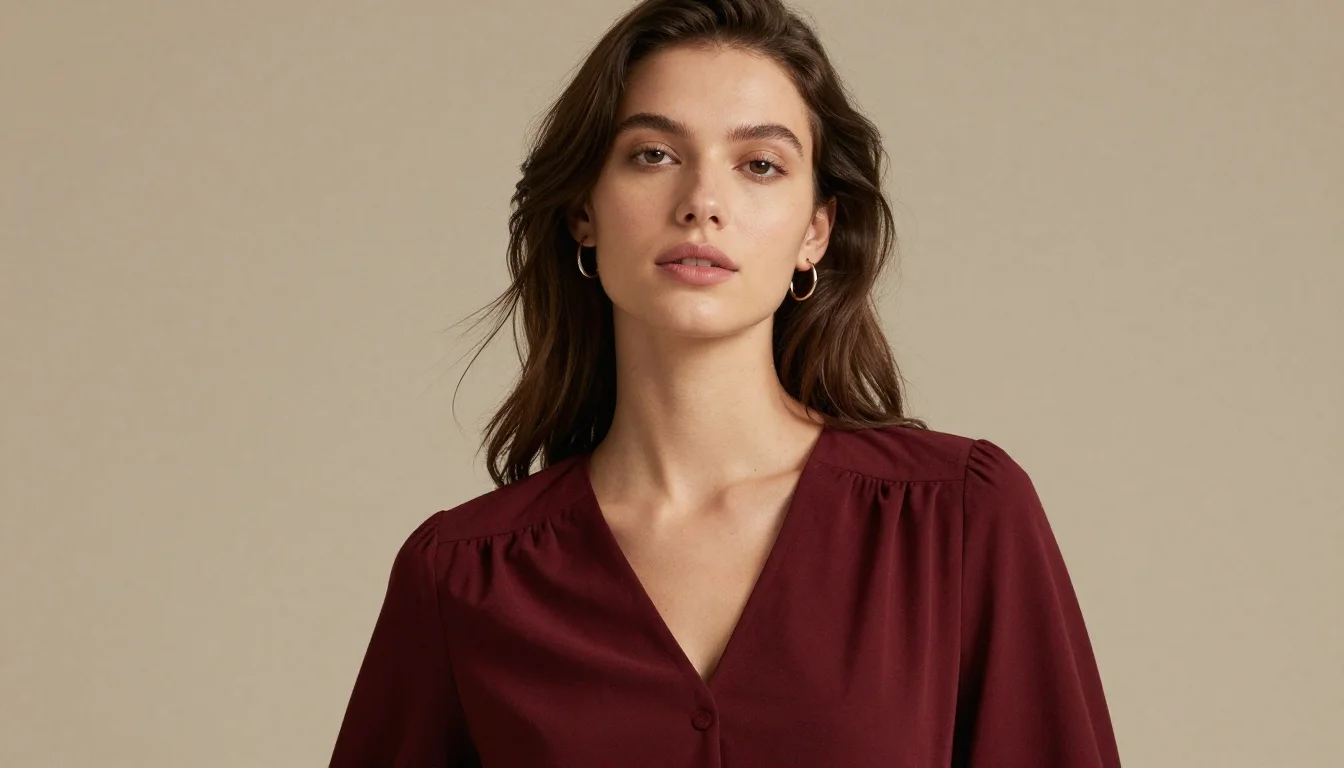
What skin tone suits burgundy?
Burgundy best suits deep and cool skin tones with rich or high-contrast coloring: cool-deep, neutral-deep, cool medium, and high-contrast fair-cool types. It is a cool-deep red-purple that needs enough depth and contrast to balance its weight. Very light, warm-soft skin often finds true burgundy overwhelming and does better with soft berry or warm plum. Undertone matters: cool undertones wear clear burgundy; warm-deep types often need warm burgundy or garnet.
The Right Burgundy for Each Skin Tone
Deep & Cool Skin: True Burgundy & Wine
Deep skin with cool or neutral-cool undertones is burgundy's ideal canvas. True burgundy and cool wine have the saturation to hold against deep pigmentation without disappearing, while the cool base echoes undertones in the skin. Deep aubergine-red pushes slightly into purple for maximum drama on Deep Winter coloring. Cool oxblood-purple offers a slightly softer entry point while staying in the cool-deep family. These shades make rich complexions look luminous and defined rather than heavy.
Cool Medium Skin: Clear Burgundy & Berry-Wine
Cool medium skin — porcelain to beige with pink or blue undertone — benefits from burgundies with clarity rather than brown muting. Clear burgundy and berry-wine provide enough depth for contrast without the brown cast that can dull cool skin. Cool merlot works for everyday knitwear and lips. Soft cool plum-red is the gateway shade for cool medium skin that finds true burgundy slightly strong at first. Together these create a polished, cool register that flatters office wear and evening looks alike.
Rich Warm-Deep Skin: Warm Burgundy & Brick-Wine
Deep warm skin can wear burgundy when the shade includes enough red warmth to align with golden undertones. Warm burgundy and brick-wine sit between cool wine and warm brick — deep enough for contrast, warm enough to avoid grayness on golden-deep skin. Rich garnet and deep warm maroon are excellent for lips and accessories on Deep Autumn types who need depth without full cool-purple pull. The test is simple: if cool wine makes skin look slightly gray, shift toward warm burgundy within the same depth range.
High-Contrast Fair-Cool: Petite Burgundy & Cool Berry
Fair skin with high contrast — dark hair, defined brows, cool undertone — can wear burgundy as a precise accent rather than a head-to-toe block. Petite burgundy and cool berry deliver the burgundy family at a scale that does not overpower delicate features. Clear wine lip color is often more flattering than a full burgundy sweater on this group. Icy plum-red accent in a scarf or nail color introduces the burgundy story without the weight of a heavy knit at the neckline. Contrast, not depth alone, unlocks burgundy here.

Not sure yet? See it on your face
Start my color analysisHow to Wear Burgundy for Your Skin Tone
Test burgundy at the neckline first
Hold a true burgundy knit or scarf under your chin in natural light. If your skin looks clearer, lips look more defined, and shadows under the eyes soften, burgundy is in your range. If your face looks grayer, flatter, or older, step down to berry-wine or warm garnet, or reserve burgundy for lips and nails only. Neckline testing is more reliable than swatching fabric in store lighting.
Match wine lip to wine clothing temperature
A cool burgundy dress demands a cool wine or berry lip — not a warm brick red. Temperature alignment at the neckline prevents the disjointed look that makes burgundy feel 'off.' Warm-deep skin in warm burgundy clothing should pair with warm garnet or brick-wine lips. Cool-deep and cool-fair types stay in clear wine, cool berry, and true burgundy lip families.
Use burgundy as a neutral anchor, not a wall of color
Even flattering burgundy can dominate when worn head to toe on medium skin. Break the look with cool charcoal, soft camel (for warm-deep), or crisp white near the face. A burgundy blazer over a cream shell flatters more faces than a burgundy turtleneck alone. Reserve full burgundy blocks for seasons and skin tones built for maximum depth — Deep Winter, Deep Autumn cool-lean, rich cool-deep.
Choose fabric weight to match your contrast level
Matte wool burgundy reads heavier than silk wine or satin berry. High-contrast and deep coloring carry chunky burgundy knits beautifully. Soft, light-warm types should prefer smooth, mid-weight berry-wine in silk or fine cotton rather than thick fuzzy burgundy that adds visual bulk at the face. Fabric texture is an underrated variable in whether burgundy feels sophisticated or overwhelming.
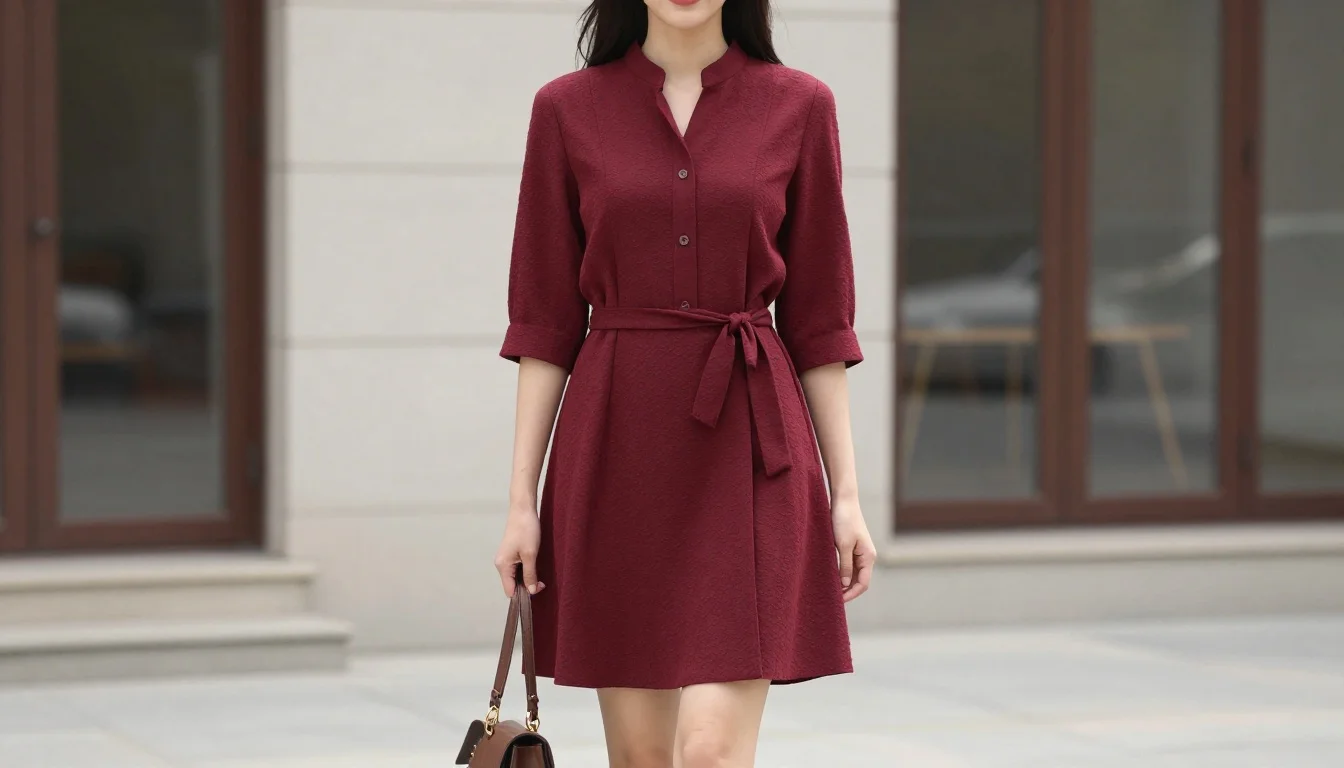
Burgundies That Fight Your Skin Tone
True cool burgundy on very light, warm-soft skin
Full-strength cool burgundy overwhelms very light Warm Spring and soft light-warm coloring. The cool purple depth exceeds what low-contrast, warm-light faces can balance, often creating a gray or sallow cast and visually aging the complexion. Soft warm berry, peachy rose, or light warm plum serve the same mood without the heavy cool pull.
Brown-muted burgundy on cool, clear skin
Burgundies with a heavy brown or rust mute — muddy wine, brown oxblood — dull cool, clear skin. Cool medium and Cool Summer types lose their natural clarity; the face can look slightly dusty. Clear berry-wine and cool merlot preserve depth while keeping the cool clarity these skin tones need.
Pale dusty mauve labeled 'burgundy' on deep skin
Marketing often calls dusty mauve or pale plum 'burgundy.' On deep skin these lack saturation and read as washed-out gray-purple rather than rich wine. Deep complexions need true depth: true burgundy, cool wine, or deep aubergine-red. Anything pale or dusty fails to create the contrast deep skin deserves.
Orange-brick 'burgundy' on cool undertones
Brick red and orange-leaning oxblood are sometimes sold beside burgundy but are warm, not cool-deep. On cool undertones they introduce temperature conflict — skin can look ruddy or uneven. Cool wine, true burgundy, and cool oxblood-purple align with cool skin's undertone and keep the complexion even.
Stop guessing — discover your exact palette
See myself in my colorsFind Your Burgundy
The right wine shade is usually one temperature or depth step from the burgundy that hasn't worked.
True burgundy exceeds the contrast budget of light warm-soft coloring. Soft warm berry keeps depth without cool-purple weight that grays the complexion.
Brick introduces warm orange that fights cool undertones. Cool wine delivers the same drama with temperature harmony.
Dusty mauve lacks saturation for deep pigmentation. True burgundy creates the rich contrast deep skin needs.
Cool wine can gray warm-deep undertones. Warm burgundy keeps depth while respecting golden richness in the skin.
Fair-cool high-contrast types often suit burgundy as accent, not bulk. Lighter placement preserves clarity.
Saturated burgundy overwhelms soft muted coloring. Muted berry-wine respects softness while staying in the wine family.
Your Season, Your Burgundy
Seasonal palettes calibrate burgundy's depth, temperature, and clarity. Your season pinpoints whether true cool burgundy, warm garnet, or soft berry-wine is your signature.
Deep Winter
Learn moreDeep Winter owns true burgundy: cool, saturated, and dramatic. True burgundy, deep aubergine-red, and icy plum accents make Deep Winter's high contrast look intentional and expensive. Brown-muted wine or soft dusty plum underwhelm this season's need for clarity and depth. Burgundy is a core neutral for Deep Winter wardrobes and lips.
Deep Autumn
Learn moreDeep Autumn wears burgundy through a warm lens: warm burgundy, rich garnet, and brick-wine rather than cool purple wine. The depth matches Deep Autumn's richness; the warmth prevents grayness on golden undertones. Cool icy burgundy can fight Deep Autumn's warmth — garnet and warm maroon are the safer signature.
Cool Winter
Learn moreCool Winter's burgundy is crisp and cool: clear wine, cool berry, and true burgundy with minimal brown muting. This season needs clarity — muddy oxblood or warm brick reads off-key. Cool Winter often prefers burgundy in lips and accessories with icy neutrals, though clear burgundy knits at the neckline are striking on high-contrast Cool Winter types.
Find Your Exact Burgundy
Burgundy spans cool true wine, warm garnet, soft berry, and deep aubergine — not every wine shade is burgundy, and not every burgundy suits every face. Your season identifies whether you need cool clarity, warm depth, or a softer berry entry point. A personalized color analysis moves you from guessing in the wine aisle to the exact burgundy — or berry-wine — that makes your skin look richest and most defined.
Stop guessing — preview every color on you
Preview Yourself In Your Palette
Get my personalized analysisStop guessing — preview every color on you
Preview Yourself In Your Palette

Related Guides for What Skin Tone Suits Burgundy?
Explore more personalized color advice based on your features.
Want to see these colors on you? What Colors Look Good on Me — free to try.
Frequently Asked Questions About What Skin Tone Suits Burgundy?
What skin tone suits burgundy?
Burgundy best suits deep and cool skin tones with rich or high-contrast coloring: cool-deep, neutral-deep, cool medium, and high-contrast fair-cool types. It is a cool-deep red-purple that needs enough depth and contrast to balance its weight. Very light, warm-soft skin often finds true burgundy overwhelming and does better with soft berry or warm plum. Undertone matters: cool undertones wear clear burgundy; warm-deep types often need warm burgundy or garnet.
Can fair skin wear burgundy?
Fair skin can wear burgundy when contrast and undertone support it. Fair-cool skin with dark hair and defined features often looks striking in clear wine, cool berry lips, or a petite burgundy blazer. Fair-warm or soft light-warm skin usually finds full-strength cool burgundy too heavy and should try soft warm berry or light plum instead. The fair-skin burgundy rule is contrast plus temperature — not fairness alone.
Is burgundy warm or cool?
True burgundy is cool — it leans red-purple with a blue base, distinct from warm brick or orange oxblood. That coolness is why it flatters cool undertones and can gray very warm, light skin. Warm-deep types can wear burgundy when they choose warm burgundy, garnet, or brick-wine with enough red warmth. Always separate cool wine burgundy from warm brick when shopping.
Why does burgundy make me look older?
Burgundy often ages very light, soft, or low-contrast coloring because its depth and cool weight exceed what the face can visually balance. The skin may look grayer or flatter next to heavy cool wine. Solutions: shift to berry-wine or soft plum, wear burgundy only on lips or nails, or choose warm garnet if you are warm-deep rather than cool. If burgundy consistently ages you, your season may be light or soft rather than deep cool.
What is the difference between burgundy and maroon?
Maroon often includes more brown or warm red, while burgundy traditionally carries a cooler purple-red cast. On cool skin, true burgundy and cool wine look clearer than brown-maroon. On warm-deep skin, warm maroon or garnet may outperform cool burgundy. Use undertone testing: if cool wine brightens you, stay burgundy-cool; if only warm red shades work, explore garnet and warm maroon instead.