Am I Bright orMuted?
The forgotten axis of color analysis. It explains why some cool-toned people look wrong in cool colors.
Everyone asks whether they're warm or cool. Almost nobody asks the question that matters just as much: are you bright or muted? Chroma — how saturated a color is — is the axis that explains the mysteries undertone can't: why a cool-toned woman looks tired in dusty blue, why a warm-toned man gets swallowed by mustard. If you've done the gold-versus-silver test and your colors still feel off, this is almost certainly the axis you're missing.


3,000+
happy clients
What Chroma Is — and Why It Overrides Temperature
Everyone asks whether they're warm or cool. Almost nobody asks the question that matters just as much: are you bright or muted? Chroma — how saturated a color is — is the axis that explains the mysteries undertone can't: why a cool-toned woman looks tired in dusty blue, why a warm-toned man gets swallowed by mustard. If you've done the gold-versus-silver test and your colors still feel off, this is almost certainly the axis you're missing.
Chroma measures how pure a color is. Bright (high-chroma) colors are saturated and clean — fuchsia, emerald, cobalt, poppy red. Muted (low-chroma) colors have grey mixed in — dusty rose, sage, slate, terracotta. Your coloring has chroma too: some faces have a clear, high-definition finish with bright whites of the eyes and clean-edged features; others have a soft, blended finish where hair, skin, and eyes melt into each other.
The rule is harmony: clear coloring needs clear color, soft coloring needs soft color. Break it in one direction and the clothes wear you — a muted person in cobalt becomes a walking sweater. Break it the other way and you look faintly unwell — a bright person in sage looks like they missed a night of sleep.
Here's the part most people miss: for many faces, chroma matters more than temperature. A Soft Summer (cool, muted) usually looks better in a muted warm camel than in a bright cool fuchsia — the mutedness is more load-bearing than the coolness. If your 'correct undertone' colors keep failing, check whether they were the wrong chroma.
What does bright vs muted mean in color analysis?
It's the chroma axis: bright (clear) coloring harmonizes with saturated, pure colors like fuchsia, cobalt, and emerald; muted (soft) coloring harmonizes with greyed, softened colors like dusty rose, sage, and slate. It works alongside warm-versus-cool — together the two axes define your season.
Bright Colors vs Muted Colors — Side by Side
Bright: Saturated, Clean, High-Voltage
Colors with no grey in them. On clear coloring they look energizing and right; the face rises to meet them. On soft coloring they take over the room and leave the person behind. If strangers compliment your outfit but not you, the outfit was probably brighter than your chroma.
Muted: Greyed, Blended, Low-Glare
Colors softened with grey. On soft coloring they harmonize — skin looks smoother, features look intentional. On clear coloring they read as dust: the eyes dull, the skin flattens, and the whole face looks like it needs a rinse. If earth tones consistently 'age' you, your chroma is bright.
How Brightness Pairs With Temperature
Chroma and temperature together are the whole seasonal system in two questions. Answer both and you have your parent season: clear-and-cool is Winter, clear-and-warm is Spring, soft-and-cool is Summer, soft-and-warm is Autumn.
The Diagnostic Pairs
Each pair holds the hue constant and flips only the saturation. Test them in daylight and watch who wins the frame — you or the fabric. You winning against the saturated shade means bright; you winning against the greyed shade means muted.

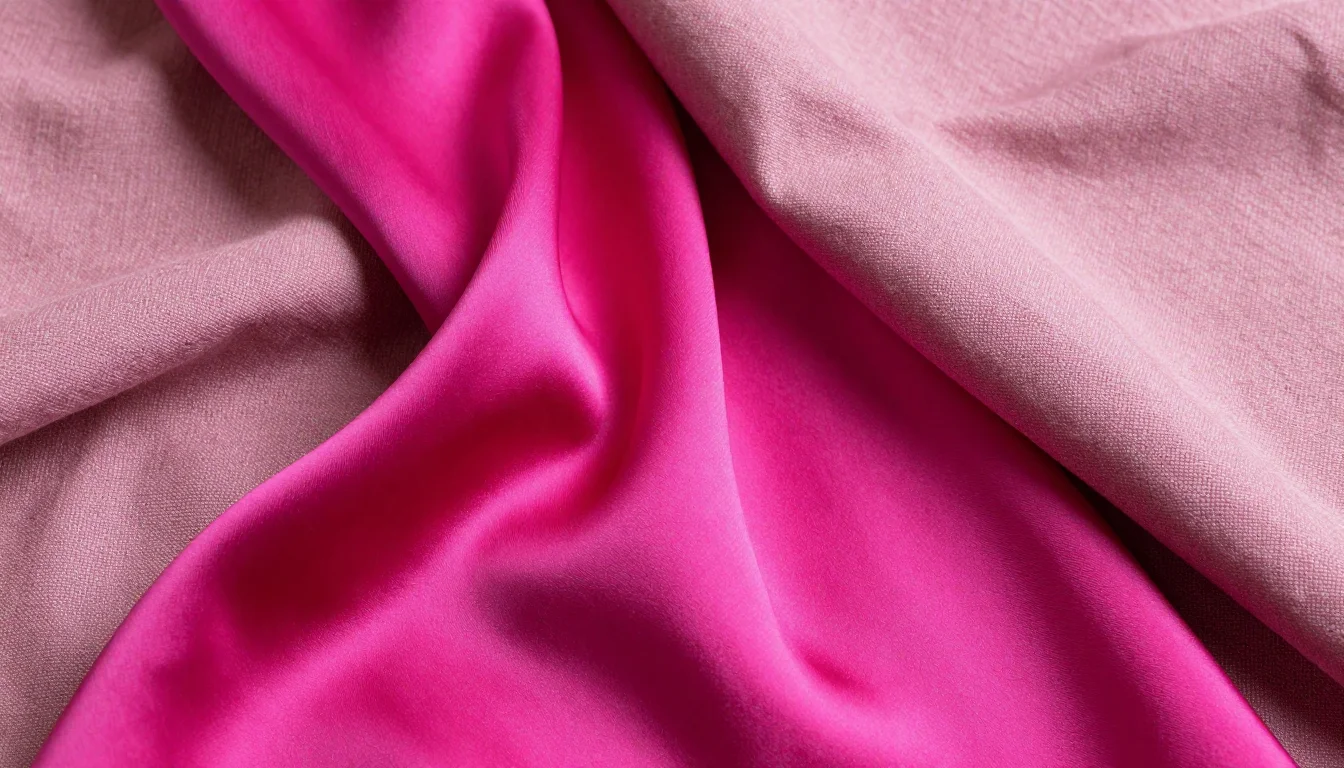
Fuchsia or dusty rose — see which one your face wins against
Start my color analysisHow to Test Your Chroma at Home
The who-wins-the-photo test
Photograph yourself in your most saturated top and your most greyed one, same light, no makeup. Look at each photo as a stranger would: what do you notice first, the person or the garment? Bright coloring holds its own against saturation; muted coloring gets upstaged by it and harmonizes with softness.
The contrast inventory
Look at an unedited photo and squint. If your features still read clearly — dark lashes, defined brows, eyes that flash — your coloring keeps its definition and can meet bright color. If squinting blends you into one gentle tone, your coloring is soft and wants muted color to match.
The pattern check
Prints reveal chroma tolerance fast. High-contrast graphic prints (black-white, primary colors) sit naturally on bright coloring and overwhelm muted coloring. Watercolor-ish, tonal prints flatter muted coloring and look faded on bright coloring. Your favorite scarf already knows your answer.
Sequence the two questions
Settle chroma first, then temperature within it. If you test muted, compare muted-cool against muted-warm (slate versus olive). If you test bright, compare bright-cool against bright-warm (fuchsia versus coral). Two questions, four outcomes — and the outcome is your parent season.

Bright or muted — find out for sure
Chroma plus temperature equals your season. Measure both at once with the free color analysis quiz and get your exact sub-season.
Signs You're Wearing the Wrong Chroma
Vivid color wears you (you might be muted)
If people see the red coat before they see your face — if bright color feels like a costume no matter how well it matches your undertone — your coloring is soft. You need the greyed version of every shade you love.
Soft color makes you look ill (you might be bright)
If sage, dusty rose, and stonewashed anything reliably draw 'are you tired?' comments, your coloring is clear. Muted shades read as grime against high-definition features. You need saturation — in your undertone's temperature.
Fixing chroma problems with more makeup
The classic compensation: a muted person adds bold lipstick to survive a bright dress, or a bright person adds blush to survive a dusty one. If an outfit only works with a corrective face, the outfit's chroma is wrong. Change the clothes, not the concealer.
Two questions decide your season. Answer both
See myself in my colorsBright vs Muted Swaps
Same hue, corrected saturation — the upgrade most wardrobes need.
Pink exists at every saturation level, which makes it the easiest chroma test to shop. Your right pink needs no styling help.
Royal blue is famously 'universal' — but it's a bright. Muted coloring does the same job better in slate and steel.
Green splits cleanly by chroma. Emerald on soft coloring is all dress, no person; sage on clear coloring is all tired, no dress.
True red is high-chroma by definition. Muted coloring keeps the power move by dropping to brick or greyed berry — commanding without the glare.
Black-on-white is a chroma-and-contrast statement, not a neutral. Bright coloring carries it; muted coloring looks kinder to itself in charcoal, greige, and soft white.
The 'pop of color' rule is bright-season advice in disguise. Muted coloring looks most expensive when accessories stay inside the same softened family as the outfit.
Which Palette Might Be Yours?
Your chroma answer, combined with temperature, lands you in one of these families — each with its own dedicated palette.
Bright Winter
Learn moreBright + cool: the highest-voltage palette in the system — fuchsia, emerald, sapphire, black and white. For clear coloring with a cool base.
Bright Spring
Learn moreBright + warm: coral, turquoise, poppy, golden yellow. For clear coloring with a golden base.
Soft Summer
Learn moreMuted + cool: mauve, slate, dusty rose, greyed teal. For soft coloring with a cool lean — and the twin door to Soft Autumn if your lean turns out warm.
Find Your Exact Colors
Chroma is the axis quizzes skip and mirrors hide — you can't easily see whether your own face is 'clear' or 'soft.' A personalized color analysis measures it from your photos alongside undertone, resolves both axes at once, and returns the exact palette — bright or muted, warm or cool — that your coloring actually runs on.
Stop guessing — preview every color on you
Preview Yourself In Your Palette
Get my personalized analysisStop guessing — preview every color on you
Preview Yourself In Your Palette

Related Guides for Am I Bright or Muted? The Chroma Test
Explore more personalized color advice based on your features.
Want to see these colors on you? What Colors Look Good on Me — free to try.
Frequently Asked Questions About Am I Bright or Muted? The Chroma Test
What does bright vs muted mean in color analysis?
It's the chroma axis: bright (clear) coloring harmonizes with saturated, pure colors like fuchsia, cobalt, and emerald; muted (soft) coloring harmonizes with greyed, softened colors like dusty rose, sage, and slate. It works alongside warm-versus-cool — together the two axes define your season.
How do I know if my coloring is clear or soft?
Squint at an unedited photo of yourself. Features that stay defined — flashing eyes, crisp edges between hair, skin, and brows — indicate clear coloring. Features that blend into one gentle wash indicate soft coloring. Confirm with the fuchsia-versus-dusty-rose test in daylight.
Can I be cool-toned but still look bad in cool colors?
Yes — this is the classic chroma miss. If you're cool and muted (Summer), bright cool colors like cobalt and fuchsia will overwhelm you even though the temperature is right. You need cool colors with grey in them: slate, mauve, dusty blue. Saturation was the problem, not undertone.
Is bright vs muted the same as high vs low contrast?
Related but not identical. Contrast is the value gap between your features (dark hair against light skin); chroma is the purity of your coloring's finish. They usually travel together — high contrast with clear finish, low contrast with soft finish — but olive-skinned and deep-skinned people often split them, which is when testing beats theory.
Which seasons are bright and which are muted?
Winter and Spring are the bright seasons — Winter is bright-cool, Spring is bright-warm. Summer and Autumn are the muted seasons — Summer is muted-cool, Autumn is muted-warm. Within each, sub-seasons like Bright Winter or Soft Autumn mark where chroma is at its most extreme.
What is the fastest chroma test?
Fuchsia versus dusty rose near your bare face in daylight — the same hue at two saturations. If fuchsia energizes your face, you're bright. If it swallows you and the dusty rose quietly flatters, you're muted. Then run temperature within the winner and you have your season.