Soft Summer orSoft Autumn?
The closest call in color analysis. The palettes differ by one degree of temperature — here's how to find your side.
If you've taken three quizzes and gotten three different answers, odds are they were Soft Summer and Soft Autumn. These are the system's twin sub-seasons: both deeply muted, both medium in depth, both allergic to loud color. The entire difference is a slight lean — Soft Summer leans cool, Soft Autumn leans warm. Most tests are too blunt to catch it. The ones below aren't.


3,000+
happy clients
Why This Is the Hardest Call in Color Analysis
If you've taken three quizzes and gotten three different answers, odds are they were Soft Summer and Soft Autumn. These are the system's twin sub-seasons: both deeply muted, both medium in depth, both allergic to loud color. The entire difference is a slight lean — Soft Summer leans cool, Soft Autumn leans warm. Most tests are too blunt to catch it. The ones below aren't.
Soft Summer and Soft Autumn sit on either side of the neutral line, closer to each other than to their own parent seasons. A Soft Summer is a Summer with warmth mixed in; a Soft Autumn is an Autumn with coolness mixed in. Their palettes physically overlap — soft teal, greyed green, rose-brown, and taupe appear in both — which is why quiz results keep flip-flopping.
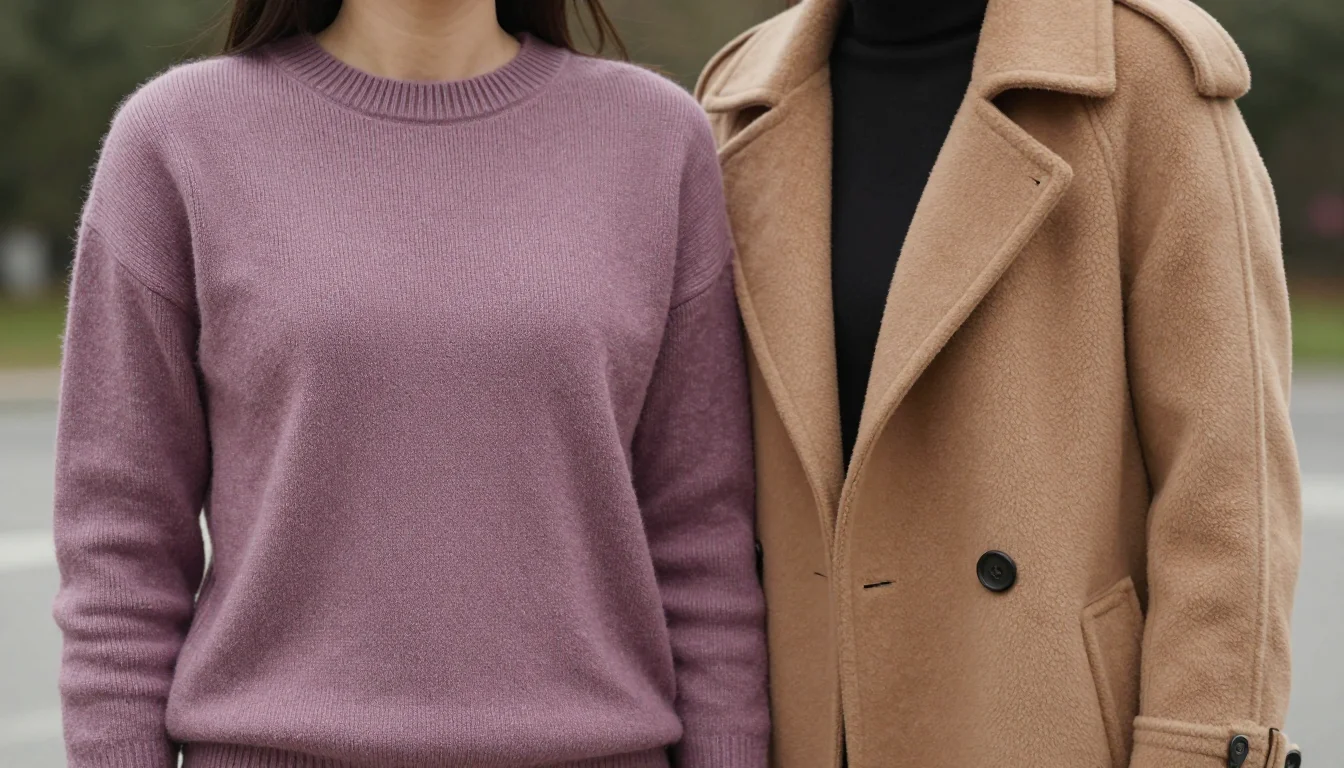
But the non-overlapping edges matter. Soft Summer's edge runs toward cool: mauve, dusty blue-pink, slate, soft berry. Soft Autumn's edge runs toward warm: camel, salmon, khaki, muted coral. Wear the wrong edge and the effect is quiet but persistent — a faint sallowness on a Soft Summer in khaki, a faint greyness on a Soft Autumn in mauve. Nobody will tell you the color is wrong; you'll just look slightly less well than you could.
Typing yourself correctly here is less about dramatic reveals and more about accumulating small wins: foundation that matches instead of oxidizing odd, hair color that doesn't fight your skin, neutrals that layer without deadening. One degree of temperature, applied across a whole wardrobe, adds up.
What is the difference between Soft Summer and Soft Autumn?
Both are muted, medium-depth sub-seasons; the difference is a slight temperature lean. Soft Summer leans cool — mauve, slate, dusty rose, rose-brown. Soft Autumn leans warm — camel, salmon, khaki, golden-brown. Their middles overlap; their edges decide.
Where the Two Soft Palettes Separate
Soft Summer's Cool Edge
These are the shades a Soft Autumn can't quite pull off. They carry a blue-grey cast that harmonizes with Soft Summer's rosy-neutral skin. If mauve and slate make you look polished and rested, you've found your edge — and your answer.
Soft Autumn's Warm Edge
These are the shades a Soft Summer can't quite pull off. They carry a golden cast that harmonizes with Soft Autumn's honeyed-neutral skin. If camel and salmon warm your face up rather than yellowing it, you belong on this side.
The Shared Middle (Safe, Not Diagnostic)
Both sub-seasons wear these beautifully — that's exactly why they can't help you decide. Enjoy them as wardrobe glue, but do your testing at the edges, not in the middle.
The Micro-Pairs That Decide It
Each pair is identical in softness and depth, differing only in that one degree of temperature. Test them in daylight against bare skin. The winner of each micro-pair should be consistent — three cool wins is Soft Summer, three warm wins is Soft Autumn.

Mauve or camel — see both on your actual photos
Start my color analysisHow to Run the Tie-Breaker at Home
Test at the edges, never the middle
The core mistake people make with this pair is testing shared shades — soft teal flatters you either way, so you learn nothing. Pull the most-cool and most-warm items you own (mauve versus camel is ideal) and compare those directly. Only the edges discriminate.
The brown test
Everyone soft wears brown, so use brown against itself: rose-brown or grey-brown (cool) versus golden-brown or caramel (warm). Watch the under-eye area — the wrong brown deepens shadows there within seconds. This is the most wearable version of the temperature test.
The foundation clue
Check which way foundations fail on you. If 'neutral' shades run too yellow on your skin, you're cooler than neutral — Soft Summer. If they run too pink, you're warmer — Soft Autumn. Your makeup drawer has been collecting evidence for years.
Use your hair's behavior, not its label
Both sub-seasons often have the same 'mousy' ash-brown hair — but watch what it does in sun. Staying flat, beige, or ash in direct light points Soft Summer. Waking up with gold or caramel glints points Soft Autumn. Ask your colorist too: whether your hair pulls warm when lightened is a professional-grade clue.
Soft Summer or Soft Autumn — find out for sure
The closest call in color analysis deserves better than a coin flip. Take the free color analysis quiz and get your exact sub-season.
Signs You've Picked the Wrong Soft Season
Your camel coat makes you look faintly yellow (you might be Soft Summer)
Camel is Soft Autumn's signature neutral and Soft Summer's quiet enemy. If yours needs a scarf between it and your face to work, you're likely on the cool side — swap toward rose-taupe and grey-brown.
Mauve and grey wash you out (you might be Soft Autumn)
Mauve is Soft Summer's home turf. If it — and cool greys generally — make you look tired while warmer taupes revive you, your lean is warm. Your greys should always have brown in them.
Anything bright or high-contrast (both — but it proves the wrong thing)
Fuchsia, cobalt, and stark black-and-white overwhelm both soft sub-seasons equally. If brights swamp you, that confirms you're soft — it says nothing about Summer versus Autumn. Don't let a bad experience with saturated color push you toward either label.
Three quizzes, three answers? Get a real one
See myself in my colorsSoft Summer vs Soft Autumn Swaps
One degree of temperature, applied shade by shade.
Taupe is the shared uniform of the soft seasons — but each side needs it tilted its way. The tilt is subtle in the hand and obvious on the face.
Dusty pink comes in both temperatures and stores rarely label which. Check the base: blue-pink for the Summer side, yellow-pink for the Autumn side.
Oatmeal carries warmth. It genuinely suits Soft Autumns and quietly yellows Soft Summers, who look fresher in grey-marl.
Denim is where soft seasons live anyway — tune the wash. Grey-cast denim serves the cool side; cream and amber-cast denim serves the warm side.
'Your lips but better' has a temperature. The wrong nude reads greyish (a Soft Autumn in rose) or orange (a Soft Summer in peach).
Black is too hard for both soft sub-seasons. Each has its own gentler dark — blue-based for Summer's side, earth-based for Autumn's.
Which Palette Might Be Yours?
Whichever side wins your tests, the full sub-season palette gives you the complete picture — and the parent seasons are worth knowing too.
Soft Summer
Learn moreThe complete cool-muted palette: every mauve, slate, dusty blue, and rose-grey that belongs to you if your tests came back cool.
Soft Autumn
Learn moreThe complete warm-muted palette: every camel, salmon, khaki, and honeyed neutral that belongs to you if your tests came back warm.
Cool Summer
Learn moreIf your cool results were strong rather than slight — if even the shared soft middle felt a bit warm — you may be a step further into Summer than the soft border. Worth comparing before you commit.
Find Your Exact Colors
Soft Summer versus Soft Autumn is precisely the call that generic quizzes miss — the difference is one degree of temperature that only shows up on your face. A personalized color analysis works from your actual photos, catches the lean, and hands you the complete soft palette for your side of the line.
Stop guessing — preview every color on you
Preview Yourself In Your Palette
Get my personalized analysisStop guessing — preview every color on you
Preview Yourself In Your Palette

Related Guides for Soft Summer or Soft Autumn? How to Tell
Explore more personalized color advice based on your features.
Want to see these colors on you? What Colors Look Good on Me — free to try.
Frequently Asked Questions About Soft Summer or Soft Autumn? How to Tell
What is the difference between Soft Summer and Soft Autumn?
Both are muted, medium-depth sub-seasons; the difference is a slight temperature lean. Soft Summer leans cool — mauve, slate, dusty rose, rose-brown. Soft Autumn leans warm — camel, salmon, khaki, golden-brown. Their middles overlap; their edges decide.
Why do I keep getting both results on quizzes?
Because most quizzes test the traits these sub-seasons share — muted, gentle, medium — and both labels fit those. To separate them you need edge tests: mauve versus salmon, slate versus khaki, rose-brown versus golden-brown against your bare face in daylight.
Can Soft Summers and Soft Autumns share a wardrobe?
About half of one — soft teal, greyed sage, taupe, and muted denim genuinely work for both. The other half is where mistakes live: camel, khaki, and salmon belong to Soft Autumn; mauve, slate, and cool berry to Soft Summer.
Is Soft Summer warm or cool?
Cool — but only just. Soft Summer is the warmest of the Summer sub-seasons, sitting right beside the neutral line. That's why it can borrow near-neutral shades, and why it gets confused with Soft Autumn, its warm mirror across that line.
What hair colors suit Soft Summer vs Soft Autumn?
Both look best keeping hair muted and close to natural. Soft Summers suit ash-brown, mushroom, and cool beige tones — no golden highlights. Soft Autumns suit warm caramel-beige, honeyed light brown, and subtle golden balayage. Going too warm is the classic Soft Summer hair mistake; going too ash is the Soft Autumn one.
Do either of them wear black well?
No — black is the hardest color in the system and both soft sub-seasons are the gentlest coloring in it. Soft Summer's better dark is charcoal or deep slate; Soft Autumn's is espresso or deep olive. Keep black below the waist if you keep it at all.