Soft Autumn Minimalist WardrobeColor Guide
Build a Soft Autumn minimalist wardrobe with dusty rose, warm taupe, soft olive, and muted camel. Discover how to build looks with shades that actually flatter you.
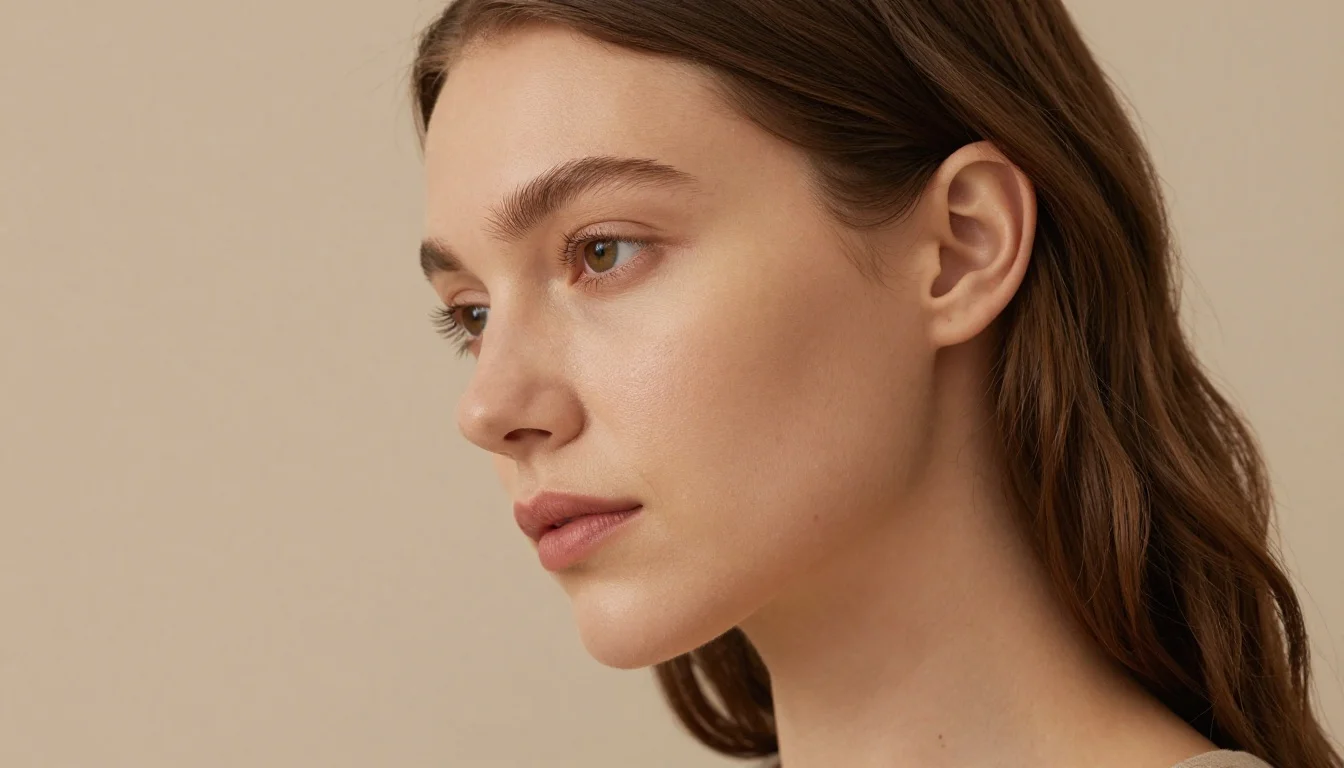
As a Soft Autumn, minimalism is your natural aesthetic. Your palette — warm-muted tones with low contrast — is inherently tonal and understated. Unlike seasons that need pops of color or high contrast to create interest, Soft Autumn builds sophistication through texture, proportion, and the subtle interplay of muted warm tones. A minimalist wardrobe built on dusty rose, warm taupe, soft olive, and muted camel is not a compromise — it is the fullest expression of your season.


3,000+
happy clients
Why Minimalism Works So Naturally for Soft Autumn
As a Soft Autumn, minimalism is your natural aesthetic. Your palette — warm-muted tones with low contrast — is inherently tonal and understated. Unlike seasons that need pops of color or high contrast to create interest, Soft Autumn builds sophistication through texture, proportion, and the subtle interplay of muted warm tones. A minimalist wardrobe built on dusty rose, warm taupe, soft olive, and muted camel is not a compromise — it is the fullest expression of your season.
Most minimalist wardrobe advice defaults to a sharp, contrasting palette — true black, stark white, one vivid color — that belongs to Bright Winter or Deep Winter. For Soft Autumn, this high-contrast approach creates visible disharmony: the stark colors compete with rather than enhance your naturally soft, warm features.
The Soft Autumn minimalist wardrobe works because your palette is already cohesive by nature. Dusty rose, warm taupe, soft camel, muted olive, and hazy terra-warm tones all live in the same tonal neighborhood. Every piece coordinates with every other piece without deliberate effort because they share warmth and mutedness. That effortless coordination is the practical promise of minimalism.
The result is a wardrobe where 15 pieces feel like 30 combinations — but more importantly, where every combination looks intentional and harmonious rather than assembled from whatever is clean. Soft Autumn minimalism is quiet confidence: nothing shouts, everything works.
How many pieces should a Soft Autumn minimalist wardrobe have?
A functional Soft Autumn minimalist wardrobe can work with 20–25 pieces: 8–10 tops, 5–6 bottoms, 2–3 outerwear, 2–3 shoes, and 3–4 accessories. Because every piece coordinates with every other piece in a muted warm palette, you effectively have more outfit combinations per piece than a non-palette wardrobe of twice the size.
The Soft Autumn Minimalist Color System
Core Muted Neutrals (Foundation)
Warm taupe, muted camel, golden-warm brown, and sandy warm beige are the foundation of a Soft Autumn minimalist wardrobe. These muted warm neutrals coordinate with everything in your palette and replace black, grey, and navy as your go-to base tones.
Soft Earthy Accent (Pick 1–2)
Dusty terracotta, muted warm brown, soft olive-green, and hazy mauve-rose are the Soft Autumn accent colors. Choose one or two as your signature and keep all other pieces in neutrals — this creates a cohesive, sophisticated minimalist system.
Soft Rose & Dusty Pink
Warm dusty rose, muted blush-peach, and hazy warm pink are the Soft Autumn equivalent of an accent color. These tones are flattering near the face and add gentle warmth to a neutral-heavy minimalist wardrobe without breaking the muted, tonal harmony.
Light Warm Tones (Optional)
Very pale warm cream, parchment, and warm off-white give you light options for summer or a softer daytime look without introducing the cool starkness of white. These are the gentlest tones in your minimalist palette and add depth variation without contrast.

Ready to see your palette on your face?
Start my color analysisBuilding Your Soft Autumn Minimalist System
The Tonal Layering Approach
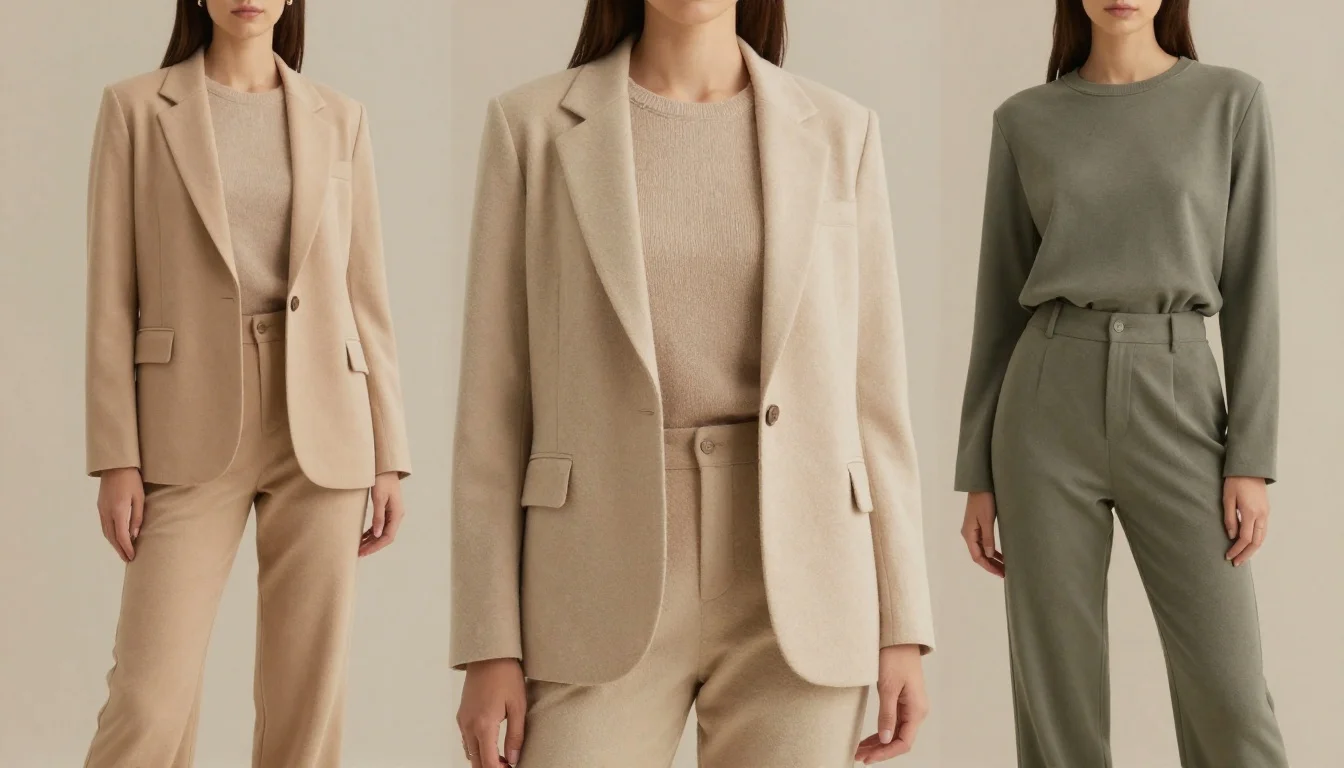
Rather than mixing a neutral base with a vivid accent, Soft Autumn minimalism works through tonal layering — stacking similar-value warm tones. A warm camel trouser, a dusty rose blouse, and a warm taupe blazer. They are all in the same muted, warm family, so the outfit reads as deeply considered even without a statement color.
Texture as Your Visual Interest
In a muted, tonal palette, texture creates the visual interest that other seasons get from color contrast. Invest in pieces with texture: a chunky-knit olive sweater, a suede camel jacket, a linen dusty rose blouse, a brushed-cotton warm taupe trouser. Texture keeps muted colors from looking flat.
Build Around Warm Taupe
Warm taupe is the closest thing Soft Autumn has to a universal neutral — warmer than grey, softer than camel, endlessly versatile. Build your minimalist wardrobe around taupe as the anchor: taupe trousers, a taupe blazer, a taupe knit. Everything in your palette coordinates with taupe effortlessly.
One Soft Accent Color
Choose one accent color as your signature — dusty rose, soft olive, or muted terracotta — and buy multiple pieces in that tone (a blouse, a scarf, a knit). In a minimalist wardrobe, repeating one accent color throughout creates intentional coherence rather than looking repetitive.
Colors That Break the Soft Autumn Minimalist System
True Black
True black creates high contrast that overwhelms Soft Autumn's low-contrast coloring. It draws attention away from your face rather than toward it. Espresso brown, dark warm charcoal, or very deep warm olive are the Soft Autumn version of "a dark neutral" — they provide depth without the stark disconnection.
Bright White
Stark white is too cool and too high-contrast for Soft Autumn. It creates an imbalance that makes your features look washed out by comparison. Warm cream, parchment, and warm ivory are your light neutrals — they give you the brightness of white with the warmth your coloring needs.
Saturated Vivid Colors
Fully saturated colors — electric blue, hot pink, vivid red — are too intense for the Soft Autumn palette and minimalist system. They overwhelm the muted harmony you are building and require the rest of the outfit to compensate. Your accent colors are muted versions of any color family, never fully saturated.
Cool Grey and Navy
Cool grey and navy are popular minimalist neutrals that belong to cool-season wardrobes. On Soft Autumn, they read as slightly wrong — too cool and too flat. Warm taupe and muted camel do everything grey and navy do in a minimalist wardrobe, but in your actual undertone.
Stop guessing — preview every look on you
See these looks on my photoMinimalist Wardrobe Color Swaps for Soft Autumn
Simplify your wardrobe by replacing off-palette pieces with Soft Autumn essentials.
True black creates contrast that Soft Autumn coloring cannot harmonize with. Warm taupe does everything black does in a minimalist wardrobe but in the correct warm undertone.
Bright white is too stark and too cool. Warm cream gives you a light neutral that harmonizes with your undertone and the rest of your muted warm palette.
Vivid saturated accents are too intense for Soft Autumn and break the muted tonal system. Dusty terracotta and soft olive are warm, muted versions that create interest without overwhelming.
A warm taupe or muted olive coat is the Soft Autumn outerwear that goes over everything in your palette and looks deeply intentional and put-together in all seasons.
White sneakers introduce too much contrast; black sits too cool. Warm tan and cognac footwear keeps the Soft Autumn minimalist wardrobe coherent from head to toe.
A warm-toned bag connects to every piece in your Soft Autumn wardrobe rather than sitting as a cool contrast point. Warm taupe in particular goes with literally everything in your palette.
Your Soft Autumn Palette
Understanding where you sit within the autumn seasons helps you choose the right tone depth for your minimalist system.
Soft Autumn
Learn moreYour season. Muted warm neutrals, soft earth-tone accents, and tonal layering are the Soft Autumn minimalist approach. Low contrast, high warmth, effortless coherence.
Warm Autumn
Learn moreShares the warm undertone with slightly more saturation. If your minimalist wardrobe feels too muted and you want slightly richer tones — deeper olive, more vibrant camel — you may lean Warm Autumn.
Soft Summer
Learn moreShares the muted quality with a cool undertone. Soft Summer's minimalist palette uses the same tonal, low-contrast approach but in cool-muted tones — dusty lavender, soft sage, muted cool rose — rather than warm ones.
Build Your Exact Minimalist Palette
A Soft Autumn minimalist wardrobe is one of the most effortless wardrobes you can build — but it works best when the exact tone depth of your neutrals and accents is calibrated to your individual coloring. Palette Hunt's AI color analysis pinpoints where you sit within the Soft Autumn spectrum and identifies the precise taupe, dusty rose, and muted olive that belongs in your minimalist system.
Stop guessing — preview every color on you
Preview Yourself In Your Palette
Get my personalized paletteStop guessing — preview every color on you
Preview Yourself In Your Palette

Related Guides for Soft Autumn Minimalist Wardrobe
Explore more personalized color advice based on your features.
Want to see these colors on you? What Colors Look Good on Me — free to try.
Frequently Asked Questions About Soft Autumn Minimalist Wardrobe
How many pieces should a Soft Autumn minimalist wardrobe have?
A functional Soft Autumn minimalist wardrobe can work with 20–25 pieces: 8–10 tops, 5–6 bottoms, 2–3 outerwear, 2–3 shoes, and 3–4 accessories. Because every piece coordinates with every other piece in a muted warm palette, you effectively have more outfit combinations per piece than a non-palette wardrobe of twice the size.
Can a Soft Autumn minimalist wardrobe include any color?
Yes — but muted, warm versions only. Dusty rose, soft olive, muted terracotta, and hazy blue-green (sufficiently muted and warm-leaning) can work. The filter is: is this muted enough to stay tonal? Is it warm enough to not conflict with your undertone? If yes, it belongs. If it is too vivid or too cool, it does not.
What is the single most versatile piece in a Soft Autumn minimalist wardrobe?
A warm taupe blazer in a quality fabric. It goes over casual tops, dresses, and formal blouses. It works in every season with fabric adjustments. It coordinates with every color in your palette. In a Soft Autumn minimalist wardrobe, the warm taupe blazer does more work than any other single piece.
Does Soft Autumn minimalism mean boring?
The opposite — Soft Autumn minimalism is quietly sophisticated rather than boring. The visual interest comes from texture, proportion, and the subtle play of muted warm tones. It is a wardrobe that rewards looking closely rather than shouting from a distance — which is exactly what feels right for this season's naturally understated coloring.
Can Soft Autumn wear black in a minimalist wardrobe?
True black is not recommended as a base — it creates too much contrast for Soft Autumn's low-contrast coloring and makes the face look washed out. Espresso brown, very dark warm charcoal, and deep warm navy can function as "dark neutrals" for occasions that call for one, paired with warm accessories to keep the palette coherent.