Best Colorsfor Bald Men
With no hair frame, your skin undertone and collar do all the work. Discover which shades flatter a bald head — and which wash you out.
When you shave your head, you remove the single biggest block of color most men wear every day — their hair. That changes the rules entirely. For men with hair, the hair frames the face, sets the contrast level, and softens the transition between skin and clothing. Take it away and your skin tone becomes the whole story, so the collar matters more than ever. Your bare head also catches and reflects light like part of your skin, extending your complexion right up to the neckline. This guide teaches you to dress by undertone — warm, cool, or deep — and to use crisp collars and contrast at the neck to do the framing your hair used to do.


3,000+
happy clients
Why Your Skin Undertone Becomes the Whole Story
When you shave your head, you remove the single biggest block of color most men wear every day — their hair. That changes the rules entirely. For men with hair, the hair frames the face, sets the contrast level, and softens the transition between skin and clothing. Take it away and your skin tone becomes the whole story, so the collar matters more than ever. Your bare head also catches and reflects light like part of your skin, extending your complexion right up to the neckline. This guide teaches you to dress by undertone — warm, cool, or deep — and to use crisp collars and contrast at the neck to do the framing your hair used to do.
On a man with hair, color sits against a three-part frame: hair, skin, and collar. The hair absorbs attention and creates a natural border, so a shirt that's slightly off-tone still has the hair to break it up. Shave the head and that buffer disappears. Now there are only two surfaces near your face — your skin and your collar — and they sit in direct conversation. The right color amplifies your complexion; the wrong one drains it with nothing to hide behind.
A bald head is also a reflective surface. Unlike hair, which scatters and dulls light, smooth scalp skin shares the same undertone as your face and reflects color upward toward it. That means a shirt color doesn't just sit below your chin — it bounces across your whole head. A warm rust sweater can throw a golden cast over a warm-undertoned scalp and look cohesive, while a cold lavender can leave a cool head looking even paler. Your head effectively becomes a larger canvas of your own skin.
Because the collar is now the closest contrast line to your face, the neckline does the framing work your hairline used to do. A crisp, defined collar — a structured shirt, a clean crew neck, a turtleneck rolled high — draws a deliberate edge that reads as intentional and sharp. A soft, faded, washed-out neckline does the opposite, blurring the one border you have left. Choosing colors well and keeping the collar crisp are the two moves that make a bald head look powerful rather than exposed.
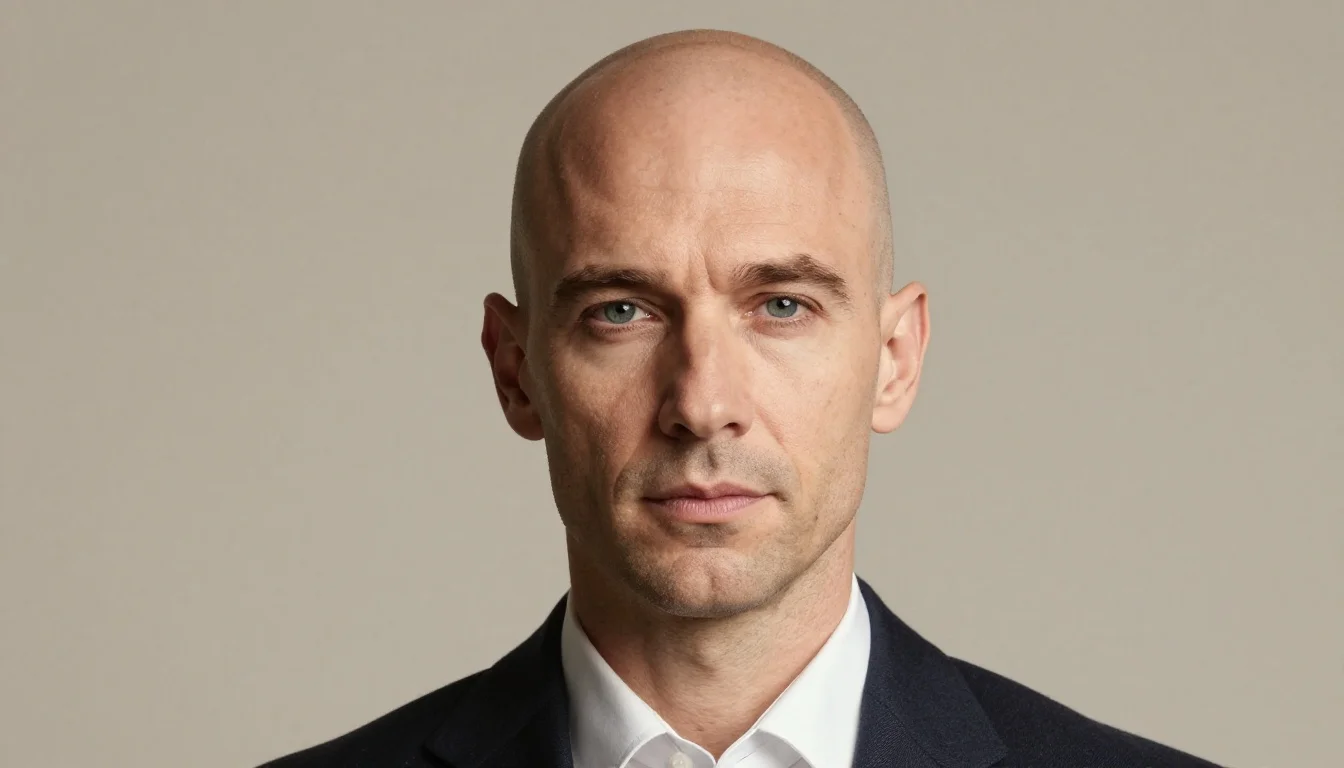
What colors look best on bald men?
It depends entirely on your skin undertone, because a bald head removes the hair frame and lets your complexion lead. Warm-undertoned scalps look best in camel, rust, and warm olive. Cool-undertoned scalps sharpen in navy, emerald, sapphire, and burgundy. Deep complexions carry vivid cobalt, white, and royal purple. Crisp white works across every undertone and is the most reliable framing color for any bald man.
Colors That Flatter a Bald Head
Crisp White and Clean Neutrals
A crisp white collar against your skin is the most reliable framing tool a bald man has — it creates a clean, defined edge right where your hairline used to be, and the brightness lifts the whole face. White works across every undertone. For a softer version, cream suits warm scalps and charcoal gives cool or deep complexions a structured, high-contrast neckline without the starkness of black.
Warm Earth Tones (Warm Undertones)
If your skin and scalp lean golden, warm, or ruddy, earth tones harmonize with the warm cast your bald head reflects. Camel, cognac, and rust echo your own undertone, making your complexion look healthy and cohesive rather than washed out. A warm olive crew neck frames a warm scalp beautifully — the temperature match means the collar reinforces your skin instead of fighting it.
Cool Jewel Tones (Cool Undertones)
If your skin reads pink, neutral, or cool, deep cool colors create the contrast that makes a bald head look sharp and deliberate. Navy and sapphire give a clean, cool framing edge at the collar; emerald and burgundy add richness without warmth. These saturated cool tones harmonize with a cool scalp's undertone while still providing the contrast your missing hairline used to supply.
Deep Saturated Tones (Deep Complexions)
If your complexion is deep, your bald head can carry the most vivid, high-contrast colors of all. Pure white against deep skin creates a powerful, clean collar line; cobalt, forest green, and royal purple read as saturated and intentional rather than loud. Depth lets your scalp amplify saturated color, so lean into bold jewel tones with a crisp neckline to maximize the framing effect.
Ready to see white & charcoal framing your face?
Start my color analysisHow to Dress When Your Head Is the Frame
Keep the collar crisp and defined
Your neckline replaces your hairline, so make it sharp. Choose structured collars, clean crew necks, and well-fitted polos over slouchy, faded, stretched-out necklines. A crisp white shirt collar or a high-rolled turtleneck draws a deliberate edge under your face that reads as intentional. Invest in pieces that hold their shape at the neck — that one line does the framing your hair used to.
Dress by undertone first
Identify your direction before anything else. Warm scalps (golden, ruddy, olive) glow in camel, rust, and warm olive. Cool scalps (pink, neutral, blue-cool) sharpen in navy, emerald, and burgundy. Deep complexions can carry vivid cobalt, white, and royal purple. Because your bare head reflects collar color upward, matching the temperature of your shirt to your undertone makes the whole head look cohesive.
Use turtlenecks and scarves to your advantage
A turtleneck is a bald man's secret weapon — it builds a clean, deliberate frame of color right around the face, replacing the missing hair frame with fabric. A rolled charcoal, navy, or cream turtleneck looks effortlessly sharp on a shaved head. Scarves do the same in colder months: a well-chosen scarf in your undertone direction adds a controlled band of flattering color exactly where you need framing.
Lead with contrast at the neckline
Contrast near the face is what makes a bald head look powerful rather than exposed. Pair your complexion with a clearly distinct collar color — white or charcoal for cool and deep skin, deep navy or rich earth tones for definition. Avoid letting your shirt melt into your skin tone. The bigger the deliberate jump in tone at the collar, the more your head reads as a confident, framed feature.
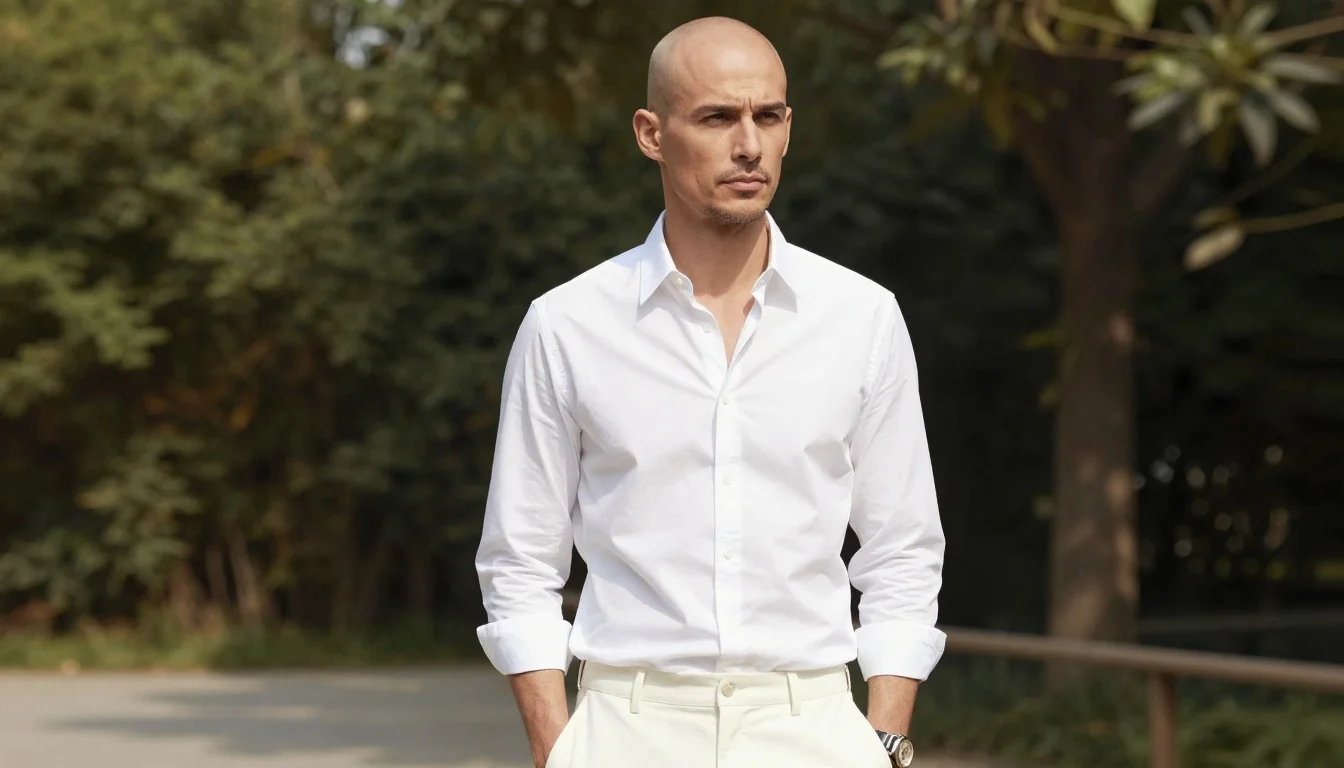
Colors That Wash Out a Bald Head
Pale washed-out pastels near the collar
Without hair to break them up, chalky pastels — dusty lilac, faded mint, washed pink — sit directly against your skin and reflect their dullness up onto a bare scalp. The result is a flat, drained look with no contrast at the one edge that matters. If you want light colors, choose crisp clean versions (clean white, clear ice blue) that frame rather than blur.
Mid-tone muddy neutrals (taupe, greige, beige)
Mid-tone neutrals are the single worst choice for a bald head. They're too close to skin tone to create contrast and too dull to harmonize, so they erase the collar line entirely and let your shirt blend into your head and face. With no hairline to add definition, a beige crew neck leaves you looking featureless. Go darker or cleaner instead.
Sickly warm yellows on cool scalps
Mustard and warm yellow push a yellow cast that reflects up onto a cool-undertoned scalp and makes it look sallow or unwell. Because a bald head amplifies whatever the collar throws upward, a temperature mismatch shows more on shaved heads than on men with hair. Cool scalps should swap warm yellow for cool jewel tones.
Cold blue-greys on warm scalps
Cool, dusty blue-greys drain warmth from a golden or ruddy scalp, leaving a warm-undertoned bald head looking grey and tired. The cold collar reflects coldness onto skin that needs warmth to look alive. Warm complexions should reach for camel, rust, and warm olive instead of icy grey-blues.
Stop guessing — preview every collar shade on you
See myself in my colorsColor Swaps for Bald Men
Replacing colors that blur the neckline with ones that frame a bald head and reflect well off a bare scalp.
Mid-tone neutrals melt into skin tone and erase the collar line on a bald head. White, charcoal, and navy create the crisp contrast at the neck that frames your face where a hairline no longer does.
Chalky pastels reflect dullness onto a bare scalp. A saturated knit chosen for your undertone — rust if warm, emerald or navy if cool — harmonizes with the head and adds the contrast a shaved look needs.
Warm mustard throws a sallow yellow cast onto a cool-undertoned head. Burgundy and forest green deliver the same rich seasonal depth in a cool direction that flatters cool scalps.
A faded, shapeless neck blurs your one remaining frame. A structured turtleneck builds a clean band of flattering color around the face, replacing the missing hair frame with deliberate edge.
Light grey sits too close to skin tone to frame a bald head. A crisp white or pale-blue collar creates the clean defined edge under the face that makes the whole look intentional.
A cold scarf drains warmth from a golden scalp it sits right beneath. A warm-toned scarf adds a controlled band of flattering color in the temperature your warm complexion needs to look alive.
Which Palette Might Be Yours?
Shaving your head doesn't change your season — it just removes the hair that used to signal it. Your season still comes from your skin undertone, eye color, and natural contrast, and identifying it tells you exactly which collar colors frame your bare head best.
Deep Winter
Learn moreIf your skin reads cool or neutral-deep and you have naturally high contrast — dark brows, deep eyes, and a scalp that looks best against pure white and vivid cool color — Deep Winter is likely your season. Your strongest framing tools are pure white, cobalt, emerald, true red, and charcoal at the collar. High contrast is exactly what a bald head needs, and Deep Winter is built on it.
Deep Autumn
Learn moreIf your skin and scalp lean warm and rich — golden or red-brown undertones with deep eyes — Deep Autumn is likely your season. Your best collar colors are warm and earthy: cognac, rust, forest green, and warm olive. These harmonize with the warm cast your bald head reflects, making the neckline frame look cohesive rather than clashing.
Cool Winter
Learn moreIf your skin has a distinct cool, blue-pink undertone with crisp natural contrast, Cool Winter may fit. You can carry clear, cool, high-contrast colors that frame a bald head sharply — deep navy, pure white, icy blue, and true red. The clean coolness of this palette suits cool scalps and keeps the collar line looking deliberate and fresh.
Find Your Exact Colors
A shaved head puts your skin undertone front and center, which makes getting your colors right more important — not less. The collar is now the closest contrast line to your face, so knowing whether warm earth tones, cool jewel tones, or high-contrast darks suit you best is the difference between a bald head that looks powerful and one that looks washed out. A personalized color analysis identifies your exact season and gives you a complete palette of the specific collar shades that frame your bare head best.
Stop guessing — preview every color on you
Preview Yourself In Your Palette
Get my personalized paletteStop guessing — preview every color on you
Preview Yourself In Your Palette
Related Guides for Best Colors for Bald Men
Explore more personalized color advice based on your features.
Want to see these colors on you? What Colors Look Good on Me — free to try.
Frequently Asked Questions About Best Colors for Bald Men
What colors look best on bald men?
It depends entirely on your skin undertone, because a bald head removes the hair frame and lets your complexion lead. Warm-undertoned scalps look best in camel, rust, and warm olive. Cool-undertoned scalps sharpen in navy, emerald, sapphire, and burgundy. Deep complexions carry vivid cobalt, white, and royal purple. Crisp white works across every undertone and is the most reliable framing color for any bald man.
Why does my shirt color matter more now that I'm bald?
Without hair, the collar is the closest contrast line to your face, so it does the framing your hairline used to do. Your bare scalp also reflects color upward like part of your skin, so the shirt color bounces across your whole head. A flattering, well-matched collar color makes your complexion look healthy and your head look framed; the wrong one drains your face with nothing to hide behind.
What colors should bald men avoid?
Avoid mid-tone muddy neutrals like taupe, greige, and beige — they're too close to skin tone to frame a bald head and erase the collar line. Avoid chalky washed-out pastels, which reflect dullness onto a bare scalp. And avoid temperature mismatches: warm mustard yellows on cool scalps look sallow, while cold blue-greys drain warmth from golden scalps. Go cleaner or darker, and match the collar's temperature to your undertone.
Are turtlenecks good for bald men?
Yes — a turtleneck is one of the best pieces a bald man can wear. It builds a clean, deliberate frame of color right around the face, replacing the missing hair frame with fabric. A rolled charcoal, navy, or cream turtleneck looks effortlessly sharp on a shaved head and gives the neckline the structure that makes a bald look intentional.
How do I figure out my undertone if I'm bald?
Look at your skin in natural light: golden, ruddy, or olive casts mean a warm undertone, while pink, blue, or neutral casts mean a cool undertone. Check whether you look better against gold or silver, and notice whether warm earth tones or cool jewel tones make your scalp look healthier. A personalized color analysis removes the guesswork and confirms your exact undertone and season.