


Hair Color Guide

Red Hair Color forOlive Skin

Auburn, mahogany, burgundy, cherry or red-brown: how each red behaves against olive skin, and how to choose between them.

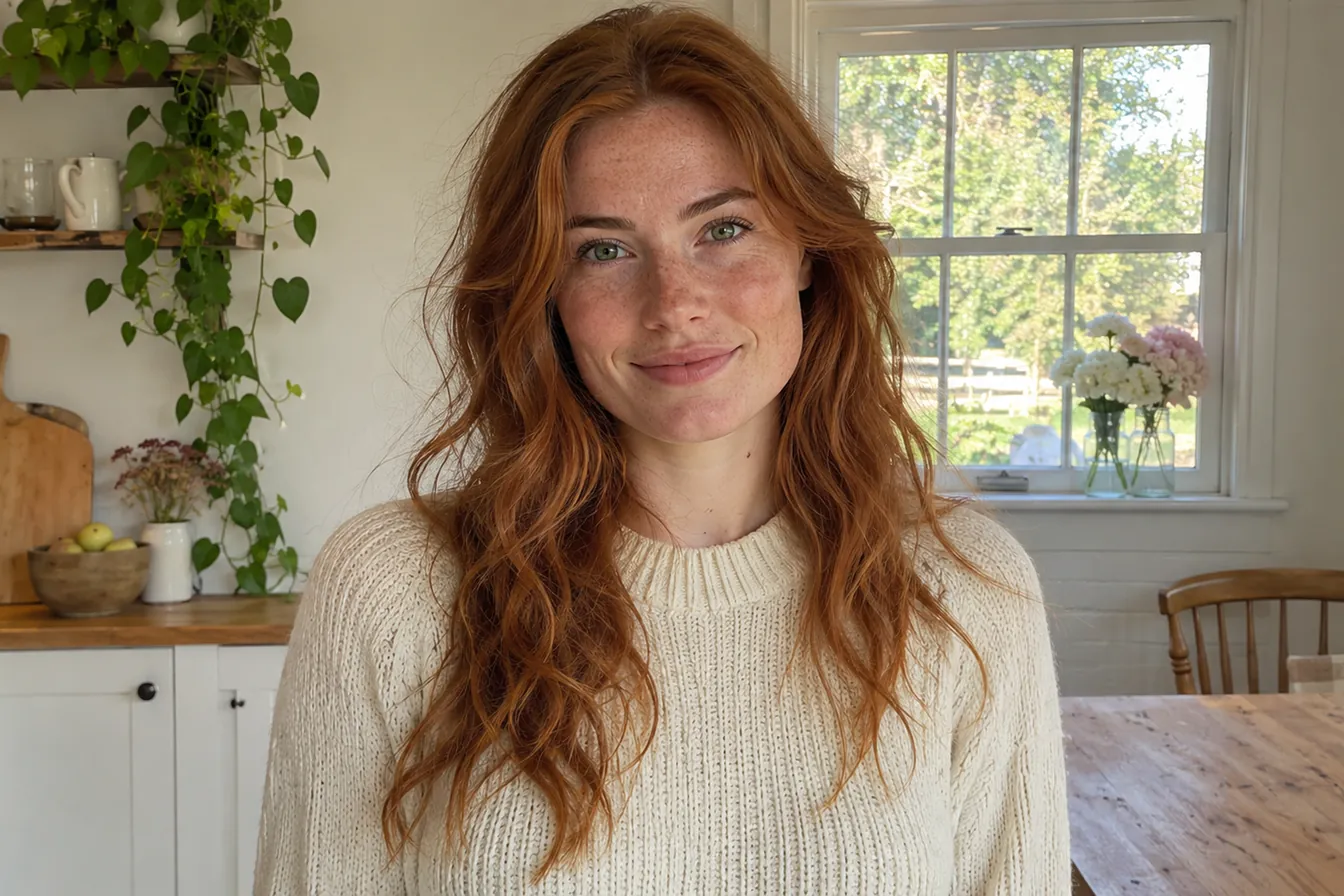
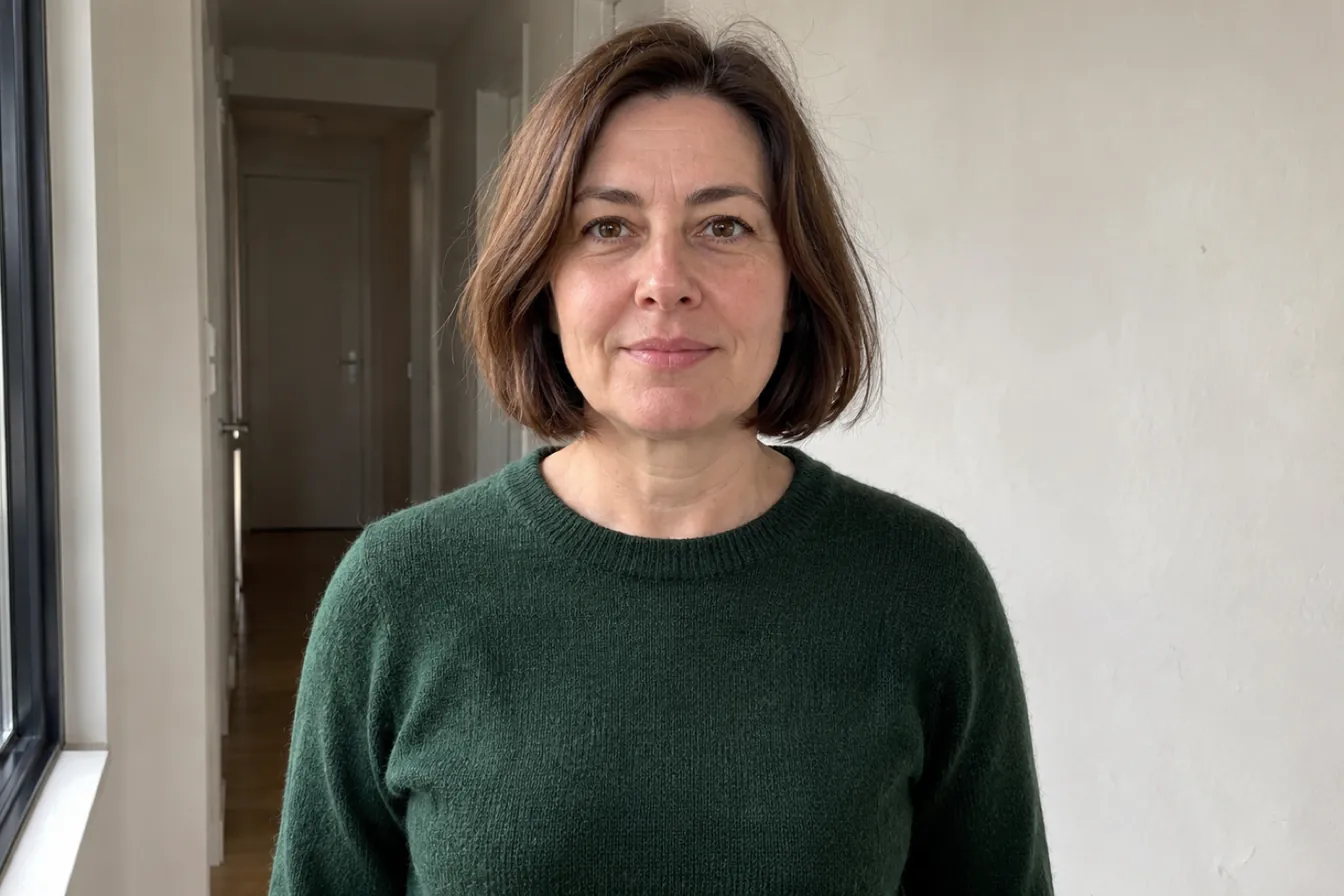
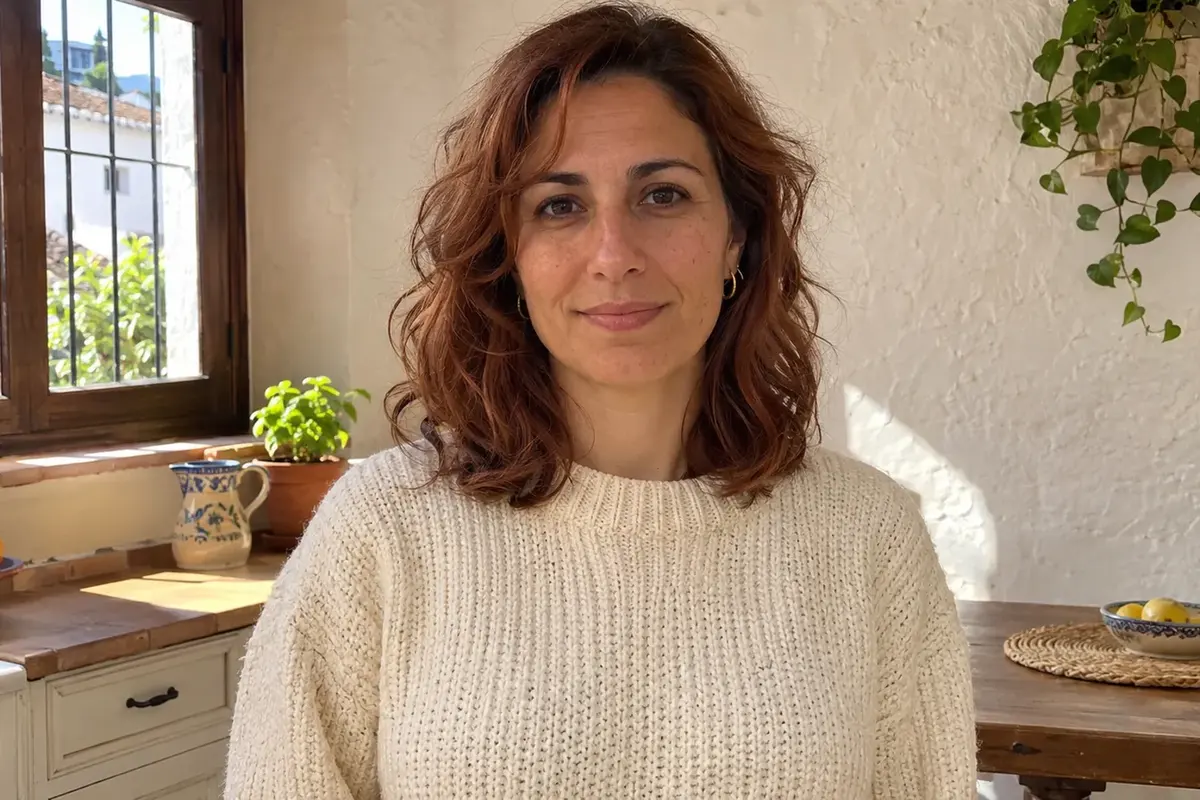
Woman with olive skin and warm auburn-brown hair standing in soft daylight beside a window, wearing a cream knit
  • Warm auburn
  • Warm mahogany
  • Deep burgundy
  • Burnt copper
  • Soft auburn brown

What is the best red hair color for olive skin?

Warm auburn and red-brown are the safest red hair colors for olive skin, followed by dark mahogany. They keep enough brown in the formula that the red reads as rich rather than orange, and they sit at a depth olive skin can carry. Burgundy works on medium to deep olive. Bright cherry and very light copper are the reds most likely to make olive skin look tired or sallow.

Why olive skin reacts to red differently

Red hair color for olive skin is a much wider decision than "red or not". Auburn, mahogany, burgundy, cherry and red-brown all sit on a different point between brown and red, and olive skin reacts to each one differently. Olive has a green-grey cast under the warmth, and red is the opposite of green, so every red you hold near your face changes how much of that cast you see. The shades below are ranked by how safely they handle it, with the exact depth and wording to take to your colorist.

Olive skin is not simply warm. It is yellow with a thin layer of green-grey underneath, which is why it tans easily and why it can look flat in the wrong color. Red sits across the color wheel from green, so a red frame makes the green in the skin more noticeable by contrast, while a brown-red frame blends into it. That one fact explains most of the results people get: a deep auburn looks like part of the face, and a bright cherry makes the same face look washed out.

Depth decides the rest. Most olive skin sits at a medium to deep level, and red needs a matching weight. A red at level 5 or 6, the shade of milk chocolate with a red cast, has enough brown to look expensive. A red at level 8 or 9, the pale orange most people picture when they say "ginger", has almost no brown left, and on olive skin it reads as a wig. If your natural hair is dark, the red you choose should stay one or two levels above it, not five.

Undertone inside the red matters as much as depth. Reds are built on three bases: orange (copper), brown (auburn, chestnut) and violet-blue (mahogany, burgundy, cherry). Olive skin handles the first two comfortably and the third in small, deep doses. A violet-red with no warmth in it can pull the skin toward grey, which is the same effect an ash brown has. This is why the best olive-skin reds are brown-based, and why the copper family has its own guide instead of being folded in here.

Red shades for olive skin, from safest to boldest

  • Warm auburn
  • Soft auburn brown
  • Medium auburn
  • Chestnut auburn

Auburn: the dependable middle

Auburn is red-brown, and that is exactly why it works. Ask for a level 5 or 6 warm auburn with a golden-brown base, not a red with brown added. On a natural level 3 or 4 head it takes one lift and a gloss, so it is a single-session color. Medium olive skin looks most natural here. Light olive can go a level lighter; if you are deep olive, stay at level 4 so the skin does not outweigh the hair.

  • Warm mahogany
  • Dark mahogany
  • Red-brown
  • Chestnut red

Red-brown and mahogany: deep and low risk

Mahogany adds a hint of violet to a brown-red base, which gives depth without the orange. The trick is to keep it warm: a warm mahogany has a copper undertone and reads as dark cherrywood, while a cool one reads as plum. These are the best choices if you have dark brown or black hair and want a visible change without bleaching. A gloss over a level 3 or 4 base is often enough, and it fades gently instead of going orange.

  • Deep burgundy
  • Burgundy brown
  • Black cherry
  • Dark cherry brown

Burgundy and dark cherry: the bold option

Burgundy is the one red family that leans cool, so olive skin needs to earn it. It suits medium to deep olive skin with strong natural contrast, especially with dark brown eyes. Keep the formula at level 3 or 4 and ask for burgundy with a brown base. Put it on a light olive complexion and the green cast shows up at the temples and jaw. A quick gloss is the safe way to test whether you like it.

  • Burnt copper
  • Deep copper
  • Cinnamon copper
  • Copper brown

Copper: only when you want the brightest red

Copper is the orange-based red, and it has more risk and more reward on olive skin than the others. It works at medium depth with brown in it, and it is a good fit for golden olive with hazel or green eyes. The full breakdown of copper shades, formulas and upkeep is in the copper hair color for olive skin guide, so this page treats it as one option among five.

Want to see auburn and mahogany on your own face?

Try red shades on my photo

How to choose and keep your red

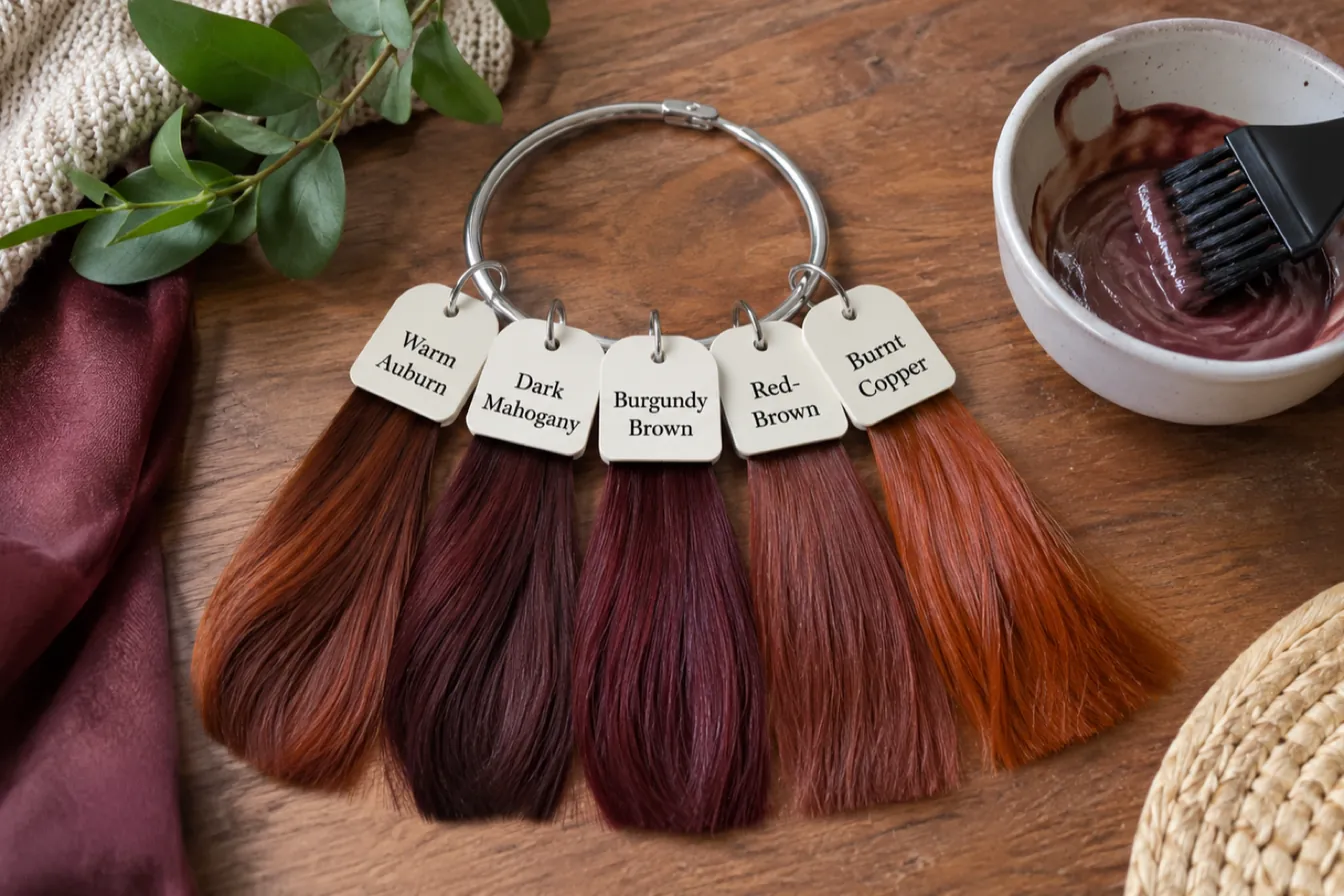
Hair color swatch ring on a table showing warm auburn, dark mahogany, burgundy brown, red-brown and burnt copper next to a toning bowl
  1. 1

    Test the red before you color

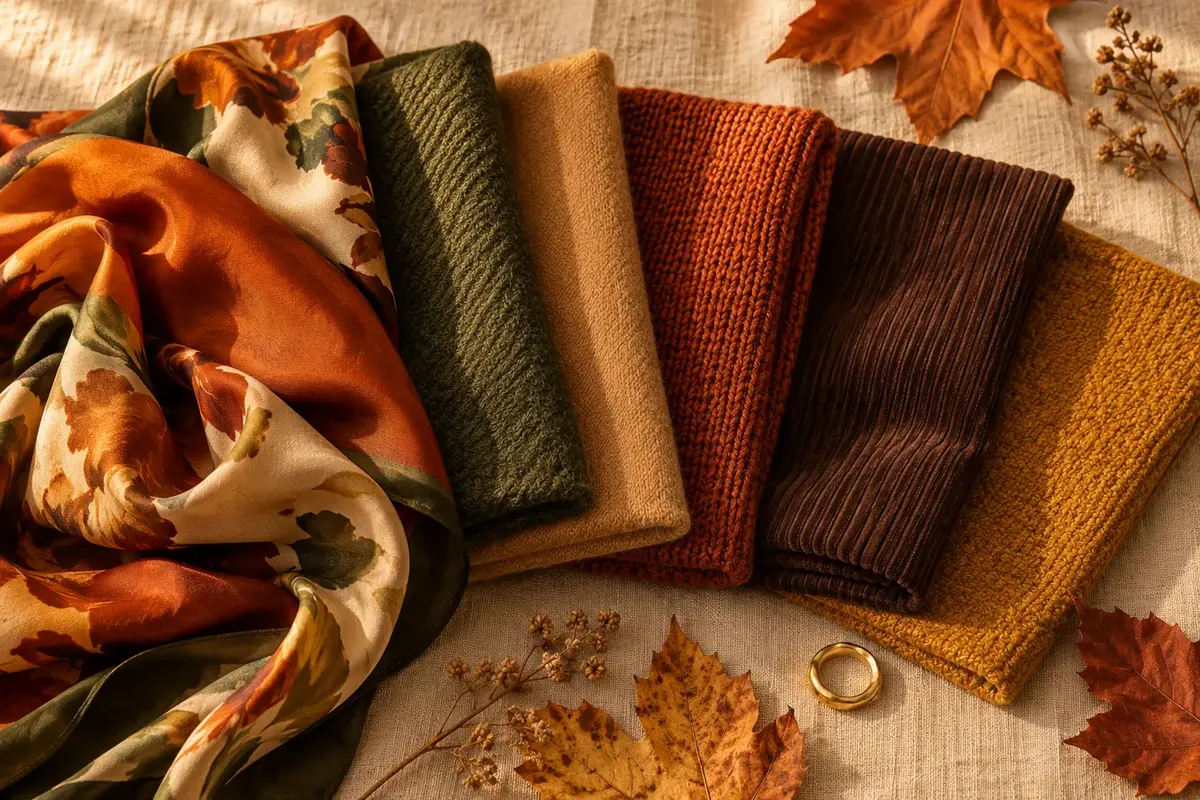
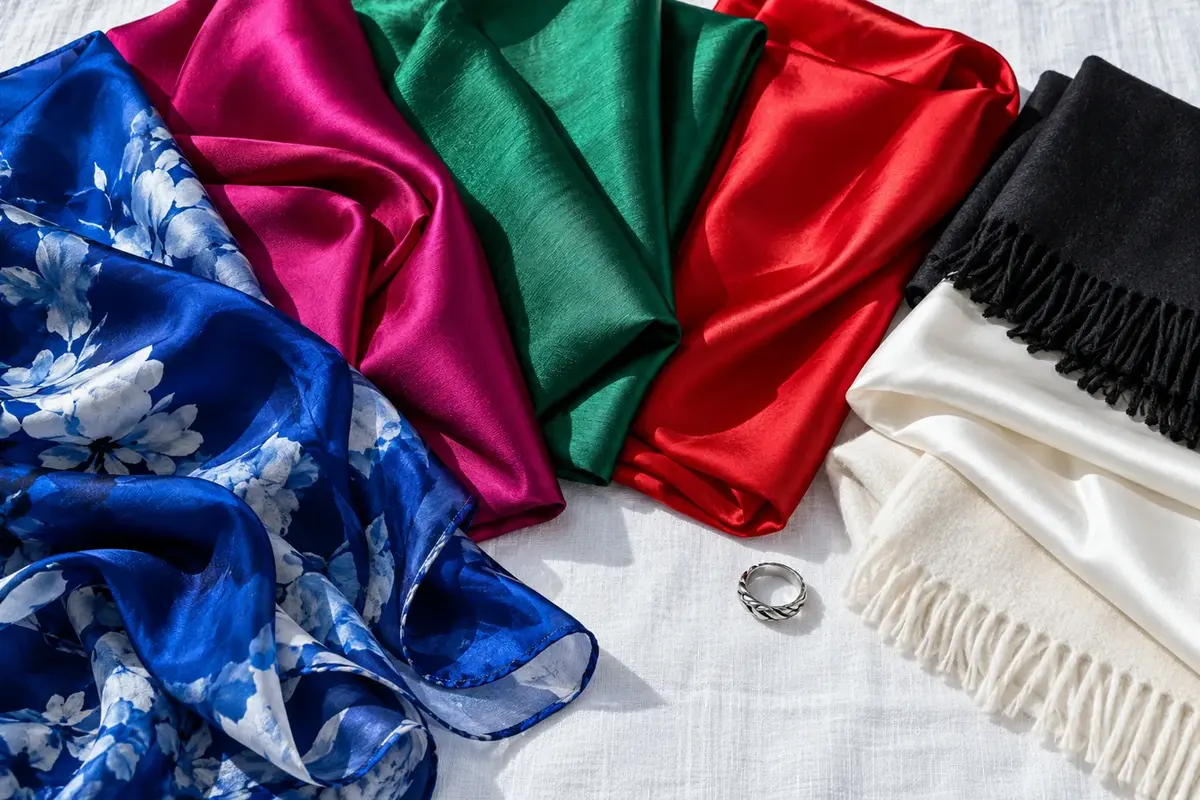
    Hold a red scarf or sweater under your chin in daylight, once in a brown-red like brick or rust and once in a violet-red like raspberry. If the skin looks richer in the first and greyer in the second, stay in the auburn and mahogany range. If both look fine, burgundy is open to you. If the brick red makes you look yellow, go deeper and browner.

  2. 2

    Start with a gloss, not a lift

    A red gloss on natural brown hair lasts four to six weeks and shows how a red sits against your skin without bleach. If you like it, the next step is a permanent formula. Going from level 3 to a bright red can take two sessions; auburn and mahogany usually take one. Never go to level 8 first and then add red on top, because the underlying orange can read as brassy.

  3. 3

    Plan for fade, because red fades first

    Red molecules are the smallest and leave the hair soonest. Wash in cool water every other day, use a color-safe sulfate-free shampoo, and add a red-depositing conditioner once a week. Expect a refresh gloss every six weeks. Never use blue or violet toning shampoo, which cancels the red and turns it muddy.

  4. 4

    Match brows and makeup to the red

    Keep brows in a warm taupe or soft brown, no redder than your roots and no more than one shade lighter than your hair. If you have any redness or rosacea in the cheeks, choose a brown-weighted red like chestnut red, and avoid saturated reds that echo the flush. A matte brown-rust lip and bronzer with a little warmth keep the face from looking washed out.

Preview the red before you book

A red can look right on a swatch and wrong against your skin. Upload a selfie and compare auburn, mahogany and burgundy side by side with the virtual hair color try-on before committing to the color chair.

Reds that tend to go wrong on olive skin

Bright cherry red

A clear blue-red has no brown to blend with olive skin. It sets the green cast against the hair and the face looks tired. If you love cherry, choose black cherry at level 3 or 4.

Light orange red

Level 8 or 9 orange-red leaves almost no depth. Olive skin usually needs the hair to carry some weight, and pale ginger shades disappear on it or look costume-like.

Pink-toned red

Rose and raspberry reds add blue and pink, which sit furthest from olive warmth. They pull the skin toward grey and show every shadow under the eyes.

Flat fire-engine red

A single-process saturated red with no dimension is the shade most often chosen from a box. On olive skin it can look painted on and it fades to orange within two weeks.

Find the depth and undertone that fits you

Start my color analysis

Red swaps for olive skin

Replace the reds that fight the green-grey cast with ones that sit with it.

Boldest red

Bright cherry or raspberry
Black cherry or burgundy brown

The brown base keeps the red from setting off the green in olive skin.

Lighter red

Level 8 strawberry or orange red
Medium auburn at level 6

More depth gives the face a frame it can balance against.

Dark hair to red

Bleach to level 9 and tone red
Lift to level 5 and gloss warm auburn

Fewer sessions, less damage and a color that grows out gracefully.

Maintenance

Violet shampoo to stop brass
Red or copper depositing conditioner

Violet cancels warmth and turns red muddy, while deposit tops it up.

Cool reds

Pink-red or plum-red
Warm mahogany with a copper undertone

Warm mahogany reads as brown-red, not violet, against olive skin.

Subtle red

All-over single-process red
Red-brown with face-framing auburn pieces

Dimension looks natural and softens regrowth lines at the part.

Which seasonal palette suits which red

Olive skin crosses several seasons. Your season decides how deep the red should go and how much warmth it needs.

Deep Autumn

Deep Autumn

Deep olive skin with dark brown or hazel eyes and natural dark hair. Dark mahogany, red-brown and burnt copper brown at level 3 or 4 are your reds. They match your natural depth, so the color reads as an enrichment of your own.

Learn more
Warm Autumn

Warm Autumn

Golden medium olive with warm brown, hazel or green eyes. Warm auburn at level 5 or 6 and copper brown are your best reds. Both match the golden warmth of the skin, and they can handle a few lighter pieces around the face.

Learn more
Deep Winter

Deep Winter

Deep olive skin with a cooler cast, dark eyes and high contrast. Burgundy brown, black cherry and dark mahogany suit you more than copper or orange-based reds. Stay deep: a level 3 burgundy is the cleanest result.

Learn more

Choose the red that reads as your own

The best red for olive skin is the one that looks like it could be your hair. For most people that is a warm auburn or a red-brown at level 5 or 6. If you are deeper, mahogany and burgundy give you the same richness without the orange. Take the swatch names and levels above to a colorist, ask for a gloss first and keep the maintenance plan, and the red will last longer than the first wash.

Stop guessing — preview every color on you

Preview Yourself In Your Palette

Find my best hair shade

Want to see these colors on you? Virtual Hair Color Try-On

Frequently Asked Questions About Red Hair Color for Olive Skin

Does red hair look good on olive skin?

Yes, if the red has brown in it. Warm auburn, red-brown and dark mahogany look natural on olive skin because they sit close to its warmth. Bright orange, cherry and pink-toned reds are the ones that tend to make olive skin look sallow.

What is the best red hair color for olive skin?

Warm auburn at level 5 or 6 is the most reliable red hair color for olive skin. If your skin is deep olive, red-brown or dark mahogany at level 3 or 4 is the safer and richer choice. Copper has its own shade guide, so it is worth reading before you choose it.

Does auburn hair color suit olive skin?

Auburn suits olive skin better than almost any other red. The brown base blends with the green-grey cast, and the red adds warmth without orange. Ask for a warm auburn rather than a cool or plum one, and match the depth to your skin: lighter for light olive, darker for deep olive.

Can olive skin wear burgundy hair?

Medium to deep olive skin can wear burgundy, as long as the base is brown and the formula stays at level 3 or 4. Light olive skin often looks tired in burgundy because the cool violet pulls up the green cast. A burgundy-brown gloss is a low-risk test.

What red hair color suits olive skin and brown eyes?

Deep warm auburn, red-brown and mahogany all work on olive skin with brown eyes. The brown iris picks up the warmth in these shades, and the result looks coordinated. Burgundy brown is an option when you want more contrast, but copper has its own guide.

How long does red hair color last on olive skin?

Expect a permanent red to look its best for four to six weeks and then fade toward orange. A gloss fades faster, around three to four weeks. Cool water, sulfate-free shampoo and a weekly red-depositing conditioner can add two or three weeks, and darker reds like mahogany and burgundy fade more gracefully than bright ones.