Best Linen Colors forWarm Undertones
Linen scatters light with a matte, slightly textured finish that makes muted and earthy tones look. Discover which shades flatter you most — and which to skip.
Linen has a distinctive relationship with light that sets it apart from other fabrics. Its natural fiber irregularity and open weave create a matte, textured surface that scatters light broadly, giving colors a natural, slightly sun-bleached quality. This means colors in linen look more natural and muted than in smoother fabrics — less polished, more organic. For warm undertones, this quality is a genuine asset. Earth tones, warm neutrals, and sun-baked hues look at home in linen in a way that feels intentional rather than constructed. The fabric amplifies the naturalness of warm tones rather than fighting it.


3,000+
happy clients
How Linen's Texture Changes Color for Warm Undertones
Linen has a distinctive relationship with light that sets it apart from other fabrics. Its natural fiber irregularity and open weave create a matte, textured surface that scatters light broadly, giving colors a natural, slightly sun-bleached quality. This means colors in linen look more natural and muted than in smoother fabrics — less polished, more organic. For warm undertones, this quality is a genuine asset. Earth tones, warm neutrals, and sun-baked hues look at home in linen in a way that feels intentional rather than constructed. The fabric amplifies the naturalness of warm tones rather than fighting it.
Linen fiber has a natural irregularity — the fibers vary in thickness and the weave is open and slightly coarse compared to cotton or silk. This creates micro-variations in the fabric surface that scatter light in different directions, producing the signature matte, slightly rough texture linen is known for. Colors in linen look desaturated and organic: a vivid orange becomes a sun-dried terracotta; a bright blue becomes a faded coastal blue. This natural muting is the key to understanding linen color for warm undertones.
For warm undertones, linen's natural muting quality is perfectly aligned with the color characteristics that are already flattering. Warm complexions look best in colors with some earthiness or muteedness — pure vivid colors can look slightly artificial against warm skin. Linen inherently provides that earthiness, making warm earth tones, muted naturals, and sun-bleached warm colors look completely natural against warm skin. The fabric and the undertone share the same aesthetic language: organic, sun-warmed, and unforced.
The key consideration is that very pale or cool linen colors don't benefit from the same natural harmony. Cool linen shades — ice blue, cool grey, stark white — may have the same muted linen quality but the temperature mismatch with warm undertones means they still create a slightly draining, cool effect. Warm undertones should focus on linen's muted quality applied to warm hues for the most flattering results.
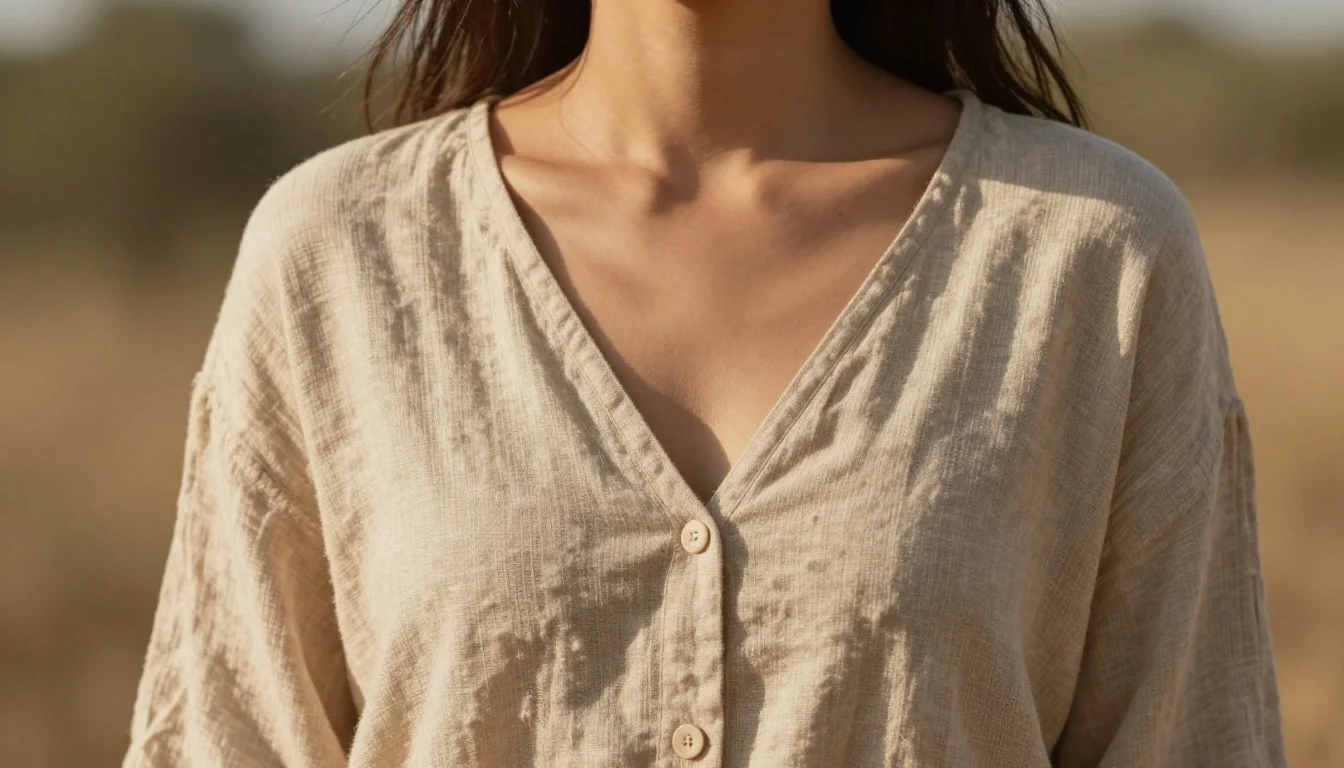
What linen colors are best for warm undertones?
Natural ecru, terracotta, warm olive, dusty amber, and warm rust are the most flattering linen colors for warm undertones. Linen's muted, textured quality gives these earthy tones a natural, organic beauty that harmonizes beautifully with warm complexions. The fabric and undertone share the same aesthetic — sun-warmed, natural, and unforced.
Your Most Flattering Linen Colors
Natural Linen and Warm Ecru
Natural undyed or barely-dyed linen in its raw ecru state is the single most flattering linen color for warm undertones. The natural fiber's warmth — a golden, straw-like yellow quality inherent in linen plant fibers — harmonizes beautifully with warm complexions. Ecru and raw cream in linen don't have to do any color work; they are naturally the right temperature for warm undertones. This is not an accident: linen was traditionally woven and worn in sun-warmed climates, and its natural warmth reflects that heritage.
Terracotta, Clay, and Warm Rust
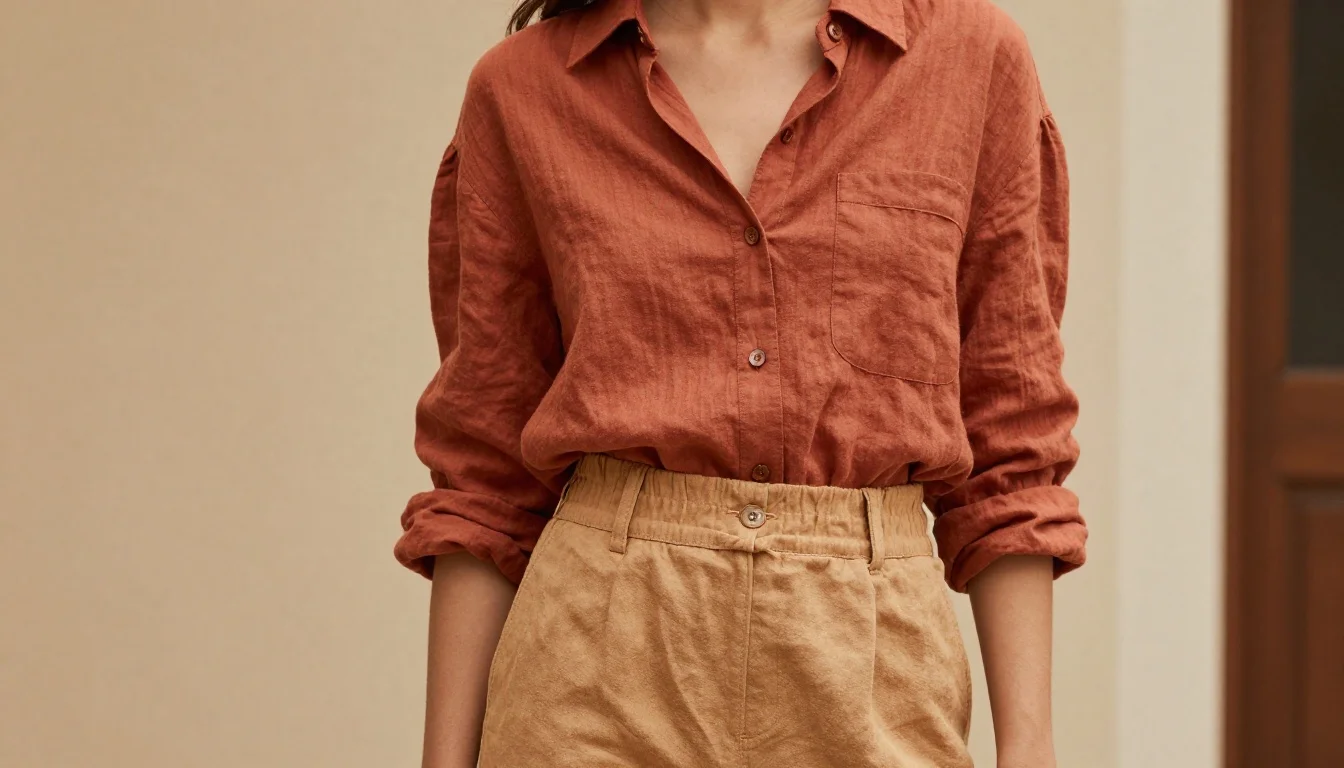
Earth-toned linen is exceptional for warm undertones. Linen's natural muting takes terracotta and rust — colors that can look bright or harsh in smooth fabrics — and gives them a sun-dried, naturally faded quality that looks beautiful. Terracotta linen looks like a pot baked in a wood oven; rust linen looks like autumn leaves after a dry summer. These colors harmonize with warm undertones because they share the same earth-warm quality, and the linen texture integrates them at the skin in an organic way.
Warm Olive and Dusty Sage
Warm olive and dusty sage linen are among the most naturally harmonious colors for warm undertones. The yellow-green quality of olive reflects the golden component of warm complexions while the linen texture desaturates it beautifully. Warm sage has a slightly greyer quality but retains enough warmth to harmonize. These botanical colors look as though they were designed to work with linen — they embody the same sun-bleached Mediterranean aesthetic that makes warm undertones glow.
Warm Amber and Golden Yellow
Amber and golden tones in linen look distinctly different from the same tones in other fabrics — the muting and scattering of linen fibers turn vivid yellows and ambers into sun-bleached, organic tones that look genuinely beautiful. Warm undertones with their golden quality have a natural affinity for amber — the colors are essentially in the same family. Linen integrates this affinity rather than stating it loudly, creating an effortless warmth.
Ready to see natural linen & ecru on your face?
Start my color analysisHow to Wear Linen Well with Warm Undertones
Build around natural ecru as your foundation
Natural linen in ecru or raw cream is the single most versatile and flattering foundation color for warm undertones. It works for every occasion and season, pairs with any other warm linen color, and requires no color thinking — the natural warmth of linen fibers does all the work. An ecru linen shirt or dress on warm undertones looks effortless precisely because the fabric and undertone share the same natural warmth.
Use earth tones for color statements
When you want color in linen, reach for terracotta, warm clay, faded rust, or olive. These earth tones are at their most beautiful in linen — the fabric's texture and muting quality amplifies their organic character. A terracotta linen shirt on warm undertones in summer is a genuinely stunning combination. The same color in silk or cotton would look more manufactured; in linen it looks like it grew that way.
Embrace tonal dressing in warm linen
Linen in warm tones lends itself particularly well to tonal dressing — wearing multiple warm shades together in linen creates a layered, sun-bleached Mediterranean aesthetic that is both flattering and beautiful. Ecru linen trousers with a warm olive linen shirt, or terracotta linen with warm clay — these combinations work because linen's texture unifies the tones while the warm colors harmonize with each other and with warm undertones.
Wear linen at the right occasions
Linen's natural, relaxed texture means it works best for casual to smart-casual contexts — it simply doesn't read as formal in the way that structured fabrics do. For warm undertones who want to incorporate flattering linen colors, focus on warm-weather casual wear, travel, weekend wear, and summer occasions. Linen's natural quality is an asset in these contexts and makes warm undertones look naturally beautiful.
Linen Colors That Work Against Warm Undertones
Cool white linen
Stark white linen has a brightness that creates a cool, slightly bleached quality against warm skin. Linen's scattering means white can look papery and cold, particularly against the golden quality of warm undertones. Warm cream, natural ecru, and warm ivory linen are far more flattering — they have the same lightness without the cool brightness.
Ice blue or cool sky blue linen
Cool blue linen has a washed-out, slightly grey quality due to linen's muting effect. Combined with the temperature mismatch between cool blue and warm undertones, ice and sky blue linen can create a slightly sallow, draining appearance. Dusty coastal blues with slight warm tones are a better choice if you want blue linen.
Cool grey linen
Grey linen reads as flat and slightly ashy against warm undertones. The muting quality of linen doesn't add warmth to cool grey — it just makes it look even more desaturated and flat. Warm greige or warm stone linen has the same neutral quality with enough warmth to stay harmonious.
Very vivid or highly saturated colors in linen
While linen naturally mutes colors, very saturated vivid linen — bright red, electric blue, vivid fuchsia — fights the fabric's organic, natural aesthetic. These colors don't harmonize well with linen's texture and can look cheap rather than vibrant. Muted, natural versions of these colors suit linen's character and warm undertones much better.
Stop guessing — preview every look on you
See these looks on my photoLinen Color Swaps for Warm Undertones
Swaps that maximize linen's natural harmony with warm complexions.
White linen has a cool, bleached quality against warm skin. Natural ecru linen shares its warmth — the fiber's golden quality harmonizes naturally with warm undertones.
Cool ice blue linen drains warm undertones. Dusty indigo and warm-toned faded blues have an organic quality that works with linen's texture and warm undertones.
Cool grey linen looks flat against warm skin. Warm stone and khaki have the same neutrality with golden warmth that harmonizes beautifully.
Vivid saturated colors fight linen's organic aesthetic. Terracotta and rust embrace it — they look like the fabric was made to hold these tones.
Pale pink linen can look faded and slightly cool against warm skin. Peach and coral have the warmth that integrates beautifully with warm undertones in linen.
Cool mint fights warm undertones and linen's natural palette. Olive and sage are the greens that linen was born to hold — organic, earthy, and warm.
Which Palette Might Be Yours?
Warm undertones span the Autumn and Spring seasonal families. Linen's muted, organic quality makes it particularly well-suited to Autumn palettes, though warm Springs can wear it beautifully too.
True Autumn
Learn moreTrue Autumn types have muted, earthy warm undertones that are perfectly matched to linen's natural aesthetic. Terracotta, olive, warm rust, and natural ecru linen are your ideal palette — these colors look like they were made for both the fabric and your complexion.
Warm Autumn
Learn moreWarm Autumn types with deep golden or amber undertones look stunning in rich earthy linen — deep terracotta, burnt amber, and warm olive. Linen's muting quality suits Warm Autumn's naturally rich, saturated coloring beautifully.
Warm Spring
Learn moreWarm Spring types can wear linen's lighter warm tones beautifully — peach, warm coral, light camel, and warm golden yellow. Choose the clearer, lighter end of linen's warm palette rather than its deepest earth tones.
Find Your Exact Colors
Linen's natural warmth and muted texture make it a particularly harmonious fabric for warm undertones. The exact shades that work best for your specific warmth — whether golden Autumn or bright Spring — depend on the depth and temperature of your undertone. A personalized color analysis identifies which warm linen palette is most flattering for your specific complexion.
Stop guessing — preview every color on you
Preview Yourself In Your Palette
Get my personalized paletteStop guessing — preview every color on you
Preview Yourself In Your Palette

Related Guides for Best Linen Colors for Warm Undertones
Explore more personalized color advice based on your features.
Want to see these colors on you? Skin Undertone Test — free to try.
Frequently Asked Questions About Best Linen Colors for Warm Undertones
What linen colors are best for warm undertones?
Natural ecru, terracotta, warm olive, dusty amber, and warm rust are the most flattering linen colors for warm undertones. Linen's muted, textured quality gives these earthy tones a natural, organic beauty that harmonizes beautifully with warm complexions. The fabric and undertone share the same aesthetic — sun-warmed, natural, and unforced.
Should warm undertones wear white linen?
Natural ecru and warm cream linen are better choices than bright white for warm undertones. Linen's scattering quality gives white a slightly cool, bleached appearance that can create a temperature mismatch with warm skin. Natural linen — which has a built-in warm golden quality — is the ideal light linen option for warm undertones.
Why does linen look so natural with warm undertones?
Linen has an inherent warmth in its natural fiber — a golden, straw-like quality from the flax plant. This natural warmth harmonizes with warm complexions before any color is even applied. Combined with linen's muted, light-scattering texture that desaturates colors into earthy, organic tones, warm undertones and linen share the same aesthetic language: natural, sun-warmed, and unforced.
Is terracotta linen good for warm undertones?
Terracotta linen is one of the most flattering color-fabric combinations for warm undertones. Linen's muting quality takes terracotta from potentially bright to sun-dried and organic, which harmonizes beautifully with warm complexions. The earthy red-orange of terracotta in linen looks as though it belongs naturally with warm skin.
Can warm undertones wear blue linen?
Warm undertones can wear linen in dusty, warm-toned blues — faded indigo, dusty denim blue, or slate blue with warm undertones. Ice blue and cool sky blue linen don't suit warm undertones because the cool temperature conflicts with warm skin. Look for blues that have been desaturated to the point of having a warm, earthy quality.
What is the best linen outfit color for summer with warm undertones?
A natural ecru linen set or terracotta linen dress is the most effortlessly flattering linen choice for warm undertones in summer. Warm olive linen trousers with a warm cream linen shirt is another ideal combination. The key is staying within the warm, earthy palette that linen naturally creates — sun-bleached, organic, and perfectly harmonized with warm skin.