Best Cashmere Colors forWarm Undertones
Cashmere absorbs light softly, making muted and deep colors look richest. Discover which shades flatter you most — and which to skip.
Cashmere doesn't reflect light — it absorbs it. The soft, fine fibers scatter incoming light rather than bouncing it back, which means colors in cashmere look deeper, richer, and more muted than the same color in silk or cotton. For warm undertones, this is a significant advantage. Muted, earthy, and deep warm tones look their absolute richest in cashmere. The fabric's light-absorbing quality softens colors just enough to create the gentle, enveloping warmth that cashmere is famous for — and that warmth is particularly well-matched to golden, peachy, and amber complexions.


3,000+
happy clients
Why Cashmere's Light-Absorbing Quality Changes Color
Cashmere doesn't reflect light — it absorbs it. The soft, fine fibers scatter incoming light rather than bouncing it back, which means colors in cashmere look deeper, richer, and more muted than the same color in silk or cotton. For warm undertones, this is a significant advantage. Muted, earthy, and deep warm tones look their absolute richest in cashmere. The fabric's light-absorbing quality softens colors just enough to create the gentle, enveloping warmth that cashmere is famous for — and that warmth is particularly well-matched to golden, peachy, and amber complexions.
Cashmere's extraordinary softness comes from the fineness of its fibers — often under 19 microns in diameter. These fine fibers create a surface that scatters light in many directions rather than reflecting it back in a concentrated way. The practical effect is that colors in cashmere look softer, deeper, and more enveloping than in reflective fabrics. A terracotta in cashmere looks richer and more muted than the same terracotta in silk.
For warm undertones, this light-absorbing quality amplifies the already flattering relationship between warm colors and warm skin. The muted depth of cashmere makes warm earthy tones — camel, terracotta, rust, golden brown — look particularly luxurious. These colors already harmonize with warm undertones, and cashmere's softening effect makes them look like they belong together rather than sitting on top of each other.
The consideration for warm undertones in cashmere is that very pale or washed-out colors can look even paler. Cashmere's light absorption means that soft, pale shades lose some of their presence — they look gentle but can lack visual weight. For warm undertones who want pale cashmere, this means choosing shades with a distinct warm quality — warm ivory, soft camel, peachy blush — rather than neutral pale tones that disappear in the soft fabric.
What cashmere colors are best for warm undertones?
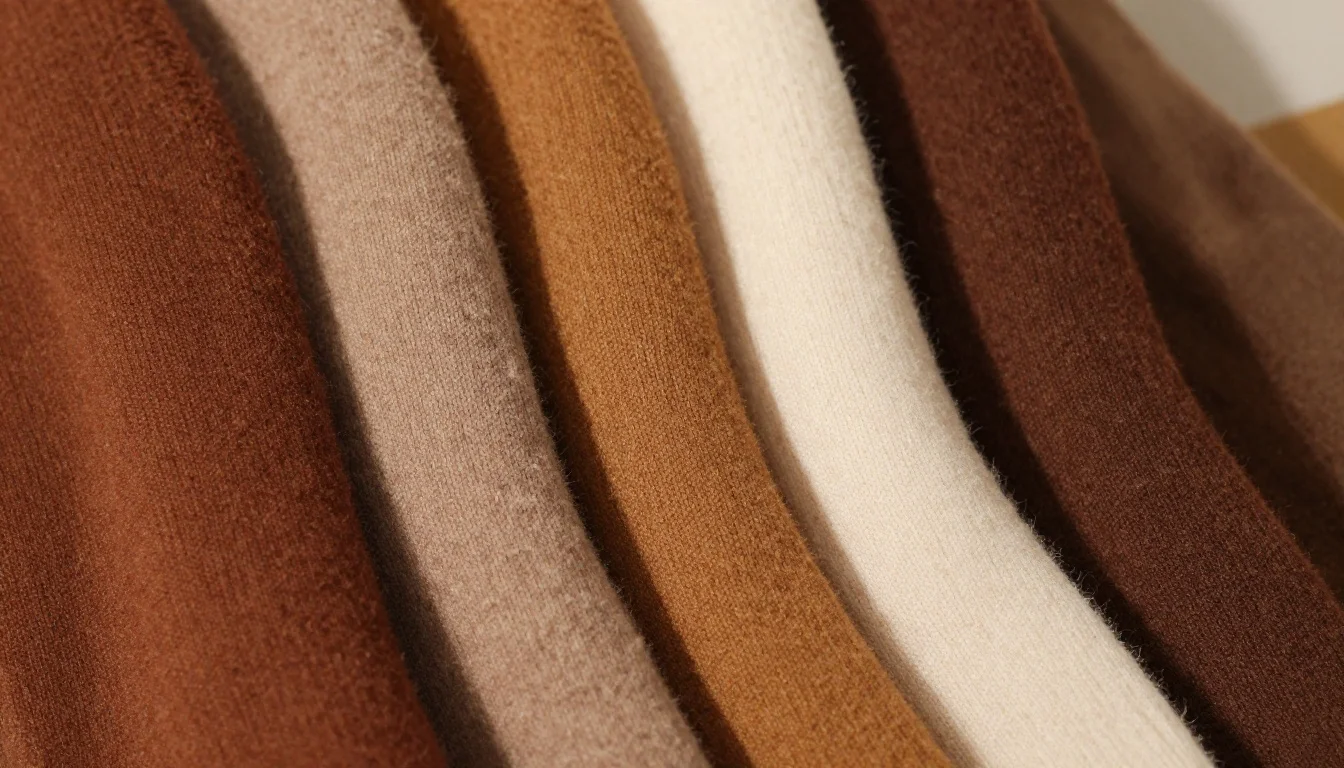
Camel, warm ivory, terracotta, rust, and deep warm browns are the most flattering cashmere colors for warm undertones. Cashmere absorbs light softly, making muted and earthy warm tones look especially rich and deep. These colors harmonize with warm complexions and look luxurious in the soft, light-absorbing quality of cashmere.
Your Most Flattering Cashmere Colors
Camel and Warm Tan
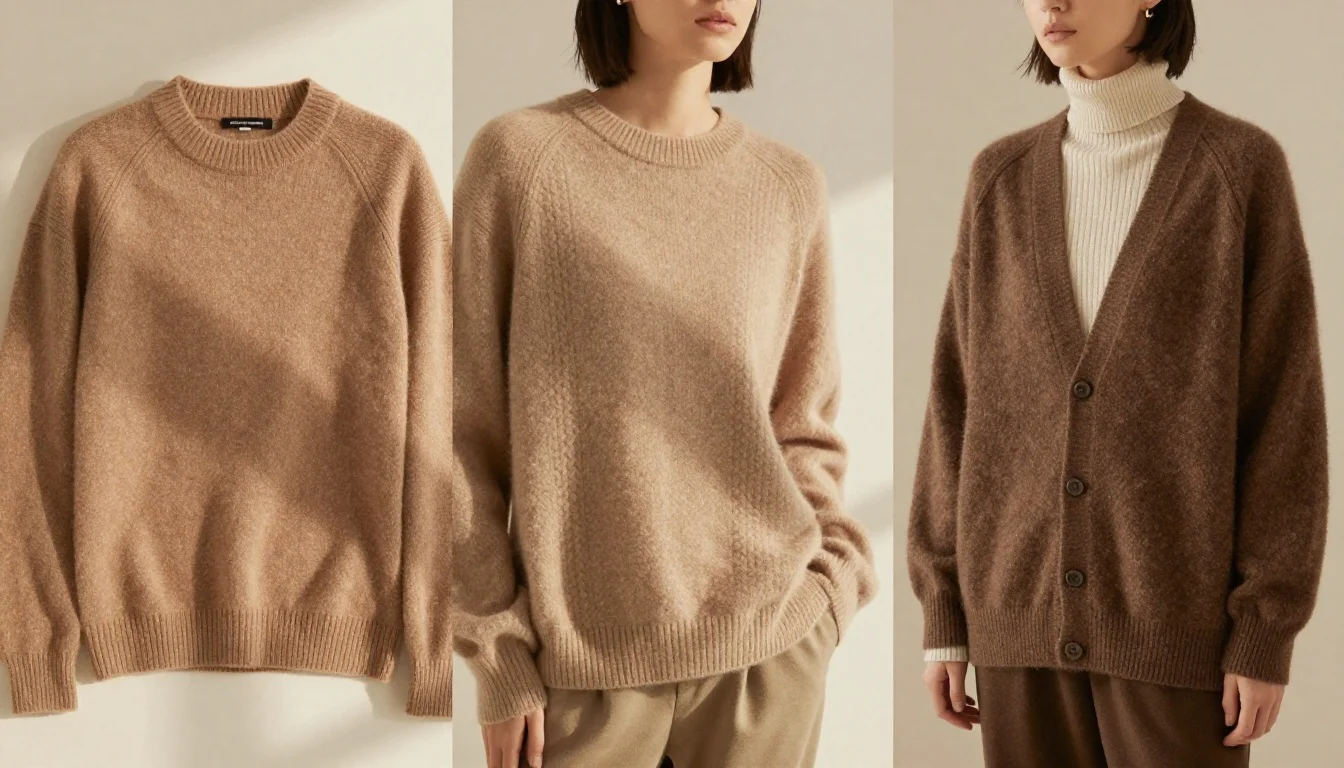
Camel cashmere is perhaps the single most iconic and flattering choice for warm undertones. The golden-brown warmth of camel harmonizes perfectly with warm complexions, and cashmere's light-absorbing quality makes camel look deeper and richer than it would in any other fabric. A camel cashmere sweater on warm undertones looks as though the color was specifically made for that complexion — it blends with the warmth of the skin while providing gentle depth.
Terracotta, Rust, and Warm Earth
Earth tones in cashmere look exceptionally rich for warm undertones. Cashmere's absorbing quality deepens terracotta and rust, making them look burnished and luxurious rather than bright or jarring. These colors carry the same golden-red warmth as warm skin tones, and the fabric's softness integrates them beautifully at the neckline. A deep terracotta cashmere knit on warm undertones is a perfect winter piece — the color and fabric work together to create warmth in every sense.
Warm Ivory and Rich Cream
Pale warm neutrals in cashmere are particularly effective for warm undertones because the fabric's softness integrates the warmth of the color with the warmth of the skin in an enveloping way. Ivory and cream cashmere don't create a stark contrast — instead they blend gently with warm skin's golden quality, looking naturally put-together. The fabric's texture gives these neutrals depth they wouldn't have in a smoother material.
Deep Warm Browns and Chocolate
Deep warm browns in cashmere look extraordinarily rich for warm undertones. The fabric's light-absorbing quality makes chocolate and cognac cashmere look deeply luxurious — the color seems to have depth within depth. Against warm skin, deep brown cashmere creates a sophisticated, cohesive warmth from collar to complexion. Cognac and mahogany add a reddish quality that creates slightly more contrast while staying within the warm family.

Ready to see camel & golden tan on your face?
Start my color analysisHow to Wear Cashmere Well with Warm Undertones
Build a capsule around camel and ivory
Camel and warm ivory cashmere are the two foundation pieces for warm undertones. A camel cashmere turtleneck, a warm ivory crewneck — these are the pieces that look effortlessly good because the color, fabric, and undertone align completely. They pair with everything in a warm palette and upgrade every outfit they're part of.
Use deep earthy cashmere as a warm layer
Terracotta, rust, and deep cinnamon cashmere layered under a jacket or coat create warmth that permeates an entire outfit. Even when the outer layer is neutral, a warm-toned cashmere base provides a golden quality at the neckline that elevates the whole look. These colors are also timeless enough to wear year after year without dating.
Choose cashmere for your most important pieces
Cashmere's light-absorbing quality makes it particularly good for pieces that live at the neckline — turtlenecks, crewnecks, fine-knit cardigans. The fabric softens color just enough to integrate with the complexion rather than sitting on top of it. For warm undertones, a camel or terracotta cashmere turtleneck is more flattering than the same color in a stiffer fabric.
Layering warm tones in cashmere
Cashmere in warm tones lends itself to tonal layering — multiple warm shades together. A camel cashmere cardigan over an ivory cashmere knit, or a rust cashmere scarf with a chocolate brown coat — these combinations look deliberate and polished because the shared warm quality of the colors creates cohesion, and cashmere's soft texture unifies them.
Cashmere Colors That Work Against Warm Undertones
Cool grey cashmere
Grey cashmere absorbs light in a way that creates a cool, slightly ashy quality near warm skin. Unlike silk where grey reflects its coolness, in cashmere grey has a dull, muted quality that creates a flat, slightly drained look against warm undertones. The fabric's softness doesn't save grey from the temperature mismatch.
Cool lavender and pale blue cashmere
Cool-toned pastels in cashmere look even cooler than they would in brighter fabrics — the light-absorbing quality of cashmere mutes them into a slightly ashy, cool tone that clashes with warm skin. Pale blue or lavender cashmere against warm skin creates the same sallow impression as these colors do in any fabric, but with the added flatness of muted absorption.
Cool charcoal and slate cashmere
Cool dark cashmere shades reflect enough cool temperature to create a slight mismatch with warm undertones. While charcoal can work for warm undertones in structured fabrics, in cashmere's soft, enveloping quality, the cool temperature reads more strongly. Warm dark colors — chocolate brown, deep burgundy — are better choices for deep cashmere.
Bright, saturated cool colors
Cashmere is at its most flattering in muted, rich, or deep tones — bright, saturated colors fight the fabric's natural softening quality. But for warm undertones, bright cool colors like cobalt or vivid teal in cashmere are particularly unflattering: they're both temperature-mismatched and too saturated for cashmere's gentle aesthetic.
Stop guessing — preview every look on you
See these looks on my photoCashmere Color Swaps for Warm Undertones
Getting the richest results from cashmere's light-absorbing warmth.
Grey absorbs light coolly against warm skin. Camel absorbs light warmly, creating a natural harmony that makes warm undertones glow.
Cool darks absorb light with a slight ashy quality against warm undertones. Warm darks absorb with richness that deepens and flatters.
Cool ivory absorbs light with a slight blue quality. Warm cream absorbs light with a golden quality that harmonizes with warm undertones.
Pale blue's cool absorption clashes with warm skin. Terracotta's warm absorption creates a beautiful color-undertone harmony.
Cool plum reflects blue-purple tones. Warm burgundy with its reddish quality absorbs richly and harmonizes with warm skin.
Lavender's cool, muted absorption clashes with warm undertones. Rust creates warm depth that makes the complexion look rich.
Which Season Are You?
Warm undertones in cashmere look most at home in the Autumn seasonal family, where muted, earthy, and rich warm tones are the palette foundation.
True Autumn
Learn moreTrue Autumn is the seasonal home for warm, muted undertones — and cashmere is the ideal fabric for this palette. Terracotta, camel, warm rust, and rich olive in cashmere look exactly as they should: deeply luxurious and perfectly matched to the complexion.
Warm Autumn
Learn moreWarm Autumn types with golden, amber undertones find cashmere's depth-enhancing quality particularly flattering. Deep golden brown, warm burnished orange, and rich cognac cashmere bring out the best in this palette's warm richness.
Warm Spring
Learn moreWarm Spring types can wear cashmere beautifully in their clearer warm tones — warm peach, coral, and bright camel — though the fabric's softening quality works best in the deeper end of Spring's palette rather than the very bright, vivid shades.
Find Your Exact Cashmere Palette
Cashmere's light-absorbing quality makes warm tones look richer and deeper than almost any other fabric. The exact shades that work best for your warm undertones depend on whether your warmth runs golden-amber or peachy-bright, and how deep your overall coloring is. A personalized color analysis identifies your seasonal home and gives you the specific cashmere palette that makes your complexion look warm, rich, and luminous.
Stop guessing — preview every color on you
Preview Yourself In Your Palette
Get my personalized paletteStop guessing — preview every color on you
Preview Yourself In Your Palette

Related Guides for Best Cashmere Colors for Warm Undertones
Explore more personalized color advice based on your features.
Want to see these colors on you? Skin Undertone Test — free to try.
Frequently Asked Questions About Best Cashmere Colors for Warm Undertones
What cashmere colors are best for warm undertones?
Camel, warm ivory, terracotta, rust, and deep warm browns are the most flattering cashmere colors for warm undertones. Cashmere absorbs light softly, making muted and earthy warm tones look especially rich and deep. These colors harmonize with warm complexions and look luxurious in the soft, light-absorbing quality of cashmere.
Why does cashmere make colors look different?
Cashmere's fine fibers scatter light rather than reflecting it, making colors appear deeper, softer, and more muted than in brighter fabrics. This light-absorbing quality means that earthy, muted warm tones look their absolute richest in cashmere — the fabric deepens them without making them harsh. Vivid, saturated colors look slightly softened.
Is camel cashmere flattering for warm undertones?
Yes — camel cashmere is one of the most flattering combinations for warm undertones. The golden-brown warmth of camel harmonizes with warm complexions, and cashmere's light-absorbing quality makes it look deeper and richer than camel in any other fabric. It creates a natural, cohesive warmth from collar to complexion.
Can warm undertones wear grey cashmere?
Grey cashmere is less flattering for warm undertones. The fabric's light absorption gives grey a cool, slightly ashy quality that creates a temperature mismatch with warm skin. Warm neutrals like camel, ivory, and tan cashmere are significantly more flattering alternatives.
What depth of cashmere suits warm undertones best?
Both medium and deep warm cashmere shades work well — camel and ivory for a lighter look, terracotta and rust for a rich colorful choice, chocolate and cognac for deep sophistication. Very pale neutrals can disappear in cashmere's soft texture. Warm undertones generally look best in cashmere when there's a definite warm tone rather than a neutral pale.