Dramatic Classic vs Classica sharp lean, or dead centre?
Both types are fundamentally balanced and symmetrical — even, moderate, and flattered by refined tailoring. The difference is a subtle Yang lean: one carries a touch of sharpness, the other sits perfectly neutral.
Settle it — take the Kibbe quiz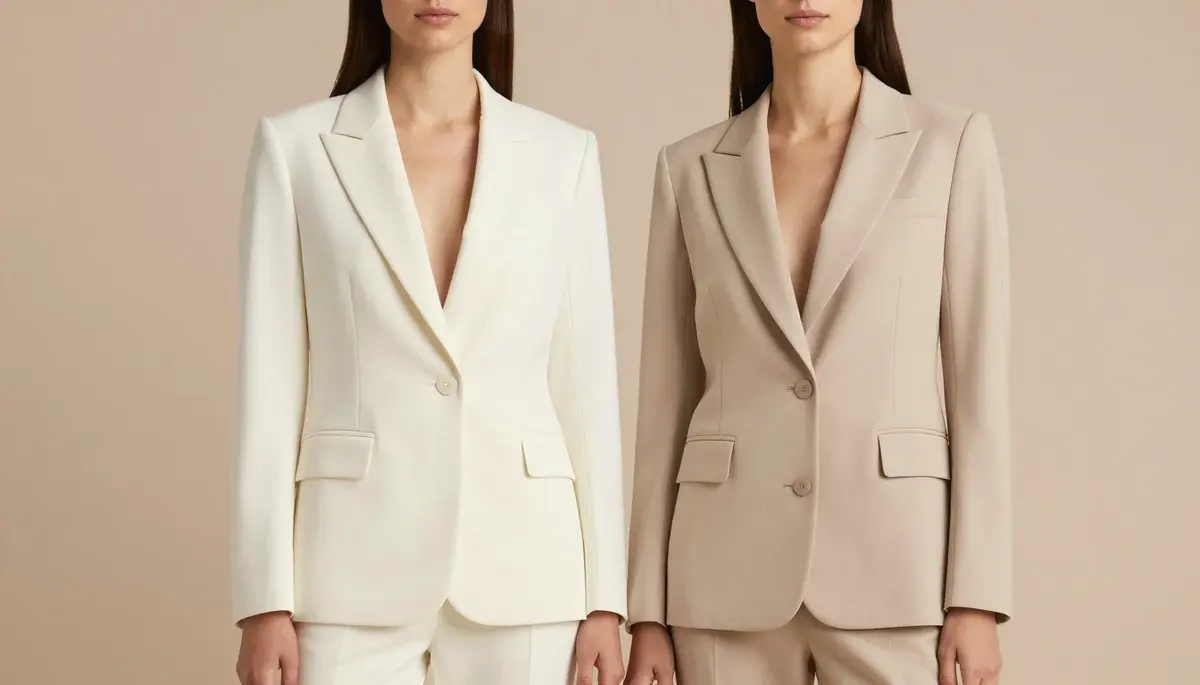
Balanced and symmetrical with a Yang edge — polished, sharp, and refined. Your proportions are even and harmonious, but the impression tips toward crispness.
Perfectly balanced — neither sharp nor soft, but symmetrical and harmonious throughout. Your even, moderate proportions are the whole impression.
Why Dramatic Classic and Classic get mixed up
Dramatic Classic and Classic are the hardest kind of pair to separate because both are defined by balance itself — symmetrical bones, moderate proportions, and no strong Yin or Yang pull. Both look best in clean, timeless, tailored pieces and both are overwhelmed by extremes in either direction. The confusion is baked into how similar balanced types look.
The only real difference is a slight tilt. A Dramatic Classic keeps that balance but tips a hair toward Yang — a little sharpness in the bones and face — so it can and should carry crisper edges, more precise tailoring, and higher contrast. A pure Classic stays exactly centred, so anything sharp reads a touch severe on it; it wants softer, more moderate detail.
The deciding factor
A slight Yang lean is the whole difference
Both are balanced — the question is whether there is any sharpness in the mix. If your bones and face carry a subtle edge, and crisp, precise, higher-contrast tailoring makes you look sharper rather than harsh, you are a Dramatic Classic. If you sit dead centre — no sharp lean at all — then crisp edges tip into severe, and you are a pure Classic that wants softer, lower-contrast, moderate lines.
Dramatic Classic vs Classic, point by point
You’re probably Dramatic Classic if…
- Your balanced frame carries a subtle sharp, angular accent.
- Crisp, precise tailoring sharpens you rather than looking harsh.
- A little higher contrast reads polished, not overwhelming.
- Very soft, low-contrast looks can read slightly bland on you.
You’re probably Classic if…
- You read perfectly balanced with no sharp lean at all.
- Crisp, high-contrast tailoring tips into severe on you.
- Soft, moderate, low-contrast pieces look most harmonious.
- People describe you as timeless and even rather than sharp.
Still torn between the two?
A single answer rarely decides your type — it’s the overall pattern of bone, flesh, and face. Our free 16-question quiz reads all three and tells you which of the 13 types you actually are.
Dramatic Classic vs Classic: Common Questions
What is the difference between Dramatic Classic and Classic?
How can I tell if I have a Yang lean or not?
Are Dramatic Classic and Classic very different in practice?

Meet the colors made for you
Your personalized color analysis in minutes — then see yourself in every look on your real face. One-time payment, no subscription.

Meet the colors made for you
Your personalized color analysis in minutes — then see yourself in every look on your real face. One-time payment, no subscription.