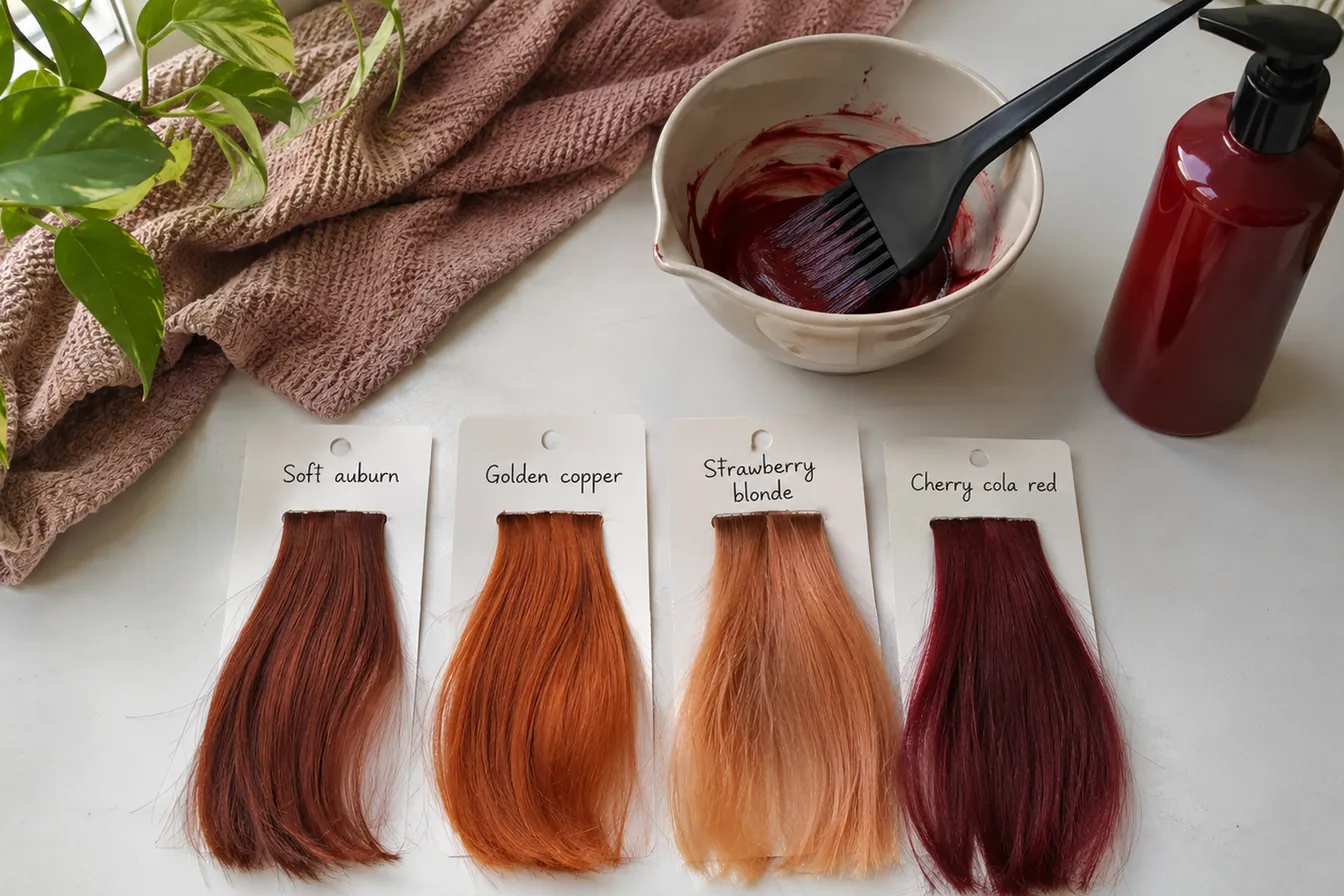
Red hair color for pale skin works best when the red matches how much pink, gold or freckle your skin carries, because red is the one hair family that sits in the same color range as your skin's own flush. Fair skin is the best canvas for red, and also the least forgiving of a wrong one. A copper that is too orange can make a rosy face look sunburned, while a dark auburn can leave warm, freckled skin looking pale and drained. The decision comes down to four reds and three questions about your skin.
Every other hair color is separate from your skin. Red is not. Pale skin has hemoglobin close to the surface, so cheeks, nose and jaw carry their own red, and the hair color interacts with that red directly. A saturated orange-red next to a flushed face creates a vibrating effect, because the two reds compete. A browner, deeper red sits behind the face and lets the skin read as the lighter element. This is why the same copper can look electric on one pale person and angry on another. The difference is whether their skin runs peach and golden, or pink and cool.
The second thing that changes is contrast. Red hair on pale skin is almost always a high-contrast combination, and the degree is yours to set. Light copper and strawberry give a gentle frame. Mid auburn gives a defined one. Deep mahogany and cherry give the highest contrast, and on skin with visible veins or shadows under the eyes they can make the face look paler than it is. If you want your freckles to show, stay in the warm, lighter reds. If you want a smooth, polished face, go deeper and cooler.
Redness in the skin itself deserves honest treatment. If you have rosacea, a ruddy nose, or cheeks that flush easily, a vivid copper or bright ginger will magnify it. A softer, brown-leaning auburn with a bit of depth lowers the contrast between face and hair, so the redness stops being the loudest thing in the room. That does not mean you cannot wear a bright red, it means you should expect to need a calmer base makeup and a deeper tone near the face if you do.