Variant
Golden chestnut
- Visible effect
- Soft gold with a subtle red-brown glow
- Often suits
- Warm coloring wanting gentle warmth
- Salon wording
- Medium golden chestnut with a soft copper reflect
Compare golden, copper, neutral, and deep chestnut, then describe the right red-brown balance at the salon.
Chestnut brown hair color is a brunette shade with a visible red, copper, or warm-gold reflect. It is warmer and more red-brown than chocolate, but usually more grounded and brown-based than auburn. The best version depends on your natural depth, undertone, contrast, and appetite for warmth.


3,000+
happy clients
Chestnut brown is a medium-to-deep red-brown with warm copper, russet, or golden reflect. Golden chestnut is subtle and sunlit, copper chestnut is more visibly red, neutral chestnut softens the warmth, and deep chestnut adds brunette depth. It should read brown first, with red warmth revealed in the light.
Chestnut brown hair color is a brunette shade with a visible red, copper, or warm-gold reflect. It is warmer and more red-brown than chocolate, but usually more grounded and brown-based than auburn. The best version depends on your natural depth, undertone, contrast, and appetite for warmth.
The word chestnut describes a warm red-brown family rather than one exact shade. A soft golden chestnut can look like brown hair touched by sunlight, while copper chestnut shows a clearer red reflect. Both remain brunette because brown depth anchors the result.
Chestnut differs from chocolate brown in temperature and reflect. Chocolate is built around cocoa depth and can be warm, neutral, or cool; chestnut needs a red-brown or copper signal. It differs from auburn because auburn usually reads more clearly red, while chestnut keeps brown as the dominant impression.
Warm and neutral-warm coloring often enjoys chestnut warmth, but a very bright copper can overpower softly muted features. Neutral or cool coloring may prefer a neutral chestnut with controlled red, or a deeper brown base with fine copper ribbons. Depth matters: a light chestnut and a deep chestnut create very different contrast around the face.
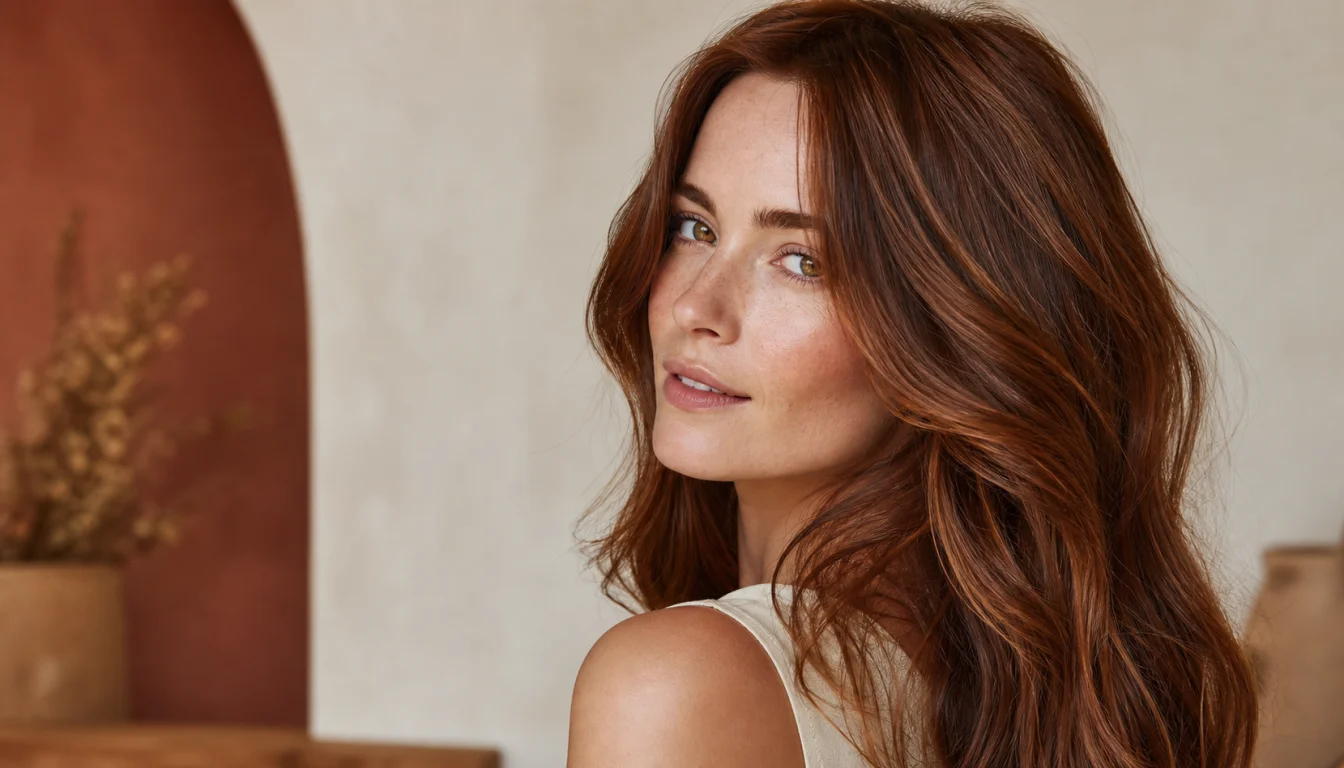
Golden chestnut is the gentlest red-brown option. Gold and subtle copper catch the light while the brown base keeps the result wearable and natural. It is useful when you want warmth without a clearly red finish.
Copper chestnut makes the red component more obvious. It suits coloring that can carry clear warmth and gives medium brown hair a lively reflect. Ask for controlled copper if you want chestnut rather than bright orange copper.
Neutral chestnut tempers red and gold with beige or balanced brown. It can be a better starting point when bright warmth feels too strong or when your natural coloring is neutral and softly blended.
Deep chestnut pairs a strong brunette base with a red-brown glow. It creates more contrast than light chestnut and can look especially rich when the red reflect appears only in direct light.
Choose the variant by how much red you want to see and how much depth your coloring can carry.
Variant
Variant
Variant
Variant
Variant
| Variant | Visible effect | Often suits | Salon wording |
|---|---|---|---|
| Golden chestnut | Soft gold with a subtle red-brown glow | Warm coloring wanting gentle warmth | Medium golden chestnut with a soft copper reflect |
| Copper chestnut | Clearer copper over a brown base | Warm or clear coloring | Rich copper chestnut, brown base still visible |
| Neutral chestnut | Muted, balanced red-brown | Neutral or softly blended coloring | Balanced chestnut with controlled red, not orange |
| Deep chestnut | Dark brunette with red warmth in the light | Deep or higher-contrast coloring | Deep chestnut brown with subtle mahogany reflect |
| Chestnut ribbons | Brown base with red-brown dimension | Anyone wanting lower-commitment warmth | Neutral brunette base with fine chestnut ribbons |
Chestnut, mahogany, and auburn overlap in salon language. Use a photo and specify whether brown or red should be dominant.

Ask for brown with copper reflect if you want chestnut, or copper-brown if you want the red to show more. This distinction prevents a stylist from interpreting chestnut as bright auburn.
Light chestnut softens light coloring, medium chestnut creates an approachable brunette frame, and deep chestnut adds drama. Bring a daylight photo of your natural hair so the target level is clear.
Use color-safe shampoo, protect the hair from heat and strong sun, and condition the mids and ends. Chestnut looks best when the warm reflect catches light rather than becoming dry and matte.
When chestnut fades, a tinted gloss can restore copper or mahogany reflect. If the hair turns too orange, ask for a balanced gloss instead of repeatedly layering red pigment at home.
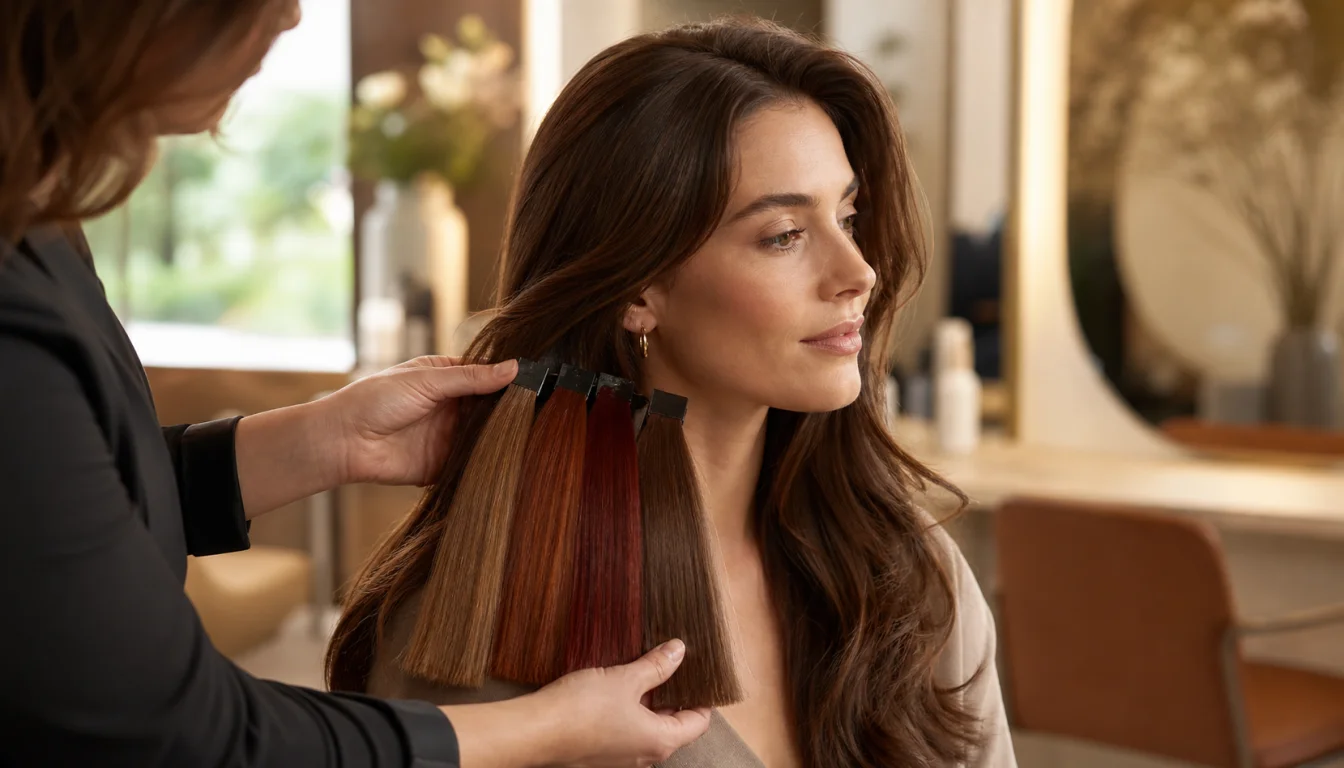
Preview golden, copper, neutral, and deep versions with our virtual hair color try-on so you can choose the red-brown balance with more confidence.
A bright orange result can read copper rather than chestnut because the brown anchor disappears. Add depth or a more neutral brown base when you want red-brown richness.
A strongly ash or blue-brown formula removes the red reflect that defines chestnut. It may be beautiful, but it belongs to the cocoa family rather than true chestnut.
Very pale highlights can make the base look striped and pull attention away from the red-brown dimension. Try honey, cinnamon, or tonal copper ribbons instead.
A dense red-violet formula can read auburn or burgundy rather than chestnut. Keep enough warm brown in the base if you want a natural red-brown finish.
Fine-tune the red-brown balance while keeping chestnut distinct from chocolate and auburn.
A soft gold-copper reflect adds life without changing the overall brunette impression.
The brown base keeps the result grounded while copper makes the warmth visible.
Balanced brown and beige reduce orange intensity while preserving the chestnut character.
A deeper base creates richness and lets the red show mainly when light hits the hair.
Close-value warm pieces create movement without breaking the red-brown base into stripes.
A demi gloss can add warmth and shine while giving you a gentler way to test the shade.
Chestnut usually sits in warm or neutral-warm territory, but the best version changes with depth and chroma. Hair color alone cannot assign your season.
Rich warm coloring often suits copper chestnut, cinnamon brown, and golden mahogany with visible warmth.
Muted warm-neutral coloring may prefer golden or neutral chestnut with a softened, low-contrast reflect.
Clear warm coloring can carry lighter golden chestnut or lively copper-brown when the shade stays bright and fresh.
Chestnut brown is a conversation between brunette depth and red warmth. Decide which side should lead, describe the reflect and level together, and plan a gloss routine that keeps the color rich. Your seasonal palette can then guide whether your chestnut should be golden, muted, coppery, or deep.
Explore more personalized color advice based on your features.
Want to see these colors on you? Virtual Hair Color Try-On — free to try.
Chestnut brown is a brunette shade with visible warm red, copper, or golden reflect. Brown remains the dominant impression, while the red-brown glow becomes clearer in sunlight or movement.
Chocolate brown centers on cocoa depth and can be warm, neutral, or cool. Chestnut brown needs a red-brown or copper signal and usually reads warmer, even when the formula is muted.
No. Chestnut is brown first with red warmth, while auburn usually reads more clearly red and can be brighter or more copper-forward. A deep chestnut can approach auburn, so ask your stylist which color should dominate.
Warm and neutral-warm coloring often suits chestnut, with the exact variant adjusted for depth and softness. Cooler or muted coloring may prefer neutral chestnut or a brown base with fine copper ribbons instead of vivid red.
Say whether you want golden chestnut, copper chestnut, neutral chestnut, or deep chestnut, then specify that brown should remain visible. A phrase like “medium brown with controlled copper reflect, not bright auburn” gives useful direction.
Use color-safe products, protect the hair from heat and sun, and refresh the red-brown reflect with a gloss when it fades. If the color becomes too orange, ask for a balanced toner rather than adding more red at home.