Wardrobe forDark Skin
Dark skin carries the widest color range of any complexion. Discover how to build looks with shades that actually flatter you.
Dark skin is not a wardrobe limitation — it's a wardrobe advantage. Deep complexions carry saturated color, bold contrast, and rich jewel tones that would overwhelm lighter skin. The challenge isn't finding colors that work; it's building a coherent wardrobe from the vast range that does. This guide gives you the core color groups, the outfit formulas, and the few shades to leave on the rack.


3,000+
happy clients
Why Dark Skin Changes Everything About Dressing
Dark skin is not a wardrobe limitation — it's a wardrobe advantage. Deep complexions carry saturated color, bold contrast, and rich jewel tones that would overwhelm lighter skin. The challenge isn't finding colors that work; it's building a coherent wardrobe from the vast range that does. This guide gives you the core color groups, the outfit formulas, and the few shades to leave on the rack.
Dark skin has high melanin concentration — this creates a rich, light-absorbing base that is uniquely equipped to carry vivid, saturated color. Colors that overwhelm lighter skin tones look proportional and intentional on deep complexions. This expands your wardrobe options dramatically. While fair skin needs to reach carefully for bold color, dark skin can wear vivid coral, electric cobalt, and saffron yellow as casually as a white tee. Understanding this opens up your entire closet.
Your undertone within dark skin shapes which specific colors are most powerful. Warm dark skin — complexions with golden, mahogany, or reddish-brown undertones — is most luminous in earthy jewel tones, warm oranges, and deep reds. Cool dark skin — complexions with blue-cool espresso or near-black undertones — is most vivid in cobalt, cool violet, and stark high-contrast pairings. Both undertone types can wear most of the same color families, but the specific shades within each family differ.
The biggest wardrobe mistake for dark skin is underestimating contrast. Stark white against very dark skin creates one of the most striking fashion combinations possible — it's not too much, it's exactly right. Similarly, vivid prints that might read as overwhelming on medium skin look grounded and intentional on dark skin. Lean into high contrast. Your complexion handles it beautifully.
What colors look best on dark skin?
Dark skin looks best in high-contrast combinations and vivid saturated colors. Bright white, vivid jewel tones (cobalt, emerald, fuchsia), warm earths (burnt orange, saffron, terracotta), and deep rich darks (burgundy, forest green, midnight navy) are the most powerful wardrobe choices for dark skin. The rule: reach for saturation and contrast, not muted neutrals.
Your Core Wardrobe Colors
High-Contrast Anchors: White, Cream & Stark Light
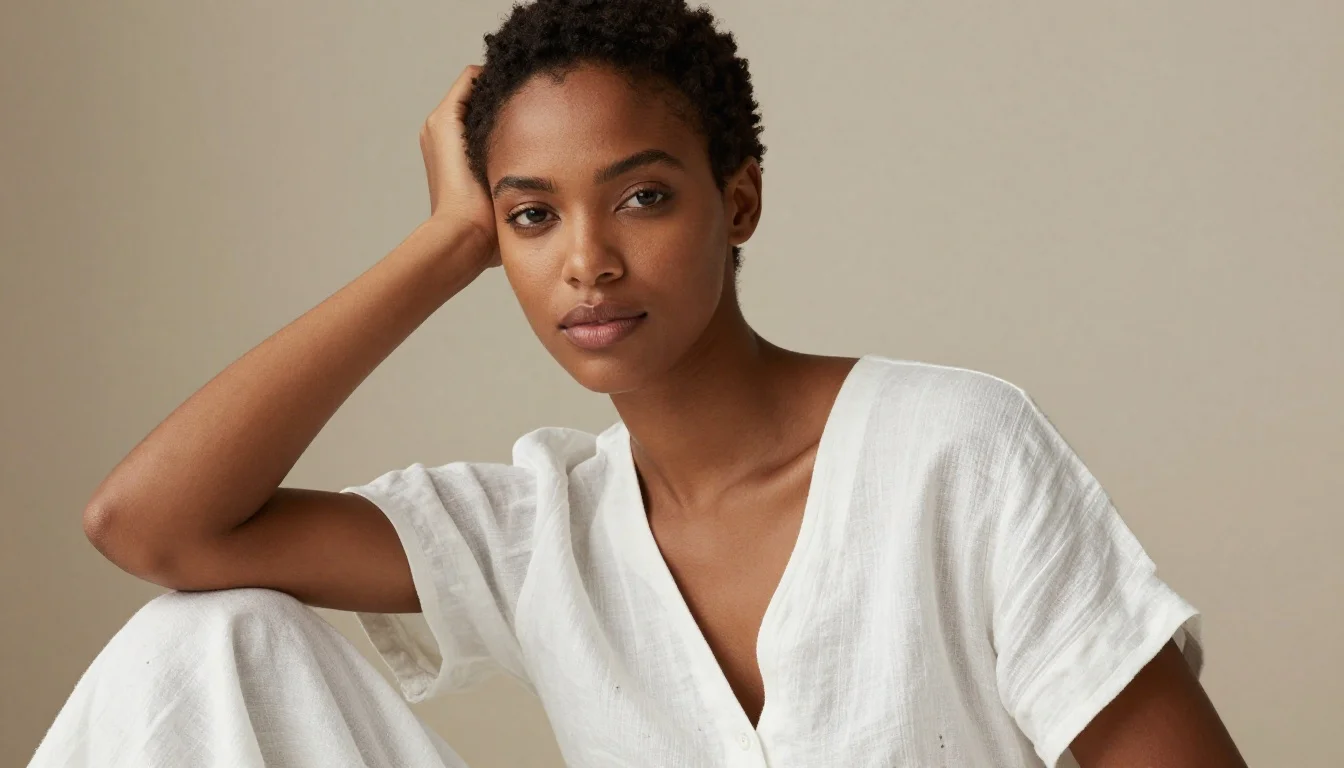
White and near-white are among the most powerful colors in a wardrobe for dark skin. The contrast between bright white fabric and deep skin is one of the most visually striking combinations in fashion — designers have relied on it for decades. A crisp white button-down, a white linen dress, or a bright white knit sweater on dark skin creates an immediate high-impact look that requires nothing else. Off-white and warm cream offer the same contrast with a softer quality — better for golden-warm undertones. These are your highest-leverage basics.
Vivid Jewel Tones: Royal Blue, Emerald & Fuchsia
Saturated jewel tones reach their maximum visual impact on dark skin — the richness of the color and the richness of the complexion create a complementary depth that looks cinematic. Royal cobalt worn against dark skin doesn't just look bold — it looks iconic. Deep emerald creates striking contrast while harmonizing with warm undertones in dark skin. Fuchsia and electric violet work through complementary contrast: cool-vivid against warm-dark. These belong in your statement pieces — the blazer you wear to interviews, the dress you save for significant dinners.
Warm Earths: Burnt Orange, Terracotta & Saffron
Warm earth tones create a resonant, glowing effect on dark skin with warm undertones. Burnt orange against golden or mahogany-dark skin looks like a photograph taken in the best possible light — warm, vivid, and cohesive. Saffron yellow, which can drain lighter complexions, reads as jewel-bright on deep skin. Terracotta and warm bronze echo the golden warmth in dark undertones and create outfits that look rich and intentional. These are the colors for your everyday tops, linen trousers, and knit dresses.
Deep Darks: Burgundy, Forest Green & Midnight Navy
Dark-on-dark dressing works beautifully when you choose rich, saturated darks rather than flat neutrals. Deep burgundy against dark skin creates a monochromatic richness that reads as sophisticated and intentional. Forest green provides contrast through hue while staying in the deep register. Midnight navy has the right depth to harmonize with dark skin rather than disappearing into it — unlike black, which can flatten features. These darks work as trousers, blazers, and structured dresses that provide wardrobe depth without the draining quality of black.

Ready to see white & off white on your face?
Start my color analysisHow to Build Outfits for Dark Skin
The contrast formula: light on dark
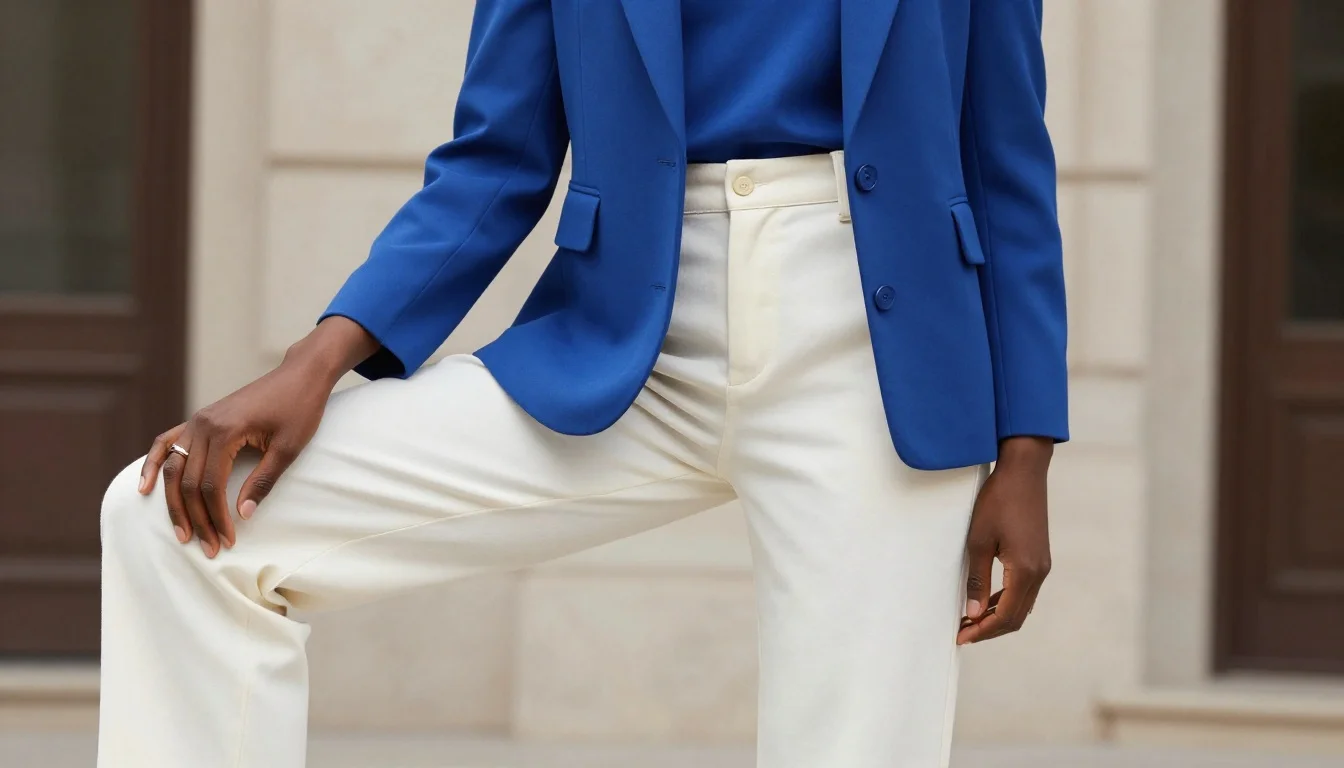
The most universally flattering outfit formula for dark skin is a light, high-contrast element near the face. A bright white or cream blouse under a dark blazer. A stark white dress with dark accessories. Light ivory linen trousers with a vivid jewel-tone top. The contrast between the light garment and your complexion is one of the most visually powerful effects in fashion — it makes the face appear more vivid and the outfit more striking. Keep this formula as your default when unsure.
Building a jewel-tone capsule
A jewel-tone capsule wardrobe works particularly well for dark skin — the saturated hues are more luminous on deep complexions than on any other. Build around three or four vivid anchors: a cobalt silk blouse, an emerald structured blazer, a fuchsia knit, and a deep teal linen trouser. These four pieces can create twelve or more outfits when combined with white, cream, and dark anchors. The key: keep the silhouettes simple and the colors vivid. Let the color do the work.
Warm undertone outfits
If your dark skin has warm golden or mahogany undertones, build around earthy warmth. A burnt orange midi dress on warm-dark skin looks luminous rather than overwhelming. Pair burnt sienna with midnight navy for a striking warm-cool contrast. Mix terracotta with cream for a daytime look that reads as polished and sun-kissed. Saffron yellow with a deep burgundy bag creates a rich, intentional warm palette. Your warm undertones make these combinations cohesive rather than eclectic.
Cool undertone outfits
Cool-dark complexions — blue-cool espresso or near-black — are particularly powerful in high-contrast, vivid-cool combinations. Cobalt blue against near-black skin is a graphic, iconic combination. Stark white with cool violet creates maximum contrast. Deep berry and electric blue-purple together look sophisticated on cool-deep skin in a way that might look jarring on warmer tones. Lean into cool jewels and crisp whites rather than warm earths — the cool undertone in your skin makes these pairings look intentional.
Colors That Dull the Wardrobe for Dark Skin
Washed-out pastels and pale nudes
Very pale, cool pastels — powder blue, blush pink, pale lavender — have low contrast against dark skin and lack the depth to look intentional. They tend to disappear or create an oddly disconnected effect where the garment looks like it belongs to a different coloring. If you love pastels, choose brighter, more saturated versions — a vivid coral rather than a pale blush, a bright mint rather than a soft powder. The pastel needs depth to register against deep skin.
Flat dark grey and mid-grey
Grey is the one neutral that consistently underperforms on dark skin. Mid-grey and flat dark grey have a draining effect on deep complexions — the cool flatness of grey against warm or cool-deep skin creates a washed-out, visually heavy look. Dark skin reads better in navy, deep plum, or forest green for dark neutrals, and in white or warm ivory for light neutrals. Grey is the gap where neither works.
Brown that matches skin tone
A brown garment that closely matches your skin tone creates a low-contrast, visually ambiguous effect where your face appears to float above the outfit. Dark brown and medium brown as tops or dresses can disappear against deep skin rather than framing it. If you love brown, choose it in accessories — a cognac leather bag or warm caramel belt — rather than in garments near your face. Deep burgundy or warm terracotta provides the warmth of brown with necessary contrast.
Stop guessing — preview every look on you
See these looks on my photoWardrobe Upgrades for Dark Skin
Swap the pieces that drain your complexion for ones that make it glow.
Grey drains deep complexions without providing useful contrast. White creates the high-impact contrast that makes dark skin look most luminous.
Pale blue lacks the saturation to register against dark skin. Vivid cobalt creates the high-contrast impact that photographs and reads powerfully in any room.
Pale pinks disappear against dark skin. Vivid coral and burnt orange have the saturation to create warmth and presence against deep complexions.
Grey reads as flat against dark skin. Navy and forest green provide the right depth with more visual richness and an undertone that complements dark skin.
Pale lavender lacks contrast and depth on dark skin. Deep violet and electric purple create striking jewel-tone contrast that makes dark skin appear radiant.
Beige and light tan blend into dark skin without creating presence. Terracotta and saffron have the warmth and saturation to glow against deep complexions.
Which Palette Might Be Yours?
Dark skin appears across multiple seasonal palettes. Your specific season tells you whether to reach for warm earthy jewels or cool vivid hues — and which exact shades within those families are most luminous on your complexion.
Deep Winter
Learn moreIf your dark skin has cool or neutral blue-cool undertones — espresso, cool mahogany, near-black — and your features have high contrast and vivid color, Deep Winter is likely yours. Your wardrobe leans vivid-cool: cobalt, emerald, fuchsia, stark white, deep violet. You handle the highest contrast and the most saturated cool tones of any seasonal type.
Deep Autumn
Learn moreIf your dark skin has warm golden or mahogany undertones and you're drawn to rich, earthy warmth, Deep Autumn may be yours. Your wardrobe sweet spot: burnt orange, deep teal, warm burgundy, golden bronze, forest green. Your deep warmth creates outfits that look richly cohesive rather than eclectic.
Bright Winter
Learn moreIf your dark skin has high contrast with vivid features — bright eyes, dark skin, and a natural clarity — Bright Winter may be yours. Your wardrobe leans high-saturation across both warm and cool: electric blue, vivid fuchsia, bright white, vivid emerald. You can carry the most vivid versions of any color family.
Find Your Exact Color Palette
Wardrobe building for dark skin depends on whether your complexion runs warm, cool, or somewhere in between — and on your seasonal type, which identifies the specific jewel tones, neutrals, and accent colors that make your deep skin look most luminous. A personalized color analysis tells you exactly which pieces to invest in and which to leave behind.
Stop guessing — preview every color on you
Preview Yourself In Your Palette
Get my personalized paletteStop guessing — preview every color on you
Preview Yourself In Your Palette

Related Guides for Wardrobe for Dark Skin
Explore more personalized color advice based on your features.
Want to see these colors on you? What Colors Look Good on Me — free to try.
Frequently Asked Questions About Wardrobe for Dark Skin
What colors look best on dark skin?
Dark skin looks best in high-contrast combinations and vivid saturated colors. Bright white, vivid jewel tones (cobalt, emerald, fuchsia), warm earths (burnt orange, saffron, terracotta), and deep rich darks (burgundy, forest green, midnight navy) are the most powerful wardrobe choices for dark skin. The rule: reach for saturation and contrast, not muted neutrals.
What colors should dark skin avoid wearing?
Mid-grey and flat grey consistently underperform on dark skin — they provide low contrast without the richness to look intentional. Very pale pastels (powder blue, blush pink, pale lavender) lack the saturation to register against deep complexions. Skin-tone-matching browns create a low-contrast, fading effect near the face. Navy, forest green, and white are better alternatives in each category.
Can dark skin wear all-white outfits?
Yes — all-white on dark skin is one of the most striking combinations in fashion. The contrast between bright white fabric and deep complexion is maximum impact with minimum effort. A white linen suit, a bright white dress, or a white blazer over a white tee creates an immediately powerful look. This is one of the wardrobe formulas uniquely suited to dark skin.
What are the best colors for dark skin and warm undertones?
Warm dark skin — golden, mahogany, or reddish-brown undertones — looks most luminous in warm earths (burnt orange, terracotta, saffron yellow), deep warm jewels (burgundy, warm teal, amber), and warm darks (forest green, warm navy). Bright white also provides striking contrast. Cool greys and stark cool tones are less flattering than warm alternatives.
Does yellow look good on dark skin?
Saffron yellow and vivid warm yellow look extraordinary on dark skin — the deep complexion provides the contrast that makes yellow glow rather than wash out. Dark skin can carry yellow in a way that fair skin often can't. Choose vivid, warm yellow (saffron, golden yellow) rather than pale lemon or cool chartreuse. A saffron yellow dress or vivid yellow blouse on dark skin is one of the most luminous wardrobe combinations possible.
What neutrals work for a dark skin wardrobe?
For dark skin, the most useful neutrals are bright white, warm ivory, midnight navy, and deep forest green. Mid-grey is the one neutral to avoid — it drains deep complexions without the richness to create a useful neutral. White provides the high contrast that makes dark skin look most vivid. Navy and forest green provide the dark depth of black with more visual interest and better undertone harmony.