Colors for Dark Skinand Dark Hair
Dark skin and dark hair create a richly pigmented, deeply striking combination. Discover which shades complement your coloring — and which to avoid.
Dark skin and dark hair is one of the most powerfully pigmented combinations in personal coloring. Both features carry deep, rich melanin — which means you need colors that create genuine contrast, not ones that blend into that depth. The colors that work best on this combination don't just look good on you. They look unmistakably, specifically right.


3,000+
happy clients
Why Dark Skin and Dark Hair Creates a Unique Color Challenge
Dark skin and dark hair is one of the most powerfully pigmented combinations in personal coloring. Both features carry deep, rich melanin — which means you need colors that create genuine contrast, not ones that blend into that depth. The colors that work best on this combination don't just look good on you. They look unmistakably, specifically right.
When both skin and hair are deeply pigmented, the face sits within a frame of dark tones — rich skin below, dark hair above. This creates a specific visual dynamic: contrast no longer comes from the interplay between skin and hair (both are dark), so it must come entirely from the clothing colors you choose. Colors worn near your face have to do all the work of creating definition and brightness.
Dark skin absorbs and reflects color differently than lighter complexions. Muted, dusty, or mid-tone colors disappear against dark skin's richness. Dark hair adds another layer of absorption at the frame — so near-face colors that might look fine with lighter hair can look washed-out or flat against the combined darkness of deep skin and black or very dark brown hair.
Your skin's undertone is still the key variable. Warm dark skin (golden, bronze, mahogany) has a red-orange undertone that makes warm vivid colors feel resonant and cool vivid colors striking by contrast. Cool dark skin (blue-brown, ebony) suits cool jewel tones most naturally. Identifying your undertone before shopping is more impactful than any other single factor for this combination.
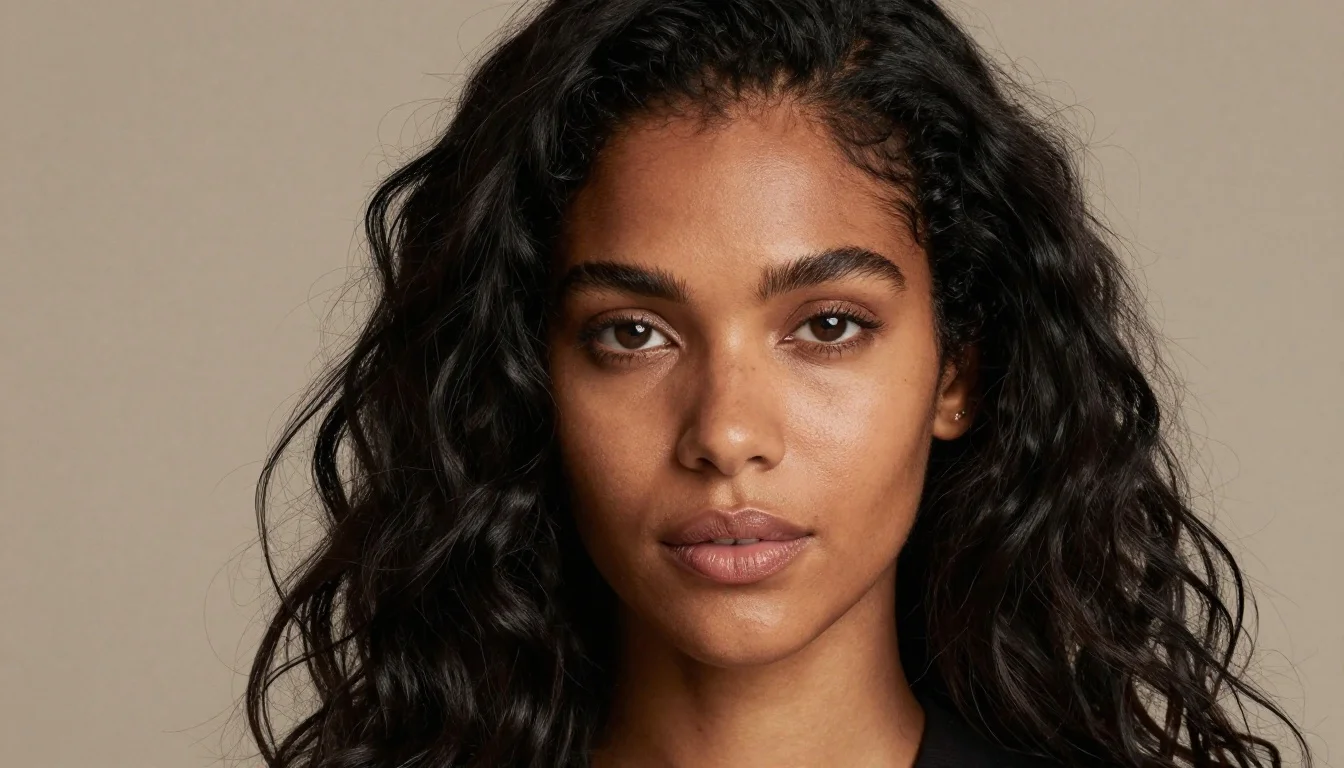
What colors look best with dark skin and dark hair?
Vivid jewel tones (cobalt, emerald, violet, magenta), warm vivid brights (coral, red, hot fuchsia), high-contrast lights (stark white, crisp ivory, bright mint), and richly saturated accents (deep gold, rich wine) all work beautifully. The common requirement is saturation — dark skin and dark hair need vivid, fully pigmented colors to create definition and contrast.
Your Most Flattering Color Families
Vivid Jewel Tones
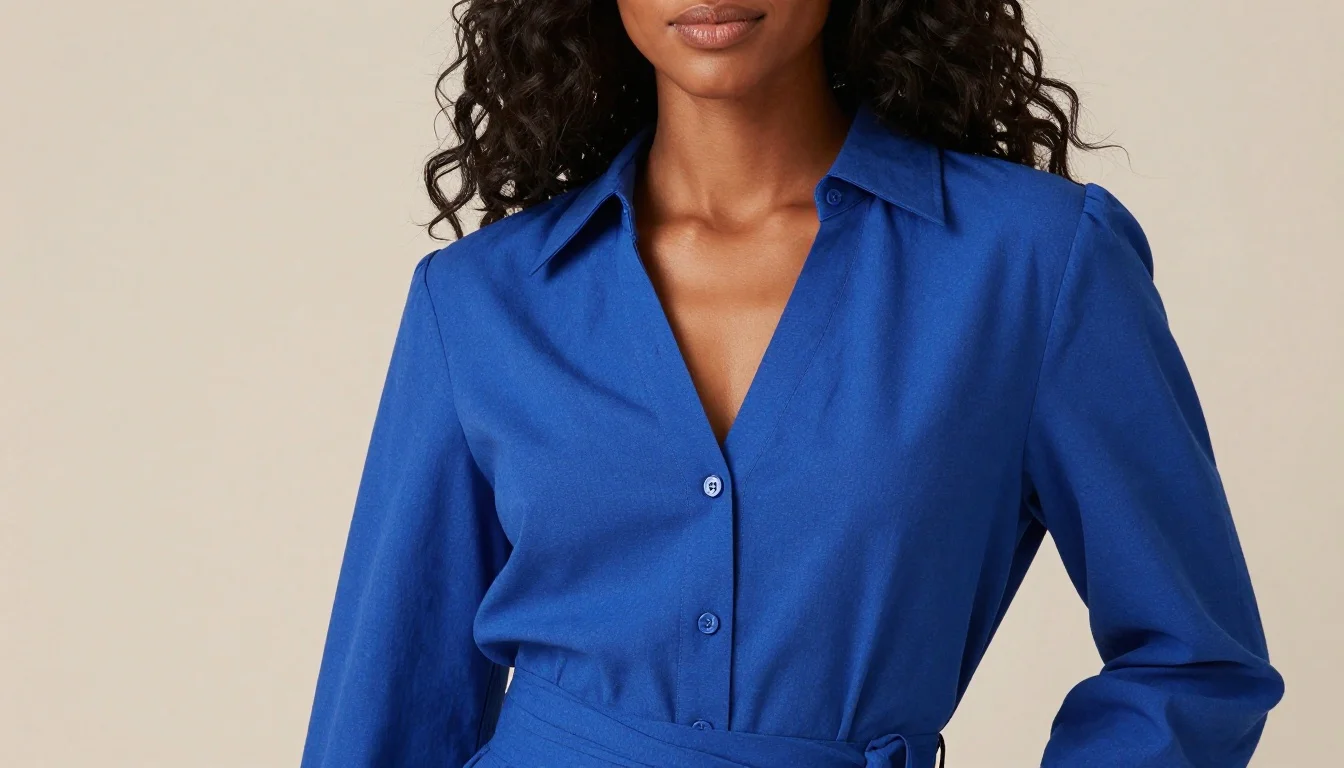
Vivid jewel tones are the single most powerful category for dark skin and dark hair. The saturation creates striking contrast against deep skin, and the clarity of these colors stands out distinctly against dark hair framing the face. Electric cobalt creates maximum cool-warm contrast against warm dark skin. True emerald has the depth to match dark skin's richness while the brightness separates it visually from dark hair. Nothing muddy — only fully saturated, clear versions.
Warm & Vivid Brights
Warm, vivid brights create the most striking contrast against dark skin specifically. Deep skin makes warm brights look deliberate and powerful — a visual boldness that lighter complexions can't support as effectively. Vivid coral and bright red echo the warm undertones present in most dark skin while creating clear, saturated contrast against it. Hot fuchsia sits between warm and cool, flattering most dark skin undertones. All require high saturation — the faded or muted version won't work.
Maximum Contrast Lights
The contrast between very deep skin and light, bright colors creates one of the most visually powerful looks available — and it's a contrast that this combination is uniquely positioned to deliver. Stark white against deep brown skin with dark hair framing the face is dramatically beautiful. Bright mint adds a cool freshness. Pale sunshine yellow needs to be bright rather than chalky to maintain contrast. The combination of deep skin, dark hair, and light bright clothing creates maximum visual impact.
Deep Rich Accents
Deeply saturated warm accents resonate with the richness of dark skin while providing enough color depth to remain visible. Deep gold has the golden warmth that pulls out the warmth in dark skin while remaining distinct from it. Rich wine adds depth through color temperature contrast — the blue-red quality creates a striking tension with warm dark skin. Warm copper reads like a more vivid earth tone, more saturated and specific than a generic brown.

Ready to see cobalt & emerald on your face?
Start my color analysisHow to Wear These Colors in Real Life
Warm vs. cool undertone strategy
If your dark skin leans warm (golden, bronze, warm mahogany), warm vivid colors amplify your natural resonance while cool jewel tones create striking contrast — both approaches work, but warm brights feel most organic. Cool dark skin (ebony, blue-brown) looks most powerful in cool jewel tones: cobalt, vivid violet, crisp white. Both skin undertones benefit enormously from high saturation — the key is temperature within saturated colors, not saturation itself.
Playing with contrast levels
Because your skin and hair are both dark, the entire contrast story is created by your clothing and accessories. For maximum impact, choose the lightest possible color against your skin — stark white, vivid mint, or pale sunshine yellow. For sophisticated restraint, deep jewel tones create color contrast without light-dark contrast. There's no in-between zone that flatters this combination — either maximum contrast with light brights, or maximum color with vivid jewels.
Professional and work settings
A vivid cobalt or jewel-toned blouse under a white or cream blazer is one of the most striking professional looks for dark skin and dark hair. The jewel tone adds depth; the lighter blazer adds contrast. For more conservative environments, rich royal blue or deep emerald achieve significant visual presence without the boldness of electric colors. Avoid dark navy jackets near the face — the combination with dark hair and dark skin loses all definition.
Evening and occasion dressing
For evening, maximum saturation at maximum depth — electric violet, vivid cobalt, bold emerald — creates a dramatic, luminous effect against dark skin in evening lighting. Metallic gold and copper are exceptional: the warmth of metallic tones creates a resonance with dark skin's richness while the metallic quality adds light-reflecting brilliance that cameras and candlelight both love. Stark white for a summer evening event creates a completely different drama — clean, bold, architectural.
Colors That Disappear Against This Combination
Black and very dark navy near the face
Wearing black or very dark navy near the face when you already have dark skin and dark hair creates a wall of darkness with no contrast — skin, hair, and clothing all merge into a single dark zone. The face loses definition. If you love the authority of dark colors, choose deep jewel tones (vivid violet, rich cobalt) that add darkness with vivid color, or use dark neutrals as bottoms while keeping tops vivid.
Muted, dusty mid-tones
Dusty rose, muted sage, greige, mushroom, and similar muted mid-tones are built for lighter complexions where their delicacy reads as elegance. Against dark skin with dark hair, these colors lack the saturation to show well — they appear flat and dull. The richness of your coloring demands saturation. If you want earthy or blush tones, choose the vivid version: clear emerald over dusty sage, vivid fuchsia over dusty rose.
Medium warm brown tones
Medium warm browns — camel, tan, warm beige, medium khaki — sit in a similar warmth register as many dark skin tones, creating a low-contrast, monochromatic effect that blurs the boundary between skin and clothing. The combination with dark hair makes this even more total — everything reads as the same warm-dark family. For earth-tone warmth, choose cognac, deep terracotta, or warm copper instead — all have enough saturation to stand out distinctly.
Stop guessing — preview every shade on you
See myself in my colorsYour Wardrobe, Upgraded
These swaps replace colors that disappear or flatten against dark skin and dark hair with vivid, high-contrast alternatives that create definition and brilliance.
Black creates a dark frame with no contrast. Cobalt adds vivid color contrast that separates face from clothing beautifully.
Dark navy disappears against dark skin and hair. Electric violet or teal provide depth with the vivid contrast that makes the combination work.
Camel blends with warm dark skin tones. Coral and terracotta are warm-earthy but with saturation to create clear visual distinction.
Dusty mauve lacks pigment depth for dark skin. Vivid magenta has the saturation to create a deliberate, striking contrast.
Pale beige creates insufficient light-dark contrast. Stark white maximizes contrast with both dark skin and dark hair powerfully.
Dark blazers near dark skin and hair create a heavy, undefined silhouette. White creates maximum contrast; emerald creates vivid jewel-tone contrast.
Which Palette Might Be Yours?
Dark skin and dark hair appear across several seasonal palettes. Your undertone — warm, cool, or neutral — and the precise depth of your skin and hair are the key variables that determine your specific season.
Deep Winter
Learn moreIf your dark skin has cool or neutral undertones, your hair is true black or near-black, and you look most powerful in vivid cool colors — stark white, electric cobalt, bold violet — Deep Winter may be your palette. Deep Winter uses colors at maximum saturation and maximum contrast: nothing muted, nothing warm. The cool clarity of these colors against deeply pigmented cool skin and black hair is one of the most visually striking combinations in color analysis.
Deep Autumn
Learn moreIf your dark skin has warm undertones — golden-brown, mahogany, warm amber — your dark hair has warm brown depth rather than pure black, and earth tones feel most resonant, Deep Autumn is worth exploring. Deep Autumn uses warm, rich, muted-deep tones: cognac, dark terracotta, deep forest green, rich burgundy. Nothing icy or cool — the warmth of your skin and hair creates a coherent, deeply warm palette.
Warm Autumn
Learn moreIf your dark skin is warm-golden or warm mahogany with clear warm-undertone richness, your dark hair has visible warm-brown depth rather than pure black, and vivid warm colors feel most alive on you, Warm Autumn may be your palette. Your colors are warm, earthy, and rich: deep rust, warm olive, cognac, burnt orange, warm wine. The deep intensity of both features aligns with Warm Autumn's depth requirement.
Find Your Exact Colors
Dark skin and dark hair is one of the most powerfully pigmented combinations in personal coloring — and the range of colors that work beautifully is wider than most people realize. But the specific palette that makes your combination look most radiant depends on your skin's undertone, the exact depth of both your skin and hair, and your contrast level with your eye color. A personalized color analysis identifies those specific shades — the colors that don't just look good, but look exactly like they were chosen for you.
Stop guessing — preview every color on you
Preview Yourself In Your Palette
Get my personalized paletteStop guessing — preview every color on you
Preview Yourself In Your Palette

Related Guides for Best Colors for Dark Skin and Dark Hair
Explore more personalized color advice based on your features.
Want to see these colors on you? Virtual Hair Color Try-On — free to try.
Frequently Asked Questions About Best Colors for Dark Skin and Dark Hair
What colors look best with dark skin and dark hair?
Vivid jewel tones (cobalt, emerald, violet, magenta), warm vivid brights (coral, red, hot fuchsia), high-contrast lights (stark white, crisp ivory, bright mint), and richly saturated accents (deep gold, rich wine) all work beautifully. The common requirement is saturation — dark skin and dark hair need vivid, fully pigmented colors to create definition and contrast.
What colors should dark skin and dark hair avoid?
Black and very dark navy near the face, muted dusty mid-tones, and medium warm browns all tend to disappear or create an undefined, flat look against dark skin and dark hair. These colors lack sufficient contrast or saturation to create visual definition. Choose the vivid version of every color family — clear emerald over dusty sage, magenta over dusty rose, cobalt over dark navy.
Can dark skin and dark hair wear white?
Absolutely — stark white is one of the most dramatically beautiful choices for this combination. The contrast between very deep skin and bright white, framed by dark hair, creates a striking visual statement that lighter complexions can't achieve the same way. Crisp white, bright ivory, and light bright colors in general are some of the most powerful options for dark skin and dark hair.
What is the best color for dark skin and black hair?
Electric cobalt, vivid emerald, bold violet, bright coral, and stark white are consistently excellent choices for dark skin and black hair. The very darkest hair creates a strong contrast with bright colors and a powerful frame for light colors against dark skin. High saturation and clear, vivid hues rather than muted or dusty versions of any color family.
What season is dark skin and dark hair?
Dark skin and dark hair most commonly appear in Deep Winter, Deep Autumn, or Warm Autumn seasonal palettes. Deep Winter suits cool-to-neutral deep skin with true black hair at maximum contrast. Deep Autumn and Warm Autumn suit warm-undertoned dark skin with dark brown-black hair and warm-rich color palettes. Your undertone — warm, cool, or neutral — is the key differentiator.
What jewelry looks best with dark skin and dark hair?
Bold gold jewelry is consistently striking against dark skin — the warmth of gold creates a luminous resonance with golden and mahogany undertones, and the contrast with dark hair creates visual clarity. Silver adds a cool, high-contrast effect that works particularly well for cool-undertoned dark skin and black hair. Both metals work — gold for warmth and richness; silver for a cooler, more contrasting look.