Makeup That Actually Workson Dark Skin
Makeup for dark skin requires pigmentation, the right undertone match. Discover which tones look natural on you — and which to skip.
Makeup for dark skin comes with specific challenges most tutorials don't address: blush that disappears, highlight that reads ashy, foundations that oxidize orange. Deep complexions respond to pigment, undertone, and formula differently than the pale-skin-default most beauty advice assumes. This guide is written for deep skin specifically — what shows, what glows, and what to avoid entirely.


3,000+
happy clients
Why Makeup Behaves Differently on Deep Skin
Makeup for dark skin comes with specific challenges most tutorials don't address: blush that disappears, highlight that reads ashy, foundations that oxidize orange. Deep complexions respond to pigment, undertone, and formula differently than the pale-skin-default most beauty advice assumes. This guide is written for deep skin specifically — what shows, what glows, and what to avoid entirely.
Dark skin contains high concentrations of melanin, which affects how pigment reads on the surface. A blush that creates a visible flush on fair skin may completely disappear on deeper skin — because the product lacks enough pigment to show against the rich backdrop. This isn't a flaw in your skin; it's a formulation issue. You need products built with pigment density for deep complexions.
Undertone is equally critical. Deep skin tones span an enormous range of undertones: warm (golden-brown, chocolate with reddish warmth), cool (blue-black, deep espresso with cool depth), and neutral (true deep brown sitting between warm and cool). The same foundation shade can look luminous on warm undertoned dark skin and ashy on cool-undertoned dark skin. Undertone — not depth — is where most makeup mistakes for dark skin originate.
The good news is that deep skin tones carry certain makeup looks more naturally than any other complexion. Rich jewel-toned eyeshadows, vivid berry lips, and deep moody liners look intentional and vivid on dark skin in a way that can look costume-like on lighter complexions. Your depth creates the perfect backdrop for bold, saturated color.
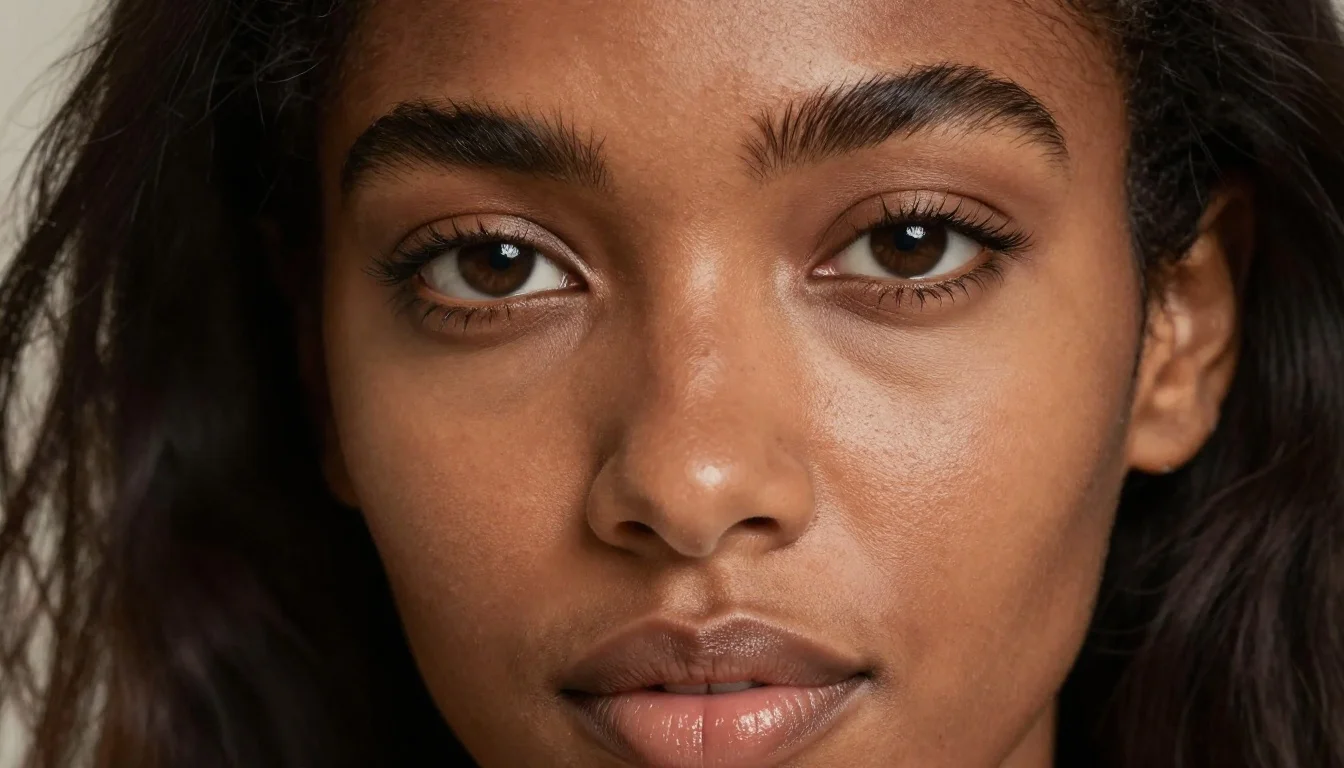
What makeup looks good on dark skin?
Deep, pigmented shades work best — baby pink and pale peach lack the density to show on darker complexions. Deep coral and berry blush, burnished gold and cobalt eyeshadow, vivid berry and true red lips, and deep gold highlight are the most impactful categories. Deep skin tones carry bold, saturated color exceptionally well — it reads intentional rather than excessive.
Your Best Makeup Shades
Eyeshadow: Rich Jewels & Warm Metals
Deep copper and burnished gold eyeshadows create a warm, metallic eye that resonates beautifully with warm-dark skin's golden depth. For a dramatic look, vivid cobalt pressed against deep skin has a graphic, intentional quality that photographs strikingly — the complementary contrast between blue and deep warm skin creates real visual tension. Forest green in a matte or sheen formula plays with the warm-cool contrast and looks sophisticated rather than costumey. These colors have enough pigment to read clearly on deeper skin.
Lip Colors: Vivid Berries, Rich Reds & Warm Nudes
Deep berry and plum lip colors are extraordinary on dark skin — the deep pigment shows up fully and creates rich, vivid contrast. True red on dark skin is one of the most striking lip pairings in beauty: the warmth of red resonates with most dark skin undertones, and the saturation is visible and impactful. Warm brick creates a slightly more wearable everyday option with the same warmth. For nude, avoid anything pale pink or cool beige — a warm chocolate nude in the same family as your skin tone looks natural and full-lipped, not washed out.
Blush: Deep Corals, Berry Flush & Warm Bronze
Standard blush shades formulated for fair skin — baby pink, pale peach, dusty rose — lack the pigment to register on deep skin. You need blush with actual density. Deep coral creates a warm, vivid flush that reads naturally against dark skin. Berry flush blush (think ripe plum or warm cranberry) creates a rich color that shows clearly and complements cool and neutral dark undertones. Bronze blush doubles as a subtle contour and warms the face naturally — particularly effective for warm dark skin with golden undertones.
Highlight & Foundation: Gold, Bronze & Undertone-Matched Base
Silver and icy highlight looks grey and ashy on dark skin — it has no relationship with the warm depth in most deep complexions. Deep gold highlight creates a glow that looks like light from within — luminous, rich, and cohesive. Bronze metallic highlight is even more dramatic and works beautifully for evening. For foundation, 'warm-neutral' and 'golden-deep' are the undertone descriptors to look for — they match the dual warm-neutral quality most deep skin tones have. A golden-bronze setting powder in your exact skin depth keeps the warmth in and prevents the grey-ashy finish that can happen with translucent or cool-toned powders.

Ready to see yourself in copper & burnished gold?
Start my color analysisHow to Apply for Maximum Impact
Foundation: matching undertone first
Depth alone isn't enough when selecting foundation for dark skin — undertone is the critical second variable. Swatch three foundations on your jaw (not your wrist) in natural light: one warm, one neutral, one cool. The right one disappears. For warm dark skin with golden or reddish undertones, look for 'warm espresso', 'golden deep', or 'caramel' shades. For cool dark skin, 'ebony', 'cool deep', or 'rich espresso' descriptors work better. Setting with a translucent powder in a warm-neutral tone prevents the ashy cast that cool-toned or pure white translucent powders create.
Eyes: building depth and drama
Dark skin creates an extraordinary backdrop for eye makeup. A deep copper or burnished gold shadow on the lid, blended into a rich chocolate brown at the crease, creates a dimensional warm eye that looks luminous against deep skin. For drama, add vivid cobalt or forest green to the lower lash line — the color shows up brilliantly and creates a defined, intentional look. A deep brown or black liner tightlined on the upper waterline makes dark eyes look larger and more defined without looking heavy. Eyeshadow primer matters on deep skin — pigment adheres better and prevents fallout.
Blush and bronze: the layering method
Apply blush more generously than you think you need — it will look right in daylight even if it seems heavy in mirror light. Start with a warm bronze bronzer on the cheekbones, temples, and jaw for warmth, then layer a deep coral or berry blush on the apples of the cheeks and blend upward. This two-layer approach creates dimension and ensures the blush reads clearly without looking painted on. For cool dark skin, skip the bronze bronzer and go straight to a cool-berry blush — the bronze can read muddy on very cool undertones.
Lips: how bold reads differently on dark skin
Bold lip colors behave differently on dark skin than on lighter complexions — they look intentional and vivid rather than overwhelming. A vivid red or deep berry lip that might read as "too much" on fair skin reads as elegant and deliberate on dark skin. The key is prep: a lip liner in your natural lip color (not the lip color itself) defines the shape and prevents bleeding. Fill in the lips with liner before applying color — this dramatically improves wear time and color payoff. For everyday wear, a warm brick or caramel tinted lip balm gives color and moisture without requiring a mirror for application.
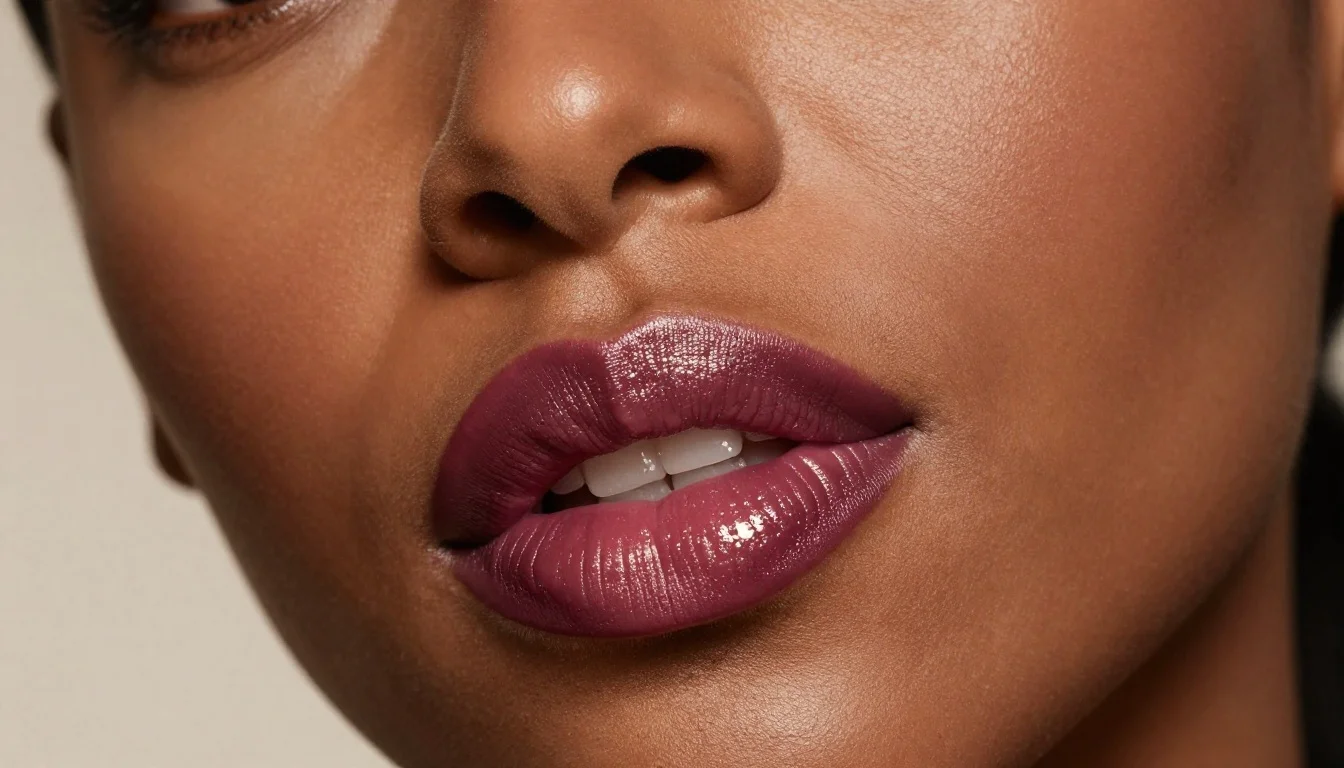
Makeup That Works Against Dark Skin
Pale pink or cool-toned blush
Baby pink and cool pink blush formulas are made for fair skin — they lack the pigment concentration to show on deeper complexions and often leave a faint, ashy residue. Even if you apply heavily, they don't create a natural flush. They also have no undertone alignment with most dark skin tones. Choose highly pigmented, warm-toned blush shades — deep coral, berry, warm bronze — that are formulated to show on deeper skin.
Cool-pink or orange-biased foundation
Cool pink foundations make dark skin look grey and dull — the pink undertone sits disconnected from most deep skin's warm-to-neutral undertone. Orange-biased foundations oxidize on dark skin and create a distinctly orange cast that looks unnatural. The right formula for most dark skin is neutral-warm or golden — neither cool nor obviously orange. Test on your jaw in natural daylight before committing.
Silver or frosty highlighter
Silver and frosted highlighters read as grey or ashy on dark skin rather than luminous. They also emphasize dry texture and fine lines more than golden formulas. The metal you want is gold — deep yellow gold, warm bronze, or a rose-gold with warm lean. Any highlighter with a lavender or silver cast will work against your skin's natural depth rather than amplifying it.
Very pale or cool nude lips
Pale pink or cool-beige nude lipsticks are formulated for fair skin and create a stark, washed-out effect on dark lips — they look like the color has been removed rather than added. Cool grey-nudes and pale lavender-nudes similarly fight the warmth in most dark skin. If you want a nude lip, choose one that matches your natural lip color or goes slightly darker — a warm brown, mahogany, or deep caramel reads as natural and flattering.
Stop guessing — preview every shade on you
See myself in my shadesYour Makeup Kit, Upgraded
Replace the shades that disappear or work against deep skin with ones that show up and glow.
Pale shades lack pigment to show on deep skin. Deep coral and berry have the density and warmth to register as a natural flush.
Silver reads ashy on dark skin. Gold and bronze create luminosity that resonates with your skin's natural depth.
Taupe can look washed out on deep skin. Copper and cobalt have the pigment and contrast to create a vivid, deliberate eye look.
Cool nudes look washed out against dark lips. Warm chocolate nudes and deep berries create flattering natural-to-vivid options that work with your lip tone.
Orange foundations oxidize visibly on dark skin. Golden-neutral tones match the warm-neutral undertone in most deep complexions without the orange shift.
White translucent powder creates a grey-ashy finish on dark skin in flash photography and daylight. A warm-tinted powder maintains your skin's natural warmth.
Which Palette Might Be Yours?
Dark skin appears across several seasonal palettes — your exact season shapes which specific shades of the products above work best for your individual coloring.
Deep Winter
Learn moreIf your dark skin has cool or neutral undertones — blue-black, cool espresso, or deep cool brown — and your overall coloring reads as high-contrast and striking, Deep Winter is likely your season. Your best makeup leans cool-vivid: bright berry lips, cobalt liner, rich burgundy eyeshadow, and a cool-neutral foundation. Gold highlight still works for you — choose a cooler, rosier gold rather than warm yellow-gold.
Deep Autumn
Learn moreIf your dark skin has warm undertones — golden-brown, warm chocolate, rich mahogany with reddish warmth — Deep Autumn is your most likely season. Your best makeup leans warm-earthy: deep copper eyeshadow, warm terracotta blush, true red lips, and warm golden highlight. Your foundation should be in the warm espresso or golden-deep range.
Soft Autumn
Learn moreIf your dark skin is more medium-deep with warm but somewhat muted undertones — warm caramel, warm brown without high contrast — Soft Autumn may be yours. Your makeup is warm but softer: dusty coral blush, warm brick lips, burnished (not vivid) gold eye looks, and warm-neutral foundation. You may find very vivid colors look slightly harsh — slightly muted, earthy versions suit you better.
Find Your Exact Shades
Makeup for dark skin depends on more than just "deep" — your undertone (warm golden, cool espresso, neutral brown), the specific depth of your complexion, and your seasonal palette all determine the exact foundation match, the right blush warmth, and the lip color that looks like you at your best. A personalized color analysis identifies your season and gives you the specific product categories and undertone ranges that work for your individual dark skin tone.

Related Guides for Makeup for Dark Skin
Explore more personalized color advice based on your features.
Want to see these colors on you? What Colors Look Good on Me — free to try.
Frequently Asked Questions About Makeup for Dark Skin
What makeup looks good on dark skin?
Deep, pigmented shades work best — baby pink and pale peach lack the density to show on darker complexions. Deep coral and berry blush, burnished gold and cobalt eyeshadow, vivid berry and true red lips, and deep gold highlight are the most impactful categories. Deep skin tones carry bold, saturated color exceptionally well — it reads intentional rather than excessive.
What blush color is best for dark skin?
Deep coral, berry-flush, warm bronze blush, and highly pigmented warm rose are the best blush colors for dark skin. Standard blush formulas made for fair skin lack the pigment concentration to show on deeper complexions — you need shades with visible depth and density. Apply more generously than you think you need; it will look correct in daylight.
What foundation undertone is best for dark skin?
Most dark skin tones have warm-to-neutral undertones — golden-warm or neutral-deep rather than cool or pink. Look for foundation descriptors like 'warm espresso', 'golden deep', 'warm mocha', or 'neutral deep'. Avoid pink-undertone or cool-beige formulas, which create a grey cast. Test on your jaw in natural light — the right shade disappears completely.
What highlighter is best for dark skin?
Deep yellow gold and warm bronze highlighters are the most flattering for dark skin. Silver, icy, and frosted highlighters read ashy rather than luminous on deep complexions because they have no warm undertone to align with your skin's depth. Look for highly pigmented gold-family highlighters — the more pigment, the less you need to apply to achieve genuine luminosity.
What lipstick colors suit dark skin?
Vivid berries, deep plum, true red, warm brick, and warm chocolate nude are the most flattering lipstick shades for dark skin. Deep skin carries bold lips elegantly — a vivid berry or true red that might read as excessive on lighter skin looks intentional and vivid on deep complexions. For everyday wear, warm chocolate nudes and warm brick shades create a wearable natural-to-polished look.
What eyeshadow shades work on dark skin?
Deep copper, burnished gold, vivid cobalt, forest green, and rich chocolate brown are excellent eyeshadow choices for dark skin. These have enough pigment and contrast to show up clearly against deeper complexions. Muted, pale, or cool-toned eyeshadows can look washed out — the vibrancy you need comes from depth and saturation, not just shimmer. Use an eyeshadow primer to maximize color payoff and longevity.