Eyeshadow forDark Skin
Dark skin needs highly pigmented, vivid eyeshadow that actually shows. Discover which tones look natural on you — and which to skip.
Dark skin creates one of the most striking backdrops for eye makeup — but only when the right shades are used. The challenge isn't that eyeshadow doesn't work on dark skin; it's that formulas and shades designed for fair-skin-default beauty don't work. Dusty neutrals disappear. Muted cool shadows look flat. Black adds no contrast. The eyeshadow that transforms dark skin is vivid, pigmented, and deliberate — and when you get it right, dark skin carries eye color more dramatically and powerfully than any other complexion.


3,000+
happy clients
Why Eyeshadow Behaves Differently on Dark Skin
Dark skin creates one of the most striking backdrops for eye makeup — but only when the right shades are used. The challenge isn't that eyeshadow doesn't work on dark skin; it's that formulas and shades designed for fair-skin-default beauty don't work. Dusty neutrals disappear. Muted cool shadows look flat. Black adds no contrast. The eyeshadow that transforms dark skin is vivid, pigmented, and deliberate — and when you get it right, dark skin carries eye color more dramatically and powerfully than any other complexion.
Dark skin contains high melanin concentration, which means eyeshadow pigment reads against a rich, deep backdrop. A dusty neutral that creates a subtle wash on fair skin may completely disappear on dark skin — not because the product is bad, but because it lacks the pigment density to create contrast or color against a deep complexion. The formulation requirements are different: you need shadows with genuine pigment load, not finely milled sheer shades designed to look "natural" on light skin.
The undertone of dark skin matters for eyeshadow selection. Warm dark skin — golden-brown, mahogany, warm chocolate — resonates with warm metallic shades like gold and copper. Cool dark skin — blue-black, cool espresso, deep neutral with cool depth — has a natural affinity with cool-vivid shades like cobalt blue, vivid fuchsia, and cool plum. Most deep complexions also carry vivid jewel tones regardless of undertone, because the color itself, not undertone resonance, creates the visual impact.
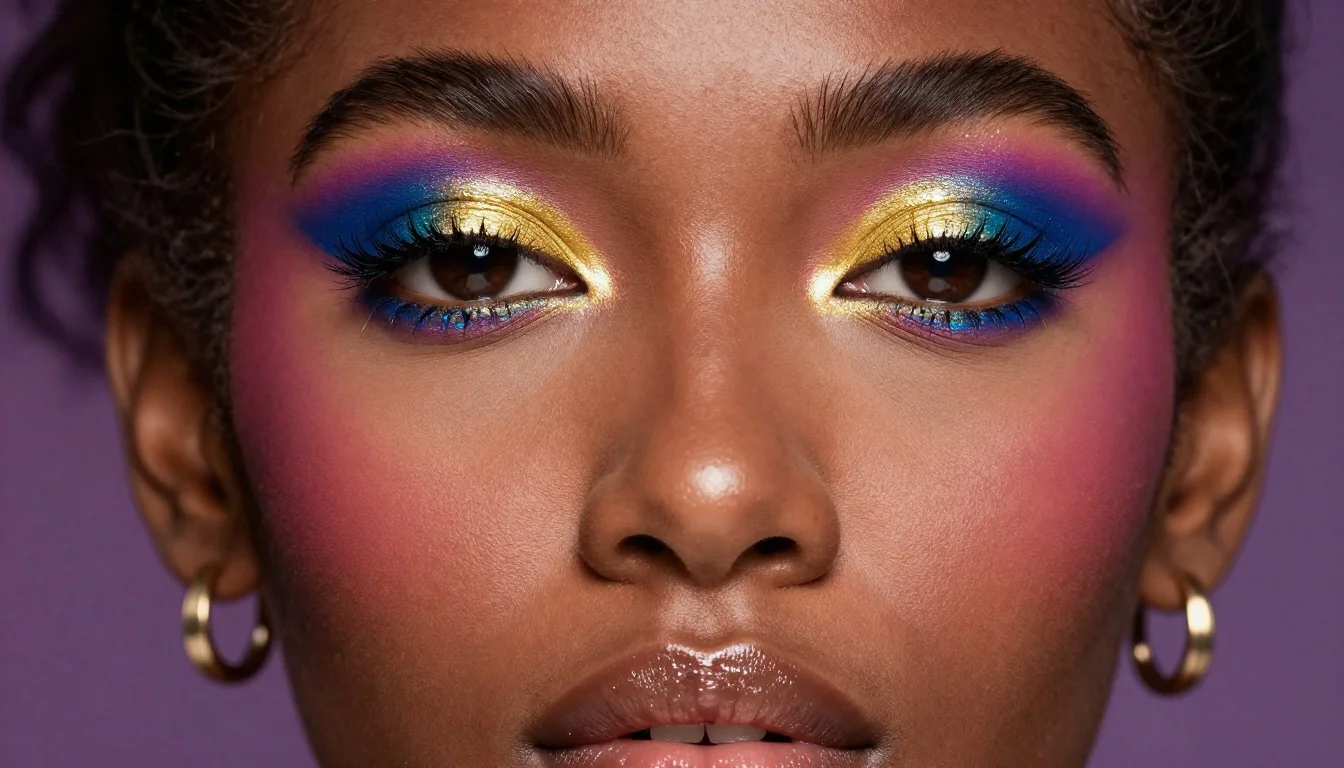
The great advantage dark skin has with eyeshadow is that vivid, bold colors look intentional and powerful rather than excessive. A vivid cobalt that might look costume-like on fair skin looks graphic and deliberate on dark skin. This means dark skin can go bolder, more saturated, and more vivid than most eyeshadow guidance suggests — and the result is consistently more striking than playing it safe.

What eyeshadow colors look best on dark skin?
Vivid jewel tones (electric cobalt, vivid emerald, bold magenta), metallic gold and copper, stark white and bright champagne for highlight, and rich burgundy are the best eyeshadow categories for dark skin. The key is pigment density — shadows need to be highly saturated and vivid to create contrast and color against a deep complexion. Avoid dusty neutrals, black, and muted cool greys, which disappear on dark skin.
Your Best Eyeshadow Shades
Vivid Jewel Tones: Electric, Bold & High-Impact
Vivid jewel tones are the most impactful eyeshadow category for dark skin because they create genuine color contrast against a deep complexion. Electric cobalt blue pops against dark skin in a way that's graphic and intentional — the depth of the skin makes the vivid blue look even more vivid. Vivid emerald creates a lush, rich eye look that reads clearly on deep complexions. Bold magenta (a vivid red-pink) looks striking and confident. The key word is "vivid" — muted or dusty versions of these colors lose much of their impact on dark skin. Go saturated.
Metallic Gold & Copper: Warm Luminosity on Deep Skin
Metallic gold on dark skin is one of the most universally flattering pairings in beauty. The warm, rich quality of gold resonates with the depth and warmth in most dark complexions and creates a luminous, intentional eye look that photographs strikingly. Burnished copper goes deeper and warmer — on warm dark skin, copper creates an almost incandescent quality. Deep bronze is more wearable for everyday while still delivering metallic impact. These shades work because the pigment density of metallic formulas ensures they actually show, and the warmth aligns with dark skin's natural depth.
Stark White & Champagne: Highlight for Maximum Impact
White and very light champagne eyeshadow on dark skin is used differently than on other complexions: as a stark, graphic inner corner or brow bone highlight, the contrast between bright white and deep skin creates a deliberate, high-fashion effect. Used as a full lid, stark white creates a bold, editorial look that's uniquely powerful on dark skin. Warm champagne in the inner corner brightens and opens the eye. These are not "subtle" shades on dark skin — the contrast makes them graphic and intentional, which is their power.
Rich Burgundy & Deep Berry: Warm Depth with Vivid Color
Burgundy and deep berry-plum provide warm, rich depth on dark skin without the zero-contrast issue of black. Rich burgundy on dark skin creates a dramatic, jewel-like eye look with genuine color payoff. The red family resonates particularly well with warm dark undertones — warm chocolate, mahogany, and golden-dark skin tones all carry burgundy beautifully. Deep wine is slightly cooler and suits neutral and cool dark undertones. These shades add depth and drama while remaining distinct from the skin, which black eyeshadow fails to do.

Ready to see yourself in cobalt blue & emerald?
Start my color analysisHow to Apply Eyeshadow for Maximum Impact on Dark Skin
Always use eyeshadow primer — it matters more on dark skin
Eyeshadow primer on dark skin is non-negotiable for vivid looks. The melanin in dark skin can cause eyeshadow pigment to shift, fade, or look patchy within hours without a primer base. A primer with a neutral or slightly light base also subtly brightens the lid, giving vivid shadows an even more luminous surface to sit on. Apply primer from lash line to brow bone, let it set for 30 seconds, and you'll see an immediate difference in how saturated and long-lasting your eye looks are.
Build vivid colors in layers for maximum saturation
For the most saturated vivid jewel-tone look on dark skin, apply eyeshadow in multiple thin layers rather than one thick application. Pat the shadow onto the lid with a flat brush — pressing rather than sweeping deposits more pigment. Build up the first layer, let it set, then add a second layer. For electric cobalt or vivid emerald, two to three layered applications creates the full-saturation, graphic look that reads clearly against dark skin. Blend at the edges only, not across the lid — you want the color to remain vivid.
Stark white and champagne: use them deliberately
The stark contrast of white or bright champagne on dark skin is a tool, not a mistake. At the inner corner, bright champagne opens and brightens the eye dramatically. Stark white on the brow bone creates a precise, intentional highlight. For an editorial look, white across the entire lid with graphic liner reads as fashion-forward and powerful. The contrast between white and deep skin is not something to soften — it's the point.
Match metallic shade to your undertone for maximum resonance
For warm dark skin (golden-brown, mahogany, warm chocolate), burnished copper and metallic yellow gold create the most luminous look — the warmth resonates and the metallic amplifies your skin's natural depth. For cool dark skin (blue-black, cool espresso), rose gold and platinum shimmer work better — still metallic, but without the warm-orange lean of yellow gold that can look slightly disconnected from cool undertones. Neutral dark skin handles both. Matching metallic temperature to your undertone is the difference between luminous and flat.
Eyeshadow That Works Against Dark Skin
Black eyeshadow as the primary shade
Black eyeshadow on dark skin creates almost no visible contrast — the shadow blends with the deep complexion and the eye look disappears rather than defining. Black liner on dark skin can work for tightlining, but black eyeshadow as a crease or lid shade adds weight without color or drama. Deep burgundy, navy, or forest green achieve the same depth with actual color that reads against dark skin.
Dusty, muted neutral browns
Dusty, muted taupe and brown eyeshadows disappear on dark skin — they lack the pigment density to show up as actual color against a deep complexion and tend to look like a flat, slightly dark smudge rather than defined eye makeup. If you want a neutral eye, go for warm metallic bronze or burnished gold instead — they have the pigment density to register while still reading as a warm neutral.
Very pale, muted shades as lid colors
Pale nude, soft beige, and very light muted shadows used as full-lid colors disappear against dark skin without creating the luminous effect they achieve on lighter complexions. If you want a light, bright effect, stark white or bright champagne creates the graphic contrast that reads clearly. Pale muted shades work as blending shades only, not as primary lid colors.
Cool grey as a smoky shade
Cool grey eyeshadow lacks the contrast to read as a defined smoky eye on dark skin — it blends with the skin's depth and looks flat. A true smoky eye on dark skin requires actual color: deep navy, deep plum, rich burgundy, or deep forest green create the smoky intensity with genuine visual contrast that grey cannot achieve on a deep complexion.
Stop guessing — preview every shade on you
See myself in my shadesYour Eyeshadow Kit, Upgraded for Dark Skin
Replace the shades that disappear or add no impact on deep complexions with highly pigmented, vivid alternatives that actually show.
Dusty neutrals lack the pigment density to show on dark skin. Metallic bronze has the same neutral quality with pigment that registers as actual color.
Black blends into dark skin with no contrast. Deep navy and burgundy create the same smoky intensity with actual color that reads clearly.
Pale muted champagne disappears on dark skin. Metallic gold or stark white creates genuine lid highlight with pigment that registers.
Dusty versions of jewel tones lose their impact on dark skin. Full-saturation vivid jewel tones have the pigment density to create striking, intentional looks.
Soft pale shimmers lack contrast on dark skin. Bright champagne or white creates the graphic inner corner highlight that opens and brightens the eye.
Flat warm brown disappears on dark skin at night. Metallic gold and copper have the reflective, pigmented quality that shows up brilliantly in dim light.
Which Seasonal Palette Fits Dark Skin?
Dark skin appears across several seasonal palettes, with your specific season determining whether your best vivid tones lean warm-earthy or cool-striking.
Deep Winter
Learn moreIf your dark skin has cool or neutral undertones — blue-black, cool espresso, deep neutral-brown — and your overall coloring reads as high-contrast and striking, Deep Winter is likely your season. Your eyeshadow is vivid and cool-leaning: electric cobalt, bright magenta, stark white, deep cool plum, and rose gold. The intensity and contrast are your signatures — go vivid and graphic.
Deep Autumn
Learn moreIf your dark skin has warm undertones — golden-brown, warm chocolate, rich mahogany with reddish warmth — Deep Autumn is your most likely season. Your best eyeshadow is warm and rich: burnished copper, metallic yellow gold, deep burgundy, warm cranberry, and rich forest green. The warmth amplifies your skin's natural depth and creates a luminous, powerful look.
Find Your Exact Eyeshadow Palette
The exact eyeshadow shades that work best on dark skin depend on your specific undertone — warm golden, cool espresso, or neutral deep — and your seasonal palette. A personalized color analysis identifies your exact season and gives you the specific product categories, pigment levels, and undertone ranges that create the most striking looks for your individual dark complexion.

Related Guides for Eyeshadow for Dark Skin
Explore more personalized color advice based on your features.
Want to see these colors on you? What Colors Look Good on Me — free to try.
Frequently Asked Questions About Eyeshadow for Dark Skin
What eyeshadow colors look best on dark skin?
Vivid jewel tones (electric cobalt, vivid emerald, bold magenta), metallic gold and copper, stark white and bright champagne for highlight, and rich burgundy are the best eyeshadow categories for dark skin. The key is pigment density — shadows need to be highly saturated and vivid to create contrast and color against a deep complexion. Avoid dusty neutrals, black, and muted cool greys, which disappear on dark skin.
Does colorful eyeshadow work on dark skin?
Yes — vivid, colorful eyeshadow works exceptionally well on dark skin, often better than on lighter complexions. Dark skin's depth creates a backdrop that makes vivid colors look intentional and powerful rather than excessive. Electric cobalt, vivid emerald, bold magenta, and metallic gold all read as striking and deliberate on dark skin. The key is full saturation — muted or dusty versions lose their impact on deep complexions.
What is the best highlighter eyeshadow for dark skin?
Metallic yellow gold is the most universally flattering lid highlighter for dark skin — it has enough warmth and pigment to create genuine luminosity against a deep complexion. For inner corner highlight, bright champagne or stark white creates the high-contrast brightness that opens the eye. Avoid pale, muted, or cool pearl highlights, which lack the pigment density to show clearly on dark skin.
Should dark skin use black eyeshadow for a smoky eye?
No — black eyeshadow creates almost no contrast on dark skin and tends to disappear into the complexion rather than creating a defined smoky look. For a smoky eye on dark skin, use deep navy, rich burgundy, deep forest green, or deep plum — these have enough color contrast to read clearly while creating the same dark, dramatic intensity as a traditional smoky eye.
What eyeshadow primer is best for dark skin?
A neutral or slightly light eyeshadow primer works best for dark skin to maximize the vibrancy of vivid shadow colors. Prime the entire lid from lash line to brow bone and allow it to set for 30 seconds before applying eyeshadow. This prevents the fading, patchiness, and color shift that can happen on dark skin without a base, and gives vivid jewel tones an even brighter surface to build on.
What seasons are common for dark skin?
Dark skin most often appears in the Deep Winter and Deep Autumn seasonal palettes. Deep Winter has cool or neutral undertones with high contrast; Deep Autumn has warm undertones with earthy richness. Some dark complexions also fall in Soft Autumn (warm but muted) or True Autumn (warm and medium-deep). A personalized color analysis identifies your specific season based on your exact undertone, depth, and contrast level.