How to Wear Greenfor Your Coloring
Green spans from warm olive to cool emerald to soft sage. Discover how to wear them confidently — matched to your undertone.
Green might be the most diverse color family in fashion. It spans more than any other hue — from the warm yellow-greens of olive and chartreuse through the balanced mid-greens of emerald and hunter to the cool blue-greens of teal and seafoam. That range means green has something for almost every skin tone, but it also means the wrong version of green can be dramatically unflattering. Warm greens suit warm undertones. Cool greens suit cool undertones. Muted greens suit muted complexions. The question is never whether green works — it is which green works for you.


3,000+
happy clients
Why Green Has the Widest Range of Any Color
Green might be the most diverse color family in fashion. It spans more than any other hue — from the warm yellow-greens of olive and chartreuse through the balanced mid-greens of emerald and hunter to the cool blue-greens of teal and seafoam. That range means green has something for almost every skin tone, but it also means the wrong version of green can be dramatically unflattering. Warm greens suit warm undertones. Cool greens suit cool undertones. Muted greens suit muted complexions. The question is never whether green works — it is which green works for you.
Green is unique on the color wheel because it straddles warm and cool in a way no other color does. Yellow-green (olive, chartreuse, lime) is warm and sits close to yellow. Blue-green (teal, seafoam, viridian) is cool and sits close to blue. True green — emerald, forest, hunter — sits in the middle. This range means there is genuinely a green for every undertone, but it also means color choices matter more in this family than almost anywhere else.
The optical effect of green near the face is also distinctive. Green is the complementary color of red on the color wheel, which means green can either neutralize or amplify any redness in the skin. Warm, yellow-based greens can make warm, olive skin glow because the yellow quality resonates. Cool greens can make cool skin look fresh and bright. But green that clashes with your undertone creates a sallow, sickly quality — and this is where green's reputation for being 'hard to wear' comes from.
Depth is important too. Very saturated, vivid greens are demanding — they require either warm-deep coloring to resonate with, or high contrast to anchor them. Muted, earthy greens (sage, olive, khaki) are more versatile precisely because their lower saturation makes the temperature conflict less harsh. They can work on a wider range of undertones as a near-neutral. The lesson: muted greens are for everyone; vivid greens are for those who have identified their correct temperature within the family.

What shade of green suits warm skin tones?
Warm skin tones (golden, peachy, olive undertones) suit warm, yellow-based greens: olive, warm moss, golden khaki, forest green, and deep hunter. These share the warmth of the complexion. Very cool blue-greens (seafoam, cool mint, teal-green) should be avoided on warm undertones as they create a temperature clash.
Shades of Green That Work Best
Emerald and Deep Jewel Green
Deep, rich greens — emerald, forest, hunter — are the most universally flattering section of the green family because their depth creates contrast rather than clash. Emerald is particularly powerful: its richness and clarity work on a surprising range of complexions, from cool skin (where its blue quality harmonizes) to warm skin with enough depth to carry the intensity. Forest green has earthy depth that suits warm and olive undertones beautifully. These are the go-to greens for anyone wanting impact and polish.
Warm Olive and Yellow-Green
Warm, yellow-toned greens are most flattering on warm and olive skin tones. Olive is particularly excellent on olive and golden skin because the yellow-warmth of the green echoes the warmth already in the complexion — both features glow together rather than competing. Warm moss and warm sage have the same quality but with softer saturation, making them wearable in more casual contexts. These are the greens that feel like they were made for warm undertones.
Sage and Muted Greens
Muted, desaturated greens — sage, dusty green, grey-green — are the most universally wearable versions of green across a wide range of complexions. Because they are low in saturation, they don't clash strongly with undertones that might struggle with vivid or warm greens. Soft sage works particularly well on cool, muted complexions (Soft Summer) because the grey quality of sage resonates with their soft, cool coloring. These shades function almost as an elevated neutral in most wardrobes.
Cool Teal-Green and Seafoam
Blue-toned greens — teal-green, jade, seafoam — are most flattering on cool skin undertones. Jade has the richness to create real contrast and works beautifully on cool skin, particularly cool-fair and cool-dark complexions. Seafoam is lighter and more delicate, working well on lighter cool complexions. Cool mint has a freshness that pairs beautifully with cool, light coloring. These are the greens that look most natural on cool-toned people.

Ready to see emerald & jewel green on your face?
Start my color analysisHow to Build Green Into Your Wardrobe
As a statement piece
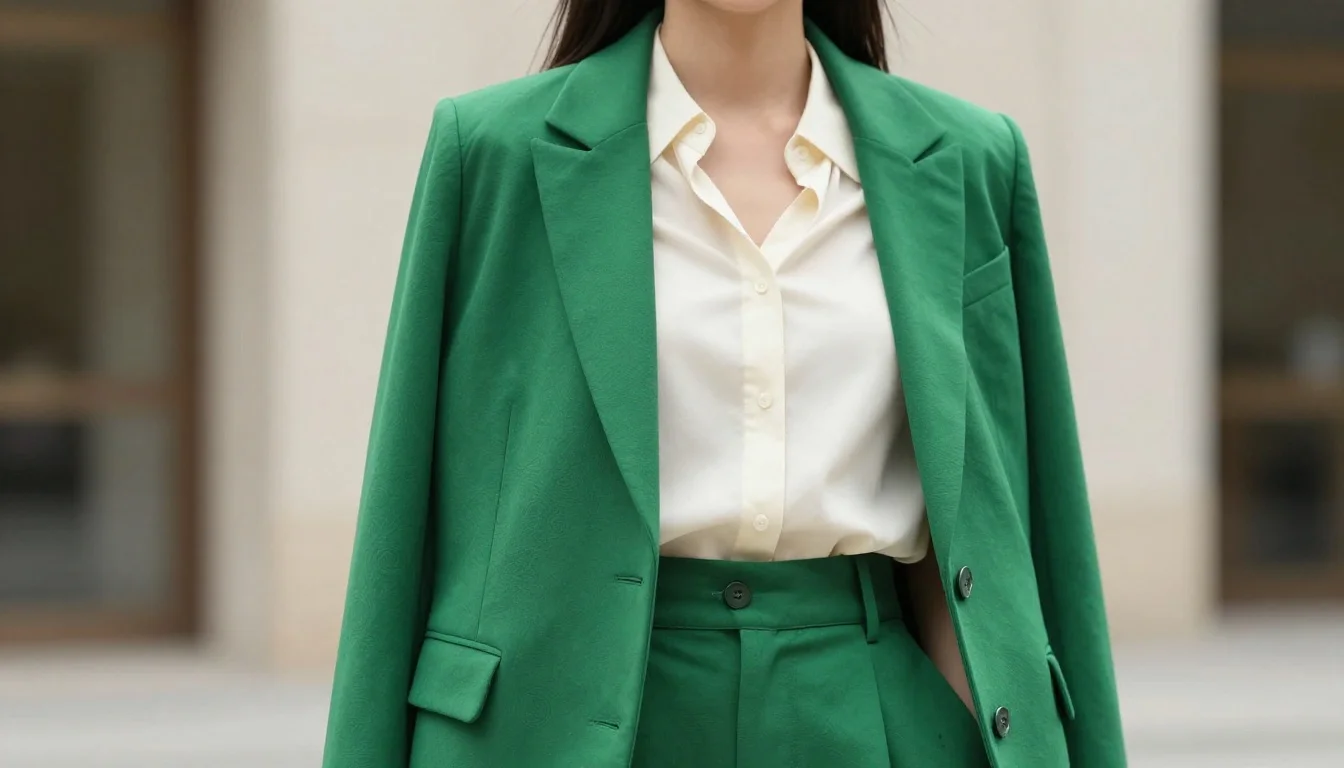
An emerald dress, forest green blazer, or deep hunter coat is among the most striking statement pieces in any wardrobe. Deep greens have a richness that makes them feel significant without the primary-color boldness of red or yellow. The key is choosing the right temperature for your coloring and letting the green be the single color event — pair with neutrals (black, white, cream, camel) to let the green speak without competition.
Green as a near-neutral
Olive, sage, and muted moss function as elevated neutrals that pair with almost everything in a wardrobe. An olive utility jacket, sage linen trousers, or khaki-green knit can be treated like any other neutral — versatile, undemanding, and reliable. These are green shades for people who want color without drama, and they tend to be among the most-worn pieces once they enter a wardrobe.
Green with other colors
Green pairs remarkably well across the spectrum. Navy and emerald create a rich, jewel-toned combination. Camel and warm olive is an earthy autumn pairing. White with vivid green is fresh and striking. Brown and warm green creates an organic, nature-inspired combination that is very wearable. Red and green, despite its seasonal associations, is actually a classic complementary pairing when the shades are sophisticated — burgundy with forest green, for example, is genuinely striking.
Green in professional settings
Deep greens — forest, hunter, emerald — are excellent professional colors. They are distinctive without being loud, and they project confidence and calm. A forest green structured blazer, a hunter green wool dress, or an emerald silk blouse are all strong professional choices. Sage and muted greens also work in office settings as elevated neutrals. Avoid bright, neon, or yellow-toned greens in formal professional contexts.
Versions of Green That Work Against You
Yellow-green and lime on cool skin
Vivid yellow-green — chartreuse, lime, yellow-toned green — creates a sallow, slightly ill effect on cool, pink-toned skin. The yellow warmth of these greens fights against the cool quality of the complexion and creates a clashing, draining effect. Cool skin types wanting green should look at blue-toned options (teal-green, jade) or deep neutral greens (forest, emerald) rather than anything that leans yellow.
Cool blue-green on warm golden skin
Very cool, blue-toned greens on warm, golden, or peachy skin can look stark and unflattering. The blue quality of teal-green or seafoam fights against the yellow-warmth of warm skin, creating a temperature clash. Warm skin tones wanting green should look at olive, warm sage, forest green, or warm moss rather than blue-based greens.
Neon green near the face
Neon green is effectively unwearable near the face on almost any skin tone. Its extreme brightness and yellow-green temperature create a harsh, sickly quality against skin. If you love bold green, emerald or vivid hunter — which have depth alongside saturation — are far more flattering than neon-bright greens.
Muted khaki-green on complexions that need saturation
On vivid, high-contrast coloring — particularly dark skin and dark hair against light skin — very muted, dusty khaki-greens can look draining and dull. These muted shades work on soft, muted complexions but flatten high-contrast ones. High-contrast types should choose saturated greens with real depth: emerald, vivid forest, rich jade.
Stop guessing — preview every look on you
See these looks on my photoSwaps That Make Green Work for Your Coloring
Trading versions of green that drain your complexion for ones that enhance it.
Yellow-green creates a sallow, sickly quality on cool undertones. Jade and teal-green share the cool temperature of the skin and look harmonious.
Cool seafoam fights warm, golden undertones. Warm olive and forest green harmonize with the warmth of the complexion and add richness.
Neon green is unwearable near the face. Sage and muted moss bring green into the wardrobe as an elevated, versatile neutral that suits almost any undertone.
Dusty khaki lacks the visual energy to make a statement. Emerald and forest green have the depth and richness that makes green genuinely striking as a statement piece.
Muted grey-green drains high-contrast coloring of its energy. Deep hunter and vivid emerald provide the saturation and depth that high-contrast types need.
Cool mint creates a temperature clash with warm undertones. Warm moss and golden olive resonate with warm and olive skin, creating a harmonious, glowing effect.
Which Seasonal Palettes Wear Green Best?
Green appears in every seasonal palette but in different versions. Your season determines which green family is yours.
Warm Autumn
Learn moreWarm Autumns have a natural affinity for the earthy greens — warm olive, golden khaki, warm moss, and dark forest. The earthy richness of Autumn coloring resonates perfectly with warm, yellow-based greens. These are the greens that look most effortlessly natural on Warm Autumn types — they feel like part of the coloring rather than an addition to it.
Cool Winter
Learn moreCool Winters wear the most vivid and intense greens — clear emerald, vivid jewel green, cool jade, and bright hunter. Their high-contrast, cool coloring can handle the intensity and creates striking results. For Cool Winters, vivid emerald is among the most powerful and flattering colors in their palette.
Soft Summer
Learn moreSoft Summers wear the most muted and gentle greens — soft sage, dusty green, heathered moss, and cool grey-green. Their soft, cool coloring resonates beautifully with muted greens that share the same low-saturation quality. Sage green is one of the most flattering colors for Soft Summer types.
Find Your Green
Green rewards the effort of finding the right shade. The difference between the wrong green (which creates a sallow, clashing effect) and the right green (which looks like it belongs with your complexion) is stark — and once you have identified your version, green becomes one of the most versatile and distinctive colors in your wardrobe. A personalized color analysis identifies exactly which part of the green family your coloring suits and gives you specific shades that make this diverse color family work for you.
Stop guessing — preview every color on you
Preview Yourself In Your Palette
Get my personalized paletteStop guessing — preview every color on you
Preview Yourself In Your Palette

Related Guides for How to Wear Green
Explore more personalized color advice based on your features.
Want to see these colors on you? What Colors Look Good on Me — free to try.
Frequently Asked Questions About How to Wear Green
What shade of green suits warm skin tones?
Warm skin tones (golden, peachy, olive undertones) suit warm, yellow-based greens: olive, warm moss, golden khaki, forest green, and deep hunter. These share the warmth of the complexion. Very cool blue-greens (seafoam, cool mint, teal-green) should be avoided on warm undertones as they create a temperature clash.
What shade of green suits cool skin tones?
Cool skin tones (pink, rosy, bluish undertones) suit cool, blue-based greens: jade, teal-green, seafoam, and cool mint. Vivid emerald also works well on cool complexions. Yellow-based greens (olive, chartreuse, lime) should be avoided as they create a sallow, clashing effect on cool undertones.
Can olive skin wear green?
Olive skin wears warm greens beautifully — particularly olive, warm moss, forest green, and warm sage. The yellow-green undertone in olive skin resonates with warm greens in a way that makes both look richer. Dark, rich greens like forest and hunter also look striking on olive skin. Cool blue-greens can create a clash with the warm quality of olive complexions.
Is emerald green easy to wear?
Emerald is actually one of the more universally flattering greens because its depth and richness mean it creates contrast rather than clashing with undertone. It works on cool complexions (where its slight blue quality harmonizes) and on warm complexions with enough depth to carry the intensity. It is more accessible than yellow-green or bright lime, which are more undertone-specific.
What is the difference between sage and olive?
Sage is a soft, grey-green with a cool or neutral quality — it leans slightly toward grey and works well on cool, muted complexions. Olive is a warm, yellow-green with earthy warmth — it resonates with warm and olive skin tones. Both are muted greens that function as near-neutrals, but they suit opposite undertone types. Sage is for Cool and Soft Summer; olive is for Warm and Deep Autumn.
What colors go with green?
Navy and emerald create a rich jewel-toned combination. Camel and olive is an earthy autumn pairing. White and vivid green is clean and striking. Brown with warm green is organic and natural. Burgundy and forest green is a sophisticated complementary pairing. Cream with sage creates a soft, elegant tonal look. Most neutrals pair well with green — black, white, tan, and navy all work comfortably with most versions of green.