Grey Hair Is YourProfessional Advantage
Grey hair is a professional asset — it signals authority, experience, and credibility. Discover how to build looks with shades that actually flatter you.
Grey hair signals authority before you say a word. In a professional context, that is not a liability — it is leverage. The challenge is not hiding your grey or softening it with safe, forgettable neutrals. The challenge is dressing in a way that makes your grey look deliberate, powerful, and entirely on purpose. The professionals who look most commanding with grey hair are wearing colors that work with grey's cool, reflective quality: vivid jewel tones that pop with authority, sharp high-contrast classics that frame grey with maximum impact, and sophisticated cool tones that feel like they belong in boardrooms. The ones who look washed out are wearing warm beige and muddy camel — colors that fight grey without providing any useful contrast.


3,000+
happy clients
Grey Hair as a Professional Asset
Grey hair signals authority before you say a word. In a professional context, that is not a liability — it is leverage. The challenge is not hiding your grey or softening it with safe, forgettable neutrals. The challenge is dressing in a way that makes your grey look deliberate, powerful, and entirely on purpose. The professionals who look most commanding with grey hair are wearing colors that work with grey's cool, reflective quality: vivid jewel tones that pop with authority, sharp high-contrast classics that frame grey with maximum impact, and sophisticated cool tones that feel like they belong in boardrooms. The ones who look washed out are wearing warm beige and muddy camel — colors that fight grey without providing any useful contrast.
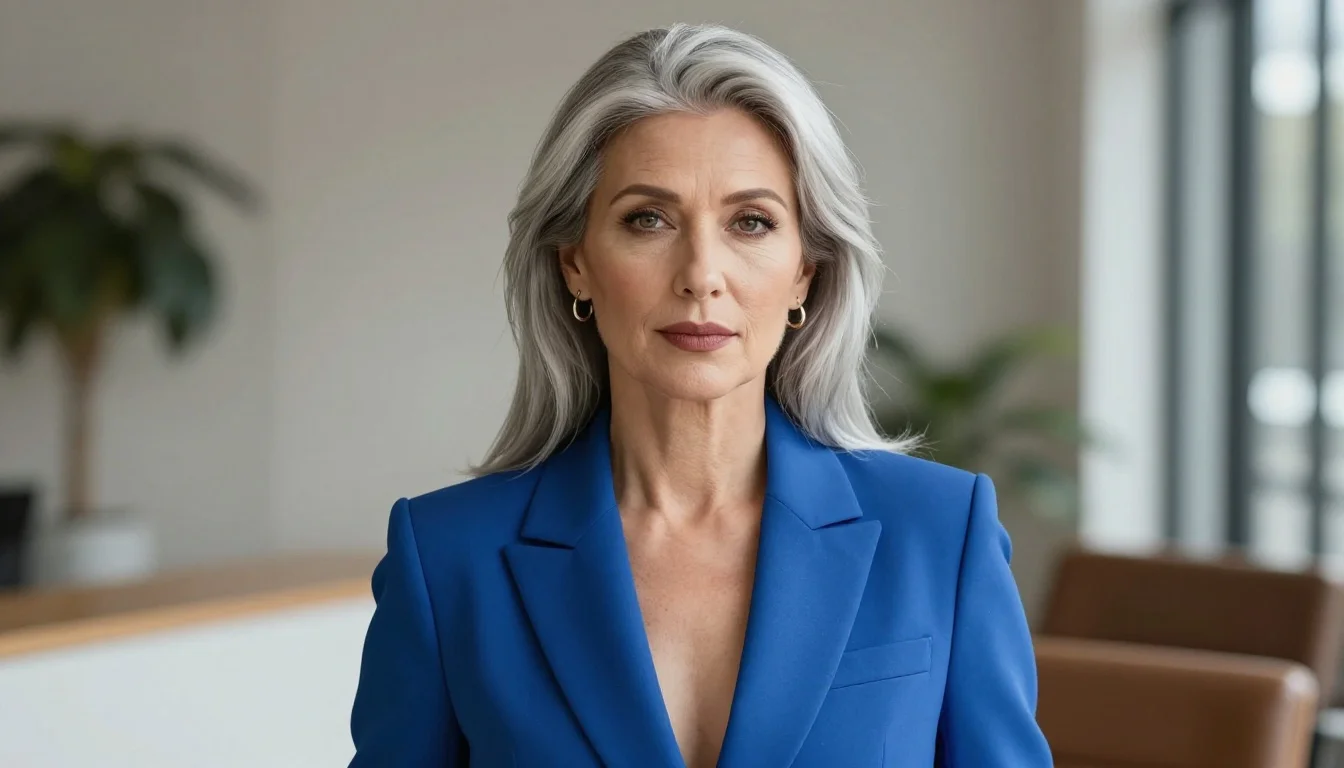
Grey hair carries a visual authority that pigmented hair does not. Research on professional perception consistently shows that grey-haired individuals are read as more experienced, more credible, and more trustworthy — before a single word is spoken. The question is not whether to leverage this. The question is whether your clothing is reinforcing that authority or inadvertently undermining it. A vivid sapphire blazer on grey hair looks like a deliberate power move. The same blazer on brown hair looks bold. The difference: grey hair's neutralizing quality gives bold colors a sophisticated platform that dark hair simply does not provide.
The professional wardrobe challenge for grey hair is different from the general color challenge. In a work context, the stakes are specific: you want to look authoritative, not washed out; polished, not blending into the background; intentional, not accidentally matching the office walls. Warm, muddy colors — camel, warm beige, warm brown, muted olive — create exactly the wrong effect. They have neither the contrast nor the temperature to work with grey hair in a professional setting. They make grey hair look like an afterthought rather than a signature.
The office environment adds another dimension: artificial lighting. Fluorescent and LED office lighting flattens warm tones and can make grey hair look yellowed or dull. This is where violet and cool tones provide a specific functional advantage — they neutralize yellow in grey hair under artificial light, making it look crisper and more distinctly silver throughout the workday. A soft amethyst blouse or a cool-toned lavender suiting piece is not just aesthetically flattering; it is performing active color correction throughout your professional day.
What work outfit colors are best for grey hair?
Vivid jewel tones (sapphire, amethyst, deep teal, rich emerald), high-contrast classics (crisp white, deep navy, true black), and rich deep darks (deep plum, charcoal) are the most authoritative professional colors for grey hair. Sapphire blue is particularly powerful — grey hair gives it a sophisticated platform that makes it look deliberate and high-status. Amethyst has the added benefit of toning grey hair to look crisper under office fluorescent lighting.
Your Best Work Outfit Colors
Power Jewel Tones
Jewel tones are the power colors for grey-haired professionals. Sapphire blue against grey hair creates a striking combination that reads as high-status and intentional — the cool depth of sapphire resonates with grey hair's cool quality while providing vivid, authority-signaling contrast. Amethyst has the additional benefit of toning grey hair to look crisper under office lighting. Deep teal and rich emerald provide depth and sophistication that makes grey hair look luminous by contrast. These are the colors that transform grey hair from 'neutral feature' into 'signature element.'
High-Contrast Classics
The professional classics — crisp white, deep navy, true black — all work exceptionally well with grey hair because they provide maximum contrast. A crisp white shirt under a dark blazer against grey hair creates a graphic, editorial quality that looks polished and intentional. Deep navy functions as grey hair's most powerful professional neutral: the cool depth makes grey look vividly silver rather than flat. Black with grey hair creates the highest possible contrast ratio, making grey hair appear more vivid and deliberately chosen.
Sophisticated Cool Tones
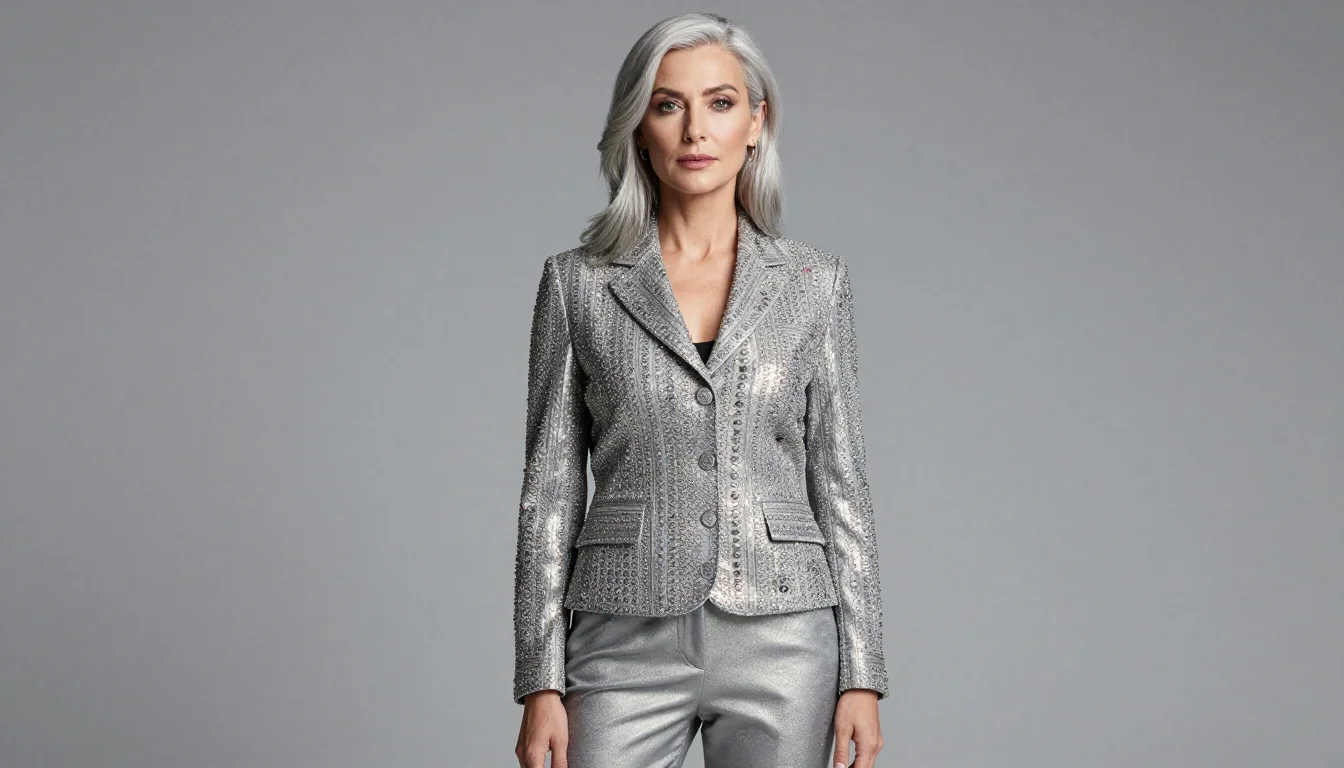
For creative fields and settings where maximum visual impact would be too much, sophisticated cool tones provide a quieter authority. Soft silver-grey suiting creates a monochromatic look with grey hair that reads as intentional and directional — it takes confidence to wear grey with grey and have it look polished. Powder blue and icy lavender work particularly well in creative industries where approachable authority matters more than boardroom gravitas. These tones all harmonize with grey hair's cool quality without competing with it.
Rich Deep Darks
Deep, dark colors create maximum contrast with grey hair's light, reflective quality and signal authority through their depth and richness. Charcoal is the professional workhorse: dark enough for gravitas, cool enough to complement grey hair without fighting it. Deep plum and aubergine sit in the warm-cool middle ground — they have enough purple undertone to complement grey hair while providing a warmer, slightly more approachable quality than pure navy or charcoal. These are the foundation pieces of a grey-haired professional's wardrobe.
Ready to see sapphire blue & amethyst purple on your face?
Start my color analysisHow to Build a Power Professional Look with Grey Hair
Lead with jewel tone near your face
The most impactful professional move for grey hair is wearing a vivid jewel tone nearest to your face — a sapphire blazer, an amethyst blouse, a deep teal scarf. Grey hair amplifies nearby colors more than dark hair does, which means the jewel tone and your grey hair create a visual dialogue that makes both look more intentional and polished. Wear your deeper, more neutral pieces lower — navy trousers, charcoal skirt — and let the jewel tone do the authority signaling at the top.
Use violet to neutralize office lighting
Office fluorescent and LED lighting can make grey hair look yellowed throughout the day. Violet tones — amethyst, lavender, soft purple — actively neutralize this effect by canceling yellow wavelengths, the same science behind purple-toning shampoos. A soft amethyst blouse or lavender suiting piece keeps grey hair looking crisp and distinctly silver all day, not just in morning natural light. This is one of the most underused professional styling strategies for grey-haired professionals.
Build contrast into every outfit
Grey hair creates the most polished professional looks when there is deliberate contrast in the outfit. A crisp white shirt under a deep navy blazer with grey hair creates three layers of contrast — the shirt, the blazer, and the hair — that look graphically intentional. Even simple outfits benefit from this principle: a charcoal trouser suit with a crisp white blouse looks far more authoritative than the same suit with a warm ivory blouse. The contrast makes grey hair look chosen rather than incidental.
Dress the season, not the convention
Many grey-haired professionals feel pressure to dress conservatively to 'compensate' for grey hair — to wear navy and grey and neutrals to appear more conventional. This is backward. Grey hair already signals the conventional qualities of authority and experience. Your clothes can afford to be more expressive, more color-forward, and more deliberately stylish than your colleagues. A deep plum sheath dress with grey hair reads as confident and fashion-forward. A beige blazer with grey hair reads as resigned. Use your grey hair's inherent authority to take more risks, not fewer.
Work Colors That Undermine Grey Hair Authority
Warm camel and tan
Camel and tan are the most common professional mistake for grey-haired dressers. They sit in a yellow-warm register that fights grey hair's cool quality without providing useful contrast — neither complementary nor contrasting, just conflicting. In office lighting, this combination washes out and can make grey hair appear yellowed and dull. A camel blazer that would look polished on a brunette colleague looks faded and uninspiring against grey hair.
Warm brown and cognac
Brown and cognac carry the same warm-temperature problem as camel, with the added issue that they can create a muddy, undifferentiated quality against grey hair. The warmth fights grey's cool neutrality without the richness or contrast needed to be interesting. These are colors that require warm undertones in hair, skin, or eyes to work well — grey hair typically provides none of those warm signals.
Dusty, muted mid-tone pastels
Very muted, chalky pastels — dusty peach, faded blush, pale sage — sit in the same low-saturation register as grey hair without providing the contrast or complementary energy needed in a professional context. They look hesitant rather than authoritative. If you want to wear pastels professionally with grey hair, choose versions with enough depth or cool precision — powder blue, icy lavender — rather than versions that look like they faded in the wash.
Warm mustard and golden yellow
Warm yellow and mustard tones create a temperature clash with grey hair that is particularly visible in office lighting. They also risk making grey hair look greenish or yellowed by reflected color — grey hair is highly reflective, and yellow-adjacent tones cast unflattering warmth onto the hair itself. If you love yellow, cool chartreuse or lemon yellow with a cool edge can work; warm golden mustard very rarely does.
Stop guessing — preview every look on you
See these looks on my photoYour Work Wardrobe, Upgraded
Replacing the professional colors that flatten grey hair with ones that signal authority and intention.
Camel fights grey hair's cool quality without contrast. Sapphire creates vivid jewel-tone authority; navy creates cool-depth authority — both make grey hair look deliberately silver and polished.
Warm tan creates an undifferentiated, faded look with grey hair. Charcoal provides deep cool contrast that makes grey hair look luminous; navy creates the cool professional standard that complements grey hair best.
Warm blush lacks the contrast and temperature alignment to work with grey hair professionally. Amethyst tones grey hair to look crisper under office lighting; powder blue creates cool, approachable authority.
Warm brown creates a muddy, low-contrast look with grey hair. Deep plum has cool-warm depth that makes grey hair look strikingly polished; emerald creates vivid jewel-tone contrast that signals confidence.
Warm golden tones clash with grey hair's cool quality and can make it look yellowed. Deep teal provides jewel-tone depth; lavender provides toning neutralization — both work with grey hair rather than against it.
Warm yellow gold can fight the cool quality of grey hair. White gold and silver echo grey hair's metallic quality with elegance; amethyst settings near the face provide the toning effect that keeps grey hair looking its crispest all day.
Which Professional Palette Fits Your Grey?
Grey hair shifts most people toward the cool seasonal palettes. Your exact professional palette depends on whether your grey is cool-silver, warm-grey, or salt-and-pepper — as well as your skin undertone and eye color.
Cool Winter
Learn moreIf your grey hair is bright and vivid silver, your skin has a distinctly cool or pale quality, and your overall look has high contrast, Cool Winter describes your professional coloring. Your power palette: icy whites, vivid sapphire, emerald, sharp charcoal, and clear jewel tones at maximum saturation. You can wear the boldest professional colors of any type — a vivid cobalt blazer looks extraordinary on you. Your professional authority registers through crisp, high-contrast dressing.
Cool Summer
Learn moreIf your grey has a softer silver quality, your skin has rosy or neutral-cool undertones, and your overall look is medium-contrast, Cool Summer describes your professional coloring. Your palette is cool and muted-sophisticated: dusty rose with richness, muted teal, soft plum, powder blue, and cool lavender. You look most authoritative in refined, subtle color rather than high-saturation jewel tones — a dusty rose blazer reads as quietly powerful on you where it would look uncertain on a Winter type.
Light Summer
Learn moreIf your grey hair has a lighter, more delicate quality, your skin is fair with cool or neutral undertones, and your coloring overall is soft rather than high-contrast, Light Summer may describe you. Your professional palette stays in the lighter, cooler registers: soft powder blue, icy lavender, pale silver-grey suiting, and muted soft teal. You look most polished in refined, understated professional dressing — lightweight fabrics in cool pale tones carry more authority on you than heavy, dark power dressing.
Find Your Exact Professional Palette
Grey hair's exact professional power depends on its specific quality — whether it runs cool-silver or warm-grey, fully silver or salt-and-pepper — combined with your skin undertone and eye color. A personalized color analysis identifies your precise seasonal type and maps the exact professional colors that make your specific grey hair command maximum authority and intention.
Stop guessing — preview every color on you
Preview Yourself In Your Palette
Get my personalized paletteStop guessing — preview every color on you
Preview Yourself In Your Palette

Related Guides for Work Outfits for Grey Hair
Explore more personalized color advice based on your features.
Want to see these colors on you? Virtual Hair Color Try-On — free to try.
Frequently Asked Questions About Work Outfits for Grey Hair
What work outfit colors are best for grey hair?
Vivid jewel tones (sapphire, amethyst, deep teal, rich emerald), high-contrast classics (crisp white, deep navy, true black), and rich deep darks (deep plum, charcoal) are the most authoritative professional colors for grey hair. Sapphire blue is particularly powerful — grey hair gives it a sophisticated platform that makes it look deliberate and high-status. Amethyst has the added benefit of toning grey hair to look crisper under office fluorescent lighting.
Should I wear bright colors or neutrals to work with grey hair?
Both work, but they work differently with grey hair. Vivid jewel tones near grey hair look more intentional and authority-signaling than the same colors on brunette hair — grey is a sophisticated neutral that amplifies bold colors. Professional neutrals (navy, charcoal, crisp white) provide the high contrast that makes grey hair look polished and deliberate. The neutrals to avoid are warm, low-contrast ones — camel, warm beige, warm tan — which create a washed-out, flat quality against grey hair.
Can grey hair wear all black to work?
Yes — all black with grey hair is a powerful professional combination. Black creates maximum contrast with grey hair's light, reflective quality, making the hair appear more vividly silver and deliberately chosen. The combination reads as graphic and fashion-forward rather than merely conventional. You can elevate all-black professional dressing with cool-metallic accessories — silver jewelry, white gold — that echo grey hair's metallic quality.
Why does camel and beige look bad with grey hair at work?
Camel and warm beige sit in a yellow-warm temperature register that fights grey hair's cool neutrality. They create neither complementary harmony (which would require cool tones) nor interesting contrast (which requires depth or saturation). The result is flat and undifferentiated — neither element looks intentional. Office fluorescent lighting compounds this by making warm neutrals look duller and grey hair look more yellowed. The practical fix: replace warm beige professional pieces with charcoal, deep navy, or cool-toned pieces that provide useful contrast.
What colors make grey hair look professional and polished for a job interview?
For maximum professional authority in an interview context, choose a deep navy or sapphire blazer with a crisp white blouse — this combination creates graphic contrast that makes grey hair look luminous and deliberate. Alternatively, a tailored charcoal blazer with a soft amethyst blouse signals sophistication while the violet tones keep grey hair looking crisp under any lighting. Both approaches use grey hair's reflective quality to amplify the outfit rather than competing with it.
Does the color of my work outfit affect how grey hair looks under office lighting?
Yes — significantly. Office fluorescent and LED lighting can make grey hair look yellowed or flat throughout the day, especially in the afternoon. Violet and cool-toned colors counteract this: amethyst, lavender, and soft purple near the face neutralize yellow in grey hair through reflected color (the same science as violet-toning shampoos). Cool blue tones also help. Warm colors — yellow, orange, warm beige — can make the lighting problem worse by casting additional warm tones onto already-challenged grey hair.