Colors for Grey Hairand Pale Skin
Grey hair and pale skin creates an all-neutral combination that needs deliberate color choices. Discover which shades complement your coloring — and which to avoid.
Grey hair and pale skin is a beautiful combination — but it's an all-neutral one. Both features are light, low-pigment, and reflective. That means the usual advice for either alone isn't enough here. Colors that merely 'work' for pale skin can look flat with grey hair. Colors fine for grey hair can disappear against pale skin. You need shades that do double duty — activating the silver in your hair and giving your fair complexion the contrast it needs.


3,000+
happy clients
Why Two Neutral Features Change Everything
Grey hair and pale skin is a beautiful combination — but it's an all-neutral one. Both features are light, low-pigment, and reflective. That means the usual advice for either alone isn't enough here. Colors that merely 'work' for pale skin can look flat with grey hair. Colors fine for grey hair can disappear against pale skin. You need shades that do double duty — activating the silver in your hair and giving your fair complexion the contrast it needs.
Grey hair contains almost no pigment — it reflects the colors around it rather than absorbing them. Pale skin is similarly high-reflectivity, picking up color temperature from nearby fabric more readily than medium or dark complexions. When you have both, the optical challenge is significant: your entire natural coloring sits in the light-to-silver range, with nothing in it creating inherent depth or contrast.
That absence of natural contrast isn't a flaw — it's the reason intentional color becomes so powerful on this combination. The right colors don't just complement grey hair or pale skin individually. They frame the entire coloring with depth, making silver hair look luminous and fair skin look porcelain-bright simultaneously. Vivid, saturated colors and deep, rich darks do this effortlessly. Dull, desaturated mid-tones do the opposite.
The common mistake is retreating into a safe zone of beiges, taupes, and soft greys because they feel cohesive with the natural palette. They're not cohesive — they're invisible. On grey hair and pale skin, safe mid-tones create a flat, faded look where nothing stands out. The counterintuitive rule: this combination demands more color confidence, not less.
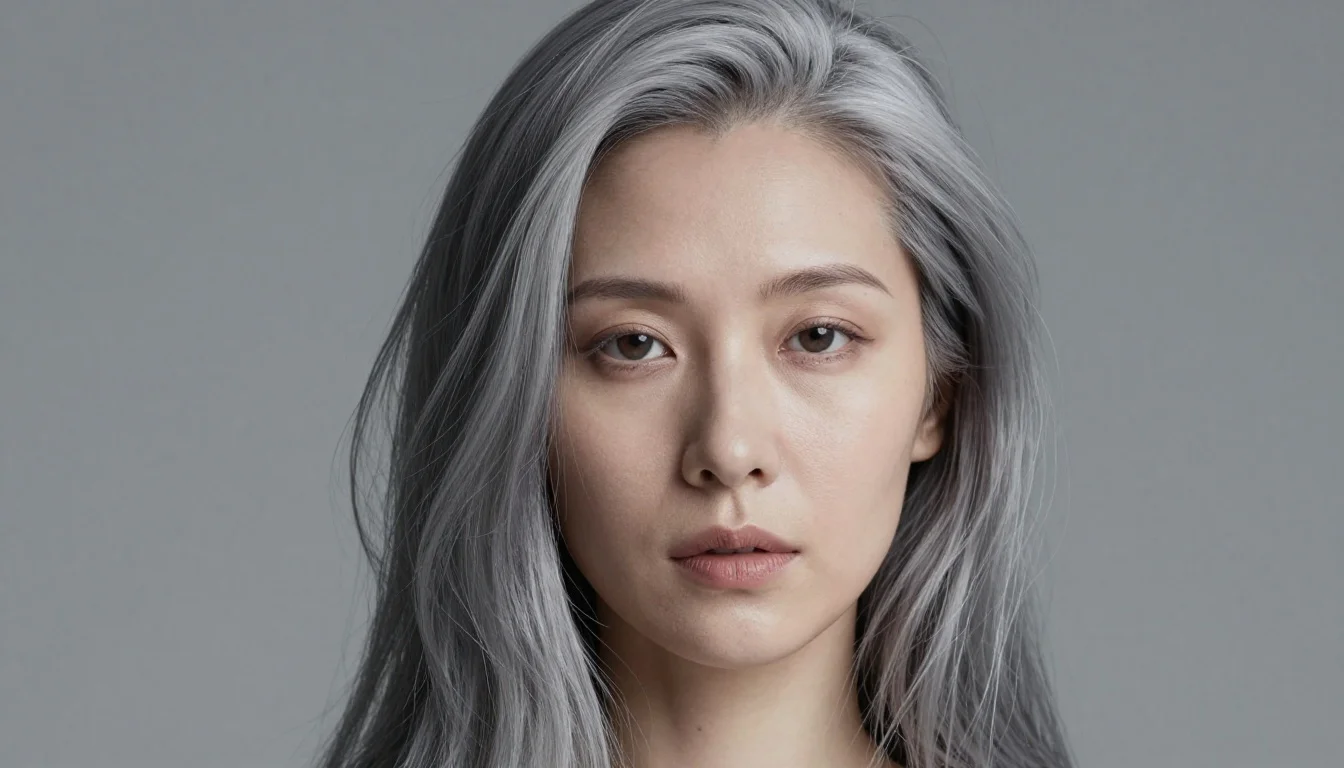
What colors look best with grey hair and pale skin?
Rich purple and violet tones are the most flattering for grey hair and pale skin together — they activate the silver quality of grey hair while providing the depth that pale skin needs. Deep jewel tones like midnight navy, sapphire, and teal create strong contrast. Rich berry shades like raspberry and cranberry add warmth without clashing. The key is choosing colors with real saturation or depth — mid-tones and desaturated shades flatten both features.
Your Most Flattering Color Families
Vivid Purple and Violet
Purple is the single most powerful color for grey hair and pale skin together. The violet wavelengths interact optically with silver-grey tones, making grey hair look brighter and cooler — more silver, less faded. At the same time, purple has enough depth and richness to create real contrast against pale skin. Deep amethyst and rich violet are your strongest choices; clear lavender works when it has genuine saturation rather than chalky pastels. Berry plum bridges both features with warm-cool balance.
Deep Cool Darks
Deep, cool-toned darks create the maximum contrast that grey hair and pale skin both need. Midnight navy is the most reliable: it's cool enough to harmonize with the silver-cool quality of grey hair while being dark enough to frame pale skin with real visual weight. Charcoal works similarly — it's deep without the starkness of black. Forest green creates beautiful contrast with both features while adding a richness that warms pale skin. These are your fail-safe "always looks intentional" colors.
Saturated Cool Jewel Tones
Saturated jewel tones with cool undertones are uniquely positioned to flatter both features at once. Sapphire blue creates a vivid, cool contrast that makes pale skin look porcelain-bright while resonating with the cool undertone of silver hair. Clear teal and vivid cobalt do the same through saturation — the vibrancy is what prevents both features from fading. These colors work because they're strong enough to hold their own against two light, reflective features simultaneously.
Rich Berry and Rose
Rich pink-reds sit in the pink-red family that activates grey hair's silver quality while adding warmth to pale skin without clashing. Deep raspberry is particularly effective: its cool-warm balance means it works with the cool undertone of most grey hair while its warmth prevents pale skin from looking cool and washed out. Cranberry creates drama. These colors photograph beautifully — the contrast between rich berry tones and silver-pale coloring is striking in any light.

Ready to see amethyst & violet on your face?
Start my color analysisHow to Dress Grey Hair and Pale Skin with Intention
Lead with depth
With grey hair and pale skin, your most important daily color decision is the garment closest to your face. Put depth there. A deep amethyst turtleneck, midnight navy blouse, or rich violet cashmere knit creates immediate visual structure: the color frames pale skin and activates the silver quality of grey hair in one move. On a day when you want zero effort, the right single piece near your face does everything. A good burgundy crewneck with any dark trousers looks striking and takes thirty seconds.
Professional settings
Midnight navy is your professional power color — it's authoritative, cool, and creates the exact depth contrast that makes pale skin and grey hair look their most polished. A navy blazer with a cool ivory or white blouse is a consistently excellent work formula. Deep violet and plum work too in creative or client-facing environments. Avoid the standard grey suiting that most stylists recommend: it blends into grey hair, creating a flat, colourless look under office lighting.
Using purple strategically
If there's one colour to invest in specifically for this combination, it's purple. A deep amethyst wool blazer, a rich violet silk blouse, or even a clear lavender cashmere knit — all of these create a glow effect next to grey hair that no other colour replicates as reliably. The optical interaction between purple tones and grey-silver hair is real: the violet wavelengths make silver hair look brighter and cooler. This isn't a style trick; it's colour science in your favour.
Evening and occasions
Grey hair and pale skin in a deep jewel tone at an evening event looks genuinely stunning. Deep sapphire, vivid cobalt, or rich emerald in silk or satin against silver hair and fair skin photographs dramatically and looks luminous in low lighting. For more relaxed evenings, a deep raspberry or cranberry dress creates the same visual impact with more approachable warmth. Avoid champagne and pale gold — they're too close to the natural palette and make everything read as uniformly pale.
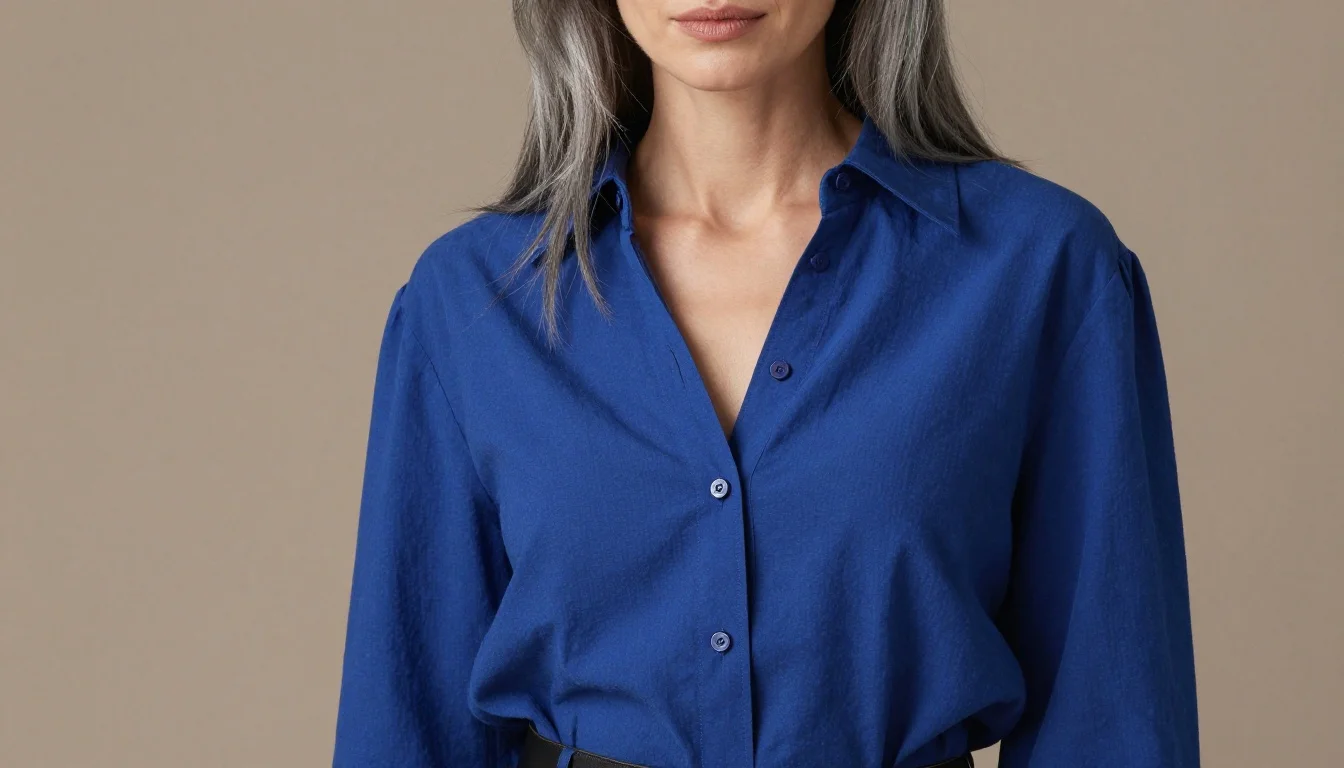
Balance pale skin with your new contrast
Grey hair changes how bright, soft, or icy your colors should be. Confirm the right palette with AI color analysis before replacing the colors near your face.
Colors That Flatten Both Features at Once
Warm grey and greige
This is the most counterintuitive avoid for this combination. Wearing grey clothing when you have grey hair creates a washed-out, monochromatic effect where your hair, skin, and outfit all blend into one undifferentiated light-grey mass. There's no focal point, no contrast, and no visual hierarchy. It feels 'matchy' in the worst sense. If you want a grey garment, choose deep charcoal — the contrast between charcoal and silver hair is what works. Mid-tone warm greys are the problem.
Warm yellow-beige and camel
Warm beige and yellow-based camel create two problems simultaneously: the yellow undertone clashes with the cool-silver quality of most grey hair, making it look tinged and faded, while the neutral, mid-tone value fails to create any contrast against pale skin. The combination of a warm beige top with grey hair and pale skin is the look most likely to be described as "washed out." Cool ivory or rich warm cognac are both better than the mid-range beige.
Chalky or desaturated pastels
Very pale, faded pastels — dusty powder blue, chalky lilac, washed-out blush — have no visual energy to do anything for grey hair and pale skin. They create a look where everything is uniformly pale with no focal point. There's a version of pastel that works for this combination: clear, saturated pastels with some vibrancy. The pale, chalky versions that look acceptable on medium or dark skin simply disappear against silver-pale coloring.
Orange and warm rust
Orange and rust create an unflattering temperature conflict with the cool quality of most grey hair and can add a sallow, washed-out note to pale skin with pink undertones. The warmth of orange doesn't add energy or contrast to silver hair — it clashes with it. If you want warmth in this color range, deep cranberry or rich raspberry gives you warmth without the orange conflict.
Stop guessing — preview every shade on you
See myself in my colorsSwaps That Give Both Features a Lift
Trading the colours that flatten grey hair and pale skin for ones that activate both.
Grey-on-grey creates a monochromatic flatness. Violet interacts with silver hair optically, making it look brighter while adding real contrast against pale skin.
Warm beige fights grey hair's cool tone and blurs into pale skin. Navy and charcoal provide the depth both features need to look polished and intentional.
Chalky pale pink vanishes against silver-pale coloring. Deep raspberry has the warmth and saturation to create genuine contrast without clashing.
Dusty mauve lacks the saturation to make an impression against two light features. Rich amethyst has real visual weight that frames both grey hair and pale skin beautifully.
Pale gold and champagne disappear into silver-pale coloring with no contrast. Sapphire and cobalt create the striking, luminous contrast that makes this combination look deliberately beautiful.
Orange-rust tones clash with cool grey hair. Cranberry and burgundy deliver richness and warmth without the cool-warm conflict — and they look extraordinary next to silver hair.
Which Palette Might Be Yours?
Grey hair with pale skin falls within several cool seasonal palettes. Your specific season is determined more by your skin undertone and eye colour than by the hair — grey hair shifts across seasons the same way platinum or silver-blonde does.
Cool Summer
Learn moreIf your pale skin has soft pink or neutral-cool undertones, your grey hair is medium-silver (not dramatically white), and your overall look feels soft and elegant rather than stark or high-contrast, Cool Summer is the most common seasonal home for this combination. Your palette is cool and medium-depth: dusty rose, soft raspberry, slate blue, cool sage, and muted teal. Everything has a cool, sophisticated quality.
Cool Winter
Learn moreIf your pale skin is very fair with distinct cool or blue-pink undertones, your grey is striking white or platinum rather than soft silver, and you have high natural contrast in your coloring — vivid eyes against very fair skin — Cool Winter may be your season. Your palette is vivid and cool: icy blues, clear emerald, bright cobalt, and sharp jewel tones. You can handle more intensity than most grey-haired types.
Soft Summer
Learn moreIf your pale skin has a neutral or muted quality rather than distinctly pink or warm, your grey is soft and blended rather than silver-bright, and your overall look is gentle and low-contrast, Soft Summer may fit best. Your palette is cool and muted: heather mauve, soft teal, smoky blue, and dusty rose. Less vivid than Cool Summer but with the same cool temperature.
Find Your Exact Colors
Grey hair and pale skin is a combination that looks effortlessly beautiful when the colors are right — and distinctly flat when they're not. The specific shades that work best for you depend on whether your grey runs cool or warm, how much pink or golden quality your pale skin carries, and what contrast your eyes bring to the overall picture. A personalised color analysis identifies exactly where in the cool spectrum you sit and gives you a precise palette that makes silver hair glow and pale skin look luminous.
Stop guessing — preview every color on you
Preview Yourself In Your Palette
Get my personalized paletteStop guessing — preview every color on you
Preview Yourself In Your Palette

Related Guides for Best Colors for Grey Hair and Pale Skin
Explore more personalized color advice based on your features.
Want to see these colors on you? Virtual Hair Color Try-On — free to try.
Frequently Asked Questions About Best Colors for Grey Hair and Pale Skin
What colors look best with grey hair and pale skin?
Rich purple and violet tones are the most flattering for grey hair and pale skin together — they activate the silver quality of grey hair while providing the depth that pale skin needs. Deep jewel tones like midnight navy, sapphire, and teal create strong contrast. Rich berry shades like raspberry and cranberry add warmth without clashing. The key is choosing colors with real saturation or depth — mid-tones and desaturated shades flatten both features.
How do I avoid looking washed out with grey hair and pale skin?
Lead with depth at your neckline. A dark, vivid garment near your face — deep violet, midnight navy, rich cranberry — creates the contrast that prevents both features from fading together. Avoid the temptation to "match" your grey with warm grey or beige clothing. Matching two neutral, low-pigment features creates flatness. Contrast creates luminosity.
Can grey hair and pale skin wear pastels?
Only if they're genuinely saturated. Chalky, very pale pastels vanish against silver-pale coloring and create a look with no focal point. Clear, vivid pastels — a proper lavender with depth, a saturated soft blue — work because they have enough visual energy to create a contrast. Think 'pastel with presence' rather than 'faded and soft.'
Should grey hair and pale skin avoid grey clothing?
Yes — mid-tone grey clothing blends into both grey hair and pale skin, creating a monochromatic flatness where everything reads as uniformly light and colourless. Deep charcoal is a completely different story: the contrast between charcoal and silver hair is striking and intentional. It's the mid-tone warm greys and greiges that cause the problem, not dark charcoals.
What season is grey hair with pale skin?
Grey hair with pale skin most commonly falls in the Cool Summer or Cool Winter seasonal families. Cool Summer fits when the overall look is soft and medium-contrast. Cool Winter fits when there's high contrast and the grey hair is very white or platinum. Soft Summer fits the most muted, gentle versions. Your skin undertone and eye colour determine the exact fit.
Does purple really look good with grey hair and pale skin?
Yes — and not just because it's flattering. There's an optical reason: the violet wavelengths in purple interact with the silver tones in grey hair, making it appear brighter, cooler, and more luminous. It's the same reason purple-toning shampoos work on grey hair. Wearing purple near grey hair has the same brightening effect. Paired with pale skin, the contrast creates exactly the visual structure this combination needs.