Hair Colors That FlatterOlive Skin
Olive skin has a yellow-green undertone that makes certain hair colors extraordinary. Discover which shades complement your coloring — and which to avoid.
Olive skin's yellow-green undertone creates specific relationships with hair color. The right shade deepens and warms the complexion. The wrong shade creates a grey or muddy effect. Whether you're going darker, lighter, or adding dimension with highlights, knowing which tones harmonize with olive undertones — and which ones fight them — is the difference between a color that looks intentional and one that looks slightly off.


3,000+
happy clients
Why Olive Skin Responds Differently to Hair Color
Olive skin's yellow-green undertone creates specific relationships with hair color. The right shade deepens and warms the complexion. The wrong shade creates a grey or muddy effect. Whether you're going darker, lighter, or adding dimension with highlights, knowing which tones harmonize with olive undertones — and which ones fight them — is the difference between a color that looks intentional and one that looks slightly off.
Olive skin has a yellow-green undertone — not simply warm (yellow-orange) but specifically yellow with a green quality. This undertone creates a distinct filter through which hair color is perceived. Cool ash tones near olive skin look grey and flat. Very warm orange-gold tones can look brassy and fight the green component. The sweet spot is warm-but-not-orange: golden-warm, rich chocolate, warm auburn, or cool-dark tones that provide clear contrast.
The yellow-green undertone also affects how highlights interact with the face. Highlights that are too blonde or too ashy look disconnected against olive skin's warmth. Highlights that are honey-golden, caramel, or chestnut-warm look like they belong — as if the light is coming from within the hair rather than sitting on top of it.
Depth plays an important role too. Olive skin handles both very dark and medium-deep hair colors well. The medium depth of olive skin means that extremely light blonde can create a high-contrast look that emphasizes the yellow-green undertone rather than softening it. Dark rich brown, warm auburn, and golden-dark colors tend to harmonize most naturally with olive skin's warmth.
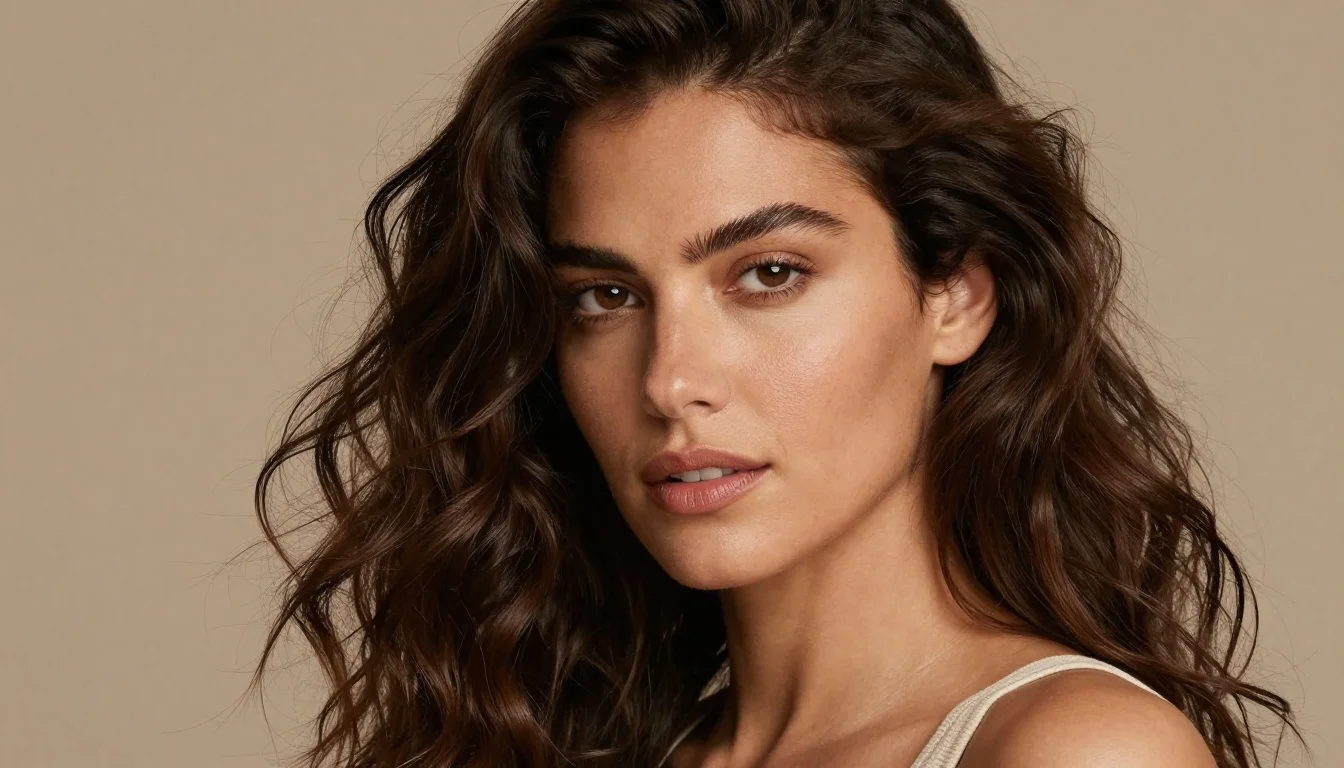
What hair color looks best on olive skin?
Rich chocolate brown and warm auburn are the most universally flattering hair colors for olive skin — their warmth harmonizes with olive's yellow-green undertone. Honey blonde and golden caramel highlights add lightness while staying warm enough to avoid the grey effect of cool tones. Very dark espresso and near-black create striking contrast. The consistent principle: all shades should have warmth rather than ash or cool grey undertones.
Your Best Hair Color Families
Rich Chocolate & Dark Brown
Dark-to-medium brown is one of the most naturally flattering hair color ranges for olive skin. The warmth in rich chocolate and chestnut echoes the warmth in olive skin without fighting the yellow-green component. Espresso brown provides vivid depth contrast against olive skin — making the complexion look more luminous and the features more defined. Warm medium brown with chestnut tones adds dimension without the contrast of very dark shades. These are the most low-maintenance choices for olive skin: they work with the natural undertone.
Warm Auburn & Red-Brown
Auburn and warm red-brown shades have a unique relationship with olive skin — the red warmth in the hair activates a beautiful contrast with the yellow-green undertone without clashing. Warm auburn catches light in a way that makes olive skin look sun-kissed. Copper-red brown adds vibrancy that plays off olive's warmth. These shades look especially striking on deeper olive skin, where the contrast between warm hair and warm-deep skin creates a rich, cohesive look. Avoid true red (too vivid without the brown grounding) or cool copper (too ashy).
Warm Blonde & Honey Highlights
If you want to go lighter, honey and golden caramel tones are the olive-skin-friendly blonde family. Honey blonde has enough warmth to harmonize with olive's yellow-green quality rather than fighting it. Caramel highlights as a balayage or ombre technique add dimension without the full contrast of all-over blonde. Warm dirty blonde (blonde with visible golden-warm undertone rather than ashy undertone) flatters olive skin far better than cool ash blonde. The rule: any blonde near olive skin should look warm, not cool.
Very Dark & Blue-Black
Very dark hair on olive skin creates striking high contrast — the depth of near-black hair against olive skin's warmth creates a vivid, graphic quality. Blue-black has a cool edge but enough depth that the cool quality reads as dramatic contrast rather than ashy mismatch. Natural jet black is neutral enough to flatter olive skin across all depths. These shades require minimal maintenance for naturally dark olive skin and create the most vivid facial framing of any color family.

Ready to see yourself in chocolate & medium brown?
Start my color analysisHow to Choose and Wear Hair Color for Olive Skin
The Undertone Test for Tone Selection
Before choosing a hair color, determine the direction of your olive undertone: more yellow-warm (golden olive) or more neutral-olive (greener without strong yellow warmth). Golden olive skin pairs best with honey blonde, warm auburn, and golden chocolate. Neutral-olive skin can handle slightly cooler choices — warm medium brown, natural black — while still needing warmth in the brown range. The most reliable test: hold swatches of warm versus cool brown near your face in natural light and note which makes your skin look healthier and more luminous.
Balayage and Highlights for Olive Skin
If you want highlights rather than all-over color, balayage is ideal for olive skin — the graduated, natural placement looks sun-kissed rather than artificial. Choose honey, caramel, or warm toffee tones rather than ash or platinum. Highlights should always be warmer than your base color, not cooler. Ask your colorist specifically to avoid ash or cool toners, which are common finishing steps that can undo all the warmth you've achieved. Chestnut highlights on dark chocolate brown base are one of the most consistently flattering combinations for olive skin.
Going Darker vs. Lighter
Going darker is generally more forgiving for olive skin — rich chocolate, espresso, and warm dark brown shades are low-maintenance and high-impact. Going lighter requires more precision. The key: never lighten beyond a warm honey tone without testing how it looks against your specific olive skin first. Many olive-skin people find that going two to three shades lighter (from natural medium brown to caramel, for example) looks better than going all the way to blonde. If you're committed to light hair, ask for a warm honey or golden tone rather than a neutral blonde.
Toning After Coloring
Toners are used after bleaching or coloring to adjust the final shade — and for olive skin, the choice of toner is critical. Avoid violet-based toners (they neutralize yellow but add cool blue, which fights olive undertones). Request warm-gold or warm-neutral toners instead, or skip the toner entirely and embrace the natural golden warmth that comes from lifting olive skin's natural pigment. If brassiness becomes an issue, use a warm-gold toning shampoo rather than a blue or purple one.
Hair Colors That Fight Olive Skin
Cool ash blonde
Ash blonde has a grey-cool undertone that creates a visual conflict with olive skin's yellow-green warmth — the result looks grey and slightly sallow, as if both hair and skin have lost their vitality. Platinum blonde can have a similar effect. If you want to go lighter, always choose honey, golden, or warm shades rather than ash or pearl tones.
Very bright orange-copper
Vivid orange-copper tones fight the green component of olive undertones, creating a clashing warmth rather than harmonious warmth. The orange-on-green effect is noticeable and unflattering. Warm copper-red brown (with brown grounding the copper) works; vivid orange-copper without brown doesn't. The distinction is subtle but visible in natural light.
Cool ash brown
Ash brown, like ash blonde, adds grey-cool undertones near olive skin — flattening the complexion and emphasizing the yellow-green component of the undertone in an unflattering way. Any brown near olive skin should have warmth: golden, chestnut, chocolate, or mahogany rather than ash, mushroom, or greige.
Very light platinum or icy tones
Platinum and icy highlights create a high-contrast look that emphasizes olive skin's yellow-green quality rather than softening it — the stark cool light near warm skin creates a disconnect. If you love very light hair, a warmer light shade (champagne rather than platinum, honey rather than ice) creates a more cohesive, flattering look against olive skin.
Stop guessing — preview every shade on you
See myself in my shadesHair Color Swaps for Olive Skin
Replacing shades that fight the yellow-green undertone with ones that harmonize with it.
Ash tones look grey near olive skin. Honey and caramel tones resonate with olive warmth for a sun-kissed, natural effect.
Ash brown flattens olive skin's warmth. Warm chocolate has the golden richness that makes olive skin look luminous.
Cool beige blondes create a grey effect against olive skin. Warm dirty blonde has the yellow-warmth to harmonize with olive's undertone.
Pure copper-orange fights the green in olive undertones. Auburn with a brown base creates warm resonance without the clash.
Cool toners add grey cast to olive skin. Warm espresso and chocolate brown create the most flattering depth without fighting the undertone.
Blue/violet toners neutralize yellow but create a grey-cool effect on olive skin. Warm-gold toners preserve the warmth that flatters olive undertones.
Which Seasonal Palette Are You?
Olive skin appears in multiple seasonal palettes. Your season depends on the depth of your olive skin, the warmth of your natural hair, and your eye color — not undertone alone.
Warm Autumn
Learn moreIf your olive skin is warm and rich, your hair is naturally dark or warm brown, and earthy warm colors feel most natural on you, Warm Autumn is a strong fit. Your best hair colors: rich chocolate, warm auburn, golden chestnut. Rich, warm, earthy shades with visible warmth.
Deep Autumn
Learn moreIf your olive skin is deeper and richer, your natural coloring is high-depth overall, and you can carry the most intense warm-dark colors, Deep Autumn may fit. Your best hair colors: espresso, deep rich auburn, near-black with warmth. Maximum depth and warmth.
Soft Autumn
Learn moreIf your olive skin is medium-depth, your overall coloring is warm but muted rather than vivid, Soft Autumn is worth exploring. Your best hair colors: warm honey-brown, warm caramel, soft chestnut. Warm but gentler, not high-contrast.
Find Your Perfect Hair Color
Olive skin's yellow-green undertone means that generic hair color advice often misses the mark — the same honey blonde that looks beautiful on warm-neutral skin can look brassy on some olive tones, while ash brown that looks sophisticated on pink skin looks grey on olive. A personalized colour analysis identifies your exact seasonal palette and maps it to specific hair color families — the right shade of warm chocolate, the exact blonde tone, and whether auburn or very dark works best for your specific olive coloring.
Related Guides for Hair Color for Olive Skin
Explore more personalized color advice based on your features.
Want to see these colors on you? Virtual Hair Color Try-On — free to try.
Frequently Asked Questions About Hair Color for Olive Skin
What hair color looks best on olive skin?
Rich chocolate brown and warm auburn are the most universally flattering hair colors for olive skin — their warmth harmonizes with olive's yellow-green undertone. Honey blonde and golden caramel highlights add lightness while staying warm enough to avoid the grey effect of cool tones. Very dark espresso and near-black create striking contrast. The consistent principle: all shades should have warmth rather than ash or cool grey undertones.
Can olive skin go blonde?
Yes, but the tone matters enormously. Honey blonde, golden blonde, and warm dirty blonde all work well with olive skin — they have enough warmth to resonate with the yellow-green undertone. Ash blonde, platinum, and cool beige blonde look grey or sallow against olive skin. If going blonde, always request warm tones and avoid violet or blue toning shampoos that would neutralize the warmth you need.
Does auburn suit olive skin?
Warm auburn is one of the most flattering hair colors for olive skin. The red-warmth in auburn creates a vivid but harmonious relationship with olive's yellow-green undertone. Choose auburn with a brown base (red-chestnut, mahogany-auburn) rather than vivid copper-orange, which can fight the green component. Auburn looks particularly striking on deeper olive skin tones.
What hair color should olive skin avoid?
Olive skin should avoid ash blonde (looks grey), ash brown (flattens complexion), cool mushroom tones (fight the warmth), vivid orange-copper (clashes with green undertone), and platinum/icy highlights (create high contrast that emphasizes the yellow-green quality). Any shade described as 'ash,' 'cool,' or 'icy' is likely to fight olive skin's undertone.
Should I use purple shampoo if I have olive skin?
Generally no — purple and blue toning shampoos neutralize yellow by adding cool blue, which fights olive skin's warmth and can create a grey effect. If you want to tone down brassiness in blonde hair, opt for a warm-gold toner or gloss instead, or simply use a moisturizing shampoo without toning pigments. Embrace some warmth in blonde hair if you have olive skin.
What highlights suit olive skin?
Honey, caramel, and warm toffee highlights in a balayage or ombre technique are the most flattering for olive skin. These warm-golden tones look naturally sun-kissed against olive's warmth. Ash or platinum highlights look disconnected. Chestnut highlights on dark brown base are particularly beautiful. Always ask your colorist to keep highlights warm — not ash, not platinum, not cool.