Wardrobe forWarm Undertones
Build a capsule wardrobe around your warm undertones. Discover how to build looks with shades that actually flatter you.
A wardrobe for warm undertones isn't just a list of flattering colors — it's a system. Knowing that terracotta harmonizes with your skin and cool grey fights it is useful; knowing which specific garments to anchor around, how to combine them into outfits, and what to reach for first in the morning is the goal. This guide treats your warm undertone as a design constraint and builds a capsule wardrobe around it: specific pieces, specific combinations, specific upgrades.


3,000+
happy clients
Why Undertone Changes What You Should Buy
A wardrobe for warm undertones isn't just a list of flattering colors — it's a system. Knowing that terracotta harmonizes with your skin and cool grey fights it is useful; knowing which specific garments to anchor around, how to combine them into outfits, and what to reach for first in the morning is the goal. This guide treats your warm undertone as a design constraint and builds a capsule wardrobe around it: specific pieces, specific combinations, specific upgrades.
Skin undertone — the warm, cool, or neutral quality beneath the surface — directly determines which clothing colors read as harmonious versus discordant. Warm undertones carry a golden, peachy, or yellow-golden quality that creates resonance with warm-adjacent colors and a specific kind of contrast with cool ones. When you understand this mechanism, buying decisions become simpler: you stop buying the cool grey blazer that always feels slightly off and start investing in the camel coat that consistently draws compliments.
The most important capsule principle for warm undertones: anchor around warm neutrals, not grey neutrals. Grey is the default neutral in most wardrobes, and it consistently fights warm undertones — the ashy, cool quality of grey creates a draining contrast against golden and peachy skin. Camel, warm stone, warm ivory, cream, and warm beige do the same organizational work grey does in a capsule wardrobe, but they harmonize with your undertone rather than competing with it. This single swap — building around warm neutrals instead of grey — is the structural foundation of a warm-undertone wardrobe.
Gold jewelry belongs in this system too. The conventional wisdom of 'pick one metal and stick to it' is worth abandoning for warm undertones — the choice isn't aesthetic preference, it's undertone physics. Yellow gold echoes the golden warmth of warm-undertone skin; silver introduces a cool temperature note that creates contrast. Gold earrings, necklaces, and rings are hardware choices with the same logic as choosing a camel coat over a grey one: the warm metal resonates, the cool one creates tension.
What colors should warm undertones wear in a capsule wardrobe?
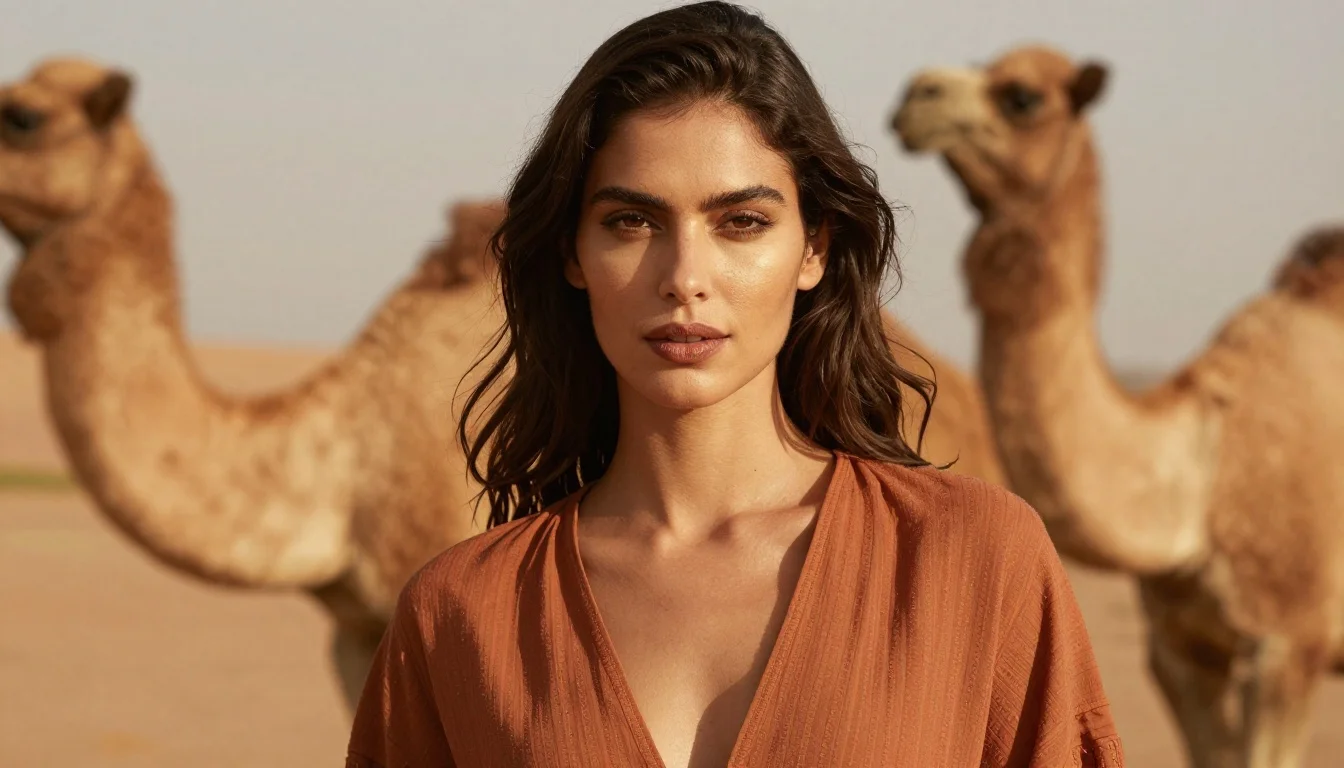
Build your capsule around warm neutral anchors — camel, warm ivory, warm stone, warm beige — as the foundation pieces. Add earth accent tones (terracotta, rust, warm olive) as your signature accent colors. Use cool deep colors (midnight navy, forest green) for contrast pieces that make warm skin look golden. Warm jewel tones (tomato red, warm emerald, rich amber) are your occasion and statement pieces. Gold jewelry ties the whole system together.
Your Core Wardrobe Colors
Warm Neutral Anchors
Camel is the warm-undertone person's alternative to grey — it functions as a neutral that goes with everything while resonating with your undertone rather than fighting it. A camel wool coat, warm stone trousers, or warm ivory linen shirt are the backbone of the capsule. They pair with both warm accent colors (terracotta, rust) and cool contrast colors (navy, forest green) seamlessly. Warm ivory replaces cool white throughout the wardrobe: as a classic tee, a silk blouse, a linen blazer — always the warm version, never the cool one.
Earth Accent Tones
These are the warm-undertone signature colors — the pieces that look effortlessly intentional on warm-toned skin because they share the same temperature register. A terracotta silk blouse, rust merino knit, or warm olive trousers near warm-undertoned skin create richness without effort. The key is using them as accents rather than head-to-toe: a rust blouse with warm stone trousers, terracotta with camel, warm olive with cream. These are your most expressive pieces and the ones that most reliably draw the right kind of attention.
Warm Jewel Tones
Warm jewel tones give you vivid color that still harmonizes with warm undertones. Tomato red — which leans orange-red rather than blue-red — is one of the most powerful colors in a warm-undertone wardrobe: it amplifies the warmth in your skin rather than clashing with it. Warm emerald (green with a yellow base, not a cool blue-green) creates a warm-cool contrast that makes warm skin look golden. These are your occasion pieces, your statement garments — a tomato red wool blazer, a warm coral silk dress, an amber cashmere sweater.
Warm Dark Neutrals
Dark neutrals in a warm-undertone wardrobe should always have warmth to them. Chocolate brown is your black — it creates depth and contrast without the cool-temperature note that straight black can introduce on very warm skin. Warm navy (navy with a slight warmth rather than a pure cool blue-navy) is your most versatile dark neutral for work: it creates the same cool-warm contrast as forest green but with more formal utility. Cognac leather — in boots, a bag, or a belt — is the warm-undertone hardware choice that ties an earth-tone capsule together.

Ready to see camel & ivory on your face?
Start my color analysisHow to Build Outfits for Warm Undertones
The warm neutral foundation
Build your outfit around a warm neutral base, then layer in color. Camel trousers or warm stone wide-legs anchor any combination: add a terracotta silk blouse for warmth-on-warmth resonance, or a forest green knit for warm-cool contrast. Warm ivory linen as a base works with rust, cognac, and warm olive on top. The principle is that your neutrals are never cool — they're always in the warm register, so any color you add harmonizes with both the neutral and your skin simultaneously.
The earth tone formula
Warm undertones are built for earth-tone dressing. The outfit formula: warm neutral bottom (camel, warm stone, warm beige) + earth accent top (terracotta, rust, warm olive) + gold hardware (belt, bag, jewelry). This is the warm-undertone signature look — cohesive, intentional, effortless. Specific combinations: camel wide-leg trousers + terracotta silk blouse + cognac leather belt and bag. Warm stone linen trousers + rust merino turtleneck + gold stud earrings. These combinations look expensive because every element speaks the same undertone language.
Cool colors as strategic contrast
Navy and forest green are your most powerful contrast tools. A midnight navy blazer over a warm ivory tee creates the warm-cool contrast that makes warm-undertoned skin look golden by comparison — the cool depth of navy frames your warmth. Forest green trousers with a cognac top create a warm-cool combination where both colors look richer in proximity to warm skin. The rule: when you introduce cool colors, go deep and saturated (navy, forest green, deep teal) rather than cool and light (pale blue, icy lavender, cool grey), which creates conflict without the benefit of depth.
Occasion dressing for warm undertones
For formal occasions: a chocolate brown or warm navy suit, or a deep tomato red dress — both are sophisticated and warm-undertone appropriate. For business: a camel blazer over warm ivory is more flattering than a grey or black blazer, and reads as just as polished. For evening: deep warm jewel tones — burnt sienna silk, warm burgundy velvet, rich amber satin — create the richness and formality of occasion dressing while working with your undertone. Warm gold jewelry completes every occasion look and requires no deliberation.
Colors That Work Against Warm Undertones
Cool grey in all forms
Cool, ashy grey is the most consistently unflattering color for warm undertones — not because it clashes dramatically, but because it drains. Medium grey tops, grey blazers, grey knits near warm-undertoned faces make the skin look flat and less alive. The temperature conflict isn't vivid enough to read as intentional contrast; it just looks slightly off. Replace grey throughout your wardrobe with warm neutral alternatives: camel for outerwear, warm stone or warm beige for trousers and bottoms, warm ivory for light tops.
Cool bright white
Bright, cool white — with its blue-white or stark quality — creates a yellow-vs-white contrast with warm undertones that highlights the warmth unfavorably. Near warm-undertoned skin, stark white can make the skin read as slightly yellow or sallow rather than golden. Warm ivory and cream do exactly the same visual work in a wardrobe (fresh, light, clean) while harmonizing with your undertone. This swap applies to shirts, tees, blouses, and any white wardrobe staple.
Icy or blue-based cool pastels
Icy lavender, cool baby blue, pale cool pink — pastels with a blue or grey-cool base — create a temperature conflict with warm undertones that neither harmonizes nor provides interesting contrast. They sit awkwardly between the two effects, creating a flat look. Warm pastels — butter yellow, soft peach, dusty coral, warm blush — give you the same light, airy quality with undertone resonance. When shopping for soft, delicate colors, always look for warmth in the hue rather than coolness.
Silver jewelry and cool-metal accessories
Silver jewelry introduces a cool temperature note that creates subtle tension with warm-undertone skin. The contrast isn't necessarily bad — silver can look intentional and striking — but it will never feel as natural or resonant as gold. In a warm-undertone capsule wardrobe, defaulting to yellow gold, warm brass, or antique gold for all hardware (belt buckles, bag hardware, shoe details, jewelry) creates internal consistency that feels instinctively right.
Stop guessing — preview every look on you
See these looks on my photoYour Wardrobe, Upgraded
Garment-by-garment swaps that build a warm-undertone capsule from what you already own.
Cool white creates a stark yellow-vs-white contrast with warm undertones. Warm ivory harmonizes — same fresh, clean look, but the undertone resonates rather than conflicts.
Grey drains warm-undertone skin at every meeting and every morning. Camel creates warm resonance; warm navy creates cool-warm contrast that makes skin look golden. Either choice flatters where grey never quite does.
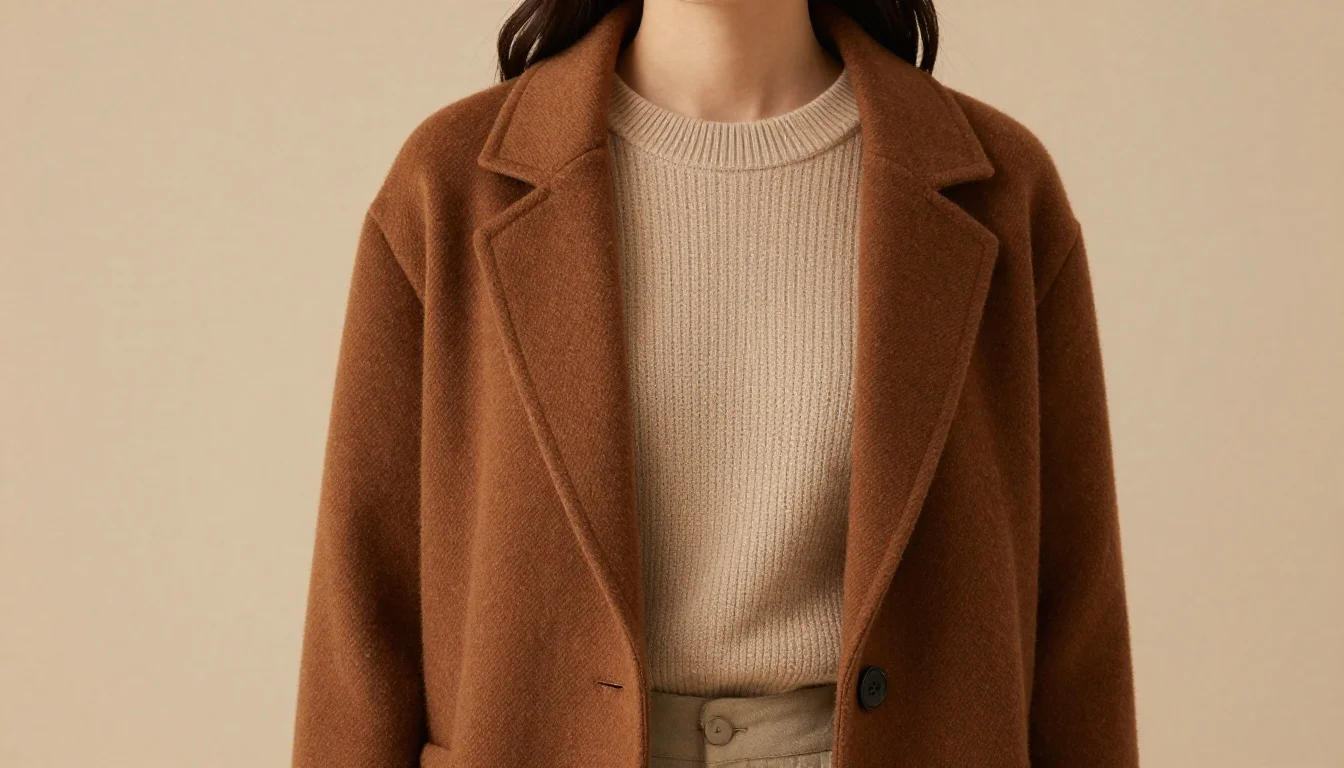
The camel coat is the warm-undertone person's most important investment piece. It harmonizes with warm skin, pairs with everything in the capsule, and looks deliberately considered rather than default. A deep warm olive overcoat creates the same warm-cool contrast as forest green in a more structured silhouette.
Cool knits in grey or lavender sit just wrong against warm-undertone skin — neither harmonizing nor creating useful contrast. Rust, warm olive, and cognac share the earth-tone register with warm skin and look intentionally styled without effort.
Grey trousers make warm-undertoned skin above them look slightly washed out because the cool neutral has no temperature relationship to the warm skin. Warm stone and camel do the same neutral work — building a base for any top — while harmonizing rather than conflicting.
Cool vivid colors introduce a temperature conflict without complementary payoff for warm undertones. Tomato red amplifies warm skin's golden quality; warm emerald creates a rich warm-cool contrast. Both read as intentional and flattering where cool vivids read as slightly off.
Which Seasonal Palette Fits Warm Undertones?
Warm undertones appear across both Autumn and Spring seasonal families. Your depth, clarity, and the specific quality of your warmth — earthy and muted versus bright and clear — determine which warm season is yours and which version of these wardrobe colors works best.
Warm Autumn
Learn moreIf your warm undertones feel earthy and rich — your best colors are muted, saturated, and autumnal, your hair is warm brunette or auburn, your eyes are warm brown or hazel — Warm Autumn is likely your season. Your capsule runs through burnt orange, cognac, forest green, warm olive, and warm ivory. Every piece in the earth-tone families in this guide will feel instinctively right on you.
Warm Spring
Learn moreIf your warm undertones come with lighter, clearer coloring — golden or warm blonde hair, lighter skin, bright and fresh eyes — Warm Spring is worth exploring. Your version of warm dressing is lighter and more luminous: clear coral, bright warm yellow, warm turquoise, soft camel. The same warm-neutral anchors apply, but your accent colors have brightness rather than earthiness.
Soft Autumn
Learn moreIf your warm undertones are gentle and muted rather than vivid or high-contrast — your coloring has a soft, gentle quality overall — Soft Autumn may be your season. Your capsule leans toward dusty terracotta, warm sage, muted camel, and soft cognac. The same warm-neutral foundation applies, but in slightly quieter, more muted expressions of each color.
Deep Autumn
Learn moreIf your warm undertones come with deep, high-contrast coloring — dark hair, deep eyes, strong overall contrast — Deep Autumn fits. Your capsule pushes toward the richest, deepest versions: dark chocolate brown, deep cognac, dark warm olive, and rich amber. Your warm neutrals can handle more depth; your earth accents go more saturated.
Find Your Exact Warm-Undertone Palette
Warm undertones give you a naturally rich and wearable color palette to build around — but the precise shades, depths, and combinations that make your specific version of warm skin glow depend on more than undertone alone. Your contrast level, seasonal type, and the specific quality of your warmth (peachy, golden, olive-warm) all shape the exact capsule that will work best for you. A personalized color analysis identifies your exact season and maps the precise wardrobe palette — specific colors, specific depths, specific combinations — that makes your warm-undertone coloring look its most radiant.
Stop guessing — preview every color on you
Preview Yourself In Your Palette
Get my personalized paletteStop guessing — preview every color on you
Preview Yourself In Your Palette

Related Guides for Wardrobe for Warm Undertones
Explore more personalized color advice based on your features.
Want to see these colors on you? Skin Undertone Test — free to try.
Frequently Asked Questions About Wardrobe for Warm Undertones
What colors should warm undertones wear in a capsule wardrobe?
Build your capsule around warm neutral anchors — camel, warm ivory, warm stone, warm beige — as the foundation pieces. Add earth accent tones (terracotta, rust, warm olive) as your signature accent colors. Use cool deep colors (midnight navy, forest green) for contrast pieces that make warm skin look golden. Warm jewel tones (tomato red, warm emerald, rich amber) are your occasion and statement pieces. Gold jewelry ties the whole system together.
What is the best coat color for warm undertones?
A camel wool coat is the single best outerwear investment for warm undertones. Camel harmonizes with golden and peachy skin, pairs with every color in the warm-undertone capsule (earth tones, navy, warm ivory, rust), and reads as considered and polished rather than default. A deep warm olive overcoat is the second-best choice — it provides the warm-cool contrast of forest green in a more structured silhouette. Avoid grey coats, which drain warm undertones consistently.
Should warm undertones wear grey?
Grey — particularly cool, ashy, medium grey — is consistently unflattering for warm undertones. The cool-grey temperature creates a draining effect against golden and peachy skin without the depth to create useful contrast. Replace grey throughout your wardrobe: camel for outerwear and blazers, warm stone or warm beige for trousers and bottoms, warm ivory for tops. Deep charcoal has enough darkness to work as a contrast neutral, but mid-range cool grey is worth eliminating.
Can warm undertones wear black?
Yes — black works for warm undertones through depth contrast. Its darkness creates definition rather than a cool-temperature fight. For everyday and work wear, however, chocolate brown is the warm-undertone alternative to black: it creates the same depth and contrast while harmonizing with golden skin in a way that reads as richer. Navy is another alternative. Black is fine; chocolate brown and warm navy are better for warm undertones specifically.
What jewelry metal is best for warm undertones?
Yellow gold is the natural choice for warm undertones — it echoes the golden warmth of warm-toned skin and creates a tonal resonance that makes both skin and jewelry look richer together. Warm brass and antique gold have the same effect. Rose gold adds a peachy-warm dimension that suits peachy warm undertones particularly well. For a consistent, harmonious capsule wardrobe, choose gold hardware throughout: belt buckles, bag hardware, shoe details, and jewelry all in gold for internal consistency that looks deliberate.
How do I know if I have warm undertones to dress for them?
Reliable warm-undertone indicators: gold jewelry looks more flattering on you than silver; your veins appear more green than blue-purple in natural light; you tan rather than burn in summer; peach, coral, and earthy warm colors feel natural and receive more compliments than cool pink or grey. If warm ivory feels more flattering than bright white, and if navy feels better than light grey — those are wardrobe-specific confirmations of warm undertones.