How to Wear Redfor Your Skin Tone
Red is one of the most powerful colors in a wardrobe. Discover how to wear them confidently — matched to your undertone.
Red is worth learning to wear. It commands attention, conveys confidence, and photographs beautifully — but only when the shade is right for your coloring. The wrong red is immediately obvious: it fights your skin tone, amplifies redness or sallowness, and makes the color look like a costume rather than clothes. The right red, by contrast, looks like it was made for you. The difference almost always comes down to undertone — warm reds versus cool reds — and saturation. Once you know which version of red suits you, it stops feeling risky and becomes one of the easiest colors to wear.


3,000+
happy clients
Why Undertone Determines Everything About Red
Red is worth learning to wear. It commands attention, conveys confidence, and photographs beautifully — but only when the shade is right for your coloring. The wrong red is immediately obvious: it fights your skin tone, amplifies redness or sallowness, and makes the color look like a costume rather than clothes. The right red, by contrast, looks like it was made for you. The difference almost always comes down to undertone — warm reds versus cool reds — and saturation. Once you know which version of red suits you, it stops feeling risky and becomes one of the easiest colors to wear.
Red is not one color — it spans an enormous range from blue-based cool reds through true reds to warm orange-reds. That range interacts with your skin's undertone in very direct ways. Cool skin undertones (pink, rosy, blue-based) clash with warm orange-reds, which amplify any redness in the face and create a clashing, heated effect. Warm skin undertones (golden, peachy, olive) conflict with cool blue-reds, which can make warm skin look sallow and stark.
Beyond undertone, depth matters. Deep and dark complexions can carry highly saturated, vivid reds with ease — the color has the visual weight to hold its own. Fair and light complexions may find the same intensity overwhelming near the face, and benefit from reds with some complexity — a slightly deepened or cooled version rather than pure-vivid primary red. Medium complexions are the most versatile and can explore the widest range of reds.
Red also has a direct effect on facial features. Because red draws the eye so powerfully, wearing it near the face focuses attention there — which is usually the point. If you have any skin redness (rosacea, flushing) and wear a warm, brassy red, the garment will amplify that redness. Cooler reds can minimize it by contrast. Understanding this optical effect helps you use red intentionally rather than reactively.
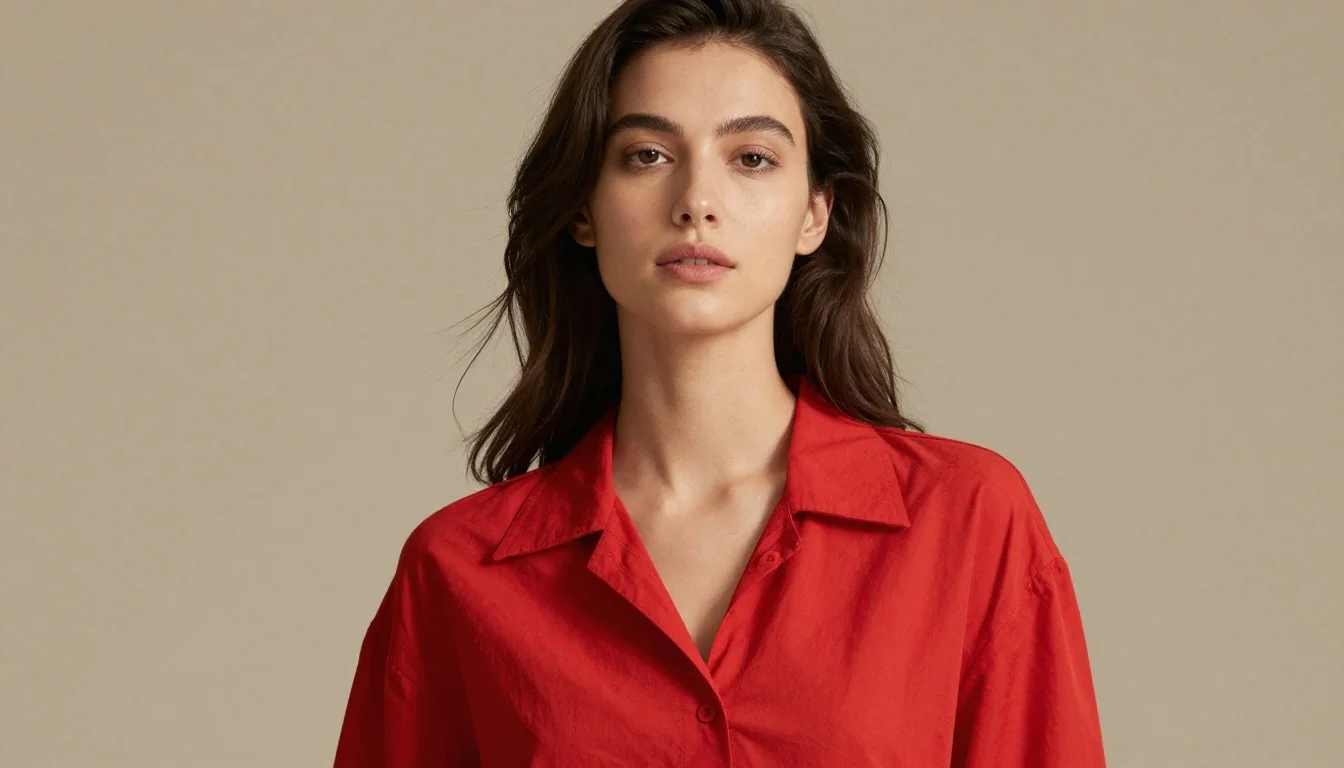
How do I know which shade of red suits my skin tone?
Undertone is the key. If your skin has cool (pink, rosy, bluish) undertones, choose reds with a blue or cool base — cherry red, crimson, ruby. If your skin has warm (golden, peachy, olive) undertones, choose reds with warmth — tomato red, poppy red, brick red. Neutral undertones can usually wear a wider range. Hold swatches to your face in natural light to see which shade illuminates and which clashes.
Shades of Red That Work Best
True Red and Slightly Cool Red
Classic true red — neither warm-orange nor blue-cool — is the most universally wearable shade in the red family. It sits in the middle of the spectrum and flatters a wide range of undertones. Cherry red has a slight fruit-cool quality that works beautifully on cool and neutral skin tones. Scarlet is vivid and slightly warm but stops before orange — it's the warmest red that neutral undertones can confidently wear. These are starting-point reds for anyone building a relationship with the color.
Deep Cool Red and Crimson
Cool reds — those with a distinctly blue or purple base — are the most flattering for cool skin undertones: pink-pale, rosy, or bluish complexions. Crimson has depth and sophistication without going into burgundy territory. Deep ruby is rich and complex, flattering on both cool and dark complexions. Blue-red (a true blue-based red) creates beautiful contrast on cool, pale skin and avoids any clash with pink undertones. These reds look elegant and deliberate rather than bold.
Warm Red and Tomato Red
Warm reds — with a slight orange or yellow warmth — are the go-to for warm and golden skin undertones: peachy, golden, olive, or brown-warm complexions. Tomato red is the quintessential warm red — vivid, slightly orange-leaning, universally flattering on warm coloring. Brick red has earth-warmth that pairs beautifully with olive and tan skin. Poppy red is bright and warm without going fully orange. These colors harmonize with warm undertones rather than fighting them.
Deep Red and Wine
Deep, darkened reds give you the power of red with greater versatility. Wine red transitions from day to evening effortlessly. Oxblood has rich brown-red warmth that works with warm and dark complexions particularly well. Dark cherry has cool depth that suits cool undertones in autumn and winter. Maroon is the most subdued of the deep reds — wearable in the same contexts as neutrals but with far more visual interest. These shades are red for people who want red without the primary-color intensity.

Ready to see fire engine & cherry red on your face?
Start my color analysisHow to Build Red Into Your Wardrobe
As a statement piece
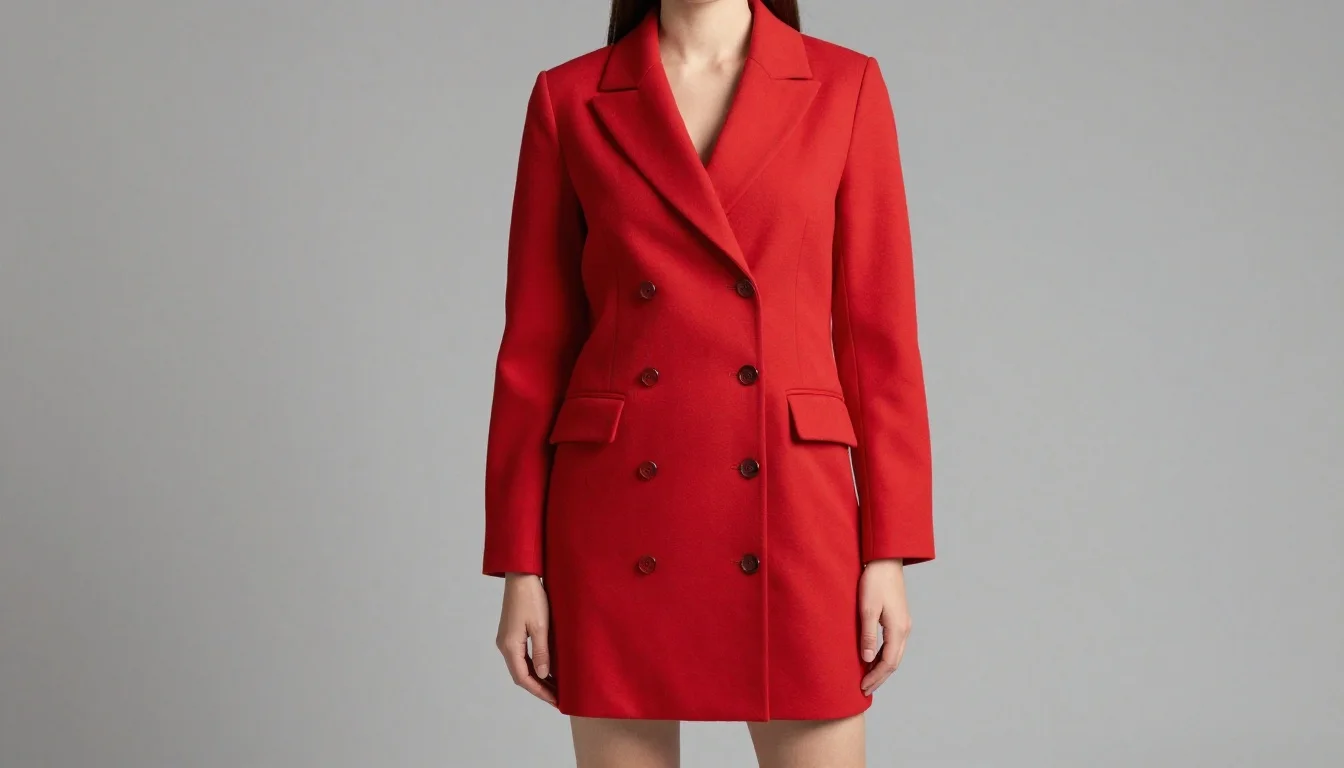
A single red garment as the focal point of an otherwise neutral outfit is the most reliable way to wear red. A red coat over grey or camel, a red blouse with dark trousers, or a red dress with nude shoes — these combinations let the red do the work. The key is keeping everything else simple. Red next to another strong color creates competition; red next to neutrals creates presence.
Red as an accent
If wearing a full red garment feels like too much, red accessories introduce the color with less commitment. A red bag, red belt, or red shoes with an all-neutral outfit creates a distinctive focal point without overwhelming. Red lipstick achieves the same effect from the face. Accessories let you test how red interacts with your coloring before committing to a red piece of clothing.
Professional settings
Red in professional settings works best when the shade is deep and complex rather than vivid and primary. A deep crimson blazer, a wine-red silk blouse, or oxblood leather shoes all register as authoritative without being theatrical. Save bright primary red for creative environments or client-facing roles where presence is an advantage. In conservative office settings, deep reds read as sophisticated rather than attention-seeking.
Casual and everyday red
Red knitwear is among the easiest ways to incorporate the color casually. A red cashmere crew-neck, a tomato-red cotton turtleneck, or a cherry-red sweatshirt all feel effortless with dark denim. The texture of knitwear softens the intensity of red while keeping it wearable day-to-day. Red trousers are bolder but rewarding — they anchor any outfit and can be treated as a neutral when paired with white, navy, or black.
Versions of Red That Work Against You
Orange-red on cool undertones
If your skin has pink, rosy, or cool undertones, orange-red — the kind that leans clearly toward orange — creates a harsh clash. The warm, brassy quality of orange-red fights against cool skin and can make the face look flushed and irritated. If you love red but feel like it never works on you, orange-red is probably the culprit. Move toward cherry, crimson, or a true cool red instead.
Blue-red on warm undertones
Very cool, blue-based reds can look stark and unflattering on warm, golden, or olive skin. The temperature contrast is too strong — the blue quality of the red fights against the yellow-warmth of the skin. On warm complexions, stick to tomato red, poppy red, or brick red rather than blue-cool crimsons.
Muted, dusty, or grayed-out red
Desaturated, muddy reds — the kind that look like faded brick or old rust — rarely flatter anyone. They lack the vibrancy that makes red worth wearing and instead create a dull, flat effect. Red earns its keep through its saturation. If you want a subtle approach to red, choose a deep wine or maroon rather than a desaturated dull red.
Bright orange-red on very fair skin
Vivid, high-saturation orange-red can overwhelm very fair or pale complexions, making the garment look more prominent than the person wearing it. On fair skin, a slightly deepened or cooled red — dark cherry, crimson, or ruby — has more impact because it creates contrast with the skin rather than overpowering it.
Stop guessing — preview every look on you
See these looks on my photoSwaps That Make Red Work for Your Coloring
Trading versions of red that fight your skin tone for ones that harmonize with it.
Blue-red fights warm undertones and looks stark. Tomato red harmonizes with golden and peachy skin for a naturally flattering result.
Orange-red clashes with pink and rosy skin tones, amplifying redness. Cherry and crimson complement cool undertones with elegance.
Desaturated reds look faded and flat against any skin tone. True red has the vibrancy that earns its place; wine has depth that reads as intentional.
Bright primary red can read as theatrical in professional settings. Deep crimson and oxblood deliver the authority of red with sophistication.
Muted brick-red lacks the vibrancy for evening. Ruby and dark cherry have the richness that photographs beautifully and holds up in low lighting.
Vivid orange-red overwhelms fair skin. Deep crimson and wine create contrast and drama without overpowering a lighter complexion.
Which Seasonal Palettes Wear Red Best?
Red appears in almost every seasonal color palette, but the version that works varies significantly. Your seasonal type determines which red is yours.
Warm Spring
Learn moreWarm Springs wear bright, warm, clear reds best. Poppy red, tomato red, and vivid coral-red are all in their palette. The brightness and warmth of these reds harmonizes with golden-warm, clear Spring coloring. True orange-red is also flattering on this type — warmth and vibrancy are both hallmarks of the Spring palette.
Deep Winter
Learn moreDeep Winters wear the most intense, vivid, and dramatic reds — pure true red, vivid cherry, and deep crimson all work beautifully. Their high-contrast, dark coloring has the visual weight to carry saturated, powerful red without it looking excessive. Red is one of Deep Winter's strongest colors.
Deep Autumn
Learn moreDeep Autumns wear rich, warm-dark reds — tomato red, brick red, oxblood, and wine. Their deep, warm coloring pairs naturally with reds that have earth-warmth. Bright, cool reds feel out of place on Deep Autumn coloring; warm, complex reds feel like home.
Find Your Red
Red is one of the most rewarding colors to get right. When your shade of red matches your undertone and depth, it stops looking like a statement and starts looking like simply what you wear — effortless, striking, and yours. A personalized color analysis identifies exactly which version of red suits your coloring and gives you a palette of reds (and the shades that pair with them) that will make this color a wardrobe staple rather than a risk.
Stop guessing — preview every color on you
Preview Yourself In Your Palette
Get my personalized paletteStop guessing — preview every color on you
Preview Yourself In Your Palette

Related Guides for How to Wear Red
Explore more personalized color advice based on your features.
Want to see these colors on you? What Colors Look Good on Me — free to try.
Frequently Asked Questions About How to Wear Red
How do I know which shade of red suits my skin tone?
Undertone is the key. If your skin has cool (pink, rosy, bluish) undertones, choose reds with a blue or cool base — cherry red, crimson, ruby. If your skin has warm (golden, peachy, olive) undertones, choose reds with warmth — tomato red, poppy red, brick red. Neutral undertones can usually wear a wider range. Hold swatches to your face in natural light to see which shade illuminates and which clashes.
Can pale skin wear red?
Yes — pale skin with cool undertones often looks stunning in cherry red, crimson, or deep ruby, which create beautiful contrast. The key for pale skin is to avoid orange-red (which can make fair skin look flushed) and very vivid, high-saturation reds that overwhelm (swap for a slightly deepened version). Deep wine and maroon are particularly wearable reds for pale complexions.
Can dark skin wear red?
Dark skin tones can wear the full spectrum of reds brilliantly — the depth and richness of dark complexions means high-saturation reds have the visual weight to match. Both warm reds (tomato, brick, oxblood) and cool reds (crimson, ruby) work on dark skin, though the warmth of your undertone will determine which feels most harmonious.
How do I wear red without it feeling like too much?
The easiest way to wear red without it feeling theatrical is to let it be the only color in your outfit. Red with true neutrals — black, white, grey, navy, camel — creates a clean, deliberate look. Red accessories rather than a red garment also introduces the color with less commitment. And choosing a deeper shade (wine, crimson) rather than primary red softens the intensity while keeping the power.
Is red good for work?
Yes, but the shade matters. Deep, complex reds — wine, crimson, oxblood — read as authoritative and sophisticated in professional settings. Bright primary or orange-red can feel theatrical in conservative offices. A deep red blazer or a wine-red silk blouse is a strong professional choice. Save the vivid, saturated red for creative environments where presence is an advantage.
What colors go with red?
Red pairs cleanly with true neutrals: black, white, grey, navy, and camel. Black and red is a classic high-contrast combination. White with red is vivid and fresh. Navy and red is preppy and polished. Camel with warm red creates an earthy, harmonious palette. Avoid pairing red with other strong colors unless you are deliberately going for a bold, color-blocked effect.