Transitioning fromAll Black to Color
A step-by-step wardrobe transition plan for all-black dressers adding color. Discover how to wear them confidently — matched to your undertone.
You've worn mostly black for years. It works — nothing clashes, everything pairs, and getting dressed is fast. But you've started feeling like the wardrobe doesn't fully represent you anymore, or you're curious what colors could do that black can't. The transition doesn't have to be dramatic. You don't have to overhaul your closet or suddenly start wearing brights. This guide gives you a practical, sequential plan for adding color to an existing all-black wardrobe without losing what works about it.


3,000+
happy clients
The Real Problem with the All-Black Wardrobe
You've worn mostly black for years. It works — nothing clashes, everything pairs, and getting dressed is fast. But you've started feeling like the wardrobe doesn't fully represent you anymore, or you're curious what colors could do that black can't. The transition doesn't have to be dramatic. You don't have to overhaul your closet or suddenly start wearing brights. This guide gives you a practical, sequential plan for adding color to an existing all-black wardrobe without losing what works about it.
All-black wardrobes are built on avoidance. Not avoidance of bad taste — avoidance of the cognitive load of color decisions. When you don't know your undertone, your seasonal palette, or which colors genuinely suit you, black removes the risk. That's entirely logical. The cost is that your wardrobe becomes a uniform rather than a self-expression tool.
The second problem is optical. Black is not universally flattering. On very fair skin with pink undertones, stark black near the face creates a harshness that ages rather than sharpens. On warm olive skin, black's cool temperature neutralizes the golden warmth that's actually one of the most attractive qualities of that complexion. On rich dark skin, all-black can flatten the coloring that would look extraordinary in vivid contrast. Black is convenient, but for many people it's leaving significant visual potential unused.
The third issue: once you live in all-black long enough, any color feels like a costume. The unfamiliarity creates discomfort even when the colors are genuinely flattering. The transition process is partly about finding the right colors — and partly about building enough wearing history with them that they feel like yours rather than someone else's.
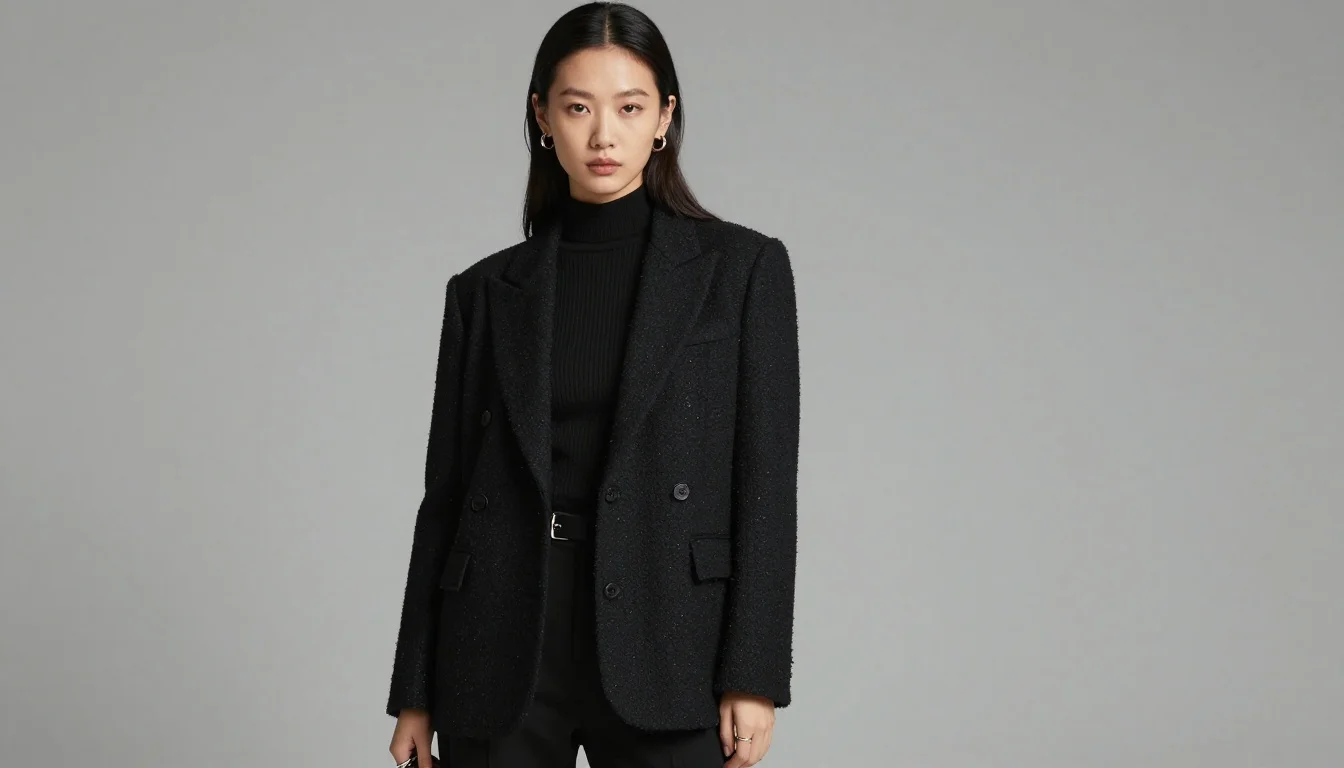
How long does it take to transition from an all-black wardrobe?
A comfortable transition takes three to six months if you add one or two new color pieces per month. Rushing it by buying many color pieces at once tends to fail — you end up with color items you don't feel confident wearing and return to black by default. Gradual accumulation with repeated wearing is how the new pieces become 'yours.'
Your Transitional Color Priorities
Phase 1: Near-Black Deep Neutrals
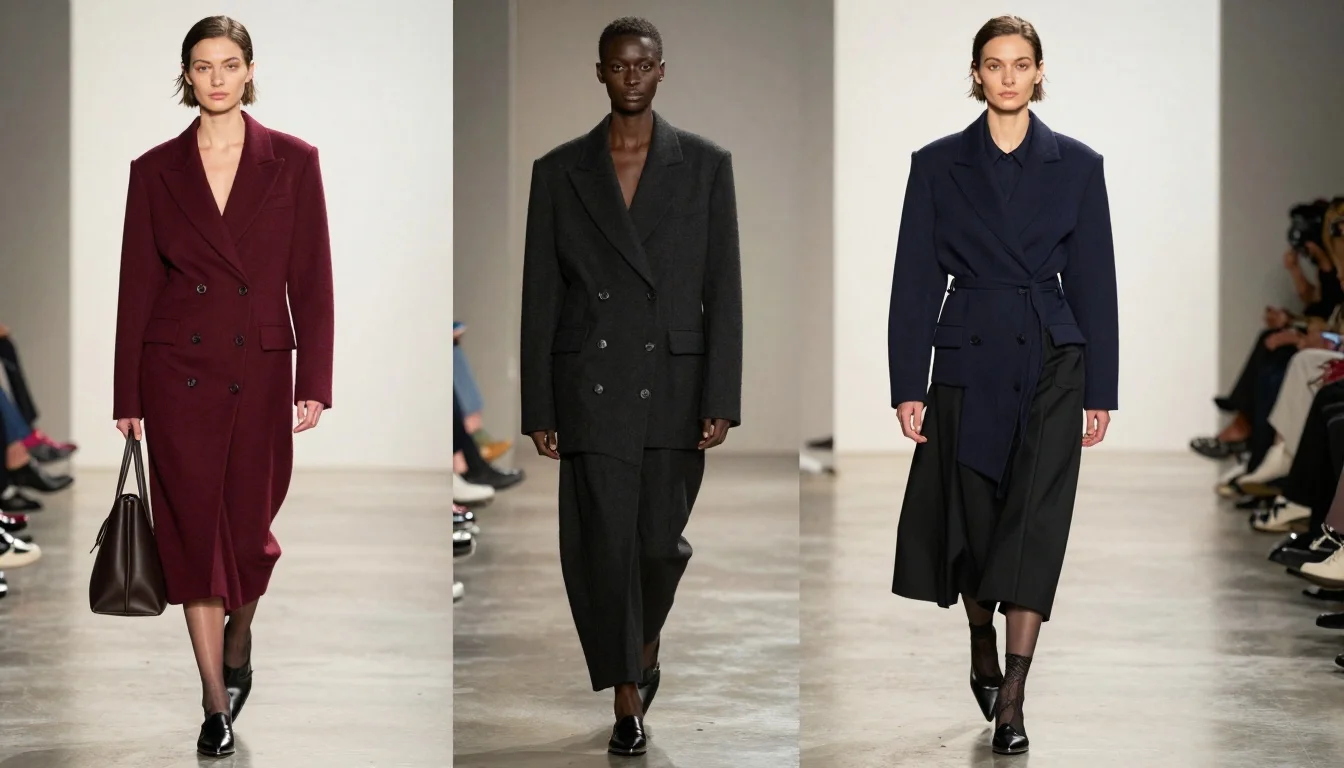
The first phase isn't really color — it's deep neutrals with undertone. Navy reads as nearly black to most people but has a cool, clean quality that suits cool undertones better than black. Forest green has a warmth and richness that flatters warm and neutral undertones. Burgundy has warmth with depth. These are the 'gateway colors' that prove non-black can be as reliable as black.
Phase 2: Your Best Single Color Family
Phase 2 is finding your single strongest color family — the one that makes your skin look best, your eyes brighter, your features most defined. For cool undertones this is often cobalt, violet, or cool emerald. For warm undertones it's often terracotta, rich olive, or warm sienna. You build from one trusted color family outward, rather than trying many simultaneously.
Phase 3: A Second Color Family
Once you have one color family working, add a second. Choose it based on what flatters your coloring AND what pairs well with the colors you already have. This is how a wardrobe develops cohesion: each addition relates to what already exists. An all-black wardrobe can absorb any color; a transitional wardrobe needs internal relationships.
Phase 4: Lighter and More Varied Colors
As your confidence with color builds, you can expand into lighter versions of your established families, prints that contain your colors, and eventually the full breadth of your seasonal palette. This is the phase where the wardrobe stops feeling like 'all-black with exceptions' and starts feeling like a personal palette that includes black as one option among many.

Not sure yet? See it on your face
Start my color analysisYour Month-by-Month Transition Plan
Month 1: Establish your undertone
Before buying anything, determine your undertone. The simplest test: hold a warm golden yellow fabric and a cool icy blue fabric to your bare face in natural daylight. Which makes your skin look clearer, more even, and less shadowed? Warm yellow reveals warm undertone; icy blue reveals cool undertone. If both look similar, you likely have neutral undertones. Write this down. Every color purchase from here builds on this foundation.
Month 2: Buy one deep neutral
Based on your undertone, buy one deep neutral that isn't black. Cool undertone: midnight navy. Warm undertone: deep forest green or rich burgundy. Neutral undertone: deep teal or plum. Wear this piece for a full month in the same situations you'd normally wear black. Does it work? Does it feel like yours? Is your face noticeably better with it than with black? This is your data.
Month 3: Add your first vivid color
Add one vivid piece in a color that suits your undertone — near the face, ideally a top or scarf. Cool undertone: cobalt, violet, clear magenta. Warm undertone: terracotta, rich olive, warm sienna. Wear it with all-black for support. Notice if you get comments (positive comments about your appearance are usually color working). Notice how you feel in it. This is the piece that will either confirm color's potential or teach you something about which specific shade to adjust.
Month 4 and beyond: Build a three-color palette
By month four you should have three colors that work alongside black: a deep neutral, a vivid accent, and something in between. Now you can start making deliberate purchases that add to these established families rather than testing random new ones. Your transition is complete when you reach for color as often as black — because the options feel equally reliable.
Transition Mistakes That Derail the Process
Buying too much color at once
Buying ten color pieces in one shopping trip overwhelms your wearing habits. You'll wear one or two, the others will feel like mistakes, and the whole experiment collapses. Buy one piece at a time, wear it enough to feel confident, then add the next. The transition takes weeks or months, not one shopping session.
Starting with your least flattering undertone temperature
If you have cool undertones and start your color transition with warm oranges and terracottas, they'll look wrong on you and confirm your suspicion that color doesn't work. If you have warm undertones and start with icy pastels, same result. Determine your undertone before buying color pieces — it's the single most important variable in whether your first color experiments succeed.
Buying color in categories that are low-visibility
Colored socks, colored bags, and colored shoes don't do much near the face. Color earns its visual impact when it's closest to your complexion. Starting color transitions in accessories that are far from your face delays the feedback loop. Put color at your neckline first — a scarf, a top, a layering piece.
Keeping the all-black wardrobe completely intact alongside the new pieces
If black always remains the easiest, most available option, you'll default to it. Once you've identified your best colors and built confidence with them, it's worth removing some of the pure-black duplicates — the fourth black t-shirt, the third black sweater — so you're not always choosing between a known comfort and an unknown. Create some friction with the default.
Stop guessing — discover your exact palette
See myself in my colorsDirect Black-to-Color Wardrobe Swaps
Replace these black staples with your best color equivalents.
The silhouette stays identical; only the color changes. This is the least psychologically risky swap because everything else about the piece is the same as what you already own.
Navy and charcoal-green have the same professional gravity as black but add visual dimension. Navy in particular photographs better against most skin tones and reads as more intentional than black in business contexts.
Rather than replacing all your black tees, replace one. Make it the vivid color that works best for your coloring. Wearing it regularly builds familiarity — it becomes your color default the way black once was.
Outerwear is high visibility — it's what people see when you walk in. A coat in a flattering warm neutral (camel for warm undertones, cool camel-grey for cool undertones) or a deep color adds personality to an otherwise all-black under-layer.
Find your single best event color and invest in one excellent piece in it. When you have a non-black option you know works, you stop defaulting to black by elimination — you choose it when you want it, not because it's the only thing you trust.
A scarf is removable, low-commitment, and sits directly near your face where color has the highest impact. It's the lowest-risk entry point for color experimentation and the most reversible if you change your mind.
Where Do Most Black Wardrobe People Land?
People who default to all-black often do so because their coloring is either high-contrast (and black creates appropriate drama) or because they have an undertone that wasn't served by the random color choices available to them. Here are the most common seasonal placements for all-black wardrobes.
Deep Winter
Learn moreThe most common season for people who look genuinely good in all-black. Deep Winter coloring is high-contrast, cool-toned, and vivid — and black is actually in the palette. The transition involves adding cool jewel tones (cobalt, vivid violet, cool emerald, true red) rather than replacing black. Deep Winters look extraordinary in vivid, cool, high-contrast colors; they were right to lean dark, just too narrow in their range.
Deep Autumn
Learn moreAll-black wearers with warm olive, golden, or brown skin often turn out to be Deep Autumn. They were right to gravitate toward depth — but wrong about the temperature. Deep Autumn looks better in warm, rich, earthy darks (deep olive, burnt terracotta, warm mahogany) than in cool black. The transition is about shifting the temperature of darks, not moving to pastels.
Cool Winter
Learn moreFair-skinned, high-contrast black wearers with cool undertones often find themselves in Cool Winter. Their palette includes vivid, cool, clear colors — and black works well, but vivid cobalt, cool white, and sharp jewel tones look even better. The transition is about adding crisp, vivid cool colors to complement the existing blacks and greys.
Make the Transition Permanent
The all-black wardrobe is a holding pattern — a safe place while you figure out what works. You don't have to give it up entirely; you just need enough confirmed alternatives that black becomes a choice rather than a default. A personalized color analysis gives you your exact palette: the specific colors that will feel as reliable as black, so you're choosing between options that all work rather than retreating to the one that's safe.
Stop guessing — preview every color on you
Preview Yourself In Your Palette
Get my personalized analysisStop guessing — preview every color on you
Preview Yourself In Your Palette

Related Guides for How to Transition from an All-Black Wardrobe
Explore more personalized color advice based on your features.
Want to see these colors on you? What Colors Look Good on Me — free to try.
Frequently Asked Questions About How to Transition from an All-Black Wardrobe
How long does it take to transition from an all-black wardrobe?
A comfortable transition takes three to six months if you add one or two new color pieces per month. Rushing it by buying many color pieces at once tends to fail — you end up with color items you don't feel confident wearing and return to black by default. Gradual accumulation with repeated wearing is how the new pieces become 'yours.'
Do I need to get rid of all my black clothes to transition?
No. The goal isn't to eliminate black but to have alternatives you trust equally. Once you have four or five color pieces you wear confidently, you can start removing duplicate black items (the third black turtleneck, etc.) to create wardrobe space, but only when you're ready.
What if color still feels like a costume no matter what I try?
This is usually a sign that you haven't yet found your actual colors — the ones calibrated to your undertone and seasonal palette. Colors that genuinely suit you don't feel like a costume; they feel like an elevated version of yourself. If everything feels like dress-up, the issue is with the specific colors you've been trying, not with color in general.
Should I transition my whole wardrobe at once or just one category?
One category at a time, starting with near-face items (tops, scarves, layering pieces). These are where color has the highest impact on your appearance and where you'll get the fastest feedback about whether a color works. Once you're confident in your near-face colors, expanding to other categories is much easier.