Find Your Color Seasonat Home
A practical, step-by-step guide to discovering your color season without a stylist. Discover how to wear them confidently — matched to your undertone.
You've heard about color seasons, you want to know yours, but booking a professional analyst isn't always practical. The good news: you can do a surprisingly accurate self-analysis at home with items you already own. It takes about thirty minutes, good natural light, and an honest mirror. This guide walks you through the full process — from identifying your undertone to narrowing down your season — with the same logic professional analysts use.


3,000+
happy clients
Why Color Seasons Actually Work
You've heard about color seasons, you want to know yours, but booking a professional analyst isn't always practical. The good news: you can do a surprisingly accurate self-analysis at home with items you already own. It takes about thirty minutes, good natural light, and an honest mirror. This guide walks you through the full process — from identifying your undertone to narrowing down your season — with the same logic professional analysts use.
The seasonal color system isn't arbitrary. It's based on the relationship between four qualities in your natural coloring: warm vs. cool undertone, depth (light to dark), clarity (clear vs. muted), and contrast (how much difference exists between your hair, skin, and eyes). When the colors you wear share those same qualities, they create visual harmony. When they clash — the wrong temperature, wrong depth, wrong clarity — even an expensive garment can look off.
The twelve-season system (an expansion of the original four) gives you a precise palette rather than a general direction. A Warm Spring has a very different palette from a Warm Autumn, even though both are warm. A Cool Winter needs different shades than a Cool Summer, even though both are cool. The detail matters because your palette is specific to the combination of all your features, not just one.
Self-analysis has genuine limitations: you can't drape yourself the way a trained analyst can, and your own perception of your coloring is often skewed by habit. But with the right tests and an open mind, most people can get within one or two seasons of their true type — which is close enough to transform how they shop and dress.
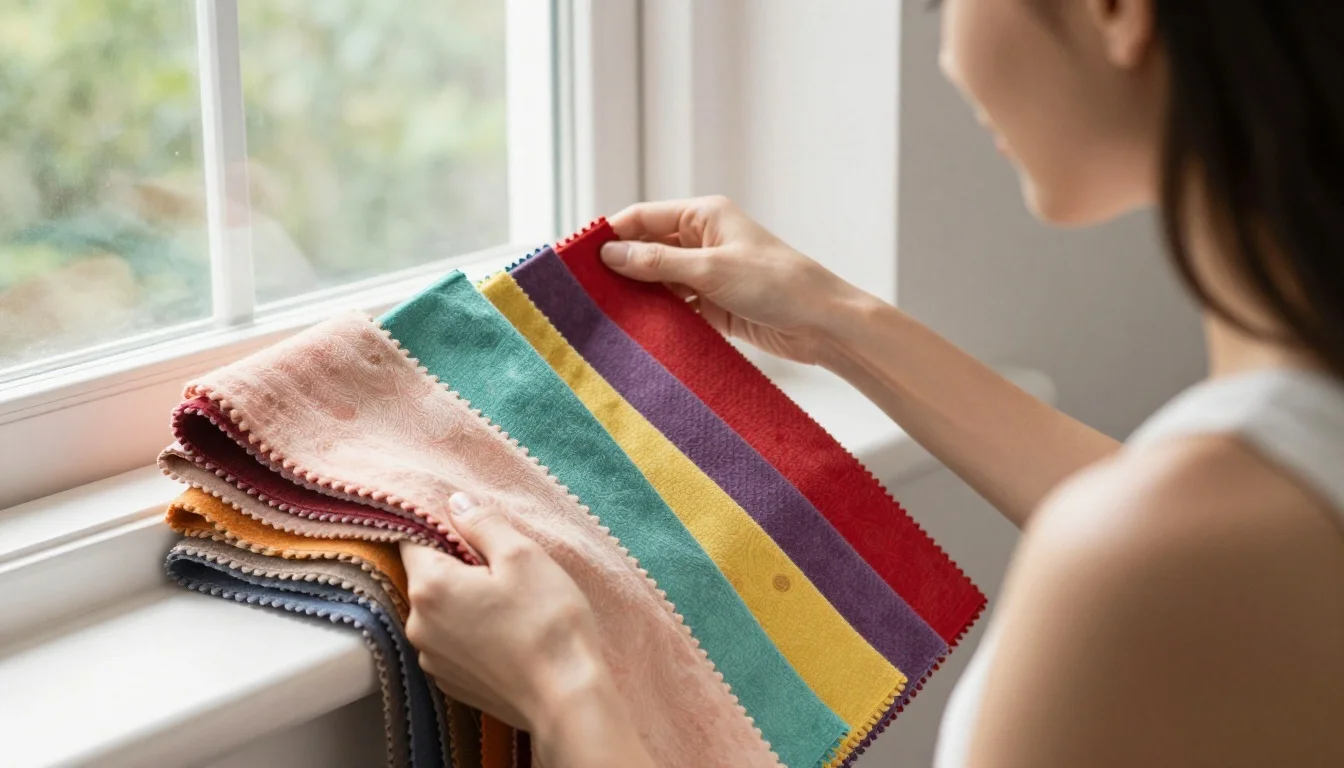
Can you really find your color season at home?
Yes, with reasonable accuracy — especially for the broad seasonal family (Spring, Summer, Autumn, Winter). The main limitations of home analysis are doing the test in imperfect lighting and difficulty being objective about your own coloring. With careful natural-light testing on a bare face, most people can identify their correct family and often their sub-season.
The Four Season Families and Their Palettes
Spring (Warm + Light/Clear)
Spring types have warm, golden undertones with either light or bright, clear coloring. Their best colors are warm, fresh, and clear — not heavy or deep. Think the colors of a spring garden: warm corals, peachy pinks, golden yellows, warm greens. Pastels work if they have warmth and clarity rather than being dusty or cool.
Summer (Cool + Light/Muted)
Summer types have cool or neutral-cool undertones with soft, medium contrast and a slightly muted quality to their coloring. Their best colors are cool and gentle — nothing jarring or deeply saturated. Think summer haze: dusty rose, powder blue, soft lavender, cool mauve. Both deep and very bright colors tend to overwhelm Summer coloring.
Autumn (Warm + Deep/Muted)
Autumn types have warm, golden or earthy undertones with rich, muted coloring. Their best colors are warm, deep, and complex — not bright or cool. Think autumn foliage: burnt orange, deep olive, rich terracotta, warm mahogany. Bright, primary colors tend to clash with Autumn's warm, earthy quality.
Winter (Cool + Deep/Clear)
Winter types have cool undertones with high contrast and clear, vivid coloring. Their best colors are cool, deep, or icy bright — nothing muted or warm. Think winter drama: true red, midnight navy, vivid cobalt, crisp white, deep black, icy pastels with a cool clarity. Warm, earthy colors tend to look muddy against Winter coloring.

Not sure yet? See it on your face
Start my color analysisThe Step-by-Step Home Draping Method
Step 1: Prepare correctly
Remove all makeup. Pull hair back completely so it doesn't influence your face color. Sit by a window in natural daylight — not direct sun, which creates harsh shadows, but bright, diffused natural light. Have a plain white or grey background behind you if possible. Keep your phone or a mirror at face level so you can observe your skin clearly.
Step 2: Test warm vs. cool
Hold a clearly warm fabric next to your face — something golden yellow, camel, orange, or warm peach. Then hold a clearly cool fabric — something icy blue, clear pink, or bright white. Notice which one makes your skin look more even, clearer, and brighter. The warm fabric will either warm your skin in a glowing way (warm undertone) or add a sallow, yellowish cast (cool undertone). The cool fabric will either brighten your skin (cool undertone) or make it look dull and greyish (warm undertone). This single test determines which half of the seasonal wheel you belong to.
Step 3: Test depth
Within your temperature half, test depth. Hold a very deep color (deep navy, black, dark brown) next to your face, then a very light one (ivory, pale grey, soft white). Notice which group your face recedes into or pops against. If deep colors seem to overwhelm you or make your face look harsh, you likely have lighter coloring. If light colors make your face look washed out and deep colors give it structure, you have deeper coloring.
Step 4: Test clarity vs. mutedness
Test a clear, vivid color (bright cobalt, vivid red, clear magenta) against a muted, greyed-down version of a similar color (dusty blue, soft rose, muted wine). Clear colors will either make your complexion look vibrant and alive (clear/high-contrast coloring) or harsh and overwhelming (muted/soft coloring). Muted colors will either look harmonious (muted coloring) or dull and flat (clear coloring). This tells you whether you belong to a bright or soft sub-season.
Step 5: Cross-reference with your features
Combine your test results with honest observation of your natural features. Warm undertone + light + clear = Light Spring. Warm undertone + light + soft = Warm Spring. Warm undertone + deep + muted = Soft Autumn or Deep Autumn. Cool undertone + light + soft = Light Summer or Soft Summer. Cool undertone + deep + clear = Deep Winter or Cool Winter. When two seasons feel equally possible, look at your natural contrast level: low natural contrast tends toward softer sub-seasons; high natural contrast tends toward brighter or deeper ones.

See all 16 seasons in one place
Once you have a guess, compare it against all 16 color seasons to confirm your match.
Common Self-Analysis Mistakes to Avoid
Testing in artificial light
Warm indoor lighting fools most people into thinking they have warmer undertones than they do. It adds golden tones to everything — your skin, the fabric, the whole scene. Always do the draping test in natural daylight, ideally by a window. A cloudy day is ideal: even, neutral light with no shadows.
Wearing makeup during testing
Foundation, blush, and bronzer all alter your skin undertone visually. Lipstick changes your face's color balance. If you test wearing makeup, you're analyzing the makeup's undertone alongside your skin — which gives inaccurate results. Test with a completely bare face.
Choosing the color you prefer over the color that works
This is the most common mistake in self-analysis. The draping test asks you to notice what happens to your face — not which color you like best. You might love emerald green but it makes your skin look sallow. The honest question is: does this color make my skin look clearer, my eyes brighter, my features more defined? Not: do I wish this looked good on me?
Over-weighting a single feature
Your color season isn't determined by one feature in isolation. The vein test (blue = cool, green = warm) is a starting point, not a conclusion. Some people have green veins but cool skin undertones. Eye color alone doesn't determine season — hazel eyes exist in every season. You need to assess the combination of skin undertone, hair depth, eye clarity, and natural contrast together.
Stop guessing — discover your exact palette
See myself in my colorsTest Colors by Season
A simple shopping-list shortcut for each seasonal family.
If warm peach makes your skin look luminous and the grey makes you look ashy, you have warm coloring. The difference on warm Spring types is immediate.
Summer types often find bright whites too stark and warm creams too yellowy. Soft, cool pastels create the most even, flattering skin effect for them.
Autumn types find that warm, earthy darks are more flattering than stark black. If terracotta makes you glow and black makes your face look harsh, you're likely in the Autumn family.
Winter types look dramatically better in deep, cool neutrals than warm ones. If cool white and deep black both feel right while warm camel looks wrong, Winter is likely your season.
If a single vivid piece near your face makes your entire coloring look more intentional and alive, you likely have clear or high-contrast coloring (Spring or Winter). If it overwhelms you, you're likely Summer or Autumn.
Cool undertones typically look better in silver; warm undertones in gold. If your skin looks clearer and fresher with silver, that supports cool undertone regardless of your other features.
Where You Might Land
Most people can narrow themselves to one of the twelve sub-seasons through home testing. Here are the three most common seasonal placements and how to recognize them.
Soft Autumn
Learn moreWarm undertone, medium depth, soft and muted coloring. Warm browns, olive, camel, and muted terracotta all look harmonious. Black feels harsh; vivid colors feel jarring. You look best in rich, earthy tones with a slightly blended quality — nothing too bright or stark.
Cool Summer
Learn moreCool undertone, medium depth, soft coloring. Dusty rose, powder blue, cool lavender, and soft teal are your natural home. Warm colors and very deep colors overwhelm your soft, muted quality. You look most polished in cool pastels and muted medium tones.
Deep Winter
Learn moreCool or neutral undertone, deep coloring, high contrast. Deep navy, rich black, vivid red, and clear jewel tones all look intentional on you. Pale and muted colors disappear against your depth and contrast. You need colors with real presence — depth or vivid clarity.
Take Your Analysis Further
Home draping gets most people close — close enough to start making better color choices immediately. But your exact sub-season and the precise palette that works for you is something a personalized AI color analysis can pin down in minutes. Upload a photo in natural light with no makeup, and PaletteHunt's analysis does what thirty minutes of home draping approximates: it identifies your specific season, gives you a custom palette, and tells you exactly which colors to wear and which to avoid.
Stop guessing — preview every color on you
Preview Yourself In Your Palette
Get my personalized analysisStop guessing — preview every color on you
Preview Yourself In Your Palette

Related Guides for How to Find Your Color Season at Home
Explore more personalized color advice based on your features.
Want to see these colors on you? What Colors Look Good on Me — free to try.
Frequently Asked Questions About How to Find Your Color Season at Home
Can you really find your color season at home?
Yes, with reasonable accuracy — especially for the broad seasonal family (Spring, Summer, Autumn, Winter). The main limitations of home analysis are doing the test in imperfect lighting and difficulty being objective about your own coloring. With careful natural-light testing on a bare face, most people can identify their correct family and often their sub-season.
What is the most reliable home test for color season?
The draping test in natural light with a bare face is the most reliable. Hold clearly warm and clearly cool fabrics near your face and observe which temperature makes your skin look clearer, more even, and less shadowed. This warm/cool split is the foundation of all seasonal analysis and is accurate for most people when done correctly.
What if I look good in both warm and cool colors?
If warm and cool colors both seem to flatter you, you likely have neutral undertones — which typically places you in the Soft Autumn, Soft Summer, Light Spring, or Light Summer families. These are the seasons where both warm and cool colors work to some degree, as long as they're appropriately muted or light. The key differentiator then becomes clarity (clear vs. muted) and depth.
How important is it to know the exact sub-season vs. just the main season?
The main season (Spring, Summer, Autumn, Winter) gets you the right temperature and approximate depth. The sub-season gives you the exact palette — which matters for shopping. A Warm Spring has a very different palette from a Light Spring, even though both are Spring. For practical dressing purposes, the sub-season is where the actionable detail lives.
Does hair color affect your color season?
Natural hair color is part of your seasonal profile — it contributes to your overall depth and contrast. However, if you color your hair, your current hair color may not reflect your natural season. When self-analyzing, either test with your natural color visible or account for the fact that colored hair may shift your apparent contrast level.
Can my color season change as I age?
Your underlying undertone doesn't change, but other aspects of your coloring do — particularly depth and contrast. As hair lightens or goes grey and skin often softens, many people shift from a higher-contrast, deeper season toward a softer or lighter one. A Deep Winter might shift toward a Cool Winter or Soft Summer as their coloring softens. Re-testing every few years is worthwhile.