Gold vs Silver Jewelry:Which Metal Flatters Your Skin Tone
Gold and silver jewelry create opposite effects on different skin tones. Discover how to find the colors that actually flatter your coloring.
The gold vs silver question is actually an undertone question in disguise. The metal you wear closest to your face creates the same effect as the fabric color nearest your neckline — it either harmonizes with your natural coloring or fights it. Getting this right makes your skin look clearer and more luminous. Getting it wrong can make you look tired or sallow without knowing why.


3,000+
happy clients
Why Metal Choice Changes How Your Skin Looks
The gold vs silver question is actually an undertone question in disguise. The metal you wear closest to your face creates the same effect as the fabric color nearest your neckline — it either harmonizes with your natural coloring or fights it. Getting this right makes your skin look clearer and more luminous. Getting it wrong can make you look tired or sallow without knowing why.
Jewelry reflects light onto your face. Gold reflects warm, yellow-toned light. Silver reflects cool, blue-white light. Your skin then either harmonizes with that reflected light or conflicts with it. When the metal temperature matches your undertone, your skin looks vibrant and even. When it clashes, it can pull out redness, sallowness, or greyness that wasn't obvious before.
This is most visible in earrings and necklaces, which sit closest to the face and neck. Bracelets and rings matter less because they're further from the face and the effect on skin appearance is minimal. The high-stakes metal decisions are the ones at your neckline and ears.
Beyond flattery, there's also a visual weight consideration. Gold reads as warm, rich, and grounded. Silver reads as cool, clean, and contemporary. Both are completely valid aesthetic choices — but one will always look more effortlessly correct with your coloring, and that's your undertone match.

Does gold or silver look better on me?
Gold flatters warm undertones; silver flatters cool undertones. Hold each metal to your bare face in daylight — the one that makes your skin look brighter and more even is your metal. Neutral undertones can wear both.
What Metal Choice Means for Your Overall Look
Warm Undertones: Gold, Rose Gold, and Bronze
Warm-toned skin — with golden, peachy, or yellow-based undertones — is flattered by warm metals. Yellow gold is the classic choice, but rose gold works particularly well because it adds a warm-pink quality that flatters both warm skin and warm-cool neutral skin. Bronze and copper are also excellent for warm undertones, especially for autumn-toned coloring. All of these metals share the golden temperature that resonates with warm skin.
Cool Undertones: Silver, White Gold, and Platinum
Cool-toned skin — with pink, rosy, or blue-based undertones — is flattered by cool metals. Sterling silver is the most universally available and most flattering for cool undertones. White gold and platinum have the same cool, silvery quality and are more durable for fine jewelry. The cool reflectivity of these metals mirrors the cool quality of the skin and creates a harmonious, clean effect.
Neutral Undertones: Mixed Metals and Either
Neutral undertones — a balance of warm and cool — have the flexibility to wear both metals. This is genuinely rare: most people have a definite lean, even if they can wear both. True neutrals can make the most of mixed metal jewelry and can choose based on outfit and occasion rather than skin tone. If both gold and silver look equally good, lean into that freedom and experiment.

Not sure yet? See it on your face
Start my color analysisHow to Choose Metal for Any Situation
Testing the metal against your skin
The simplest test: hold a gold piece and a silver piece against your inner wrist in natural light, no clothing nearby. Look at the skin around the metal — which makes it look clearer, more vibrant, more 'alive'? That's your metal. This takes about thirty seconds and is more reliable than any chart or rule. Do it before buying any significant piece of jewelry.
Earrings: the highest-stakes metal decision
Earrings sit at exact face-level and have more impact on how your complexion looks than any other jewelry piece. For daytime, stud or small hoop earrings in your correct metal instantly brighten the skin. For evening, drop or statement earrings in your metal create a frame for the face that lifts the whole look. If you own earrings in the 'wrong' metal and love the style, consider whether you can find the same style in your correct metal — the difference will surprise you.
Mixing metals with intention
Mixing metals works when one clearly dominates and the other accents. Don't try to balance them 50/50 — pick your skin-tone metal as the dominant and add small amounts of the other as accent. A gold necklace with a silver clasp detail, or silver earrings with a small gold charm, reads as intentional rather than conflicted. The dominant metal nearest your face is still doing the skin-flattery work.
Metals and outfit color interaction
Metal doesn't just interact with skin — it also interacts with clothing color. Gold reads warm and rich, making it natural with earthy tones, warm neutrals, and jewel tones with warm bases. Silver reads cool and clean, making it natural with cool-toned clothing, stark white, navy, and sharp jewel tones. When your outfit is cool and your metal is gold, there's a temperature conflict at multiple levels — not just skin, but clothes too.
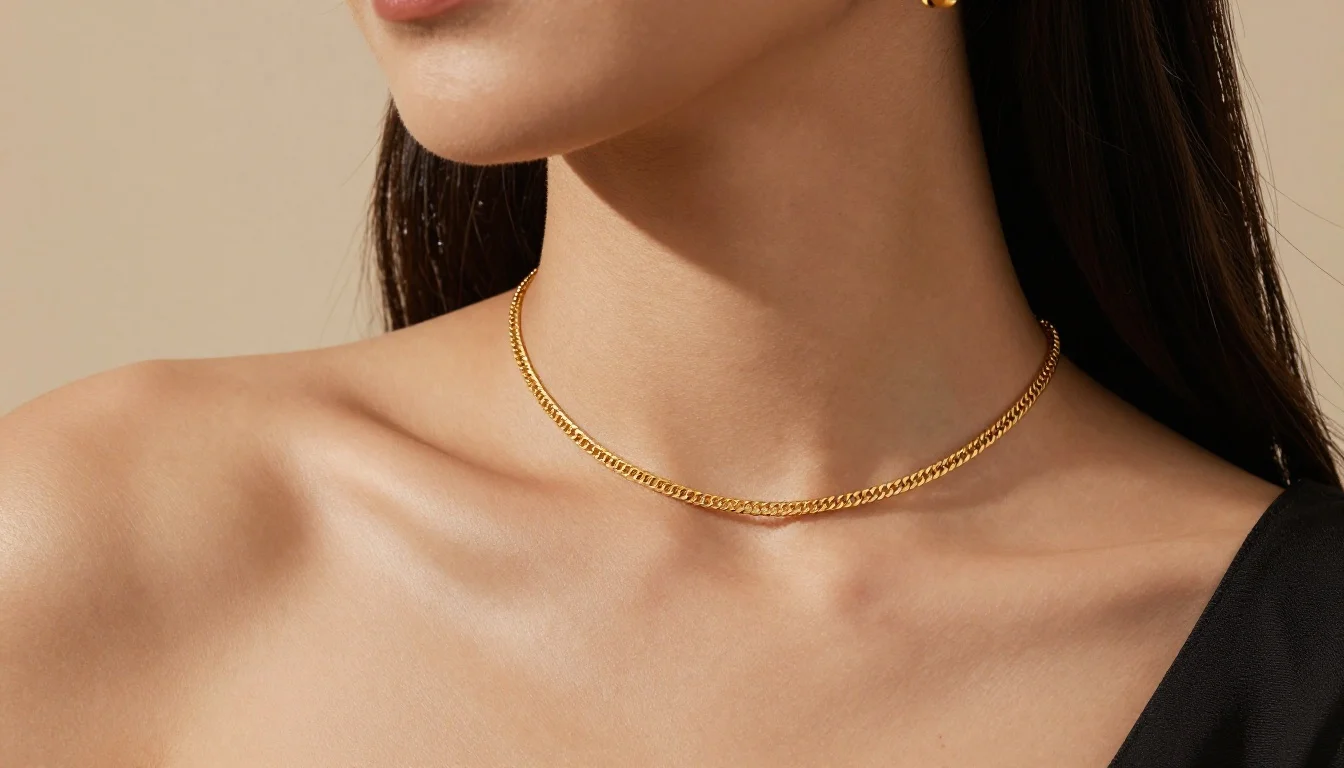
Gold or silver — which is yours?
It comes down to your undertone. Settle it with the free color analysis quiz and get your metals plus your full color palette.
Common Mistakes with Jewelry and Skin Tone
Choosing metal based on hair color alone
A common shortcut: dark hair means gold, blonde means silver (or vice versa). This is unreliable because it ignores undertone, which is the actual determinant of metal flattery. Dark hair can sit on either warm or cool skin. Blonde hair can be warm gold or cool ash. Always prioritize skin undertone over hair color when choosing metals.
Wearing the wrong metal at your neckline
A statement necklace or pendant rests right against the skin of your chest and neck — this is where metal temperature is most visible and has the most impact. Wearing a yellow gold necklace on cool-toned skin in this position can create a noticeably sallow or tired quality. Moving the piece to the wrist reduces the effect significantly. If you love a metal that doesn't match your undertone, wear it away from your face.
Assuming rose gold is neutral
Rose gold is often marketed as universally flattering, but it has a warm undertone — the pink in rose gold is warm-pink, not cool-pink. It's genuinely more versatile than yellow gold and can work on neutral-undertoned people, but for strongly cool-toned skin, rose gold can still read as warm and pull out yellow tones. Test it specifically against your skin rather than assuming.
Ignoring the finish — matte vs polished
The finish of a metal affects how much light it reflects and therefore how strongly the temperature reads. Highly polished silver is intensely cool and reflects a lot of light — dramatic but strong. Brushed or matte gold is softer and warmer. If you're at the edge of warm-cool (neutral undertone), a matte or brushed finish in either metal is more forgiving than a high-polish piece.
Stop guessing — discover your exact palette
See myself in my colorsMetal Swaps for Your Undertone
Common jewelry mistakes and the correct-temperature alternatives.
Yellow gold at ear-level reflects warm light onto cool-toned skin, pulling out yellow tones. Silver mirrors the cool quality of the skin.
Silver necklaces resting against warm-toned skin can look ashy or cold. Gold creates a warm resonance that looks natural and luminous.
Equal balance of two metals looks confused. One dominant metal nearest the face does the flattering work while the accent adds interest.
Yellow gold on a cool-toned wrist can look warm and heavy. Silver or white gold reads clean and precise — flattering the undertone even at wrist distance.
White metal settings reflect cool light at face level. Gold settings do the same job while adding warmth that complements warm-toned skin.
Rings are less critical than face-level pieces but still create a color temperature on the hands. Matching metal to undertone makes the whole look harmonious.
Which Seasons Wear Which Metals
The seasonal color system provides clear guidance on metal choices because each season has a defined warm or cool temperature.
Spring (Warm, Light to Bright)
Learn moreAll Spring types — Light, Warm, and Bright — have warm undertones and are most flattered by yellow gold, rose gold, and warm bronze. Bright Spring can also wear gold with high shine because their coloring supports the vivid warmth. Rose gold is a particularly Spring-appropriate metal due to its warm-peachy quality.
Autumn (Warm, Deep to Muted)
Learn moreAll Autumn types — Warm, Deep, and Soft — have warm undertones and are flattered by gold, bronze, copper, and antique brass. Deep Autumn in particular looks extraordinary in rich, warm metals with an aged or matte finish. Warm Autumn suits golden-amber toned metals more than polished bright gold.
Summer (Cool, Soft to Light)
Learn moreAll Summer types — Soft, Cool, and Light — have cool undertones and are flattered by silver, white gold, and platinum. Rose gold can work for some Soft Summers with neutral leanings. Sterling silver with a soft, slightly brushed finish is particularly Summer-appropriate.
Winter (Cool, Deep to Bright)
Learn moreAll Winter types — Cool, Deep, and Bright — have cool undertones and are strongly flattered by silver, white gold, and platinum. Bright Winter can wear highly polished silver with dramatic effect. Cool Winter suits sleek, modern silver pieces. Deep Winter can also wear silver, particularly with high-contrast pieces.
Find Your Metal Match Through Color Analysis
The gold vs silver question has a clear answer for most people — it's your undertone in metal form. Once you know your season and palette, metal choice becomes automatic: warm seasons wear gold, cool seasons wear silver, and the exact shade and finish within those categories refines to your specific season. A personalized color analysis gives you this clarity plus the full color palette that works with your metal, making every wardrobe and jewelry decision more coherent.
Stop guessing — preview every color on you
Preview Yourself In Your Palette
Get my personalized analysisStop guessing — preview every color on you
Preview Yourself In Your Palette

Related Guides for Gold vs Silver Jewelry
Explore more personalized color advice based on your features.
Want to see these colors on you? What Colors Look Good on Me — free to try.
Frequently Asked Questions About Gold vs Silver Jewelry
Does gold or silver look better on me?
Gold flatters warm undertones; silver flatters cool undertones. Hold each metal to your bare face in daylight — the one that makes your skin look brighter and more even is your metal. Neutral undertones can wear both.
Does gold or silver jewelry look better on warm skin tones?
Gold looks better on warm undertones. Yellow gold, rose gold, and bronze all share the warm temperature of warm-toned skin and create a harmonious, luminous effect. Silver can look cool and slightly at odds with warm skin, particularly at face level in earrings and necklaces.
Does gold or silver look better on cool skin tones?
Silver, white gold, and platinum look better on cool undertones. Their cool reflectivity mirrors the cool quality of cool-toned skin and creates clarity and brightness. Yellow gold can pull out yellow or sallow tones on cool skin, particularly when worn as earrings or a necklace near the face.
Can warm-toned people wear silver jewelry?
Yes, especially away from the face. Silver bracelets, rings, and anklets on warm-toned people have minimal impact because they're at wrist or ankle distance rather than face level. For earrings and necklaces, the impact is more visible — but wearing silver on warm skin occasionally is not wrong, just less optimal than gold.
Is rose gold good for all skin tones?
Rose gold is warmer than silver but cooler than yellow gold, making it the most versatile of the warm metals. It works well for warm and neutral undertones. For strongly cool-toned people, rose gold may still read warmer than ideal — test it specifically against your skin to check.
How do I know if gold or silver looks better on me?
Hold a gold piece and a silver piece against your inner wrist in natural daylight. Look at the skin immediately around the metal — which makes it look clearer, more vibrant, and more alive? That's your metal. You can also try wearing each as earrings and taking photos in natural light: the right metal will make your face look fresher and more even-toned.
Can you mix gold and silver jewelry?
Yes, if done intentionally. The key is to have one metal clearly dominant (closest to your face and most prominent in quantity) and the other as a minor accent. Trying to balance them equally creates visual conflict. Choose your skin-tone metal as the dominant piece and add small amounts of the other for interest.
Does gold or silver look better on pale skin?
Pale skin can be warm or cool, so undertone decides, not fairness. Pale-cool skin (pink or blue undertones) glows in silver and white gold; pale-warm skin (peach or golden undertones) glows in yellow gold and rose gold.
Does gold or silver look better on brown or deep skin?
Both can look stunning on brown and deep skin — undertone still decides. Warm deep skin shines in rich yellow gold; cool deep skin shines in silver and platinum. Many deep-skinned people are neutral and wear both with ease.