Best Colors forAfrican Skin Tones
African skin tones span from warm caramel to deep ebony, with rich warm, neutral, and cool undertones. Discover which shades flatter you most — and which to skip.
African skin tones represent one of the most diverse and beautiful complexion ranges in the world — from warm caramel and honey-brown through rich mahogany and chocolate to deep, luminous ebony. This is not one skin tone but a spectrum, spanning the entire African continent and its diaspora, with enormous variation in undertone from warm golden-brown to deep neutral to cool blue-black. What these complexions share is extraordinary depth and the capacity to carry colors of richness and intensity that lighter complexions simply cannot. This guide covers the full range and celebrates what makes African skin tones so powerfully suited to bold, rich color.


3,000+
happy clients
Why Depth and Undertone Both Matter for African Skin
African skin tones represent one of the most diverse and beautiful complexion ranges in the world — from warm caramel and honey-brown through rich mahogany and chocolate to deep, luminous ebony. This is not one skin tone but a spectrum, spanning the entire African continent and its diaspora, with enormous variation in undertone from warm golden-brown to deep neutral to cool blue-black. What these complexions share is extraordinary depth and the capacity to carry colors of richness and intensity that lighter complexions simply cannot. This guide covers the full range and celebrates what makes African skin tones so powerfully suited to bold, rich color.
African skin tones vary significantly in undertone — not all African complexions are warm. Many have warm, golden-brown undertones; some are deeply neutral; others have cool, blue-black undertones particularly at the deeper end of the spectrum. The common mistake is assuming all dark skin is warm and should therefore wear warm colors. In reality, a very deep complexion with cool undertones needs different colors than a medium caramel complexion with warm golden undertones.
Depth is the other critical variable. Deep to very deep African skin tones have extraordinary color-carrying capacity — they can wear the most intensely saturated, vivid colors on the spectrum without those colors overwhelming the complexion. Rich jewel tones, vivid brights, and deep saturated shades look stunning against very deep skin in a way that would overwhelm lighter complexions. Medium to rich brown tones have slightly more flexibility but benefit from similar principles: color should have intensity, not be washed out or muted.
The universal rule for African skin tones across the depth spectrum: avoid dull, dusty, and muted colors near the face. Colors with grey or ashy undertones tend to conflict with the richness of deep complexions, creating a dull, flat effect. The African skin tone's greatest asset is its inherent richness — the colors that honor that are equally rich, saturated, and full of life.
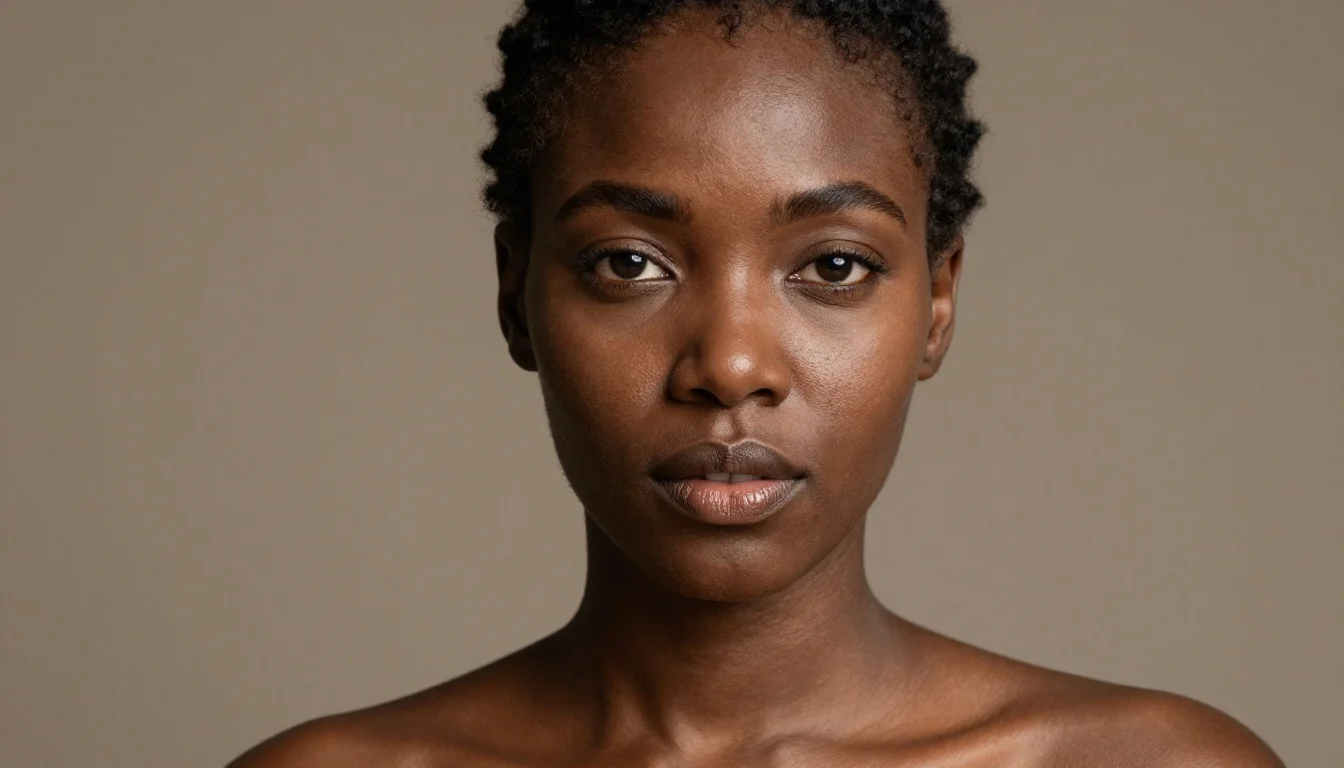
What colors look best on African skin tones?
Rich jewel tones — royal purple, sapphire, emerald, ruby — are broadly flattering on African skin tones due to their depth and saturation matching the richness of the complexion. Vivid brights like cobalt, fuchsia, and vivid yellow create striking contrasts on deep complexions. Warm earthy tones work particularly well for warm-undertoned African skin. High-contrast neutrals like bright white and true black are universally powerful. The key: richness and saturation over dusty, muted, or washed-out tones.
Your Most Flattering Color Families
Rich Jewel Tones
Jewel tones are the quintessential flattering family for African skin tones because their depth and richness match the depth of the complexion. Royal purple against deep ebony skin creates a stunning, regal combination. Sapphire and royal blue illuminate medium to deep brown skin with vivid contrast. Emerald green against warm brown skin tones creates a particularly striking harmony. The principle is simple: deep skin can carry deep, saturated color with power that lighter complexions cannot match.
Warm Earth and Spice Tones
For African skin tones with warm, golden-brown undertones — caramel, honey, and warm mahogany complexions in particular — earth and spice tones create a beautiful tonal resonance. Burnt orange against warm brown skin is a natural harmony. Terracotta and rust provide warmth and richness that make golden-undertoned complexions glow. Rich bronze and warm gold are particularly stunning as metallic accents. These are the colors that align with the golden quality of warm African undertones rather than fighting them.
Vivid Brights and Saturated Hues
Deep and very deep African skin tones have the unique capacity to make vivid, bright colors look extraordinary rather than overwhelming. Vivid yellow against very deep skin creates one of the most striking color combinations in fashion. Hot coral, fuchsia, and electric cobalt all create high-contrast combinations that make deep complexions look luminous and powerful. This color-carrying capacity is a genuine privilege of dark skin — colors that would look garish on lighter complexions look intentional and bold on deep ones.
Crisp, Contrasting Neutrals
High-contrast neutrals — particularly bright white and cream — are striking against medium to deep African skin tones. Pure white against deep ebony creates one of the highest-contrast, most striking color combinations in existence. Unlike cooler or lighter complexions where stark white can be harsh, it creates a graphic, powerful contrast against deep brown and ebony skin. Black on black creates a monochromatic depth effect that is equally striking. These contrasting neutrals are among the most elegant choices for African complexions.

Ready to see purple & sapphire blue on your face?
Start my color analysisHow to Dress African Skin Tones with Intention
Embracing your color-carrying capacity
Deep and very deep African skin tones have an extraordinary gift: the capacity to wear vivid, saturated colors that lighter complexions cannot carry. Embrace this. Colors that would look overwhelming on lighter skin look intentional and stunning on dark skin. Build confidence with one vivid color piece — a cobalt blazer, a vivid yellow dress, a bright emerald top — and observe the difference. Your skin tone is made for bold color.
Building your everyday wardrobe
Your most powerful neutrals are high-contrast ones: bright white, true black, crisp ivory. These anchor your wardrobe and create the kind of sharp, striking looks that work best with African skin tones. Layer in your jewel tones — royal purple, deep emerald, sapphire — as your color pieces. If you have warm undertones, add terracotta, burnt orange, and warm gold. Avoid building your basics in ashy grey or dusty neutrals — they flatten rather than complement.
Professional settings
African skin tones look particularly powerful in deep, rich, saturated professional colors: midnight navy, deep emerald, rich burgundy, vivid royal blue. These colors communicate authority while harmonizing with the natural richness of the complexion. A deep emerald blazer on dark skin looks striking and professional in a way that immediately reads as intentional and powerful. Pair with crisp white for maximum contrast in formal settings.
Jewelry and metals
Both gold and silver work beautifully on African skin tones — the choice depends on your undertone. Warm, golden-brown complexions are particularly luminous with yellow gold, which harmonizes with the warmth. Deep, cool-undertoned complexions can wear both equally well, with platinum and white gold providing striking contrast. Bold, statement jewelry looks particularly powerful against deep skin — this is one context where larger is often better.
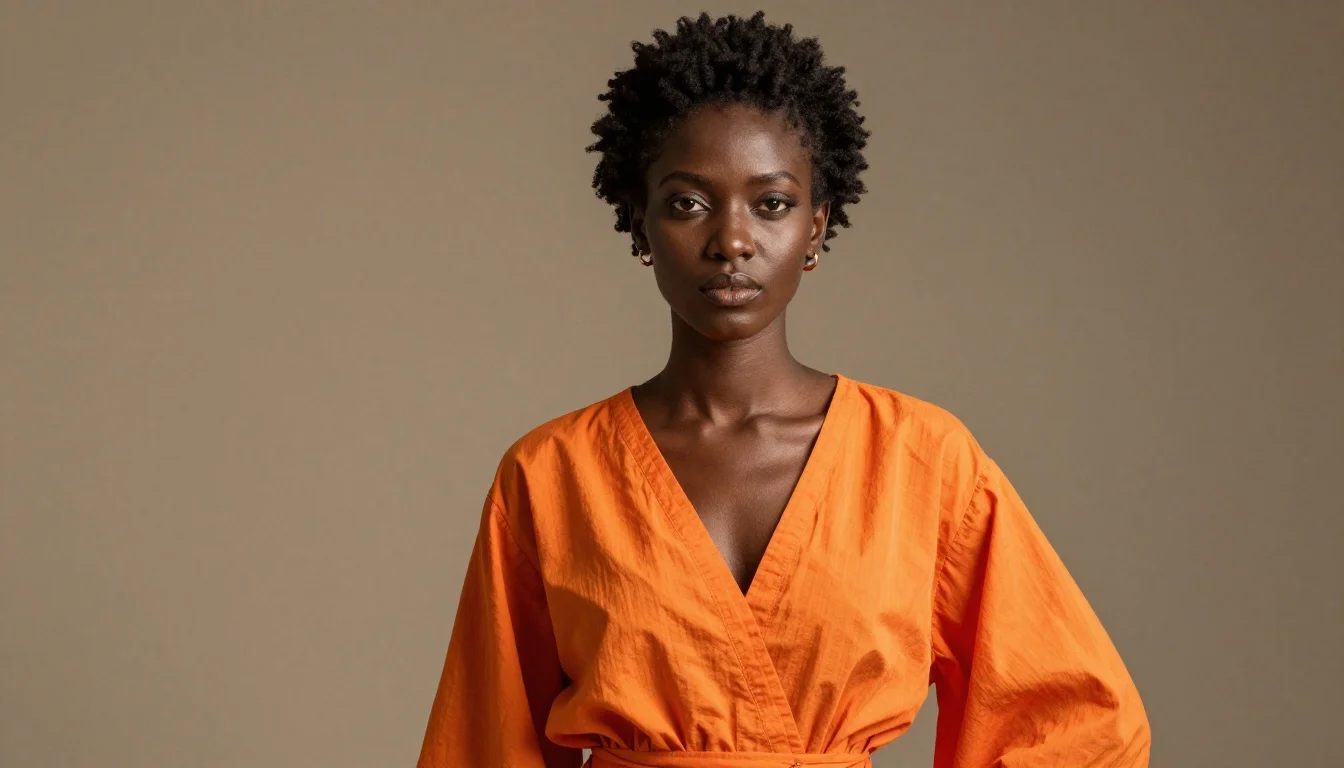
Colors That Work Against African Skin Tones
Ashy grey and dusty neutrals
Ashy, grey-tinged colors conflict with the richness of African skin tones. They introduce a dullness that fights the inherent depth and warmth of the complexion. Dusty grey, taupe, and ash-brown create a flat, muted effect near dark skin rather than enhancing it. If you want a grey, choose one with depth — charcoal or slate — rather than the mid-tone ashy versions that create the most conflict.
Muted, dusty earth tones (muddy browns and khaki)
Muddy, desaturated earth tones — dirty khaki, dull brown, warm putty — blend into medium-depth brown skin rather than complementing it, creating a washed-out, undefined look. These colors lack the saturation to create any interesting contrast or harmony with African skin tones. Clear, saturated versions of earth tones (bright terracotta, vivid rust, rich bronze) are entirely different and very flattering.
Pale, chalky pastels
Very pale pastels — powder pink, baby blue, pale lilac — tend to create an unflattering low-contrast relationship with medium to dark African skin tones, looking neither vivid enough to be striking nor rich enough to harmonize. The lack of saturation means these colors add nothing visually. If you love pastels, choose ones with clear, clean saturation rather than the chalky, washed-out versions.
Cool beige and nude-for-light-skin tones
Clothing labeled 'nude' or 'skin-tone' is typically created for lighter skin tones and sits in a pale warm-beige range that looks neither here nor there against medium to deep African complexions — not dark enough to create contrast, not warm enough to harmonize with deep undertones. African skin tones deserve properly rich nude-adjacent colors: rich caramel, warm chocolate, or deep bronze rather than wan beige.
Stop guessing — preview every shade on you
See myself in my colorsSwaps That Let African Skin Tones Shine
Replacing colors that dull richness with ones that amplify it.
Ashy and dusty colors flatten the richness of African skin tones. Vivid jewel tones create powerful contrast; bright white creates striking luminosity.
Dusty mid-tones have no visual authority against deep skin. Rich, deep jewel tones provide the saturation and depth that looks intentional and powerful.
Pale pink lacks both the contrast and the saturation to do anything interesting near deep skin. Vivid brights create the striking, luminous effect that showcases your complexion.
Pale warm neutrals blend into medium-depth skin without creating definition. Deep neutrals create clean, powerful foundations.
Pale evening colors lack the impact to do justice to deep African skin. Rich jewel tones in evening light create a stunning, regal effect.
Muted accessories disappear near dark skin. Bold, saturated accessories or warm gold metallics create the kind of intentional, striking finish that complements the richness of African complexions.
Which Palette Might Be Yours?
African skin tones span several color seasons depending on undertone direction, depth, and contrast level. The warm-to-neutral-to-cool range of undertones within African complexions means multiple seasonal families are represented.
Deep Autumn
Learn moreIf your African skin has warm, golden-brown undertones — caramel, honey, or warm mahogany — with very dark hair and dark eyes, Deep Autumn often fits. Your palette is rich and earthy: deep rust, warm burgundy, forest green, chocolate brown, dark gold. Colors with warmth, depth, and richness.
Deep Winter
Learn moreIf your African skin is deep to very deep with neutral or cool undertones — and your overall look is high-contrast and dramatic — Deep Winter often fits. Your palette is vivid and deep: true black, vivid jewel tones, rich burgundy, royal blue. Colors with depth and saturation, neither particularly warm nor cool.
Warm Autumn
Learn moreIf your African skin is medium-depth caramel or warm brown with clear golden undertones and a muted, earthy quality to your overall coloring, Warm Autumn may fit. Your palette is warm and muted: terracotta, olive, warm rust, burnt orange, warm camel — the rich earth tones of the natural world.
Find Your Exact Colors
African skin tones are not one complexion but an entire spectrum — from warm caramel to deep ebony — and your precise best colors depend on your exact undertone direction, depth, and contrast level. A personalized color analysis identifies your exact season within the seasonal system, giving you a specific palette of colors that make your individual African complexion look its most luminous, powerful, and alive.
Stop guessing — preview every color on you
Preview Yourself In Your Palette
Get my personalized paletteStop guessing — preview every color on you
Preview Yourself In Your Palette

Related Guides for Best Colors for African Skin Tones
Explore more personalized color advice based on your features.
Want to see these colors on you? What Colors Look Good on Me — free to try.
Frequently Asked Questions About Best Colors for African Skin Tones
What colors look best on African skin tones?
Rich jewel tones — royal purple, sapphire, emerald, ruby — are broadly flattering on African skin tones due to their depth and saturation matching the richness of the complexion. Vivid brights like cobalt, fuchsia, and vivid yellow create striking contrasts on deep complexions. Warm earthy tones work particularly well for warm-undertoned African skin. High-contrast neutrals like bright white and true black are universally powerful. The key: richness and saturation over dusty, muted, or washed-out tones.
Do African skin tones have warm or cool undertones?
African skin tones span the full range of undertones. Many have warm, golden-brown undertones — especially caramel, honey, and warm mahogany complexions. Some are deeply neutral. Very deep, ebony complexions often have neutral to cool undertones. The assumption that all African skin is warm is a generalization. Checking vein color in natural light (blue-purple = cool, green = warm, mixed = neutral) gives a more accurate reading than skin depth alone.
Can African skin tones wear bright colors?
Yes — absolutely. Deep African skin tones have an extraordinary ability to carry vivid, saturated colors that lighter complexions cannot. Vivid yellow, electric cobalt, hot coral, and fuchsia all look striking and luminous against deep skin rather than overwhelming. This is one of the genuine privileges of deep skin tones: the brighter the color, the more the complexion tends to amplify it rather than be overwhelmed by it.
What colors should African skin tones avoid?
Ashy greys, dusty neutrals, and muddy desaturated earth tones tend to flatten the richness of African complexions. Pale, chalky pastels lack the saturation to create any interesting effect. Colors that are commonly labeled 'nude' or 'skin-tone' for light complexions look neither here nor there on deeper skin. The general rule: avoid any color that looks dull, ashy, or uncertain.
Does white look good on African skin?
Bright, crisp white is one of the most striking and flattering colors for deep African skin tones. The high contrast between pure white and deep ebony or dark brown skin creates a powerful, luminous effect. This is very different from the cool-white-on-pale-skin situation where the contrast can be harsh — on deep skin, the contrast is graphic and beautiful. Bright white in tops, dresses, and suits looks extraordinary on medium to deep African complexions.
What color season is African skin?
African skin tones most commonly fall within the Deep Autumn or Deep Winter seasonal families, depending on undertone direction. Warm, golden-brown undertones with earthy quality typically fit Deep Autumn or Warm Autumn. Deep, neutral to cool-undertoned complexions with high contrast fit Deep Winter or Cool Winter. Some medium-depth warm African complexions fit Warm Spring. A color analysis determines the precise seasonal category based on undertone, depth, and contrast level together.