Lipstick Shades forWarm Undertones
Warm undertones need lipstick that stays in the warm half of the color wheel. Discover which tones look natural on you — and which to skip.
Lipstick temperature is not a minor detail — it is the single most important factor in whether a lip color flatters warm-undertoned skin. Warm undertones are golden, peachy, and yellow-based beneath the surface, and they respond to lip colors that stay in the same warm half of the color wheel. The right lipstick looks harmonious, natural, and enhancing. The wrong one — a cool fuchsia, a blue-red, a cool mauve — creates a clashing undertone effect where your skin and lip appear to fight each other. The warm-undertone lipstick palette is one of the richest available: brick red, terracotta, warm coral, cognac nude, deep warm berry, and a wide range of earthy spice tones.


3,000+
happy clients
Why Warm Undertones Need Warm-Temperature Lipstick
Lipstick temperature is not a minor detail — it is the single most important factor in whether a lip color flatters warm-undertoned skin. Warm undertones are golden, peachy, and yellow-based beneath the surface, and they respond to lip colors that stay in the same warm half of the color wheel. The right lipstick looks harmonious, natural, and enhancing. The wrong one — a cool fuchsia, a blue-red, a cool mauve — creates a clashing undertone effect where your skin and lip appear to fight each other. The warm-undertone lipstick palette is one of the richest available: brick red, terracotta, warm coral, cognac nude, deep warm berry, and a wide range of earthy spice tones.
Every lipstick shade carries a temperature base — warm (orange, yellow, peachy) or cool (blue, pink, mauve). When that temperature matches your skin's natural undertone, the lipstick appears intentional and the skin looks luminous. When the temperatures clash, both the lip color and the skin look slightly off: the complexion can appear sallow or greenish, and the lip color seems to sit on top of the skin rather than belong to it.
Warm undertones appear across every skin depth — from very fair skin with golden or peachy overtones to deep skin with a rich golden or orange-brown cast. What all warm-undertoned skin shares is that yellow-golden quality beneath the surface. This warm undertone interacts with lipstick temperature regardless of how light or dark your skin is. A fair-skinned person with warm undertones and a deep-skinned person with warm undertones respond to the same lipstick principles.
The most common warm-undertone lipstick mistake is reaching for cool-based shades — blue-red, cool fuchsia, cool mauve — because they look vivid and appealing on their own. On warm skin, these shades create a clashing undertone effect. The other frequent mistake is assuming the neutral lip for warm undertones is beige. A beige lipstick has a cool grey quality that sits strangely on warm skin. The true warm-undertone neutral is a cognac nude, a warm caramel, or a terracotta-nude — peachy, golden, or orange-brown rather than grey-beige.

What lipstick colors look best on warm undertones?
Warm undertones look best in lipstick that stays in the warm half of the color wheel: brick red, terracotta, warm coral, cognac nude, peachy nude, tomato red, warm plum, and spiced berry. These shades share an orange, peachy, or golden base that harmonizes with warm-undertoned skin. Avoid cool-based shades like blue-red, cool fuchsia, cool mauve, and beige nude — these create a clashing undertone effect on warm skin.
Your Best Lipstick Shade Families
Brick Red & Warm Red
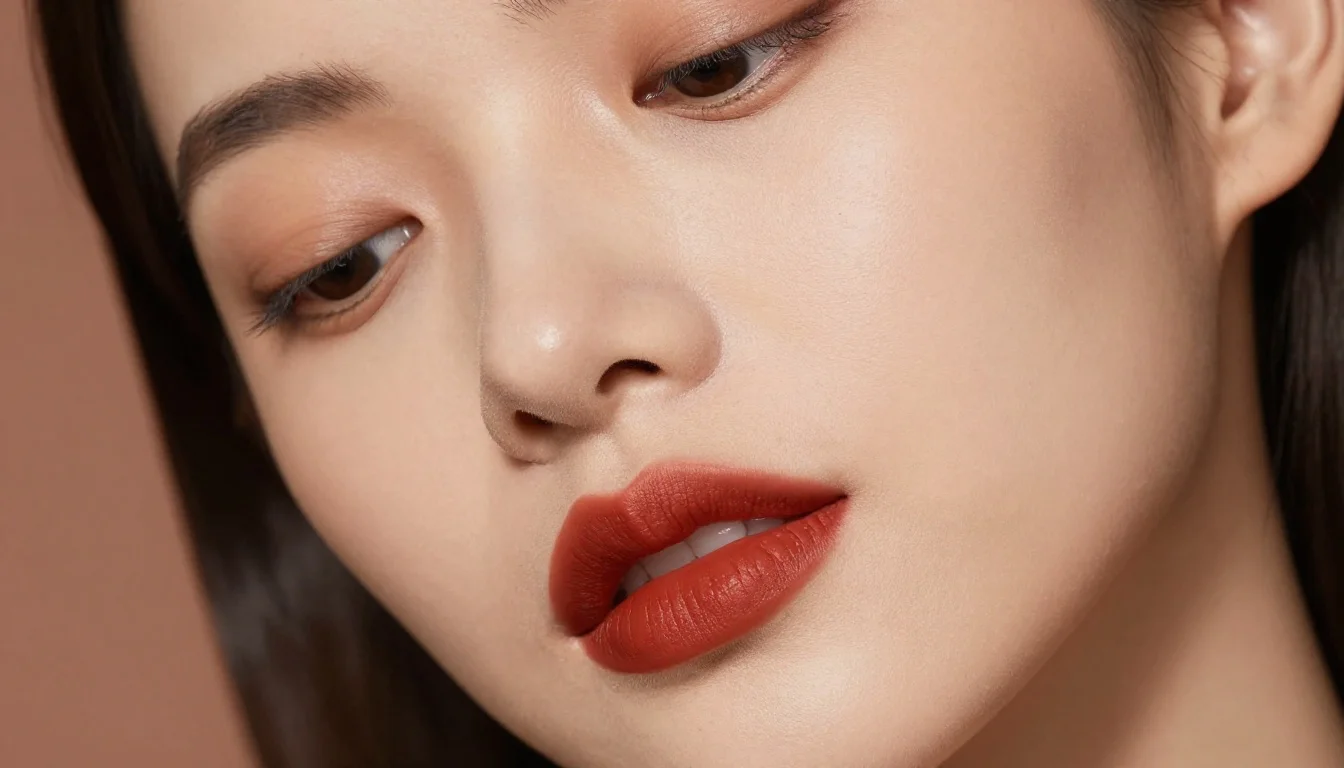
Brick red is the signature lipstick for warm undertones — it sits exactly at the intersection of red and orange-brown, making it the red shade most naturally calibrated to golden and peachy skin. A true brick red has no blue lean, only warm terracotta-orange depth. Tomato red is vivid and warm, less brown than brick but still firmly in warm territory. Warm crimson sits slightly deeper and richer. Paprika red adds a spiced, earthy warmth to the red family. These reds make warm-undertoned skin look clear and glowing rather than flushed or jarring, because there is no temperature conflict between lip and skin.
Terracotta & Warm Coral
Terracotta is the quintessential warm-undertone lip color — an orange-brown earthy shade that echoes the warmth in golden and peachy skin so naturally it looks like it grew from your complexion. On warm undertones, terracotta has a skin-like harmony that feels effortlessly wearable. Warm coral sits between orange and pink with a strong peachy-warm base — it is fresh, vibrant, and specifically formulated for warm skin. Peach coral is the lighter, summer version: sheer and glowing on warm skin. These shades are the warm-undertone equivalent of the classic everyday lip.
Cognac Nude & Warm Caramel
The warm-undertone neutral lip is not beige — it is cognac, caramel, or peachy nude. These shades have an orange-warm or peachy-warm base rather than the grey-pink base of cool-leaning nudes. On warm undertones, a cognac nude looks like your lips but perfected: defined, healthy, and natural without appearing flat or washed out. Warm caramel adds slightly more depth for a polished daytime look. Peachy nude is the sheerer everyday option. Avoid beige and grey-pink nudes — on warm-undertoned skin these read as dull and lifeless rather than neutral.
Deep Warm Berry & Spiced Wine
Dark lippies for warm undertones live in the warm-plum and spiced-berry zone rather than the cool-purple or cool-wine zone. A warm plum has a red-brown-purple quality — richly saturated with a warm base — as opposed to a cool plum which leans blue-purple. Spiced berry has a warmth behind its depth, almost like a cranberry with amber warmth added. Warm burgundy is the warm-undertone alternative to cool wine: it has more brown-red than blue-red in its composition. Cinnamon-brown dark lips lean into earthy warm territory for the most dramatic warm-undertone evening look.

Ready to see yourself in brick red & tomato red?
Start my color analysisHow to Wear Lipstick as a Warm Undertone
Identifying warm temperature in the store
When shopping for lipstick, look for descriptor words that signal warm temperature: 'brick', 'terracotta', 'cognac', 'caramel', 'warm coral', 'peachy', 'spice', 'burnt', 'tomato', 'earthy', and 'warm nude'. Avoid: 'cool mauve', 'fuchsia', 'blue-red', 'cool rose', 'berry with blue base', and 'grey-pink nude'. When swatching in-store, hold the swatch against your inner wrist — warm lipsticks look clean and harmonious against the golden-yellow veins of warm-undertoned skin. Cool shades will look slightly discordant.
Building your three-lipstick foundation
Three lipstick shades cover every occasion for warm undertones. First, a warm everyday nude: cognac, peachy nude, or warm caramel — your lips perfected, in a warm-base nude that looks natural rather than flat. Second, a brick red or warm coral: your daytime impact shade for a defined, glowing, put-together look. Third, a warm plum or spiced berry: your evening and autumn-winter power shade, with depth and richness that stays firmly in warm territory. These three cover 95% of your needs.
Matching warm lipstick to your skin depth
Within the warm undertone family, skin depth affects proportion. Fair warm skin: lighter warm corals, peachy nudes, and warm brick reds create beautiful contrast without overwhelming delicate coloring. Medium warm skin: the widest range — brick red, terracotta, warm coral, cognac nude, and warm plum all work with equal strength. Deep warm skin: rich cognac, deep terracotta, spiced berry, and warm burgundy are your most powerful choices — they echo the rich warmth in deeper skin tones and create intentional depth-on-depth harmony.
Using warm lipstick as your base point
Warm-undertoned skin has a natural vibrancy that warm lip colors enhance rather than compete with. Unlike cool undertones where a bold lip creates high-contrast drama against cool skin, warm undertones create a more harmonious, blended effect — the lip and skin appear to work together seamlessly. This means warm-undertone lipstick tends to look wearable and effortless even at full pigmentation. A terracotta or brick red at full intensity on warm skin looks polish rather than statement — lean into it.
Build a full warm-undertone makeup palette
Lipstick is just the start. The makeup color matcher pairs your lip shades with matched blush, eyeshadow, and foundation tones for your undertone.
Lipstick Shades That Work Against Warm Undertones
Blue-red and cool true red
Blue-based red is classically flattering for cool undertones — and specifically unflattering for warm ones. On warm-undertoned skin, a blue-red creates a visible temperature clash: the cool lip base fights the warm golden undertone in the skin, making the complexion look flushed or slightly greenish. The fix is simple: swap for a brick red or tomato red that has the same visual impact with a warm rather than blue base.
Cool fuchsia and vivid cool pink
Cool fuchsia has a strong blue-pink base — it is one of the most extreme cool-temperature lip shades available. On warm-undertoned skin, fuchsia creates a stark clashing undertone effect. The blue quality of the shade highlights the warm quality of the skin in a way that looks discordant rather than deliberate. Warm-undertone pinks should be peachy-pink, warm rose-pink, or salmon — not vivid cool fuchsia.
Cool mauve and grey-pink nude
Cool mauve and grey-pink nudes are natural choices for cool undertones but work against warm ones. On golden or peachy skin, a cool mauve looks flat and slightly grey — it drains warmth rather than enhancing it. A grey-pink nude, often sold as a universal nude, similarly sits strangely on warm undertones because its grey-pink base directly conflicts with the yellow-golden cast beneath warm skin.
Beige nude lipstick
Beige nudes are the most common lipstick mistake for warm undertones. Beige has a cool, desaturated quality that reads as grey-pink or grey-yellow on the lips — neither of which harmonizes with warm golden undertones. On warm skin, a beige nude makes the face look flat, the lips look washed out, and the overall complexion look sallow. The warm-undertone neutral is cognac, peachy nude, or warm caramel — not beige.
Stop guessing — preview every shade on you
See myself in my shadesLipstick Upgrades for Warm Undertones
The cool-based shades that clash with warm undertones, swapped for warm-temperature alternatives that glow.
Beige has a cool, desaturated base that looks flat and washed out on warm undertones. Cognac and peachy nude have the same natural intention with a warm orange-peachy base that harmonizes.
Blue-based red creates a temperature clash with warm undertones that makes skin look flushed. Brick red and tomato red deliver the same impact with a warm base that enhances golden and peachy skin.
Cool fuchsia has a blue base that clashes directly with warm undertones. Warm coral and peachy pink have the same vibrancy in a warm-harmonious temperature.
Cool wine and blue-purple plum fight warm undertones. Warm plum and spiced burgundy have the same depth with a red-brown-warm base that works with golden and peachy skin.
Cool berries have a blue-pink base that clashes with warm undertones. A warm berry or amber-cranberry delivers the same richness in a temperature that enhances rather than fights warm skin.
Cool mocha and grey-mauve neutrals have a cool base that looks flat and slightly grey on warm-undertoned deeper skin. Warm caramel and terracotta-nude give the neutral lip look with a warm earthy base that feels intentional.
Which Seasonal Palette Fits Your Warm Undertones?
Warm undertones appear across four seasonal palettes in the 12-season color analysis system — your specific palette depends on whether your warm coloring is deep or light and muted or vivid. Each responds to slightly different versions of the warm lipstick families.
Warm Autumn
Learn moreIf your warm undertones are paired with deep, muted, rich coloring — warm brown, auburn, or dark golden hair; warm brown, hazel, or green eyes; golden or olive-warm skin — Warm Autumn is likely yours. Your lipstick sweet spot is the full range of earthy warm tones: terracotta, brick red, warm plum, spiced berry, deep cognac, and cinnamon-brown dark lips. Rich, saturated, and earthy versions of these families are your strength. Vivid cool or bright shades wash out Warm Autumn's characteristic depth.
Warm Spring
Learn moreIf your warm undertones are paired with clear, lighter, more vivid coloring — golden or strawberry blonde hair, warm green or hazel eyes, peachy or golden-warm skin with a fresh quality — Warm Spring is likely yours. Your lipstick sweet spot is warmer and lighter than Autumn: warm coral, peachy nude, tomato red, and warm salmon. The clear, bright quality of Warm Spring coloring can carry vivid warm reds and corals without the earthy depth needed by Autumn types.
Soft Autumn
Learn moreIf your warm undertones are paired with softer, more muted coloring — medium warm-brown or ashy-warm hair, warm hazel or muted green-brown eyes, warm but not vivid skin — Soft Autumn may be yours. Your lipstick sweet spot is the softer, more muted versions of warm tones: dusty warm rose, muted terracotta, soft brick, warm nude, and muted warm plum. Vivid saturated warm shades overpower Soft Autumn's characteristic softness; reach for the dusky, muted versions of these families.
Find Your Exact Warm-Undertone Lipstick Palette
Warm undertones span a rich range — from Warm Spring's fresh peachy corals to Warm Autumn's deep spiced terracottas. Your precise lipstick palette depends on where your coloring falls within the warm spectrum: how light or deep, how vivid or muted. A personalized color analysis identifies your exact seasonal type and the specific lipstick shade families that make your warm-undertoned skin look its most luminous and alive.

Related Guides for Lipstick for Warm Undertones
Explore more personalized color advice based on your features.
Want to see these colors on you? Skin Undertone Test — free to try.
Frequently Asked Questions About Lipstick for Warm Undertones
What lipstick colors look best on warm undertones?
Warm undertones look best in lipstick that stays in the warm half of the color wheel: brick red, terracotta, warm coral, cognac nude, peachy nude, tomato red, warm plum, and spiced berry. These shades share an orange, peachy, or golden base that harmonizes with warm-undertoned skin. Avoid cool-based shades like blue-red, cool fuchsia, cool mauve, and beige nude — these create a clashing undertone effect on warm skin.
What red lipstick suits warm undertones?
Brick red is the ideal red for warm undertones — it sits at the intersection of red and orange-brown, with no blue lean. Tomato red and warm crimson also work well. Avoid blue-based red and cool true red, which have a cool temperature that directly clashes with warm-undertoned skin and can make the complexion look flushed or uneven.
What nude lipstick works for warm undertones?
The warm-undertone neutral lip is not beige — it is cognac, warm caramel, or peachy nude. These shades have an orange-warm or peachy-warm base rather than the grey-pink base of cool nudes or the desaturated grey quality of beige. On warm-undertoned skin, a cognac or peachy nude looks natural and skin-like. A beige nude looks flat, washed out, or slightly grey.
Can warm undertones wear dark lipstick?
Yes — warm undertones carry dark lips beautifully when the shade has a warm base. Warm plum, spiced berry, warm burgundy, and cinnamon-brown dark lips all work for warm undertones. The shades to avoid in the dark family are cool wine (blue-red base) and cool plum (blue-purple base) — these have cool temperatures that clash with warm skin. Look for dark shades described as spiced, warm, or earthy rather than wine, berry with blue base, or plum with purple base.
What is the difference between warm and cool lipstick undertones?
Warm-temperature lipsticks have an orange, yellow, or peachy base — they lean brick, coral, terracotta, cognac, or spice. Cool-temperature lipsticks have a blue, pink, or purple base — they lean fuchsia, cool mauve, berry, cool wine, or true blue-red. You can identify temperature by comparing shades: warm reds look more orange-brown; cool reds look more blue-pink. For warm-undertoned skin, warm-temperature lipstick creates harmony; cool-temperature creates a clashing undertone effect.
Does lipstick undertone matter for deeper warm-toned skin?
Yes, absolutely. Deep warm-toned skin — with its rich golden or orange-brown cast — responds powerfully to warm-temperature lipstick. A cool blue-red or fuchsia on deep warm skin creates the same temperature clash as on fair warm skin; it is just expressed differently. Rich cognac, deep terracotta, warm plum, and spiced burgundy look extraordinary on deep warm-toned skin in a way that cool-base shades cannot replicate — the warmth in the lip echoes and enhances the warmth in the skin.