Your Professional Wardrobe,Elevated for Tan Skin
Discover the best professional colors for tan skin. Discover how to build looks with shades that actually flatter you.
Tan skin is one of the most versatile complexions in a professional wardrobe. It sits in the medium-depth range with warm undertones, which means it responds beautifully to both warm professional classics and cool bold accents. The crisp white shirt looks exceptional against tan skin in a way it simply does not against fairer complexions. Deep navy commands authority. A cobalt blazer turns a boardroom appearance into a statement. The key is knowing which professional colors amplify your skin's natural warmth and radiance — and which ones let you disappear into the background.


3,000+
happy clients
How Tan Skin Changes Your Professional Color Choices
Tan skin is one of the most versatile complexions in a professional wardrobe. It sits in the medium-depth range with warm undertones, which means it responds beautifully to both warm professional classics and cool bold accents. The crisp white shirt looks exceptional against tan skin in a way it simply does not against fairer complexions. Deep navy commands authority. A cobalt blazer turns a boardroom appearance into a statement. The key is knowing which professional colors amplify your skin's natural warmth and radiance — and which ones let you disappear into the background.
Tan skin has medium depth and typically warm undertones — golden, olive, or peachy. In professional settings, this gives you an advantage that many people with fairer or deeper complexions do not have: you can wear both warm professional classics and cool bold accents with equal impact. A crisp white shirt on tan skin creates high contrast that reads as instantly polished and authoritative. That same shirt on very fair skin creates a much lower-contrast effect.
The professional color palette for tan skin is uniquely wide. Deep navy, chocolate brown, forest green, and warm charcoal all serve as powerful wardrobe anchors. But tan skin can also carry jewel-tone accent pieces — a cobalt blazer, an emerald blouse, a deep burgundy pencil skirt — without those colors becoming overwhelming. The medium depth of tan skin acts as a visual anchor that lets bold colors read as intentional rather than costume-like.
The critical error to avoid in professional dressing with tan skin is reaching for skin-adjacent neutrals. Warm beige blazers, camel trousers, and sand-colored shirts all sit in the same warmth register as tan skin, creating a flat, low-contrast look where you seem underdressed regardless of the garment's quality. In a professional context, contrast is authority. Choose colors that create visual distinction between your clothing and your skin, and your presence in any room immediately increases.

What colors look most professional on tan skin?
Deep navy, crisp white, chocolate brown, warm charcoal, forest green, and jewel tones like cobalt and deep burgundy all look exceptionally professional on tan skin. The key is contrast — tan skin looks most authoritative in professional settings when paired with colors that create clear visual distinction from the skin itself, whether through depth (dark anchor colors) or temperature (cool jewel tones against warm tan skin).
Your Best Work Outfit Colors
High-Contrast Whites and Light Neutrals
White is one of the most powerful professional choices for tan skin. The high contrast between crisp white and warm-tan skin creates an immediately polished, authoritative look — the visual equivalent of a sharp edge. A classic white button-down on tan skin looks cleaner and more intentional than it does on fairer complexions, where the contrast is lower. Cool light grey provides similar contrast in a more subdued way, excellent for full suiting on tan skin. These light neutrals do the most work with the least effort in professional environments.
Rich Anchor Darks
Deep navy is perhaps the single most powerful professional color for tan skin. Its cool depth creates a striking warm-cool contrast with tan skin's warmth, making the skin appear more golden and the navy appear richer. Chocolate brown — a warm dark — resonates with tan skin's warmth while providing real depth contrast, creating a sophisticated, cohesive professional look. Warm charcoal is the workhorse neutral that works across all tan skin undertones. These anchor colors form the backbone of a powerful professional wardrobe.
Professional Jewel Accents
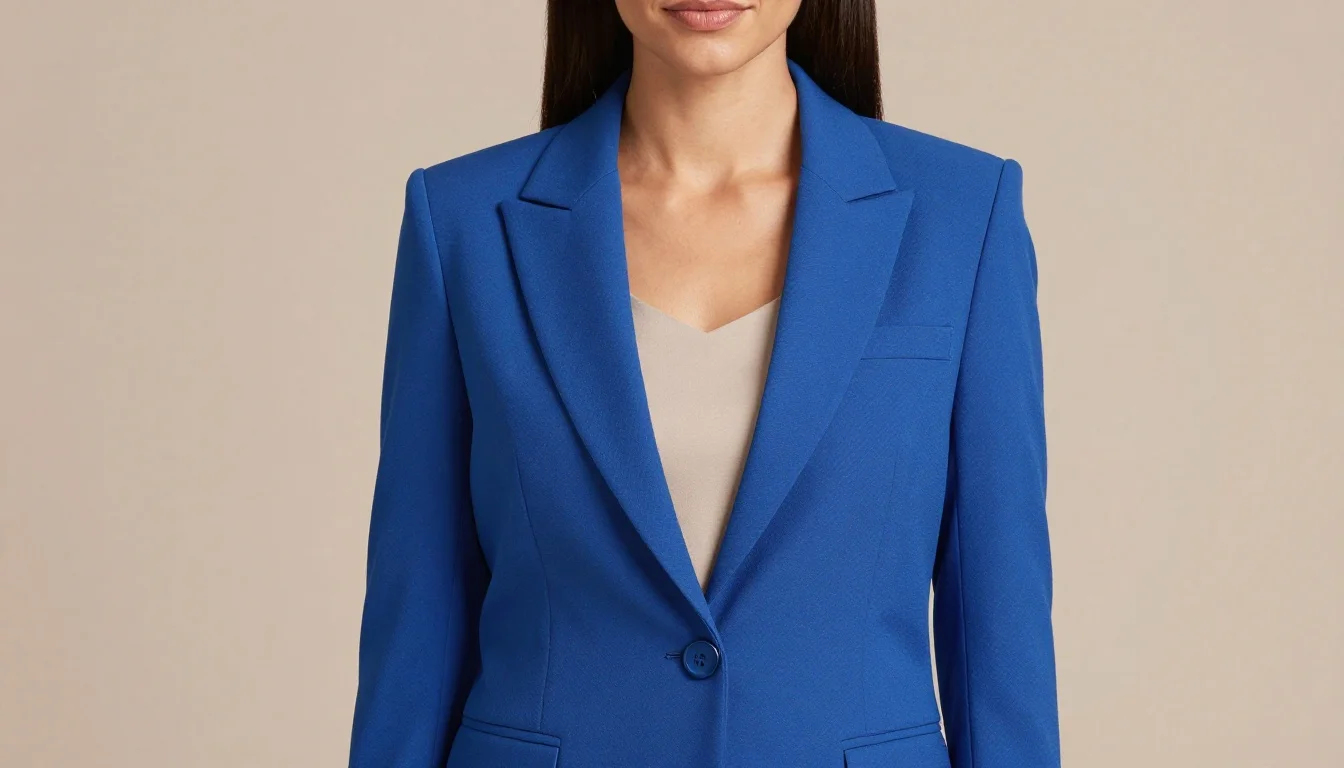
Tan skin can carry jewel tones in professional settings in a way that many other complexions cannot. A cobalt blazer worn over a white shirt on tan skin creates a striking, polished look — the cool-warm contrast reads as deliberately confident rather than merely bold. Deep emerald communicates authority while making tan skin appear radiantly golden by comparison. Rich burgundy is the most elegant jewel tone for tan skin in professional settings: warm enough to resonate with tan undertones, dark enough to carry genuine visual weight.
Earth Tone Business Casual
For business casual environments, warm earth tones create a cohesive, intentional professional look on tan skin. A terracotta blouse amplifies tan skin's warmth while standing clearly distinct from it — the key is that terracotta is deeper and more saturated than tan skin itself. Warm olive trousers pair beautifully with tan skin and read as fashion-forward in relaxed professional settings. Deep camel (distinguished from sandy camel by its richness and depth) can work when paired with high-contrast pieces like a crisp white shirt or dark blazer.

Ready to see white shirt & white suiting on your face?
Start my color analysisHow to Build Professional Looks for Tan Skin
The power white shirt formula
A crisp white button-down is one of the highest-impact professional pieces you can own as someone with tan skin. The visual contrast it creates — bright white against warm medium tan — reads as instantly polished, confident, and put-together. Wear it tucked into deep navy tailored trousers for a clean, authoritative meeting look. Pair it under a cobalt or deep burgundy blazer for a statement that reads as fashion-aware and professional simultaneously. The key is keeping the white genuinely crisp — bright optical white rather than warm ivory, which loses the high-contrast effect.
Anchoring with deep navy
Deep navy is the most universally flattering professional color for tan skin and deserves a central place in your work wardrobe. A deep navy blazer over a white shirt is a foolproof combination that projects authority while making tan skin look golden and radiant. Deep navy tailored trousers work with almost everything — white, cream, light grey, and bright accent blouses. Navy suiting reads as more dynamic on tan skin than on fair complexions because the warm-cool contrast between the navy and the skin creates a visual energy that pure white shirts against pale skin simply do not have.
Adding jewel tone authority
Tan skin is one of the few complexion types that can wear jewel tones as primary professional pieces — not just accents. A well-cut cobalt blazer is a genuine boardroom piece on tan skin, not a party garment. Wear it over a white shirt with dark trousers for a look that commands immediate attention. A deep emerald blouse reads as polished and powerful rather than eccentric against tan skin. The medium depth of tan skin acts as a visual anchor for these bold colors, making them readable as intentional and sophisticated rather than overwhelming.
Earth tone business casual
In business casual environments, lean into warm earth tones with proper depth contrast. A terracotta blouse in silk or fine jersey over tailored dark trousers looks elevated and season-appropriate while capitalizing on tan skin's natural warmth. Warm olive wide-leg trousers with a crisp white or cream blouse is a sophisticated business casual combination that works year-round for tan skin. The formula: one warm earth tone paired with either a high-contrast neutral (white, light grey) or a deep anchor (navy, charcoal) keeps the look professional rather than casual.
Professional Colors That Flatten Tan Skin
Sandy and warm beige
Warm beige is the most common professional mistake for tan skin. It sits in the same warmth and depth register as tan skin itself, creating a low-contrast, monochromatic look where clothing and skin blur together. In a professional context this translates as visually underpowered — even an expensive beige blazer will look like a non-choice against tan skin. Swap to deep navy or rich charcoal for authority, or deep terracotta for warmth with actual contrast.
Dusty and chalky pastels
Dusty rose, powder blue, pale lavender, and muted lilac all lack the saturation to read distinctly against the richness of tan skin. In professional settings these colors create a washed-out, tentative appearance — the opposite of the confident presence you want in meetings and presentations. If you want a lighter professional color, choose crisp white or cool light grey, both of which have enough contrast to register with authority against tan skin.
Muddy medium tones
Medium-value colors in warm registers — dusty mustard, muted khaki, warm greige, brownish olive — sit too close to tan skin's own depth and warmth to create effective contrast. They neither harmonize warmly (too muted) nor contrast vividly (too close in value). In professional dressing, these colors make tan skin look dull rather than polished. Go darker (navy, chocolate, charcoal) or bolder (cobalt, emerald) for professional impact.
Nude and skin-matching tones
Nude tones calibrated for tan skin — warm brown-beige, tawny, bronze — are particularly problematic professionally because they create a near-seamless visual transition between clothing and skin. The result is that your outfit disappears and your overall appearance lacks definition. Nude shades are appropriate for hosiery where invisibility is the goal, not for garments where presence and authority matter.
Stop guessing — preview every look on you
See these looks on my photoYour Work Wardrobe, Upgraded
Trading the professional colors that flatten tan skin for ones that build authority and presence.
Camel and beige create zero meaningful contrast against tan skin, resulting in a flat, underpowered professional look. Deep navy creates a striking warm-cool contrast that projects authority. Chocolate brown resonates with tan warmth while providing real depth — a more sophisticated version of the same warm register.
Warm ivory sits too close to tan skin's warmth register, reducing the high-contrast effect. Crisp optical white creates maximum contrast against tan skin, making the look immediately more polished and authoritative. This single swap often has a more visible effect than an entire outfit change.
Dusty rose lacks saturation to read distinctly against tan skin and communicates tentativeness rather than confidence. Cobalt creates a powerful cool-warm contrast that makes tan skin appear more golden and the blazer look more intentional. Deep emerald reads as polished authority on tan skin.
A tan sheath dress on tan skin creates an almost monochromatic effect that diminishes visual presence. Deep burgundy is warm and dark simultaneously — it resonates with tan skin's warmth while creating real depth contrast. Forest green creates cool-warm contrast that makes tan skin appear luminously golden.
Sandy trousers blend into the lower half when paired with neutral tops on tan skin, creating a visually undifferentiated look. Deep navy or charcoal create the visual anchor at the bottom that makes the whole professional outfit read as intentional and polished.
Dusty lavender and pale grey lack saturation to show up cleanly against tan skin in a relaxed work context. Forest green creates cool-warm contrast that keeps the business casual look professional. Deep cognac amplifies tan skin's warmth with depth — a rich, deliberate choice rather than a faded default.
Which Seasonal Palette Fits Your Tan Skin?
Tan skin appears across several seasonal color analysis palettes. Your specific season depends on whether your tan runs warm-golden, olive-neutral, or warm-clear — and what your hair and eye colors contribute. Knowing your season helps you identify the exact shades within these broad families that will be most powerful for you professionally.
Warm Autumn
Learn moreIf your tan skin has a distinctly golden or bronze quality, your hair is warm brown or dark, and deep muted earth tones feel most powerful on you, Warm Autumn may be your palette. Your professional palette is warm, rich, and muted-deep: warm charcoal suiting, cognac blazers, deep terracotta blouses, warm olive trousers, and rich burgundy — all in muted rather than vivid versions. Your white is cream, your navy is warm navy with a slight olive undertone.
Warm Spring
Learn moreIf your tan skin is warm but has a light, clear quality — golden without being deeply pigmented — your hair is warm medium-brown or warm dark blonde, and warm brights feel most alive on you, Warm Spring may be your palette. Your professional palette is warm and clear: clear coral blouses, warm olive trousers, bright warm teal accents, and warm ivory as your white alternative. Your jewel tones lean warm — teal over cobalt, warm emerald over forest green.
Bright Spring
Learn moreIf your tan skin has a clear, high-contrast quality — warm but vivid — your features are distinct and vivid, and very saturated bright colors feel most powerful rather than overwhelming on you, Bright Spring may be your season. Your professional palette features vivid cobalt, clear emerald, and bright coral as statement pieces, with crisp white and deep navy as anchors. Your colors need to be clear and saturated — muted versions will fall flat on you where vivid versions will sing.
Build the Professional Wardrobe Your Tan Skin Deserves
Tan skin has a natural versatility in professional settings that is genuinely rare — it can carry both warm classics and cool jewel tones with authority, it makes white shirts look crisper, and it gives dark anchor colors a warmth they lack against paler complexions. The difference between a powerful professional wardrobe and a flat one for tan skin often comes down to contrast: choosing colors that stand clearly distinct from your skin rather than blending into it. Your exact ideal shades within these families depend on whether your tan runs golden-warm, olive-neutral, or warm-clear — a personalized color analysis identifies the precise professional colors that will make your tan skin look its most authoritative and radiant.
Stop guessing — preview every color on you
Preview Yourself In Your Palette
Get my personalized paletteStop guessing — preview every color on you
Preview Yourself In Your Palette

Related Guides for Work Outfits for Tan Skin
Explore more personalized color advice based on your features.
Want to see these colors on you? What Colors Look Good on Me — free to try.
Frequently Asked Questions About Work Outfits for Tan Skin
What colors look most professional on tan skin?
Deep navy, crisp white, chocolate brown, warm charcoal, forest green, and jewel tones like cobalt and deep burgundy all look exceptionally professional on tan skin. The key is contrast — tan skin looks most authoritative in professional settings when paired with colors that create clear visual distinction from the skin itself, whether through depth (dark anchor colors) or temperature (cool jewel tones against warm tan skin).
Does white look good on tan skin in professional settings?
Yes — a crisp white shirt is one of the most powerful professional pieces for tan skin. The high contrast between optical white and warm-tan skin creates an immediately polished, authoritative look. Importantly, choose crisp bright white rather than warm ivory or cream, which loses the high-contrast effect by sitting closer to tan skin's own warmth register.
Can tan skin wear a navy blue suit or blazer?
Absolutely — deep navy is one of the best professional colors for tan skin. The cool depth of navy creates a warm-cool contrast against tan skin's warmth that makes both the navy appear richer and the skin appear more golden. A deep navy blazer paired with a crisp white shirt is one of the most universally flattering and authoritative professional combinations for tan skin.
What work blazer colors are best for tan skin?
Deep navy, chocolate brown, warm charcoal, forest green, cobalt blue, and deep burgundy all make excellent work blazers for tan skin. Avoid warm camel and beige blazers, which blend into tan skin's warmth without creating meaningful contrast. A cobalt or emerald blazer over a white shirt is a particularly powerful choice for tan skin — the jewel tone creates striking contrast while the medium depth of tan skin keeps the look professional rather than overwhelming.
What should tan skin avoid wearing to work?
Avoid warm beige and sandy tones (they disappear into tan skin without contrast), dusty pastels (they lack saturation to read distinctly against tan skin's richness), muddy medium warm tones like dusty mustard and warm greige (too close to tan skin's depth), and nude or skin-matching tones (they erase visual definition entirely). In professional settings, contrast is authority — choose colors that stand clearly distinct from tan skin.
What jewel tones work for tan skin in professional settings?
Cobalt blue, deep emerald, rich burgundy, and deep violet all work exceptionally well as professional jewel tones for tan skin. Tan skin's medium depth acts as a visual anchor that makes these bold colors read as intentional and sophisticated rather than costume-like. A cobalt blazer or emerald blouse on tan skin reads as fashion-aware authority rather than mere boldness. Keep the jewel tone paired with neutral anchors (white shirt, navy or charcoal trousers) to maintain a professional rather than purely festive impression.