Dress for the ContrastDark Hair Creates
Dark hair — black, blue-black, or very dark brown — creates high visual contrast that changes how. Discover how to build looks with shades that actually flatter you.
Dark hair — whether jet black, blue-black, or very dark brown — is one of the most powerful style assets you can have. It creates a strong visual anchor that makes colors around it read more vividly, gives structure to any silhouette, and allows you to carry bold pieces that would overwhelm lighter coloring. The wardrobe strategy here isn't about finding colors that 'go with' dark hair. It's about building outfits that use your hair's natural contrast as a deliberate design element.


3,000+
happy clients
How Dark Hair Changes What You Wear
Dark hair — whether jet black, blue-black, or very dark brown — is one of the most powerful style assets you can have. It creates a strong visual anchor that makes colors around it read more vividly, gives structure to any silhouette, and allows you to carry bold pieces that would overwhelm lighter coloring. The wardrobe strategy here isn't about finding colors that 'go with' dark hair. It's about building outfits that use your hair's natural contrast as a deliberate design element.
Dark hair has more visual weight than lighter hair. It anchors your overall appearance and creates a high-contrast frame around your face. That frame changes how clothing colors behave — vivid colors look more vivid, crisp whites look crisper, and rich darks read as sophisticated rather than heavy. Colors that work against this frame — muddy mid-tones, washed-out pastels — simply disappear.
The other variable that matters is your hair's undertone. Cool dark hair (blue-black, ash dark brown, near-black with cool depth) aligns with cool-toned clothing — navy, cobalt, jewel tones, crisp white. Warm dark hair (warm brown-black, rich dark espresso, warm-toned black) aligns with warm-toned clothing — camel, terracotta, warm ivory, deep bronze. Getting this distinction right is the difference between an outfit that looks pulled together and one that looks off for reasons you can't quite name.
The formula that works across all dark hair types is this: commit to either high contrast (dark hair against a bright or light piece) or rich tonal depth (dark hair with deeply saturated colors). The middle ground — faded, dusty, or mid-intensity shades — has no relationship to dark hair's visual weight and consistently falls flat.
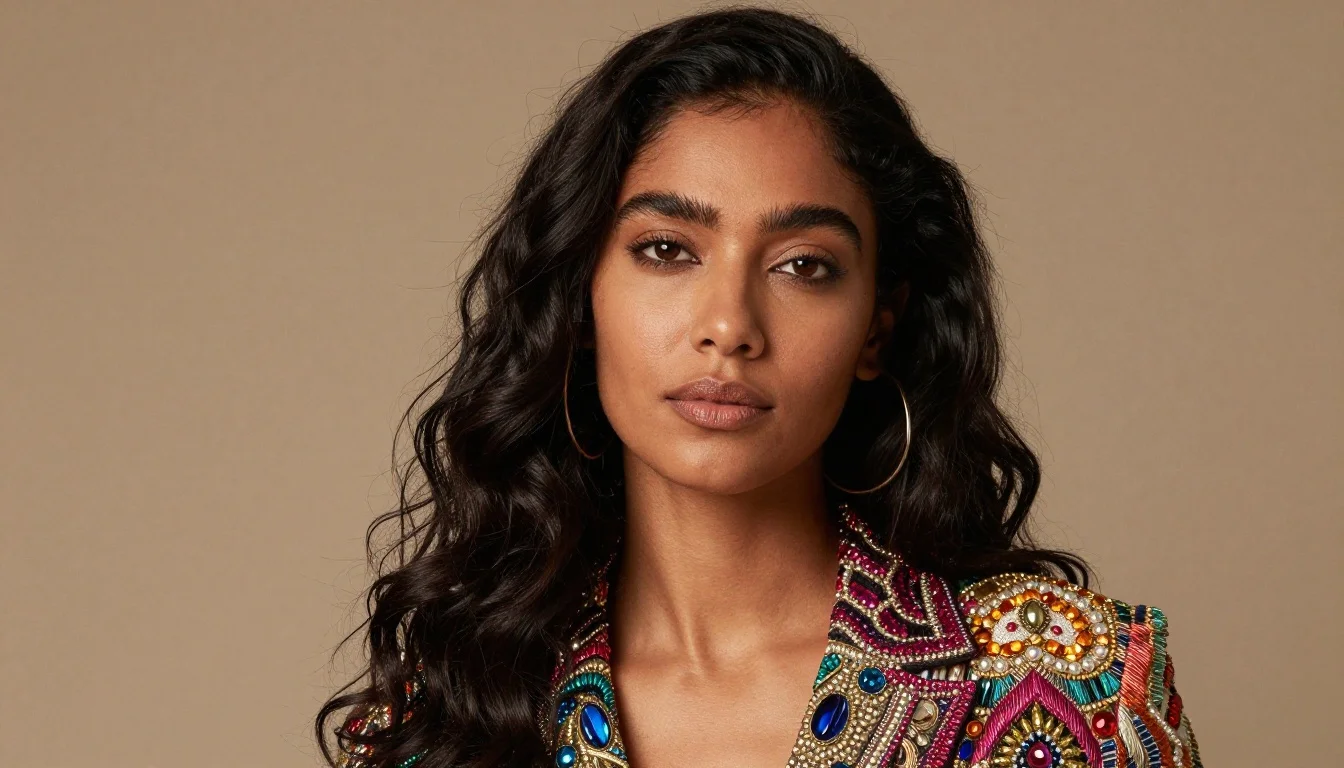
What colors look best in a wardrobe for dark hair?
Dark hair looks best paired with rich jewel tones (sapphire, emerald, deep ruby), clean neutrals (crisp white or camel, depending on your hair's warmth), and deeply saturated earthy tones. The key is matching the color's visual weight to your hair's — either high contrast (vivid or light against dark) or rich tonal depth (saturated darks together). Muddy mid-tones and washed-out pastels consistently fall flat.
Your Core Wardrobe Colors
Rich Jewel Tones
Jewel tones are the most universally flattering family for dark hair across all skin tones. The saturation level matches your hair's visual weight, so the two elements balance each other rather than competing. A sapphire blouse against dark hair reads as intentional and sharp. A deep ruby dress has an almost theatrical clarity. These colors don't need jewelry or styling to land — the combination does the work.
Warm-Cool Neutrals (by hair tone)
Neutrals work beautifully with dark hair when chosen for your hair undertone. If your dark hair runs warm, camel and warm ivory create a rich, harmonious look — the warmth in the fabric echoes the warmth in your hair. If your dark hair is cool-leaning, crisp white and navy create clean, high-contrast looks that feel sharp without being harsh. Avoid greige and mid-grey — they have no relationship to dark hair at any temperature.
Deep Earthy Tones
Earthy tones work with dark hair because they share its depth without matching it. For warm dark hair, terracotta, rust, and warm olive have an earthy resonance that feels completely cohesive. For cool dark hair, slate blue and deep teal create a rich, sophisticated combination. Both camps get a grounded, layered look that reads as deliberate and considered.
Classic Dark Sophisticates
Going dark-on-dark is a legitimate power move when the colors have real depth and saturation. Midnight navy against dark hair creates quiet authority. Deep plum feels luxurious. The key is choosing rich, saturated darks rather than flat or muddy ones — the latter disappear. This approach works especially well for eveningwear and tailored workwear, where the tonal look reads as confident and intentional.
Ready to see sapphire blue & emerald green on your face?
Start my color analysisHow to Build Outfits with Dark Hair
The High-Contrast Formula
The most reliable outfit formula for dark hair: one strong, light or vivid piece near your face, clean neutrals everywhere else. A crisp white shirt tucked into dark trousers. A sapphire blouse with tailored charcoal wide-legs. A deep ruby wrap dress on its own. This formula uses your hair's contrast deliberately — the gap between dark hair and a vivid or light piece reads as composed and intentional rather than accidental.
The Tonal Power Look
Head-to-toe rich neutrals or deep saturated colors are uniquely powerful on dark hair. A camel turtleneck with camel wide-leg trousers (for warm dark hair) or an all-navy outfit (for cool dark hair) creates a seamless, elongated silhouette that lighter coloring struggles to carry. The key is committing fully — one piece that breaks the tonal look undoes the effect. Texture variation (a ribbed knit with smooth trousers, a matte blazer with a satin top) keeps it from looking flat.
The Vivid Pop Formula
Dark hair gives you permission to carry one bold piece in an otherwise neutral outfit without it reading as costume. A neutral base — cream, camel, charcoal, navy — plus one vivid piece in an emerald blouse, deep ruby bag, or cobalt trench gives your dark hair a vivid counterpoint. The rule is one strong piece only: when every element competes, nothing wins. Let your hair be the anchor and let one vivid piece play off it.
Warm vs. Cool Hair — The Outfit Edit
Check your dark hair in natural light. Blue, cool, or ashy dark hair calls for cool-toned wardrobes: navy, cobalt, jewel tones, crisp white, charcoal. Warm, reddish-tinted, or brown-black hair calls for warm-toned wardrobes: camel, terracotta, warm olive, warm ivory, rust. When your outfit temperature matches your hair temperature, the overall effect is cohesive in a way that's hard to articulate but immediately visible. Mismatching hair and outfit temperature creates a subtle visual discord that styling can't fully fix.
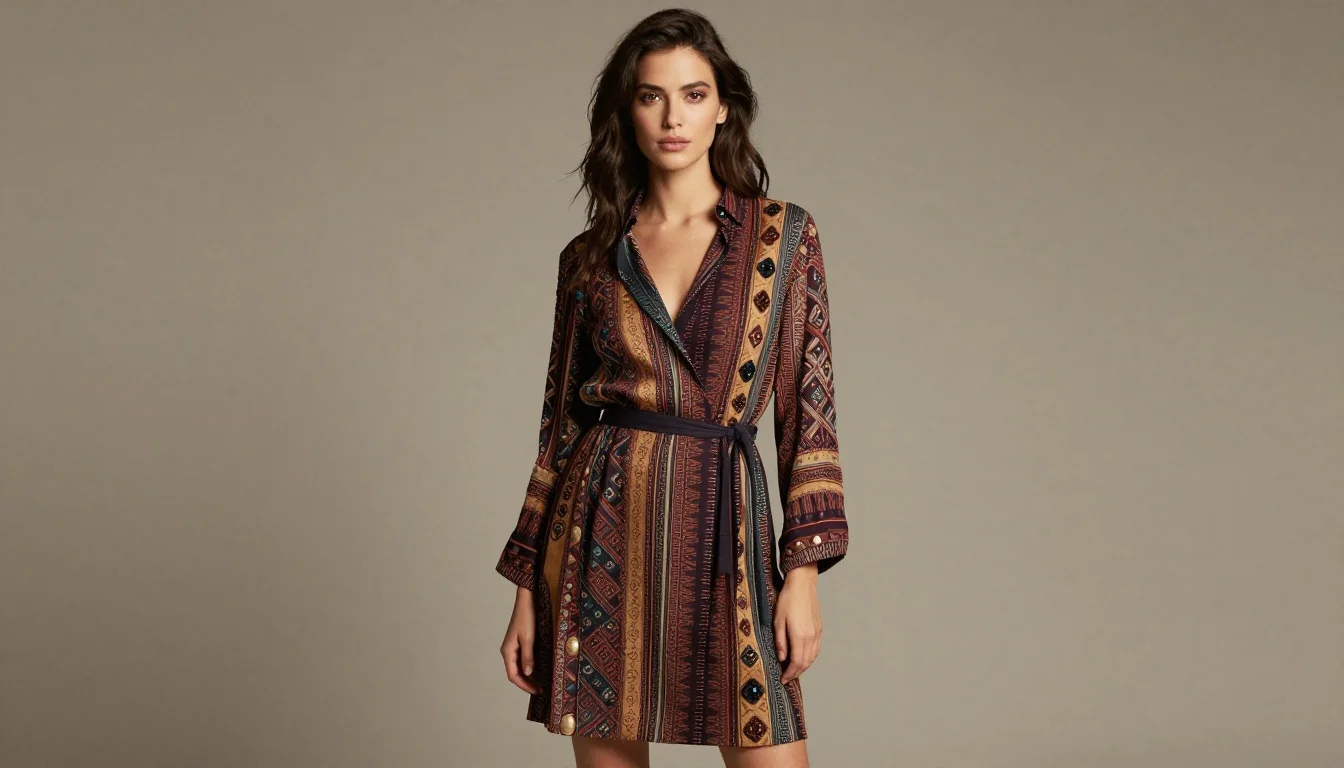
Colors That Work Against Dark Hair
Muddy mid-tones (greige, dusty khaki, mid-taupe)
These colors live in the middle — not dark enough to create tonal sophistication, not light enough to create clean contrast. They have no visual relationship to dark hair's weight and density. Worn near the face, they flatten your features and make your overall coloring look dull rather than striking.
Hair-matching dark brown
Wearing a shade that closely mirrors your dark hair color creates a monochrome effect from the shoulder up that reads as an accident rather than a choice. The face loses definition. If you want a dark neutral, choose midnight navy, deep plum, or forest green — all have the same sophistication as dark brown but enough contrast to frame your face.
Washed-out or chalky pastels
Very faded pastels lack the visual weight to hold their own next to dark hair. They neither create a satisfying contrast nor share dark hair's depth. Baby pink, pale mint, and chalky lavender all disappear — or worse, make your complexion look sallow by contrast. If you want softer colors, choose ones with enough saturation to stand their ground: dusty rose with real depth, or a clear pale blush rather than chalky white-pink.
Acid or neon brights
Highly saturated neons create a jarring disconnect rather than a satisfying contrast with dark hair. The visual relationship feels unresolved — too competing, not complementary. If you want to wear vivid color, choose saturated rather than neon: cobalt rather than electric blue, true red rather than fluorescent coral.
Stop guessing — preview every look on you
See these looks on my photoYour Wardrobe, Upgraded
Targeted swaps that use your dark hair as a style asset rather than a background.
Beige muddles against dark hair — no contrast, no harmony. Ivory and white make the contrast explicit and intentional. They frame your face rather than disappearing into your overall coloring.
Mid-grey has no visual relationship to dark hair. Navy and cobalt create structured, polished looks that use your natural contrast rather than ignoring it. The result is sharper and more authoritative.
Saturated greens have the visual weight to complement dark hair. Washed-out versions just flatten your coloring. The difference is immediately visible — one looks intentional, the other looks like an afterthought.
Richer, deeper reds have the visual weight to balance dark hair without looking harsh. They read as sophisticated rather than bold-for-bold's-sake, which is the register you want when your hair already makes a statement.
A coat that matches your hair color creates a flat, undifferentiated look from shoulder to hairline. Camel and navy both have the same sophistication but frame your face rather than merging with it.
All-black can work for dark hair but often reads as a default rather than a deliberate choice. Navy and deep plum have the same polish with added richness — they feel considered rather than safe.
Which Seasonal Palette Fits Your Dark Hair?
Dark hair appears across several seasonal color palettes — which one applies to you depends on your skin tone, eye color, and whether your hair runs warm or cool. These are the most common matches.
Deep Winter
Learn moreIf your dark hair is near-black or very dark espresso with cool depth, and your skin is fair, light olive, or deep with cool undertones, Deep Winter is likely your palette. You handle stark contrasts and jewel tones effortlessly — cobalt, true red, icy white, and deep emerald all look exceptional on you. Muted or dusty shades look wrong.
Cool Winter
Learn moreIf your dark hair leans cool or ashy and your overall coloring has a crisp, cool quality — fair skin with pink undertones, bright or cool-toned eyes — Cool Winter may fit better than Deep Winter. Your wardrobe leans into jewel tones, navy, and bold contrast, but at slightly less extreme intensity than Deep Winter.
Deep Autumn
Learn moreIf your dark hair has warmth — warm brown-black, rich espresso, or dark hair with reddish or golden depth — and your skin has warm, olive, or golden undertones, Deep Autumn is likely your match. Your palette is rich and earthy: camel, rust, terracotta, dark olive, warm ivory. Cool jewel tones and stark white feel off.
Warm Autumn
Learn moreFor dark hair with the most warmth — warm brown-black or very dark warm brunette — paired with golden, peachy, or warm tan skin. Warm Autumn palettes center on earthy, golden tones at medium-to-dark depth. Rich camel, warm rust, forest green, and deep olive all work beautifully here.
Find Your Exact Palette
Dark hair is the starting point, but your best wardrobe colors depend on the complete picture — your skin undertone, eye color, and the specific warmth or coolness in your hair all determine which shades will look extraordinary on you versus merely acceptable. A personalized color analysis maps all of this precisely, so you can invest in pieces you'll reach for constantly rather than ones that feel almost right.
Stop guessing — preview every color on you
Preview Yourself In Your Palette
Get my personalized paletteStop guessing — preview every color on you
Preview Yourself In Your Palette

Related Guides for Wardrobe for Dark Hair
Explore more personalized color advice based on your features.
Want to see these colors on you? Virtual Hair Color Try-On — free to try.
Frequently Asked Questions About Wardrobe for Dark Hair
What colors look best in a wardrobe for dark hair?
Dark hair looks best paired with rich jewel tones (sapphire, emerald, deep ruby), clean neutrals (crisp white or camel, depending on your hair's warmth), and deeply saturated earthy tones. The key is matching the color's visual weight to your hair's — either high contrast (vivid or light against dark) or rich tonal depth (saturated darks together). Muddy mid-tones and washed-out pastels consistently fall flat.
Does it matter whether my dark hair is warm or cool?
Yes — significantly. Cool dark hair (blue-black, ashy dark brown) aligns with cool-toned clothing: navy, cobalt, jewel tones, crisp white. Warm dark hair (warm brown-black, reddish-tinted dark brown) aligns with warm-toned clothing: camel, terracotta, warm ivory, rust. When your outfit temperature matches your hair temperature, the overall effect is immediately more cohesive. Mismatching creates a subtle visual discord that's hard to name but easy to see.
Can you wear all-black outfits with dark hair?
All-black works for dark hair, but it's not always the strongest choice. Very dark hair against all-black clothing can create a flat, monochrome effect from the shoulder up. The more interesting moves are midnight navy, deep plum, or charcoal — all have the same sophistication as black but enough distinction to frame your face rather than blending with your hair. That said, all-black with sharp tailoring and contrasting accessories reads well.
What neutral colors work best for dark-haired wardrobes?
The best neutrals depend on your hair tone. For warm dark hair: camel, warm ivory, rich tan, and deep espresso brown all feel cohesive. For cool dark hair: crisp white, midnight navy, and charcoal create clean contrast. In both cases, avoid greige, dusty taupe, and mid-grey — these colors have no tonal relationship to dark hair and consistently look unintentional.
How do you build a wardrobe formula around dark hair?
The most reliable formula: a core of two to three neutrals that match your hair's warmth, one jewel tone for your strongest pieces (blouses, dresses, statement coats), and one earthy accent (terracotta or olive for warm hair; teal or slate for cool hair). This creates a system where every piece connects to the others, and your dark hair anchors the whole look. The formula that consistently fails: collecting mid-tones and pastels without considering how they read against dark hair's visual weight.
What seasonal color palette suits dark hair best?
Dark hair appears across Deep Winter, Cool Winter, Deep Autumn, and Warm Autumn palettes. Deep Winter and Cool Winter suit dark hair with cool undertones and fair-to-medium skin. Deep Autumn and Warm Autumn suit dark hair with warm undertones and golden, olive, or warm-toned skin. Your specific season — and therefore your exact best colors — is determined by the full combination of hair, skin, and eye color, not hair alone.