Best Jewelry forNeutral Undertones
Discover how to choose jewelry with neutral undertones. Discover how to find the colors that actually flatter your coloring.
Neutral undertones sit in the middle of the warm-cool spectrum — you have neither a distinctly golden nor a distinctly pink cast beneath your skin. This gives you a genuine advantage when it comes to jewelry: both gold and silver can look flattering, and your gemstone range is wider than most. But with great range comes the need for strategy — this guide shows you how to make the most of your unique flexibility.


3,000+
happy clients
Why Neutral Undertones Give You Real Jewelry Flexibility
Neutral undertones sit in the middle of the warm-cool spectrum — you have neither a distinctly golden nor a distinctly pink cast beneath your skin. This gives you a genuine advantage when it comes to jewelry: both gold and silver can look flattering, and your gemstone range is wider than most. But with great range comes the need for strategy — this guide shows you how to make the most of your unique flexibility.
Most undertone guides present a clear binary: warm gets gold, cool gets silver. But neutral undertones genuinely sit between these poles, meaning you do not have a strong color relationship that will be violated by either metal. Both yellow gold and silver can look harmonious against your complexion — the question becomes one of preference, occasion, and intentional styling rather than undertone correction.
That said, neutral undertones are not infinitely flexible. Very extreme temperatures — very warm copper or very cool platinum — may still lean slightly in a direction that your balanced skin does not echo. The sweet spot for neutral undertones tends to be middle-temperature metals: standard yellow gold (not super-warm antique gold), standard silver (not super-cool bright platinum), and rose gold, which sits beautifully in the middle.
Gemstone color follows the same logic. Both cool and warm gems work, but the most reliably flattering options tend to be stones with their own balanced quality: rose quartz, soft amethyst, aquamarine, and light green tourmaline all have a quality of neither pushing strongly cool nor strongly warm. Rich, vivid gems also work beautifully — your neutral skin reads as a clean backdrop for both temperatures.

Can neutral undertones wear both gold and silver?
Yes — this is the defining advantage of neutral undertones. Neither yellow gold nor silver creates a strong temperature clash with balanced, neutral skin. Both can be worn harmoniously, with rose gold being an especially natural fit since it sits precisely between the two.
Your Jewelry Color Palette
Metals for Neutral Undertones
Rose gold is the most iconic choice for neutral undertones — it sits perfectly between gold's warmth and silver's coolness. Standard yellow gold and standard silver both work. Avoid extremes: very warm copper/bronze or very cool bright platinum may tip past your undertone's range. Mixed-metal looks are a natural fit for neutral skin.
Neutral-Balanced Gemstones
Rose quartz, misty aquamarine, sage green moonstone, and dusty lavender amethyst all carry an intrinsic neutrality — they lean neither strongly warm nor strongly cool. These stones feel effortlessly cohesive on neutral skin because they mirror its own balanced quality.
Statement Jewelry Colors
Vivid ruby, deep navy, forest green, and rich purple are all excellent statement choices for neutral undertones. Because your skin has no strong temperature that clashes with these colors, a wide range of vivid gems read as flattering and intentional.
Delicate and Everyday Colors
Champagne, pale blue, blush, and pale green are gentle everyday options for neutral skin. Because your undertone does not compete with any of these, they all appear soft and cohesive. Choose based on mood and wardrobe rather than strict undertone rules.

Ready to see your palette on your face?
Start my color analysisChoosing and Wearing Jewelry for Neutral Undertones
Embrace Rose Gold as Your Signature Metal
Rose gold is uniquely positioned for neutral undertones — its pink-warm quality bridges the warm-cool spectrum without going to either extreme. It looks cohesive on neutral skin in a way that flatters without needing to 'correct' any temperature. It is the neutral undertone's most natural metal.
Strategic Metal Mixing
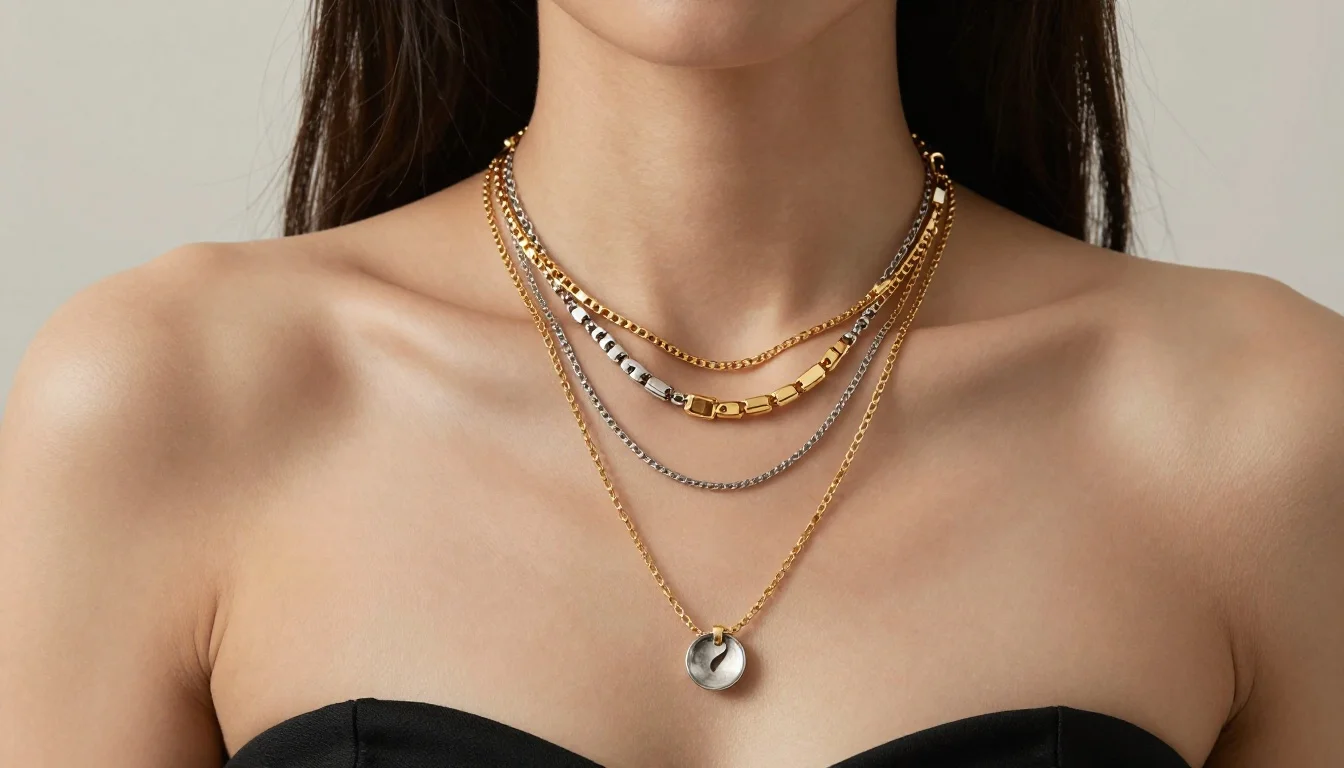
Neutral undertones are ideally positioned for intentional metal mixing. Where warm and cool undertones can look confused when mixing metals, neutral skin makes mixed-metal looks appear curated and deliberate. A yellow gold ring alongside a silver bangle looks like a style choice, not an accident.
Let Wardrobe Drive Jewelry Temperature
Since both metals work, let your outfit make the decision. Wearing warm earth tones? Reach for gold. Wearing cool navy or grey? Silver creates crisp harmony. White or cream? Either works. This is a luxury that warm and cool undertones do not fully have.
Occasion Guidance
For professional settings, rose gold or white gold pieces project polished neutrality that suits all environments. For evenings, the breadth of your options means you can dress to the occasion — soft rose tourmaline for a romantic dinner, vivid sapphire in white gold for a gala. For everyday, mixed metals or a simple rose gold chain work effortlessly.
Where Neutral Undertones Can Still Clash
Very Extreme Warm Metals (Heavy Copper, Dark Bronze)
Even neutral undertones can be pulled too warm by very orange-heavy copper or dark antique bronze, which can make skin look more sallow or tired. Middle-temperature gold is a safer, more harmonious choice.
Very Extreme Cool Metals (Ultra-Bright Platinum)
Very cool, high-shine platinum can still read as slightly cold against neutral skin — not as jarring as on warm undertones, but less harmonious than standard silver or white gold, which have a subtler cool tone.
Strongly Temperature-Conflicted Combinations
While neutral undertones can wear both gold and silver, combining very warm and very cool elements in a single piece (e.g., deep orange amber in a bright platinum setting) can create internal temperature conflict in the jewelry itself that looks unintentional rather than curated.
Stop guessing — preview every look on you
See these looks on my photoJewelry Swaps for Neutral Undertones
Strategic choices that make the most of your unique metal and gemstone flexibility.
Rose gold is your most naturally flattering metal; mixed metals read as curated rather than confused on neutral skin.
Neutral undertones can carry the in-between temperature of rose gold without any undertone conflict.
Neutral undertones give you the rare freedom to let wardrobe color drive gemstone choice rather than undertone rules.
Staying within standard temperature ranges flatters neutral undertones better than extremes at either end.
Neutral undertones are the complexion best positioned for metal-mixed stacks — it looks deliberate and stylish rather than mismatched.
Since your skin will not clash with either temperature, let the clothing palette guide gemstone selection for a cohesive look from head to toe.
Which Palette Might Be Yours?
Neutral undertones appear across several seasonal palettes, particularly in the soft and bright families where the balance between warm and cool is a defining feature of the coloring.
Soft Summer
Learn moreSoft Summer has cool-neutral undertones with a muted, powdery quality. Soft silver, cool rose gold, and dusty-toned gems like grey pearl, soft amethyst, and powder blue chalcedony beautifully complement this understated palette.
Soft Autumn
Learn moreSoft Autumn has warm-neutral undertones with muted, earthy warmth. Rose gold, brushed gold, and softly saturated stones like peach sapphire, smoky topaz, and warm green tourmaline are most flattering for this quiet, blended palette.
Bright Spring
Learn moreBright Spring has neutral-warm undertones with high clarity and vibrancy. Both gold and silver work here — vivid, clear gemstones are the real star. Bright coral, vivid aquamarine, and sharp sapphire in clear settings capitalize on the palette's luminous quality.
Find Your Exact Colors
Neutral undertones give you the broadest jewelry canvas — but knowing your exact seasonal palette tells you which direction within that range will make you look most radiant. Take the Palette Hunt color analysis to get your full personalized guide and discover exactly where on the warm-cool spectrum your neutral coloring sits.
Stop guessing — preview every color on you
Preview Yourself In Your Palette
Get my personalized paletteStop guessing — preview every color on you
Preview Yourself In Your Palette

Related Guides for Best Jewelry for Neutral Undertones
Explore more personalized color advice based on your features.
Want to see these colors on you? Skin Undertone Test — free to try.
Frequently Asked Questions About Best Jewelry for Neutral Undertones
Can neutral undertones wear both gold and silver?
Yes — this is the defining advantage of neutral undertones. Neither yellow gold nor silver creates a strong temperature clash with balanced, neutral skin. Both can be worn harmoniously, with rose gold being an especially natural fit since it sits precisely between the two.
What is the best metal for neutral undertones?
Rose gold is widely considered the most naturally flattering metal for neutral undertones because it bridges the warm-cool spectrum without going to either extreme. Standard yellow gold and standard silver are both good options. Very extreme metals — very warm copper or very cool bright platinum — may still feel slightly off.
Can neutral undertones mix metals?
Yes — and this is where neutral undertones have a real advantage over warm and cool undertones. Mixed metal looks read as curated and intentional on neutral skin rather than confused or mismatched. A stacked mix of gold and silver bangles, for example, looks like a deliberate style choice.
What gemstones are best for neutral undertones?
Neutral undertones have the widest gemstone range. Stones that work particularly well include rose quartz, soft amethyst, aquamarine, mint tourmaline, and morganite — these have their own balanced, neither-strongly-warm-nor-cool quality. But vivid gems in both warm and cool families also work beautifully.
How do I choose between gold and silver if I can wear both?
Let your wardrobe be your guide. Wearing warm-toned outfits (earth tones, cream, warm red)? Gold creates harmony. Wearing cool-toned outfits (navy, grey, icy pastels)? Silver creates crisp cohesion. Wearing neutral or white? Either works perfectly. Your undertone stops being the constraint — your outfit becomes the decision point.
Is rose gold the best jewelry for neutral undertones?
Rose gold is an excellent choice for neutral undertones because it splits the difference between yellow gold and silver, sitting exactly in the middle temperature. Many people with neutral undertones find rose gold their most intuitive and versatile option — it goes with warm and cool outfits alike.