How to Wear Purplefor Your Skin Tone
Purple flatters almost every skin tone — but the wrong shade can dull your complexion. Discover how to wear them confidently — matched to your undertone.
Purple is one of the most universally flattering colors — more so than most people realize. Unlike red or yellow, which have pronounced undertone requirements, purple spans from warm red-purple through true violet to blue-lavender and can work across a wide range of skin tones when the right shade is chosen. What changes is the specific version: warm, red-based purples suit warm undertones, cool blue-purples suit cool undertones, and rich, deep purples create contrast on almost any complexion. The question is never whether you can wear purple but which part of the purple family is yours.


3,000+
happy clients
Why Purple Flatters More Widely Than Almost Any Color
Purple is one of the most universally flattering colors — more so than most people realize. Unlike red or yellow, which have pronounced undertone requirements, purple spans from warm red-purple through true violet to blue-lavender and can work across a wide range of skin tones when the right shade is chosen. What changes is the specific version: warm, red-based purples suit warm undertones, cool blue-purples suit cool undertones, and rich, deep purples create contrast on almost any complexion. The question is never whether you can wear purple but which part of the purple family is yours.
Purple's unique flattery comes from its position on the color wheel. Sitting between red (which is warm) and blue (which is cool), purple can be shifted in either direction — making warm-purple for warm skin and cool-purple for cool skin. This versatility is unusual: yellow, orange, and red all start from a warm base and require significant undertone adjustment to work on cool skin. Purple starts from a balanced position and can shift either way with ease.
Additionally, purple has a known optical property of making the complexion look luminous — particularly at certain depths. Deep amethyst, in particular, creates a brightening effect near the face that has to do with how violet wavelengths interact with the skin's reflective properties. This is why purple is a universally recommended color for grey hair and why it photographs so beautifully next to a wide range of complexions.
The main pitfall with purple is muted, grey-toned versions on complexions that can't carry muted colors. Dusty, grey-lavender and muted lilac can wash out complexions that need saturation or depth. The principle is: either the purple should have genuine saturation and richness, or the complexion has the soft, muted quality (Soft Summer, Soft Autumn) that resonates with muted purple. Somewhere in between — a muted purple on a vivid, high-contrast complexion — is where purple goes wrong.
Does purple suit all skin tones?
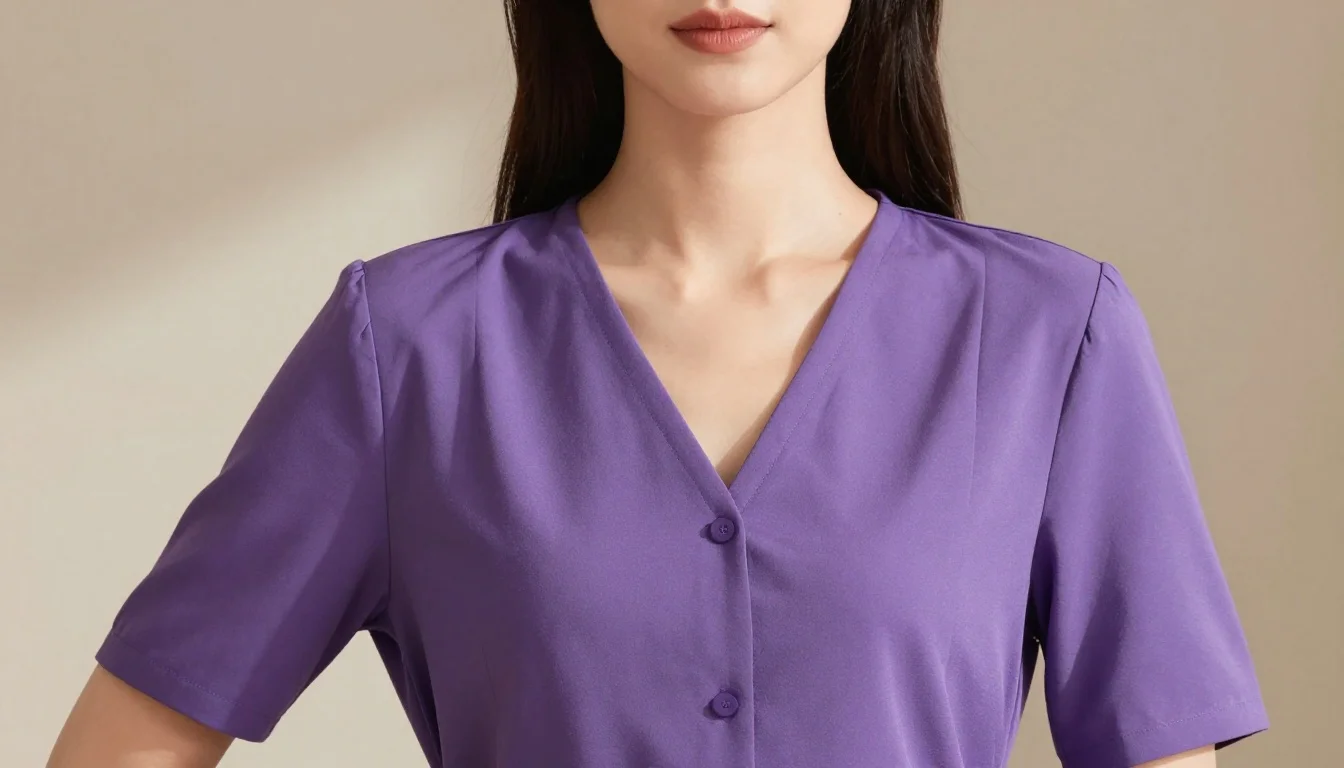
Purple is one of the most widely flattering colors across skin tones — more so than most other colors. The key is choosing the right version: warm red-purples for warm undertones, cool blue-purples for cool undertones, and deep amethyst for almost everyone. The range of purple shades available means almost every complexion has a flattering version within the family.
Shades of Purple That Work Best
Deep Amethyst and Rich Violet
Deep, rich purples — amethyst, violet, dark purple — are the most universally flattering section of the purple family. They work across a huge range of complexions because their depth creates contrast without harshness, and their richness gives them visual weight that most skin tones can hold against. Deep amethyst particularly has the brightening property mentioned above: it creates a luminosity near the face that is unique in the color spectrum. These are 'fail-safe' purples for anyone who feels uncertain about the color.
Warm Red-Purple and Berry
Warm purples — those that lean toward the red end of the spectrum — are most flattering on warm and neutral skin tones. Berry purple has a fruit-warmth that works beautifully on golden, peachy, and olive complexions. Warm plum and red-violet have enough warmth to harmonize with warm undertones while providing the cool richness of purple. These shades are among the most versatile in the purple family — they straddle the warm-cool boundary in a way that makes them accessible to many undertone types.
Cool Lavender and Blue-Purple
Cool purples — those with a distinct blue base — are most flattering on cool skin undertones. Clear lavender has enough saturation to avoid being chalky while providing the cool temperature that resonates with pink-rosy or bluish complexions. Periwinkle sits between purple and blue and works beautifully on cool skin. These are the purples that look most naturally effortless on cool-toned people — they create harmony rather than contrast.
Soft Mauve and Dusty Purple
Muted, dusty purples — those that have been greyed and softened — suit the soft seasonal types (Soft Summer, Soft Autumn) and complexions that share their gentle, low-saturation quality. Soft mauve is one of the most sophisticated colors in the purple family: it is unmistakably purple but has a subtlety that makes it feel like a neutral in most wardrobes. These purples are less vivid than amethyst or lavender and better suited for everyday, quiet elegance.

Ready to see amethyst & violet on your face?
Start my color analysisHow to Build Purple Into Your Wardrobe
As a statement piece
A purple statement piece has unusual power because purple is rarely a wardrobe default — so when it appears, it looks distinctive and deliberate. A deep violet blazer, an amethyst silk dress, or a clear lavender coat all create immediate impact. The key with statement purples is choosing a piece in a shade that genuinely flatters your specific coloring — the wrong shade of purple can look theatrical; the right shade looks like it was made for you.
Purple as a near-neutral
Soft mauve, dusty purple, and warm plum function almost as elevated neutrals — they pair with nearly everything and can be worn in the same casual-everyday contexts as grey or navy. A mauve cashmere turtleneck, a dusty lilac linen shirt, or a soft plum knit are all examples of purple that requires no more thought than any other neutral. These muted versions of purple are genuinely versatile and underused in most wardrobes.
Professional settings
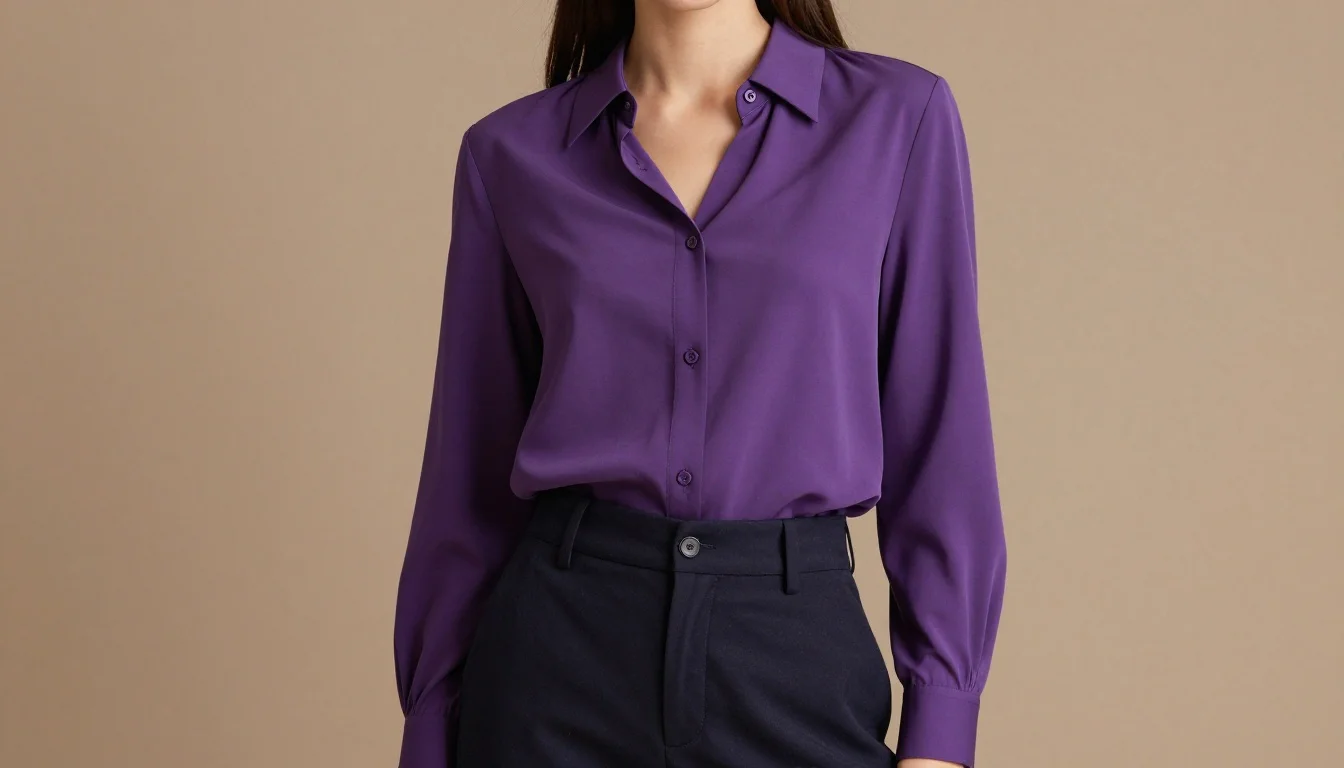
Purple reads as authoritative and distinctive in professional settings — particularly in its deeper, richer versions. Deep amethyst, wine-purple, or dark violet in a blazer or structured blouse is polished and memorable. Avoid bright, candy purples in professional contexts. Soft mauve is a strong choice for understated professional dressing that still shows personality and intentionality.
Purple with other colors
Purple pairs elegantly with grey — both share a cool quality that creates cohesion. Purple with camel or tan creates a warm-cool balance that works beautifully in autumn. Navy and purple together is rich and regal. White with vivid purple is crisp and striking. Blush pink with purple creates a soft, tonal palette. Avoid pairing purple with brown unless the tones are very carefully matched — it can look muddy.
Versions of Purple That Work Against You
Warm red-purple on very cool skin
Purples that lean clearly toward warm red (magenta-purple, warm fuchsia) on distinctly cool skin with pink undertones create a slightly clashing effect. The warmth in these purples fights against the cool quality of the complexion. Cool skin types should choose blue-lavender, cool violet, or deep amethyst rather than warm berry-purple.
Chalky, very pale lilac on anyone
Pale, chalky lilac — the kind that looks like it has been washed out — has no visual energy. On cool skin, it disappears without creating impact. On warm skin, it creates a slightly sallow clash. The principle with very pale purple: either choose a version with genuine saturation (clear lavender), or choose a deeper version (mauve, soft amethyst). The pale, chalky middle ground suits almost nobody.
Muted grey-purple on vivid, high-contrast coloring
Dusty, grey-toned purples look beautiful on muted complexions (Soft Summer, Soft Autumn) but create a dull, draining effect on vivid, high-contrast coloring that needs saturation. If you have strong contrast in your features — dark hair and light skin, or vivid eyes — avoid dusty muted purples and choose clear, vivid, or deep ones instead.
Very warm orange-purple on cool skin
Some fashion 'purples' are actually more heavily orange-red than true purple — they sit so warm on the spectrum that they read almost as mauve-red rather than purple. On cool undertones, these warm purples look clashing and unflattering. True cool skin should stick to blue-violet, cool amethyst, and lavender.
Stop guessing — preview every look on you
See these looks on my photoSwaps That Make Purple Work for Your Coloring
Trading versions of purple that flatten your complexion for ones that illuminate it.
Warm berry-purple can clash with pink, cool undertones. Lavender and blue-violet share the cool temperature of the skin and create harmony.
Blue-lavender can look stark and cool on warm, golden skin. Warm plum and berry harmonize with warm undertones and add richness.
Chalky lilac has no visual energy and flatters no one. Rich amethyst has depth and brightness; soft mauve has sophistication — both are real colors with real impact.
Candy purple reads as too casual or theatrical for professional settings. Deep violet and warm plum have the authority and sophistication that work in any environment.
Muted grey-purple drains vivid, high-contrast coloring of energy. Clear lavender and vivid amethyst provide the saturation that high-contrast types need from color.
Vivid purple overwhelms soft, muted complexions. Soft mauve and dusty lavender share the gentle saturation of soft coloring and look harmonious rather than jarring.
Which Seasonal Palettes Wear Purple Best?
Purple appears across many seasonal palettes. Your season determines which version of the purple family is most flattering for your specific coloring.
Cool Summer
Learn moreCool Summers have the strongest natural affinity for purple, particularly in its soft and muted forms. Dusty mauve, soft lilac, heathered violet, and cool berry are all core Cool Summer palette colors. Their soft, cool coloring resonates beautifully with these gentle purples — it is often the color that looks most effortlessly right on Cool Summer types.
Cool Winter
Learn moreCool Winters wear the most vivid and intense purples — clear violet, vivid amethyst, bright lavender, and deep blue-purple. Their high-contrast, cool coloring can handle the intensity that overwhelms other types. For Cool Winters, vivid purple is among the most powerful and flattering colors in their entire palette.
Deep Winter
Learn moreDeep Winters wear the deepest, richest purples — dark violet, deep amethyst, wine-purple, rich jewel plum. The depth and intensity of their coloring requires similarly deep and saturated purples. Pale or muted purples look weak on Deep Winter coloring; deep, vivid ones look magnificent.
Find Your Purple
Purple is one of the most rewarding color investments you can make — it has unusual flattery power across a wide range of skin tones, photographs beautifully, and has a distinctiveness that more common wardrobe colors lack. Whether your purple is the rich depth of amethyst, the cool elegance of lavender, or the sophisticated subtlety of soft mauve, getting the shade right turns this color into something you reach for effortlessly. A personalized color analysis identifies exactly which part of the purple family belongs in your wardrobe.
Stop guessing — preview every color on you
Preview Yourself In Your Palette
Get my personalized paletteStop guessing — preview every color on you
Preview Yourself In Your Palette

Related Guides for How to Wear Purple
Explore more personalized color advice based on your features.
Want to see these colors on you? What Colors Look Good on Me — free to try.
Frequently Asked Questions About How to Wear Purple
Does purple suit all skin tones?
Purple is one of the most widely flattering colors across skin tones — more so than most other colors. The key is choosing the right version: warm red-purples for warm undertones, cool blue-purples for cool undertones, and deep amethyst for almost everyone. The range of purple shades available means almost every complexion has a flattering version within the family.
What shade of purple suits warm skin tones?
Warm skin tones (golden, peachy, olive) suit warm purples with a red or berry quality: berry purple, warm plum, red-violet, and deep wine-purple. These share the warmth of the complexion. Very blue or cool purples can feel harsh on warm skin. Deep amethyst also works well on warm skin as its depth creates harmonious contrast.
What shade of purple suits cool skin tones?
Cool skin tones (pink, rosy, bluish undertones) suit cool purples with a blue base: clear lavender, periwinkle, blue-violet, and cool amethyst. These share the cool temperature of the complexion. Soft mauve and dusty lilac also work well for cool, muted complexions (Cool Summer types). Avoid warm, red-leaning purples on distinctly cool skin.
How do I wear purple in a sophisticated way?
Choose deep, rich, or muted versions of purple rather than bright or candy shades: deep amethyst, soft mauve, warm plum, or dusty lavender all read as sophisticated rather than bold. Wear purple in quality fabrics — silk, cashmere, fine wool — which elevate the color's richness. Pair with grey, camel, white, or navy rather than other strong colors, letting the purple do the work.
What colors go with purple?
Grey and purple is one of the most elegant pairings — both share a cool quality. Camel and purple creates warm-cool balance. Navy and purple is rich and classic. White with vivid purple is crisp. Blush or soft pink with purple creates a feminine, tonal look. For contrast, yellow-green and purple are complementary colors and create a striking pairing when used deliberately.
Is lavender the same as purple?
Lavender is a specific shade within the purple family — it is a very pale, cool, blue-toned purple. It is distinct from clear violet (more saturated), soft mauve (warmer), deep amethyst (darker and richer), and berry purple (warmer and more red-toned). Lavender is particularly flattering on cool skin types and on soft, light complexions that suit its delicate saturation.