How to Wear Orangefor Every Skin Tone
Orange is polarizing — some people glow in it, others look washed out or clashing. Discover how to wear them confidently — matched to your undertone.
Orange is the color most people have abandoned without fully exploring. It has a reputation for being difficult, and in its purest neon form that reputation is mostly earned. But orange spans an enormous spectrum — from bright tangerine to burnt sienna to deep terracotta to soft peach — and within that range are shades that work beautifully for almost every complexion. The versions of orange that flatter are the ones that align with your skin's undertone and depth, rather than fighting against them. Understanding the orange family is the key to unlocking a color that, worn correctly, creates warmth, luminosity, and genuine impact.


3,000+
happy clients
Why Orange Is Tied So Directly to Undertone
Orange is the color most people have abandoned without fully exploring. It has a reputation for being difficult, and in its purest neon form that reputation is mostly earned. But orange spans an enormous spectrum — from bright tangerine to burnt sienna to deep terracotta to soft peach — and within that range are shades that work beautifully for almost every complexion. The versions of orange that flatter are the ones that align with your skin's undertone and depth, rather than fighting against them. Understanding the orange family is the key to unlocking a color that, worn correctly, creates warmth, luminosity, and genuine impact.
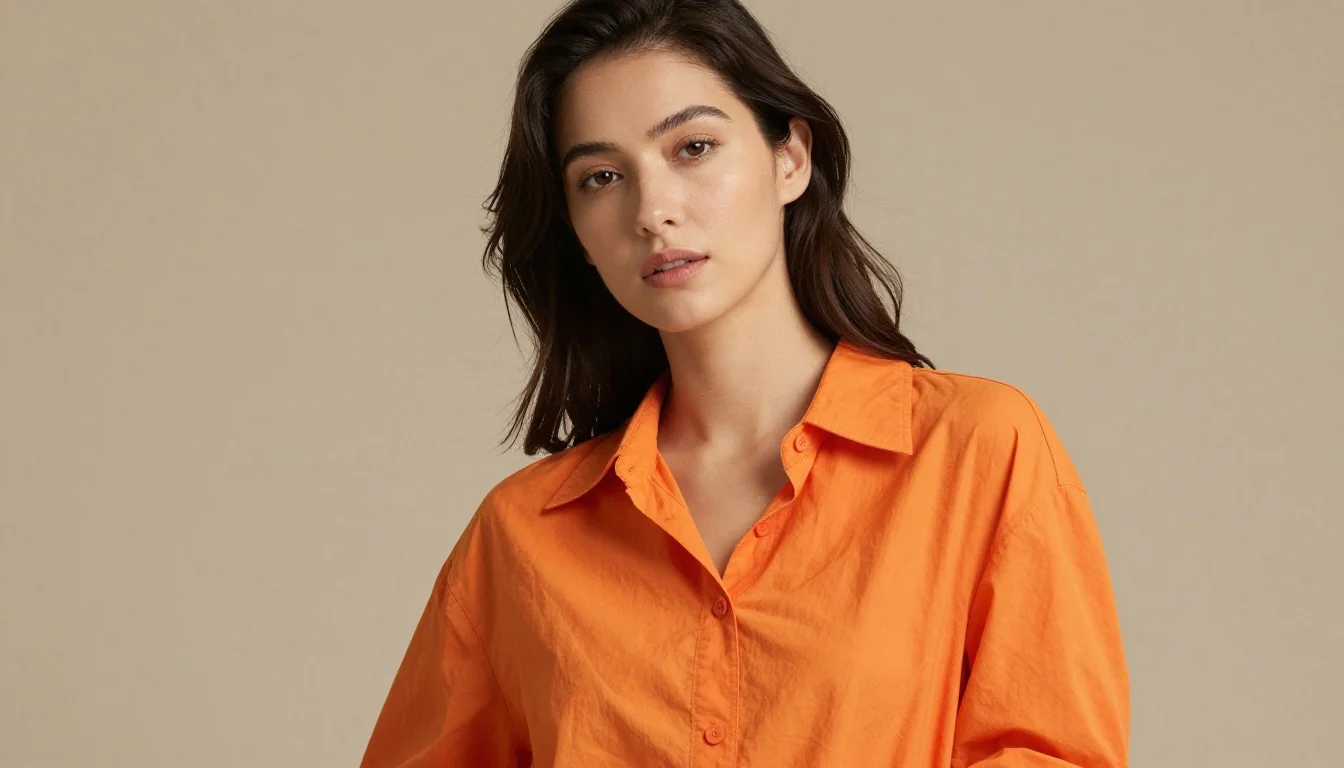
Orange is inherently a warm color — it lives between red and yellow on the spectrum. That warmth means it has a uniquely strong relationship with skin undertone. On skin that is warm-toned (golden, peachy, olive), orange harmonizes naturally — the warmth of the color resonates with the warmth of the skin. On skin that is cool-toned (pink, rosy, blue-based), pure warm orange can clash, making the face look flushed or the skin tone look sallow.
But the solution for cool undertones isn't to avoid orange — it's to choose versions of orange that have been shifted toward the cool side or deepened enough to create contrast rather than blending. Terracotta has brick-earth warmth but is muted enough to work on neutral undertones. Burnt orange has depth that works on both warm and neutral skin. Apricot leans slightly peachy-cool and is more flattering on cool-neutral complexions than true orange.
Depth is also a significant factor with orange. Pale, bright orange (neon, vivid tangerine) is among the most demanding colors — it reflects a huge amount of warm light toward the face and requires either warm or deep coloring to handle. Deepened oranges — terracotta, rust, burnt sienna — have the same warmth but with more complexity and less reflective intensity, making them accessible to a wider range of complexions.
Can cool skin tones wear orange?
Yes, but the shade matters enormously. Cool, pink-toned skin does best with terracotta, rust, or deep burnt orange — versions of orange that have enough earthiness or depth to bridge the temperature gap. Bright, warm, vivid orange is the version to avoid on cool undertones. Terracotta in particular is remarkably versatile and works on undertones that would never wear true orange.
Shades of Orange That Work Best
Terracotta and Rust
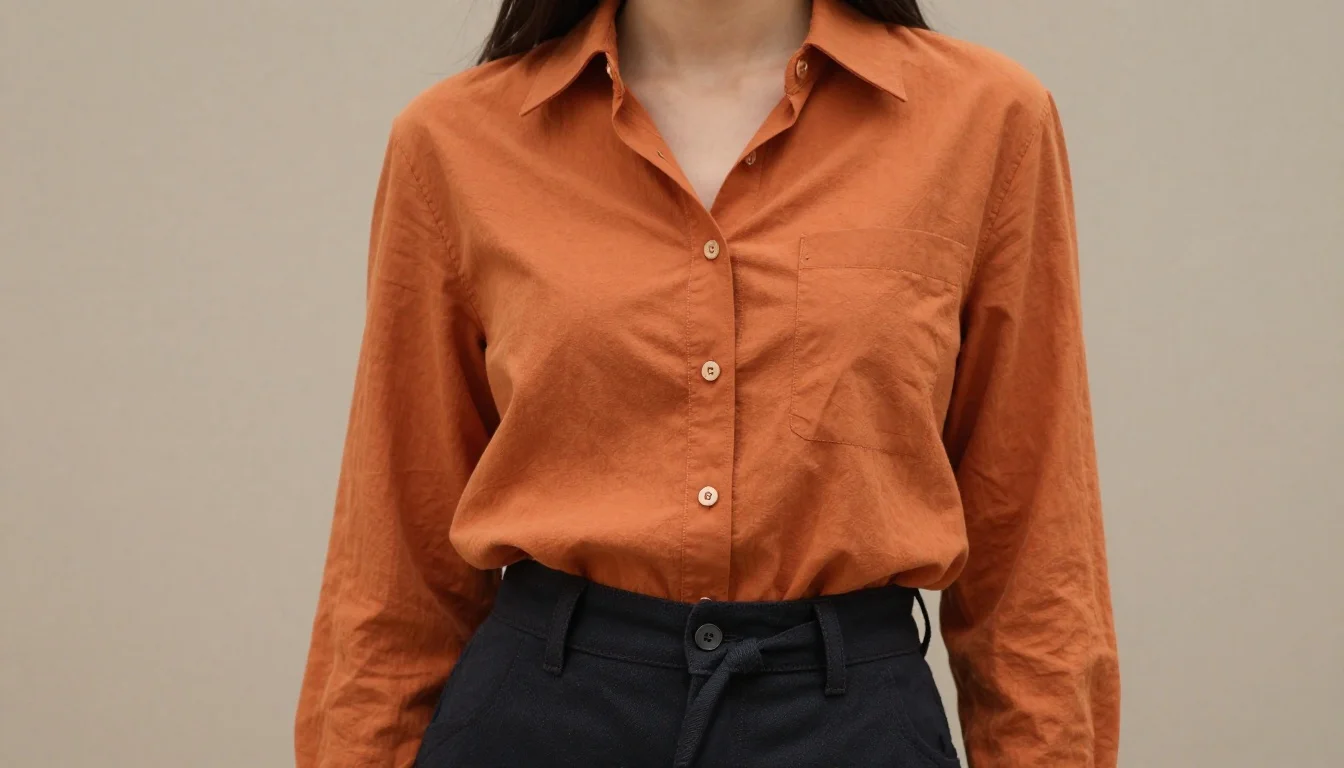
Terracotta and rust are the most universally wearable versions of orange. They have the warmth of orange but with earthy complexity that makes them accessible across a wider range of undertones — including neutral and even slightly cool complexions. Clay terracotta is particularly remarkable: it works on warm olive, medium neutral, and even some cool skin tones by creating harmony rather than intensity. These are orange shades that feel like a warm neutral rather than a bold statement, and they are remarkably versatile.
Burnt Orange and Amber
Burnt orange and amber have the richness and depth that makes orange feel sophisticated rather than bold. These shades work exceptionally well on warm, olive, and dark complexions — the depth of the color creates a harmonious resonance with deeper skin tones. Golden amber pairs particularly well with warm golden undertones, making both the color and the complexion look richer. For dark complexions, deep burnt orange creates a stunning, jewel-toned warmth.
Peach and Apricot
At the pale, soft end of the orange family, peach and apricot function almost as a warm neutral. These shades suit fair-to-medium skin, particularly those with warm or neutral undertones. Soft peach is one of the most flattering colors for fair warm skin — it adds warmth and glow without intensity. Apricot works similarly on light-medium complexions. For cool undertones, these shades can be tricky — the warmth may create a slightly clashing effect on distinctly pink skin.
Tangerine and Vivid Orange
Vivid, bright orange — tangerine, true orange — is the most demanding version but also the most striking when it works. It suits warm, deep, and high-contrast coloring best: golden-warm skin, olive skin, and dark complexions all have the depth and warmth to carry vivid orange without it looking overwhelming. On these skin tones, vivid orange looks luminous and deliberate. It should be worn near the face only when you're confident in the shade match.

Ready to see clay terracotta & rust on your face?
Start my color analysisHow to Build Orange Into Your Wardrobe
As a statement piece
An orange statement piece — a coat, blazer, or dress — is powerful when the shade is right. Terracotta and burnt orange transition from bold to wearable because their depth gives them a neutral quality that vivid orange lacks. A terracotta wool coat over any neutral outfit creates immediate warmth and personality. A burnt orange silk dress for evening is striking without being theatrical.
Orange as an accent
Orange accessories are one of the easiest ways to add warmth to any wardrobe. A terracotta leather bag, rust-colored scarf, or cognac-orange shoes all introduce the orange family without requiring a full garment commitment. These pieces pair beautifully with navy, camel, olive, and earthy neutrals — introducing warmth to otherwise cool or neutral outfits.
Orange in autumn and winter
Orange earns its most natural home in autumn and winter — especially in its earthy forms. Rust, burnt orange, terracotta, and amber all feel seasonally appropriate in wool, cashmere, and cord fabrics. A terracotta ribbed sweater with dark denim and cognac boots is one of the easiest and most flattering autumn combinations for warm and neutral skin tones.
Orange in summer
In summer, lighter and brighter oranges — peach, apricot, tangerine — come into their own. Peach is a natural summer dress color for warm and fair-warm complexions. Tangerine in a linen shirt or cotton dress works beautifully for warm, olive, and dark skin tones. For summer, keep orange garments lighter in fabric weight and avoid heavy saturation in heat.
Versions of Orange That Work Against You
Neon or fluorescent orange
High-intensity neon orange is effectively unwearable near the face for most skin tones. It reflects enormous amounts of warm, intense light toward the complexion and creates a washed-out or clashing effect regardless of undertone. Neon orange works as a small accent — a bag strap, an accessory detail — but as a top, dress, or jacket it overwhelms rather than flatters.
Warm orange on cool pink undertones
Bright, warm, red-yellow orange on skin with distinctly cool (pink, rosy) undertones creates a clash that makes the face look flushed and the skin tone look jaundiced. The temperature conflict between warm orange and cool skin is particularly harsh. Cool-toned people who want orange should move to terracotta, rust, or apricot — all of which have enough depth or neutrality to bridge the gap.
Orange-red on medium warm skin without distinction
A very orange-red that sits in the middle of the spectrum — neither clearly orange nor clearly red — can look muddled on medium warm complexions, creating a clashing, undifferentiated warmth. Choose a cleaner direction: go warmer into terracotta or cooler into red, rather than sitting in the ambiguous orange-red zone.
Pale chalky orange on cool undertones
Pale, muted orange — like a dusty salmon that leans orange — can look sallow and unflattering on cool, pink-toned skin. The warmth is too present to harmonize but too pale to create useful contrast. Deep rust or terracotta is a better choice for cool-neutral skin wanting earth-orange tones.
Stop guessing — preview every look on you
See these looks on my photoSwaps That Make Orange Work for Your Coloring
Trading versions of orange that clash with your skin tone for ones that harmonize.
Bright warm orange clashes with cool undertones. Terracotta and rust have enough earth-depth to work on neutral-to-cool complexions without harshness.
Chalky salmon looks faded against warm skin. Vivid peach and tangerine have the saturation to harmonize with warm undertones and create a glowing result.
Neon orange is too intense near the face. Burnt orange and rust have the warmth of orange with depth that makes them wearable as outerwear for all seasons.
Muddled orange-red reads as indeterminate. Cognac orange and terracotta have clear identity and pair naturally with both warm and neutral wardrobe neutrals.
Pale washed-out peach looks faded in bright light. Saturated apricot and warm peach have enough color energy to look fresh and flattering.
Pale apricot has insufficient contrast with deep complexions to make an impact. Burnt orange and tangerine have the depth and saturation to create a striking, luminous result.
Which Seasonal Palettes Wear Orange Best?
Orange spans the warm seasonal palettes but appears in very different versions across them. Your season determines which part of the orange family belongs in your wardrobe.
Warm Autumn
Learn moreWarm Autumns have the strongest natural relationship with orange. Burnt orange, terracotta, rust, amber, and pumpkin are all core Autumn palette colors. The earthy, rich, warm quality of Autumn coloring resonates perfectly with orange in all its deeper forms. Warm Autumn is the season that makes orange look most natural and intentional.
Deep Autumn
Learn moreDeep Autumns wear the richest, darkest versions of orange — cognac, dark rust, deep pumpkin, burnt sienna. The depth of their coloring needs similarly deep and complex oranges. Bright or pale orange can look too light; deep, saturated earth-oranges look stunning against Deep Autumn's rich, dark coloring.
Warm Spring
Learn moreWarm Springs wear the bright, clear, warm versions of orange — vivid peach, tangerine, coral-orange, warm apricot. Spring oranges are lighter and more vivid than Autumn ones; they have the freshness and clarity of Spring coloring rather than the earthiness of Autumn. A warm Spring in tangerine looks alive and luminous.
Find Your Orange
Orange, once you find your version, becomes one of the most distinctive and flattering colors you own. Whether it is the earthy warmth of terracotta, the rich depth of burnt orange, or the vivid energy of tangerine — there is an orange that resonates with your coloring. A personalized color analysis pinpoints which part of the orange family suits your specific undertone and depth, giving you a confident starting point in a color that rewards the people who know how to use it.
Stop guessing — preview every color on you
Preview Yourself In Your Palette
Get my personalized paletteStop guessing — preview every color on you
Preview Yourself In Your Palette
Related Guides for How to Wear Orange
Explore more personalized color advice based on your features.
Want to see these colors on you? What Colors Look Good on Me — free to try.
Frequently Asked Questions About How to Wear Orange
Can cool skin tones wear orange?
Yes, but the shade matters enormously. Cool, pink-toned skin does best with terracotta, rust, or deep burnt orange — versions of orange that have enough earthiness or depth to bridge the temperature gap. Bright, warm, vivid orange is the version to avoid on cool undertones. Terracotta in particular is remarkably versatile and works on undertones that would never wear true orange.
What is the most wearable shade of orange?
Terracotta is consistently the most wearable version of orange across the widest range of skin tones. It has the warmth of orange but with earthy complexity that prevents clashing and works on warm, neutral, and even some cool complexions. After terracotta, burnt orange and rust are similarly versatile because their depth creates contrast rather than intensity.
What is the difference between rust and orange?
Rust is a deep, muted, brownish-orange — the orange family after it has been darkened and earthy warmth has been added. It is more sophisticated and wearable than true orange because its depth gives it a near-neutral quality. Orange is the pure, bright version of the hue — vivid and saturated. Rust works in autumn and winter easily; vivid orange is more suited to summer and requires warm or deep coloring to handle.
Does orange work for professional settings?
In most professional environments, muted versions of orange — terracotta, rust, burnt sienna — read as earthy sophistication rather than bold statement. A terracotta blazer or rust turtleneck is workplace-appropriate in most industries. Vivid, bright orange is better saved for creative environments or casual contexts. In conservative offices, orange works best as an accessory (a terracotta bag, rust scarf) rather than as a main garment.
What colors go with orange?
Navy and orange is a classic, striking combination — particularly for warm oranges paired with deep navy. White with vivid orange creates clean, fresh contrast. Brown and terracotta is an earthy tonal pairing. Olive green with rust creates an autumnal, sophisticated combination. Camel or tan with any orange creates warm harmony. Avoid pairing orange with pink or red unless deliberately making a bold statement.
Is orange a good summer color?
Yes — vivid, bright versions of orange (tangerine, peach, apricot) are naturally summery in light fabrics. Orange in linen or cotton feels fresh and sun-appropriate. In summer, move toward the lighter, brighter end of the orange family. In autumn and winter, move toward the deeper, earthier end — rust, burnt orange, terracotta — which feel more seasonally appropriate in heavier fabrics.