How to WearMustard
Mustard is one of the most misunderstood colors in a wardrobe. Discover how to wear them confidently — matched to your undertone.
Mustard sits in a peculiar zone: warm enough to feel autumnal, golden enough to feel luxurious, but yellow enough to intimidate people who associate it with primary school art supplies. The difference between mustard that looks expensive and intentional and mustard that looks jarring is almost always the specific shade and what it's paired with — not the color family itself. This guide covers the versions of mustard that actually work, the pairings that make it feel sophisticated, and the ways to wear it from a single pop of color to a full-look commitment.


3,000+
happy clients
Why Mustard Is Harder Than It Looks
Mustard sits in a peculiar zone: warm enough to feel autumnal, golden enough to feel luxurious, but yellow enough to intimidate people who associate it with primary school art supplies. The difference between mustard that looks expensive and intentional and mustard that looks jarring is almost always the specific shade and what it's paired with — not the color family itself. This guide covers the versions of mustard that actually work, the pairings that make it feel sophisticated, and the ways to wear it from a single pop of color to a full-look commitment.
Mustard is a warm, yellow-based color with significant variation. True mustard sits at the deepened, muted end of the yellow spectrum — more gold than lemon, more ochre than daffodil. It's this depth and warmth that makes it work as a wardrobe color rather than a novelty item. But because it lives adjacent to straight yellow, people often pick the wrong version: too bright, too green-toned, or too pale — and none of these behave like mustard. They behave like yellow.
The warmth in mustard does something specific to skin tones: it reflects golden light back toward the face. For anyone with warm undertones — olive, golden, peachy, or caramel skin — this creates a glow effect. For cool undertones, mustard can add warmth that reads as flush or sallow depending on how it's worn. This is why shade selection matters: a deeply muted, almost olive-tinged mustard is more forgiving across undertones than a bright, clean golden yellow.
Mustard also has one major advantage as a statement color: it behaves like a neutral when paired correctly. Navy, chocolate brown, burgundy, forest green, cream, and charcoal all work with it effortlessly. That neutralizing capacity is what makes mustard pieces so versatile — a mustard blazer worn with navy trousers is not a statement look. It's a classic.
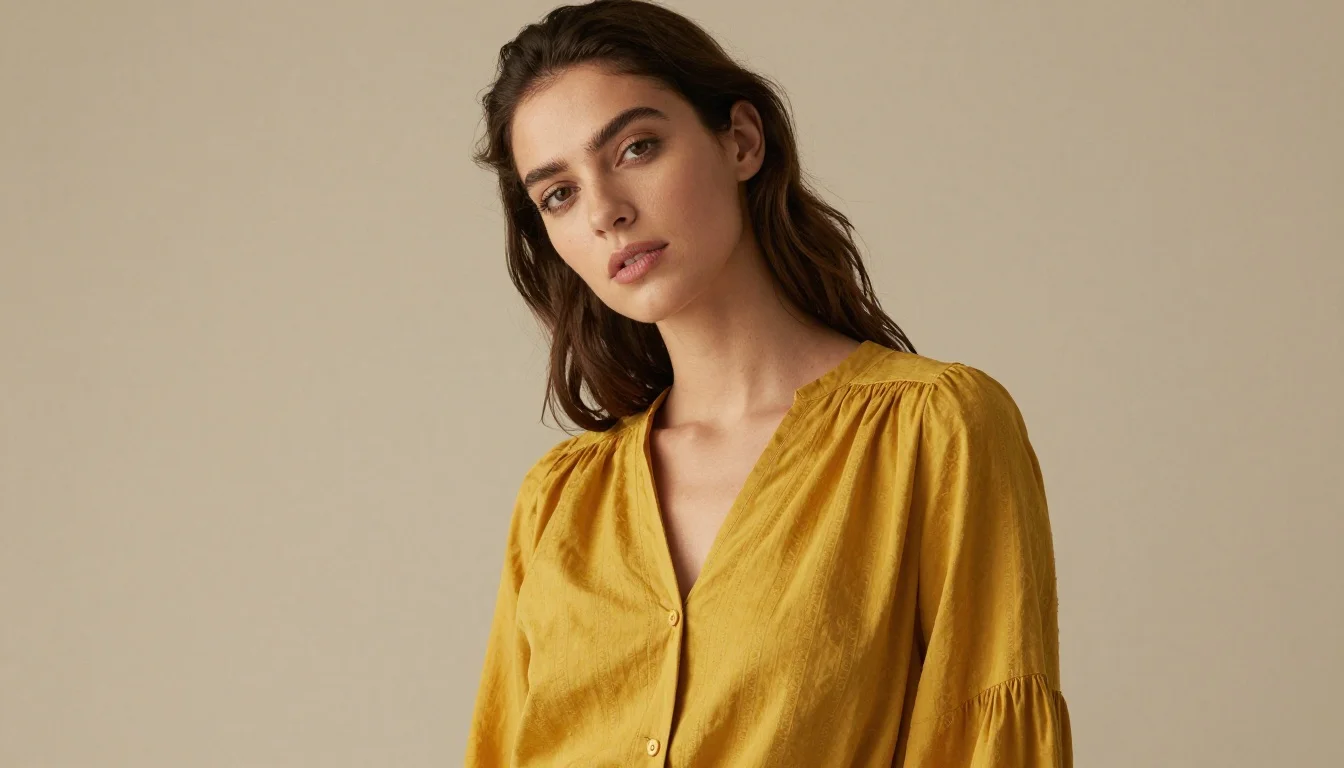
What colors go with mustard?
Navy is the classic pairing — mustard and navy is one of the most sophisticated warm-cool combinations in a wardrobe. Beyond navy: chocolate brown, charcoal grey, forest green, burgundy, cream, and off-white all work reliably. Avoid orange, bright red, and strong pink alongside mustard as these compete rather than complement.
Shades of Mustard That Work Best
Deep Ochre Mustard
This is the most versatile and universally flattering version of mustard. Deep ochre sits closer to terracotta and amber than to yellow, which gives it a richness that reads as a sophisticated neutral rather than a statement color. It photographs well, works in professional and casual contexts, and is the version most likely to be described as 'that perfect mustard' when someone compliments your outfit. This is the shade to invest in if you're building mustard into your wardrobe for the first time.
Muted Golden Mustard
Muted golden mustard has a softness that makes it easier to wear for those uncertain about committing to bright color. The reduced saturation means it works near the face without overwhelming — a muted golden turtleneck or knit is approachable for almost every skin tone. It pairs beautifully with soft, low-contrast outfits and lends itself to layering with ivory, camel, and soft brown.
Olive-Toned Mustard
Olive mustard is the most grounded and versatile shade in this family — it sits so close to olive green that it shares olive's quality of behaving like a neutral. This version is the best choice for those with cool undertones who want to try mustard, because the green in it softens the yellow. It pairs instinctively with denim, khaki, brown leather, and cream. A linen olive-mustard shirt or tailored trousers in this shade works across almost all casual and smart-casual contexts.
Bright Clear Mustard
Bright, clear mustard is the most impactful and the most demanding version. Worn correctly — paired with strong neutrals and styled with confidence — it's striking. It works best for warm undertones and those with high natural contrast (dark hair, defined features). Best used as an accent rather than a full-look color, or as a statement piece in an otherwise simple outfit. This is the mustard of a bright knit sweater or a single blazer worn with white and navy.

Ready to see golden ochre & amber mustard on your face?
Start my color analysisHow to Incorporate Mustard in Real Outfits
Start with accessories
If you're new to mustard, begin with a bag, belt, or scarf. A mustard leather tote with a navy or grey outfit adds warmth without requiring commitment. A mustard wool scarf with a camel or brown coat is one of the best autumn combinations. These small introductions let you test how the color interacts with your skin tone before committing to a full garment.
The mustard knit formula
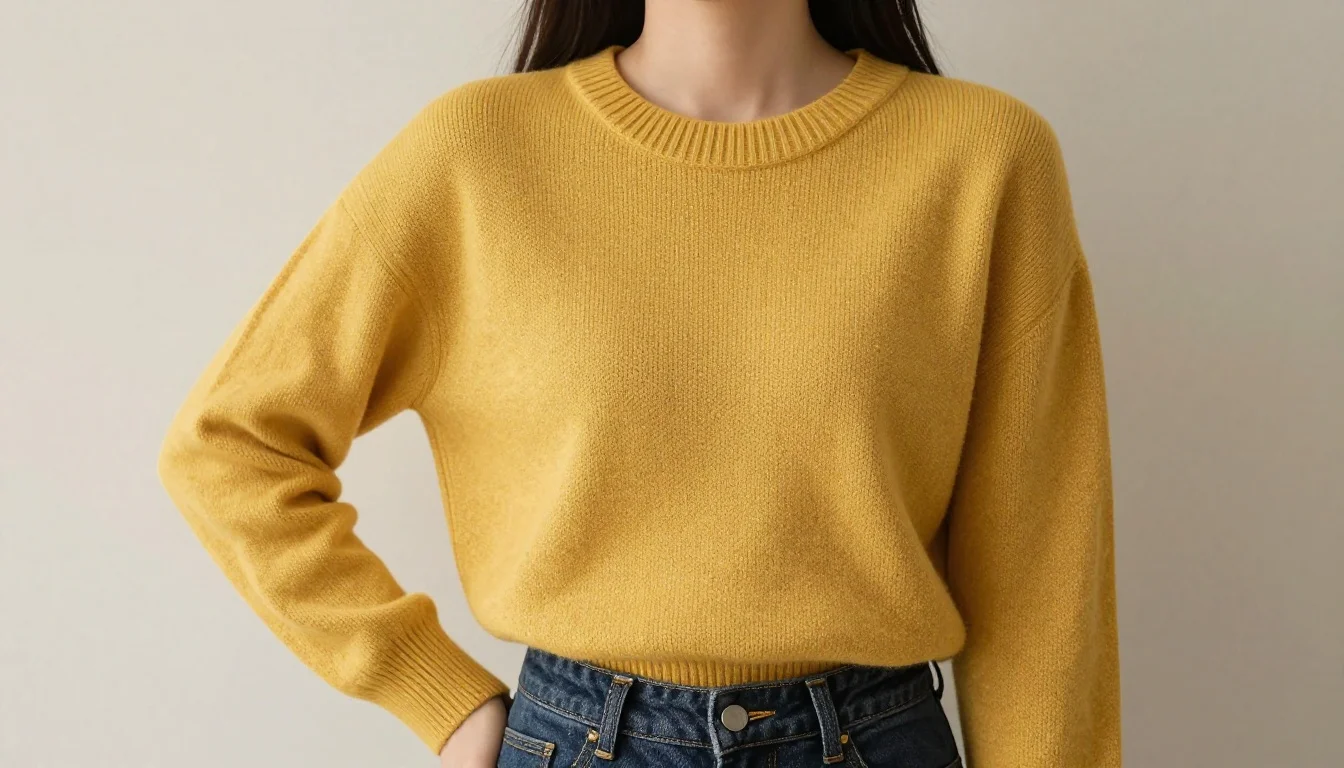
A mustard knit sweater or turtleneck is the single most wearable mustard piece. Wear it with straight dark denim, white or charcoal trousers, or a mid-grey skirt. The formula works because mustard sweaters sit near the face — creating warmth — while neutral bottoms keep the overall look grounded. Add brown or tan leather boots and the outfit works for almost any casual or smart-casual occasion.
Mustard as outerwear
A mustard coat, blazer, or jacket makes the biggest impact with minimal effort. A wool mustard blazer over a white shirt with navy trousers is a classic that requires no styling creativity. A mustard trench or structured coat worn over all-black or all-navy outfits becomes the entire point of the look. Outerwear is the lowest-risk way to wear a bold mustard because the base outfit can be entirely simple.
The wrong pairings to avoid
Avoid pairing mustard with orange, red-orange, or bright green — these warm-tone pairings create a clashing vibrancy that overwhelms both colors. Mustard with pink needs care: soft pink and mustard can work but require a third neutral anchor. The most reliable pairings are navy, chocolate brown, charcoal, forest green, burgundy, cream, and off-white. These all create contrast without competition.
Versions of Mustard That Create Problems
Pale lemon-yellow mustard
When mustard loses too much depth and shifts toward pale yellow, it loses the golden richness that makes it work. Pale, washed-out mustard carries none of the warmth of true mustard and creates a sallow, yellowish cast near most skin tones. It reads as faded yellow rather than intentional color. Always push toward deeper, richer shades rather than lighter ones.
Neon or greenish-yellow
Chartreuse and neon yellow-green are sometimes marketed as mustard but are a completely different color family. They're high-intensity, cool-leaning, and much harder to incorporate into everyday dressing. If you want mustard, look for warmth and depth — if the shade looks fluorescent or green under lighting, it's not mustard.
Heavily muted grey-mustard
Some 'mustard' shades have been desaturated to the point of looking grey-green or khaki-beige rather than golden. These lose the warmth that is mustard's main asset. They read as a dull neutral rather than a considered color choice. Check that any mustard you buy retains visible golden warmth — not just warmth in theory.
Stop guessing — preview every look on you
See these looks on my photoSwaps That Make Mustard Work
Trading the versions that fall flat for the pairings and shades that shine.
Lemon reads as costume; ochre mustard reads as sophisticated autumn dressing.
Mustard adds the warmth of camel with visual interest — it's a neutral upgrade that still pairs with navy, grey, and brown.
Orange can feel costumey in autumn; mustard with burgundy achieves the seasonal richness more elegantly.
A mustard bag adds a warm pop without demanding the rest of the outfit change. Works with denim, black, grey, and navy equally.
Mustard is a bolder, more memorable version of the warm-neutral coat. Same versatility, more visual impact.
Khaki is bland; olive-mustard reads as intentional, pairs with the same shirts, and has a richness that photographs far better.
Who Mustard Belongs To
Mustard is associated primarily with warm seasonal palettes, where golden and earthy tones are the natural currency. If you are a warm season, mustard is likely already on your best-color list.
Warm Autumn
Learn moreWarm Autumn is mustard's primary owner. The palette is rich, earthy, and golden — and mustard sits exactly in that register. Deep ochre mustard, amber mustard, and golden honey are all core Warm Autumn colors that belong at the center of the wardrobe rather than as accents.
Soft Autumn
Learn moreSoft Autumn benefits from the muted end of the mustard family. Soft dijon, dusty gold, and antique mustard work well here because they have the warmth the palette needs without the intensity that would overwhelm softer, lower-contrast coloring.
Warm Spring
Learn moreWarm Spring wears the brighter, clearer mustards — golden yellow, vivid dijon — as accent colors. The warmth is right but the saturation should be kept lively rather than deep and earthy. A bright, clean mustard accessory or knit works beautifully for this season.
Find the Mustard That Works for You
Mustard is one of those colors that looks deliberately chosen when it's right and accidentally wrong when it isn't. The difference almost always comes down to undertone, depth, and pairing. A personal color analysis identifies exactly which version of mustard — and which pairings — make your natural coloring look its most warm and alive.
Stop guessing — preview every color on you
Preview Yourself In Your Palette
Get my personalized paletteStop guessing — preview every color on you
Preview Yourself In Your Palette

Related Guides for How to Wear Mustard
Explore more personalized color advice based on your features.
Want to see these colors on you? What Colors Look Good on Me — free to try.
Frequently Asked Questions About How to Wear Mustard
What colors go with mustard?
Navy is the classic pairing — mustard and navy is one of the most sophisticated warm-cool combinations in a wardrobe. Beyond navy: chocolate brown, charcoal grey, forest green, burgundy, cream, and off-white all work reliably. Avoid orange, bright red, and strong pink alongside mustard as these compete rather than complement.
Can cool undertones wear mustard?
Yes, with the right shade. Olive-toned mustard and deeply muted golden ochre are more forgiving for cool undertones than bright clear yellow-mustard. The key is avoiding the shades that are most yellow-warm — the more grounded and earthy the mustard, the more universally it works.
What skin tones does mustard suit?
Mustard is most naturally flattering on warm undertones — olive, golden, peachy, and caramel skin tones. For cool or neutral undertones, the muted, olive-tinged versions of mustard work better than bright or clean golden yellows.
Is mustard a neutral?
In practice, deeply muted mustard and olive-mustard behave like warm neutrals. They pair with navy, brown, grey, and cream in the same way that khaki or camel does. Bright, clear mustard is more of a statement color. The depth and saturation determine whether it acts as a neutral or an accent.
What to wear with a mustard dress?
A mustard dress works best with brown leather accessories (belt, bag, sandals or boots), navy or burgundy outerwear, and minimal jewelry in gold tones. Avoid pairing with orange, red, or bright prints that compete with the dress itself.