How to Wear ColorWhen You Only Wear Black
A practical guide for all-black dressers who want to add color without losing their identity. Discover how to wear them confidently — matched to your undertone.
Black feels safe, intentional, and effortless. You know it works. The problem is you've been wearing it so long that everything else feels like a risk — too loud, too complicated, too much. But here's what nobody tells you: the reason color feels risky isn't that you can't wear it. It's that you haven't found your colors yet. Once you know which specific shades work for your skin tone, eyes, and undertone, color stops being a gamble and becomes as reliable as black.


3,000+
happy clients
Why Black Became Your Default (And Why That's Understandable)
Black feels safe, intentional, and effortless. You know it works. The problem is you've been wearing it so long that everything else feels like a risk — too loud, too complicated, too much. But here's what nobody tells you: the reason color feels risky isn't that you can't wear it. It's that you haven't found your colors yet. Once you know which specific shades work for your skin tone, eyes, and undertone, color stops being a gamble and becomes as reliable as black.
Black is the most forgiving color in clothing. It doesn't clash with anything. It doesn't require you to know your undertone, your season, or which greens work vs. which don't. It just works. For anyone who had a bad experience with color — a compliment that felt forced, a top that made their skin look sallow, a dress that just felt 'off' — black became the answer. The logic is rational: if it can't go wrong, wear it.
The issue is that black isn't neutral for everyone. On very fair skin, it can create harsh contrast that ages rather than flatters. On warm olive or golden skin, the cool temperature of black can flatten the natural warmth that makes those skin tones beautiful. On dark skin, stark black without contrast becomes flat rather than elegant. Black works reliably — but it doesn't necessarily work optimally.
More importantly, the avoidance of color means you've been leaving a whole dimension of dressing on the table. Color does things black can't: it can brighten eyes, warm skin, create depth, signal personality, change how much energy or authority you project. When you find your actual colors — the ones calibrated to your specific coloring — they don't feel risky. They feel like you, but more so.

Can I still wear black if I find my color season?
Absolutely. Knowing your color season doesn't mean giving up black — it means understanding where black sits in your palette and when other colors are more flattering. Most Winter types look excellent in black. Some Autumn types find deep, warm darks more flattering than black but can still wear it. Color analysis expands your options; it doesn't eliminate existing ones.
Where to Start: Your Gateway Colors
Deep, Saturated Neutrals
If you only wear black, deep neutrals are your first step. They're not significantly louder than black — they just have undertone. Navy reads as almost-black. Deep forest green reads as sophisticated dark. Burgundy is close to the effect of black but warmer. These colors are a genuine upgrade from black without demanding color confidence you haven't built yet.
Single Strong Accent
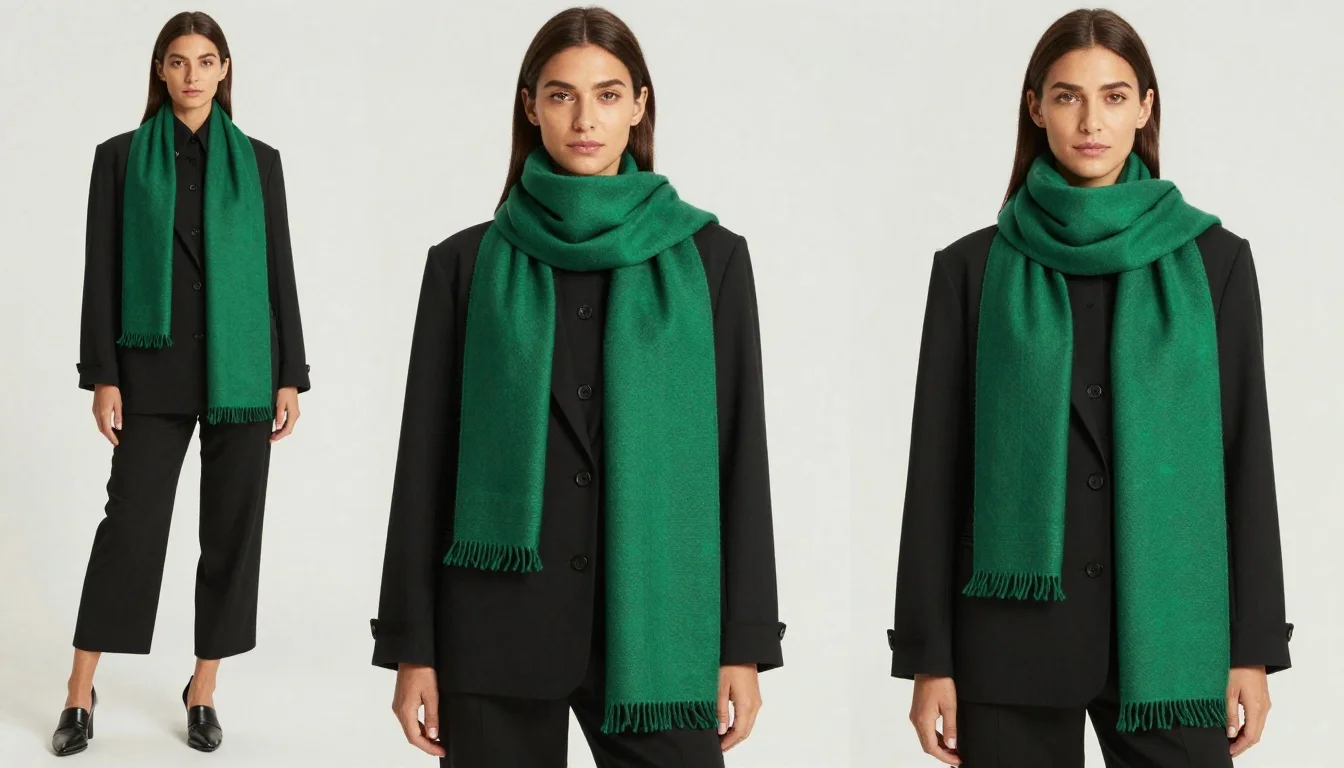
The all-black wearer's most powerful color move is one strong piece near the face. A cobalt blue turtleneck, a rich violet blouse, a vivid crimson scarf — worn with black everything else. This is how many professional stylists introduce color: one piece, full saturation, paired with the black wardrobe you already own. The black grounds the color; the color does the work.
Cool-Leaning Colors (for cool undertones)
If you have cool or neutral undertones — blue-pink or neutral skin, ash or platinum hair — cool colors feel like a natural extension of black. They have the same clean, crisp quality that makes black appealing. Cobalt blue and cool magenta in particular have the sharpness of black with the visual impact of color.
Warm-Leaning Colors (for warm undertones)
If you have warm undertones — golden, peachy, or yellow-beige skin; golden or red-brown hair — warm colors feel like a natural extension rather than a departure. Deep terracotta and rich camel have the sophistication of black but add the warmth that makes warm-undertoned skin glow. Starting with warm, earthy tones rather than cool brights is often the key for warm-undertoned black wearers.

Ready to see midnight navy & green on your face?
Start my color analysisA Practical Color-Introduction Plan
Week 1: Add a deep neutral
Buy one piece in a deep neutral that isn't black: midnight navy, deep forest green, or rich burgundy. Wear it exactly as you'd wear the black version — same outfit, same styling. This step is about demonstrating to yourself that non-black can feel as reliable as black. Notice how the slight color shift interacts with your skin and eyes compared to black. This is the first data point.
Week 2: One strong color piece
Add one piece in a strong, flattering color near your face. The key word is 'near your face' — a scarf, top, or turtleneck rather than trousers or shoes. Wear it with your existing black wardrobe. You're not changing your wardrobe; you're adding one accent to it. The black provides structure; the color piece is the statement. This is the classic 'uniform with intention' approach.
Week 3: Test a second color
Add a second color piece in a different family. If your first was a cool jewel tone (cobalt, violet), try a warm one (burgundy, deep olive). Or try a different intensity: if you started with a vivid saturated piece, try a clear but not overly bright alternative. You're building a personal data set of which colors feel right and which don't. By the end of this week you'll have early evidence of your color preferences.
Building toward color confidence
Once you have two or three colors that feel reliably good, start incorporating them as your defaults in those garment categories. If cobalt blue works near your face, you don't have to buy cobalt blue everything — but you can start considering cobalt for any knitwear or blouse purchase rather than defaulting to black. Gradually, you build a wardrobe with black as a base and a personal color palette layered over it.
Colors That Will Confirm Your Fear of Color
Your least compatible undertone colors
If you have warm undertones and start with cool, icy pastels — they'll look wrong. If you have cool undertones and start with orange or terracotta, they'll clash. Starting with colors that genuinely don't suit you will reinforce the belief that color doesn't work for you. This is why knowing your undertone before you experiment is critical. The failure isn't color — it's starting with the wrong colors for your specific coloring.
Head-to-toe bright or warm-toned color
Going from all-black to an all-color outfit in one step is almost always jarring — for you and visually. The psychology of color confidence is cumulative. One piece of the right color near your face is more powerful and more manageable than a full outfit in an unfamiliar palette. Build to all-color outfits gradually; start with one strong piece against black.
Trends that don't suit your undertone
Color trends — millennial pink, burnt orange, sage green — get pushed hard every season regardless of whether they suit everyone. Starting with a trending color rather than a personally flattering one is a recipe for the failed color experiment that sends you back to black. Find what works for your coloring first; then find the version of trends that fits within your palette.
Chalky, faded pastels if you have deep or high-contrast coloring
Pale, desaturated pastels look visually weak against deep or high-contrast coloring. If you're dark-haired with olive or dark skin, a chalky lavender or dusty pink will look like a mistake — as though you tried color and it failed. Deep, saturated versions of those same colors would work. The solution isn't to avoid pastels; it's to choose saturated versions appropriate to your depth.
Stop guessing — preview every look on you
See these looks on my photoBlack Swap Challenges
Specific swaps that preserve the sophistication of all-black while adding color.
The turtleneck is a perfect first color vehicle because the silhouette is identical and it sits close to the face where color does the most work. The swap is minimal; the impact is significant.
Navy and forest green have the same professional weight as black but add undertone warmth (forest) or cool crispness (navy) that often makes the face look better. This is the simplest black upgrade.
Burgundy and deep plum sit in the red-purple range that tends to warm skin and complement most hair colors. They're dark enough to feel 'almost black' while adding real color value.
A scarf is the lowest-commitment color vehicle: it can be removed. It's also highly visible near the face. Start your color experimentation with scarves if outerwear feels like too much commitment.
When you know your undertone, a jewel-tone dress in your temperature is more flattering than black for most events while carrying the same dressed-up quality. Find your single best event color and have it as a black alternative.
Rather than having black + grey/white as your only neutrals, add one vivid color top that you've verified works for your coloring. This creates visual options without requiring a wardrobe overhaul.
What Does Your Undertone Say About Your Colors?
Your undertone determines which direction to go when you leave black. Cool undertones tend to find cool-side colors most natural as first moves. Warm undertones find earthy or warm-toned colors first. Here's where all-black wearers often land when they discover their season.
Deep Winter
Learn moreMany committed black wearers turn out to be Deep Winter — they were right that dark, high-contrast, cool colors suit them. The expansion from black is into vivid jewel tones, crisp whites, and cool icy colors. Deep Winter types look spectacular in vivid cobalt, cool emerald, and true red. Their instinct for black was correct; the palette is just wider.
Deep Autumn
Learn moreAll-black wearers with warm, golden or olive undertones often turn out to be Deep Autumn. Their expansion from black is into deep, warm, earthy tones: rich terracotta, burnt sienna, deep olive, warm mahogany. These colors have the depth and weight that makes black appealing, but they add warmth that flatters olive and golden complexions in a way black can't.
Cool Winter
Learn morePale-skinned, dark-haired black wearers with pink or cool undertones often find Cool Winter is their season. Their palette expands into vivid, cool colors with real contrast: navy, cobalt, clear magenta, cool white. They can also wear black well — but they look even more striking with the crisp, vivid colors that amplify their natural cool contrast.
Find the Colors Worth Leaving Black For
The reason black feels safer than color isn't a permanent truth — it's a gap in information. When you know your specific colors, reaching for them feels as automatic as reaching for black. A personalized color analysis identifies your season, your palette, and the specific shades most flattering to your skin, eyes, and hair. The goal isn't to make you wear less black. It's to give you options you can trust as much as you trust black.
Stop guessing — preview every color on you
Preview Yourself In Your Palette
Get my personalized paletteStop guessing — preview every color on you
Preview Yourself In Your Palette

Related Guides for How to Wear Color When You Only Wear Black
Explore more personalized color advice based on your features.
Want to see these colors on you? What Colors Look Good on Me — free to try.
Frequently Asked Questions About How to Wear Color When You Only Wear Black
Can I still wear black if I find my color season?
Absolutely. Knowing your color season doesn't mean giving up black — it means understanding where black sits in your palette and when other colors are more flattering. Most Winter types look excellent in black. Some Autumn types find deep, warm darks more flattering than black but can still wear it. Color analysis expands your options; it doesn't eliminate existing ones.
Where do I start if I want to add one color to my all-black wardrobe?
Start with a deep, rich neutral in a near-face garment: navy, forest green, burgundy, or deep plum. These read as sophisticated and work with everything you already own. Once you've added one color piece successfully, your confidence to experiment further grows naturally.
Why do some colors make me look worse than black even when I try?
Because they're not in your palette. Color isn't universally flattering — specific colors work for specific coloring. If you've tried coral and it made your skin look sallow, that's because coral has warm-orange undertones that don't suit your skin undertone. The solution isn't to avoid color — it's to find the version of warm color that does suit you, or to focus on cool-toned colors instead.
Is all-black always a bad choice?
No. All-black is reliable, versatile, and genuinely flattering for many people — particularly those with cool, high-contrast coloring (Deep Winter, Cool Winter). For others, it's adequate but not optimal. The real question isn't whether black is bad; it's whether you're wearing it because it's genuinely the best option for you, or because you haven't yet discovered what else works.