How to Wear Brownas Your Most Flattering Neutral
Brown is fashion's most underrated neutral. Discover how to wear them confidently — matched to your undertone.
Brown is having a well-deserved renaissance, and for good reason: when the shade is right for your coloring, brown is more flattering than black, warmer than grey, and more interesting than navy. It is a neutral that actually flatters rather than simply contrasting. But brown, like beige, exists on a wide spectrum — from warm chocolate and caramel through cool-toned taupe and mushroom brown to nearly-black espresso — and the wrong shade on the wrong undertone creates a dull, muddy effect. The right brown, matched to your undertone and depth, is one of the most powerful tools in a wardrobe.


3,000+
happy clients
Why Brown Requires Undertone Awareness
Brown is having a well-deserved renaissance, and for good reason: when the shade is right for your coloring, brown is more flattering than black, warmer than grey, and more interesting than navy. It is a neutral that actually flatters rather than simply contrasting. But brown, like beige, exists on a wide spectrum — from warm chocolate and caramel through cool-toned taupe and mushroom brown to nearly-black espresso — and the wrong shade on the wrong undertone creates a dull, muddy effect. The right brown, matched to your undertone and depth, is one of the most powerful tools in a wardrobe.
Brown's relationship with skin tone is more nuanced than most neutrals because brown itself spans an enormous undertone range. A warm, golden brown (caramel, chestnut, cognac) can be deeply flattering on warm and olive skin but fight against cool, pink complexions. A cool, grey-brown (mushroom, taupe, ash brown) can look sophisticated on cool complexions but flatten warm skin. Understanding which family of brown aligns with your undertone is the first step to wearing it effectively.
Depth is the second critical variable. Very dark, near-black browns (espresso, dark chocolate) behave more like black — they create sharp contrast and suit high-contrast coloring better than low-contrast. Mid-depth browns (chestnut, cognac, warm chocolate) are the most versatile and flattering across the widest range of complexions. Very light browns (latte, greige-brown) sit closer to beige and can wash out light complexions that need contrast while looking beautiful on deeper complexions as a warm neutral.
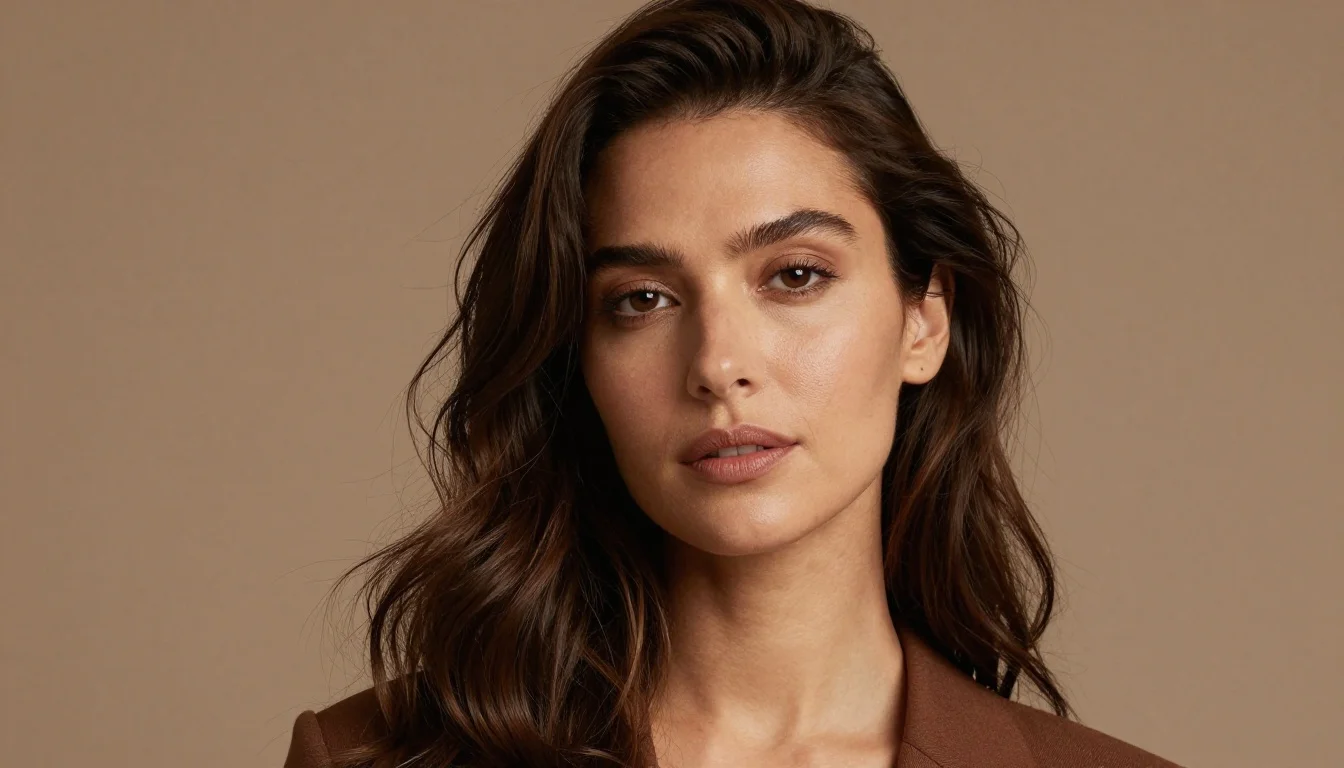
Brown also does something unique for the face: the right warm brown near the face creates a radiant effect on warm skin tones that no other neutral achieves. It reflects warmth back toward the complexion rather than contrast away from it. This is why brown can look more alive and flattering on warm, golden, or olive skin than the same quality black piece — brown harmonizes where black contrasts.
Is brown more flattering than black?
For warm and olive skin tones, yes — warm brown is often more flattering than black because it harmonizes with the warmth in the skin rather than creating stark contrast. Brown near the face on warm skin can create a radiant, luminous effect that black does not achieve. For cool skin tones, dark chocolate or espresso can be as flattering as black while adding more warmth.
Shades of Brown That Work Best
Warm Brown — Caramel, Cognac, and Chestnut
Warm browns with golden-orange or amber undertones are the most flattering for warm, olive, and peachy complexions. Caramel has a golden warmth that brings life to warm skin tones. Cognac is rich and sophisticated — a deep amber-brown that suits warm undertones and dark complexions beautifully. Chestnut is warm-red brown that harmonizes with auburn hair and warm complexions. These are confidence browns — reach for them if you have any warmth in your skin.
Cool Brown — Taupe, Mushroom, and Ash Brown
Cool browns with grey or slightly blue undertones are more flattering for cool, pink, and neutral complexions. Taupe is perhaps the most versatile cool brown — sophisticated and neutral enough to pair with everything while remaining cooler than warm caramel. Mushroom brown has an earthy grey quality that works beautifully on cool and soft-muted coloring. These browns do not fight pink undertones the way warm caramel would.
Mid Brown — Chocolate and Walnut
Classic mid-range browns — chocolate, walnut, mocha — sit in the middle of the undertone spectrum and are the most universally wearable. Chocolate brown works on the widest range of complexions because its depth creates contrast regardless of undertone. Walnut has a slightly warm quality that works for both warm and neutral complexions. These are the navy of brown — the most reliable, versatile, and broadly flattering.
Deep Brown — Espresso and Dark Chocolate
Deep, near-black browns function as elevated versions of black — they offer the depth and contrast of black with greater warmth and sophistication. Espresso suits high-contrast coloring beautifully and works for cool, neutral, and deep complexions. Dark chocolate has slightly more warmth and works on warm complexions that find black too stark. These deep browns are particularly powerful for autumn and winter dressing.

Ready to see caramel brown & cognac on your face?
Start my color analysisHow to Build Brown Into Your Wardrobe
Brown as your primary neutral
If you have warm or olive skin, consider using warm chocolate or cognac as your primary neutral instead of black. A warm chocolate coat, chestnut leather bag, and cognac boots create a richer, more flattering base than the equivalent black pieces. The warmth of brown reflects toward warm skin rather than contrasting against it, creating an inherently more harmonious result.
Brown and navy — the unexpected perfect pair
Brown and navy is one of fashion's most underused combinations. Warm chocolate brown with deep navy creates a sophisticated, non-obvious pairing that works across all skin tones. The warmth of brown and the coolness of navy balance each other, and the combination has a timeless European elegance that feels less formulaic than brown and black.
Tonal brown dressing
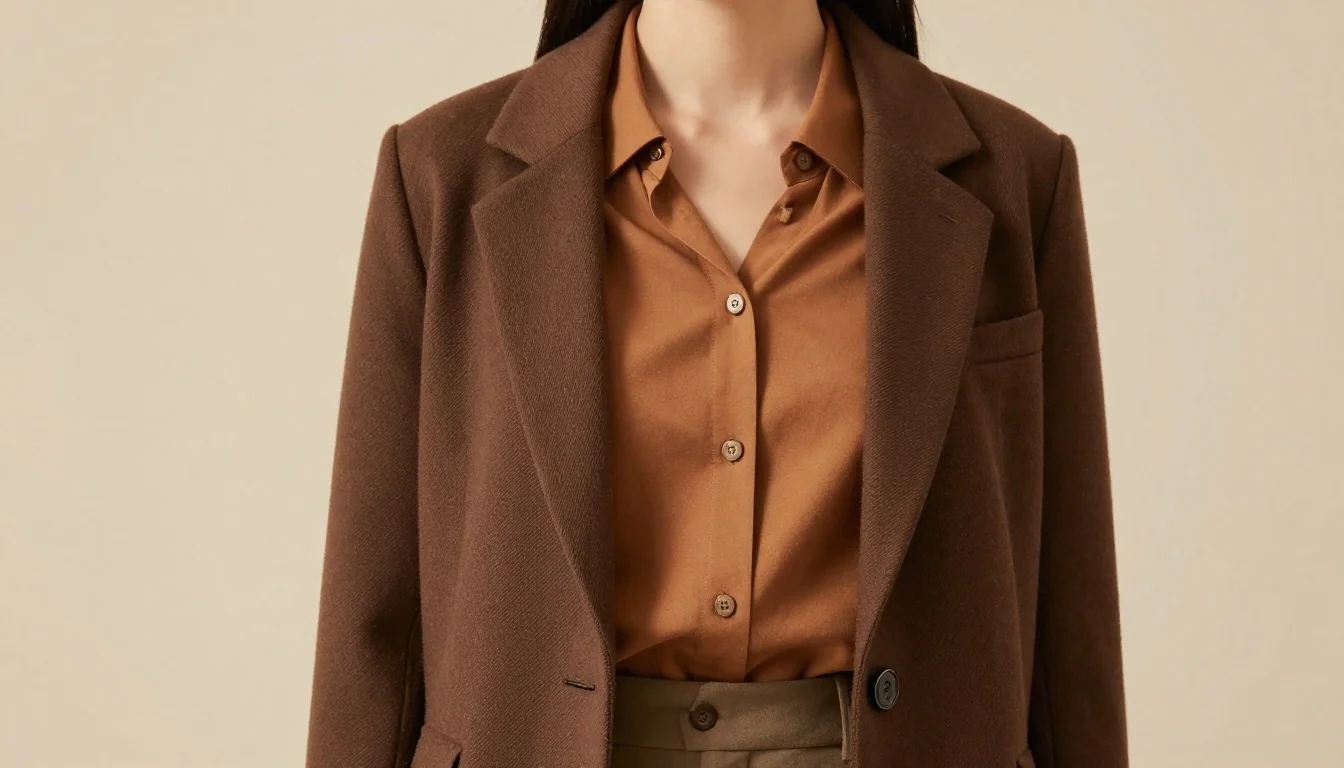
Head-to-toe brown dressing works when you vary the depth: a caramel sweater with warm chocolate trousers and cognac boots. Like tonal beige, the key is that all your browns share the same undertone direction (all warm or all cool) and vary in depth. Tonal warm brown is one of autumn's strongest looks — earthy, cohesive, and sophisticated.
Brown with unexpected color combinations
Brown pairs beautifully with colors people do not expect: warm brown with cobalt blue creates a striking contrast; brown with dusty rose has an unexpectedly elegant quality; warm chocolate with forest green is earthy and rich. Brown anchors vibrant colors differently than black does — less harsh, more harmonious.
Versions of Brown That Work Against You
Warm orange-brown on cool undertones
Strongly warm, orange-based browns — burnt sienna, pumpkin brown, amber brown — can clash with cool, pink, or rosy skin. The orange warmth fights against cool undertones and can make the complexion look tired or ruddy. Swap for taupe, mushroom, or true chocolate if you have cool undertones.
Muddy, dull mid-brown on most complexions
Dull, neither-warm-nor-cool desaturated brown is the least flattering version. It has none of the richness of chocolate or the earthy warmth of cognac — it simply looks like the color of mud. If a brown looks flat and lifeless on the hanger, it will look worse next to your face. Choose browns with clear undertone direction.
Light beige-brown very close to your skin tone
Light greige-brown or latte shades that closely match your skin tone create a washed-out effect for the same reason pale beige does — the color blends into you rather than framing you. Fair complexions especially should avoid very light, skin-close browns near the face and choose richer versions instead.
Cool grey-brown on warm or golden skin
Ash brown, very grey-taupe, or cool-toned greige-brown can flatten warm, golden, or olive skin by fighting against its natural warmth. On olive or warm complexions, these cool browns look muddy rather than sophisticated. Warm caramel or cognac will always serve warm skin better.
Stop guessing — preview every look on you
See these looks on my photoSwaps That Make Brown Work for Your Coloring
Trading versions of brown that fight your skin tone for ones that harmonize with it.
Cool grey-brown fights warm undertones and drains color from golden skin. Caramel and cognac harmonize with warm complexions and create a radiant effect.
Strongly warm, orange-brown clashes with cool pink undertones. True chocolate and taupe provide depth and warmth without the orange clash.
Dull desaturated brown lacks the richness to look intentional next to any skin tone. Chestnut and warm chocolate have clear undertone direction and flattering depth.
Very light, skin-close brown creates a washed-out monochrome effect on fair complexions. Chocolate and walnut provide the contrast needed to frame a lighter complexion.
Flat, undirected mid-brown lacks the richness for evening. Cognac has warm glamour; dark chocolate has depth and elegance — both photograph beautifully.
Mixing warm caramel shoes with a cool grey-brown bag looks disjointed. Keeping all your brown accessories in the same undertone family — all warm or all cool — creates coherence.
Which Palette Might Be Yours?
Brown is most strongly associated with Autumn seasonal types, but appears in other palettes too. Your seasonal type determines which family of brown belongs in your wardrobe.
Deep Autumn
Learn moreDeep Autumns live in warm, rich, deep browns — cognac, dark chocolate, chestnut, and espresso are all core palette colors. The depth and warmth of Deep Autumn coloring supports the richest, darkest browns without them overpowering. Brown is arguably the primary neutral for this type — more flattering and natural than black.
Warm Autumn
Learn moreWarm Autumns wear golden, earthy browns beautifully — caramel, warm chocolate, cognac, and rich tan are all in their palette. The muted, golden-warm quality of Warm Autumn coloring harmonizes with earthy warm browns in a way that looks naturally effortless. A caramel coat on a Warm Autumn simply looks right.
Soft Autumn
Learn moreSoft Autumns wear muted, medium-depth browns — warm taupe, greyed-caramel, and soft chocolate work within their palette. Their coloring is soft and warm-muted, which means the most saturated vivid browns may be too strong, but the muted earthy versions are highly flattering.
Find Your Brown
Brown deserves a place in almost every wardrobe — but the version matters enormously. When the undertone and depth align with your coloring, brown is one of the most flattering, sophisticated, and versatile neutrals available. A personalized color analysis identifies exactly which browns suit your coloring and shows you how to build them into a wardrobe that works harder and looks more intentional.
Stop guessing — preview every color on you
Preview Yourself In Your Palette
Get my personalized paletteStop guessing — preview every color on you
Preview Yourself In Your Palette

Related Guides for How to Wear Brown
Explore more personalized color advice based on your features.
Want to see these colors on you? What Colors Look Good on Me — free to try.
Frequently Asked Questions About How to Wear Brown
Is brown more flattering than black?
For warm and olive skin tones, yes — warm brown is often more flattering than black because it harmonizes with the warmth in the skin rather than creating stark contrast. Brown near the face on warm skin can create a radiant, luminous effect that black does not achieve. For cool skin tones, dark chocolate or espresso can be as flattering as black while adding more warmth.
What undertone does brown work best with?
Warm browns (caramel, cognac, chestnut) work best with warm, golden, peachy, and olive undertones. Cool browns (taupe, mushroom) work best with cool, pink, and neutral undertones. True chocolate and dark chocolate are the most universally flattering because they work across a wider undertone range.
What colors go with brown?
Brown pairs beautifully with cream and off-white (for a warm tonal look), navy (the underrated perfect pairing), forest green (earthy and rich), dusty rose and blush (unexpectedly elegant), cobalt blue (bold contrast), and other earth tones. Brown and black together can look dated — if you want to mix them, make sure one is clearly dominant.
Can you wear brown to work?
Absolutely — chocolate brown, walnut, and cognac are excellent professional colors in structured pieces. A chocolate blazer is as polished as a navy one. Cognac leather accessories elevate any professional outfit. Brown trousers or a brown dress read as sophisticated and considered. Avoid light washed-out browns or muddy desaturated shades in professional settings.
Can brown work as a head-to-toe look?
Yes — tonal brown dressing is one of autumn's most elegant looks. The key is varying the depth (darker on bottom, lighter on top or vice versa) and using texture variation to add interest. Ensure all your browns share the same undertone direction — do not mix warm caramel with cool mushroom, as the undertone clash will make the outfit look unplanned.
Should brown shoes match your bag?
They should share the same undertone family — all warm or all cool brown — but do not need to be identical. A cognac bag with chestnut shoes works because both are warm browns. A mushroom taupe bag with a dark chocolate shoe is harder to pull off because the undertones differ. Matching depth more than exact shade creates a more modern, considered result than exact matching.