Best Suit Colors for Menwith Warm Undertones
Warm undertones make certain suit colors look exceptional and others look off. Discover how to find the colors that actually flatter your coloring.
Warm undertones in men's skin — golden, peachy, olive-warm, or bronze hues — respond strongly to the color of a suit. Get it right and your complexion looks rich and vibrant. Get it wrong and even a well-cut suit makes you look tired or washed out. This guide covers the suit colors that genuinely work on warm-undertoned men, explains why each one works at the pigment level, and gives you a practical framework for building a suit wardrobe around your coloring.


3,000+
happy clients
Why Undertone Changes Which Suits Look Sharp on You
Warm undertones in men's skin — golden, peachy, olive-warm, or bronze hues — respond strongly to the color of a suit. Get it right and your complexion looks rich and vibrant. Get it wrong and even a well-cut suit makes you look tired or washed out. This guide covers the suit colors that genuinely work on warm-undertoned men, explains why each one works at the pigment level, and gives you a practical framework for building a suit wardrobe around your coloring.
Warm undertones mean your skin has yellow, golden, or peachy pigment running beneath the surface. This warm base interacts with the color of clothing next to your face. When a suit color shares that warm quality — camel, tan, rich brown, olive, warm charcoal — your complexion looks harmonious and alive. When a suit color is sharply cool — icy grey, blue-toned charcoal, cool black — the temperature mismatch creates a subtle visual conflict that makes the combination look slightly off, even if you can't immediately articulate why.
The effect is most visible in your face. A well-chosen suit color makes your skin look clearer, your eyes sharper, and your jaw more defined. A poorly matched suit does the opposite — it draws attention to redness, creates shadows under the eyes, or simply makes your face look flat. This isn't subjective: it's how light and pigment interact with complementary versus clashing color temperatures.
For warm-undertoned men, the practical implication is clear: build toward suits with warm or neutral undertones. You have an advantage over cool-toned men when it comes to the brown and earth tone families — colors that are genuinely difficult to wear if you don't have the right skin warmth to ground them. Use that advantage.
What suit colors are best for men with warm undertones?
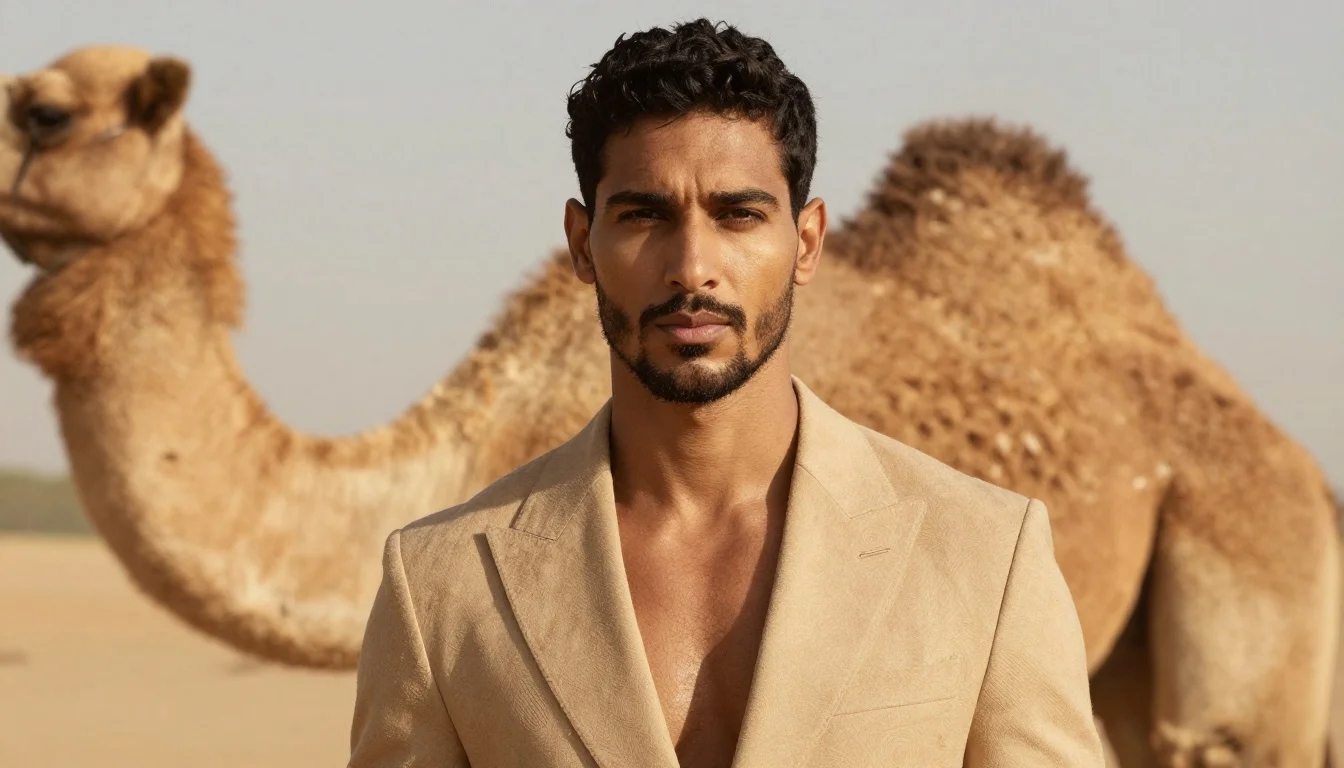
Camel, cognac brown, warm charcoal, warm navy, olive green, and burgundy are the strongest suit colors for men with warm undertones. These colors share or complement the golden, peachy warmth in warm-toned skin and create a harmonious, flattering combination. Camel and warm charcoal are the most versatile starting points.
Suit Colors That Work Best for Warm Undertones
Camel and Warm Brown
Camel and brown suits are where warm-toned men have a clear advantage. The golden warmth in camel harmonizes with golden skin undertones, creating a rich tonal effect — your complexion and the suit feel like they belong together. Cognac and chocolate browns deepen this same effect. These suits look flat or even muddy on cool-toned men but look grounded and deliberate on warm complexions. A camel suit for smart casual and a rich brown suit for business creative settings are cornerstone warm-undertone pieces.
Warm Earthy Neutrals
Warm charcoal — charcoal with a slightly brown or green cast rather than a blue one — is one of the best all-purpose suits for warm-toned men. It reads as authoritative and formal like standard charcoal but doesn't create the cold, slightly mismatched effect that pure blue-grey charcoal can. Taupe and stone give you the neutral utility of grey without the cool cast. Check the fabric in natural light: if the grey has any warmth to it, it's your charcoal.
Warm Navy and Deep Teal
Navy works for warm-toned men when the navy leans slightly warmer — teal-navy rather than the sharply blue, slightly purple navies that suit cool complexions. Deep olive green and bottle green are outstanding suit colors for warm undertones: the yellow-green undertone in olive echoes the golden warmth of warm skin and creates a sophisticated, harmonious result. These are confident, distinguished choices that are uncommon enough to make a strong impression.
Burgundy and Rich Jewel Tones
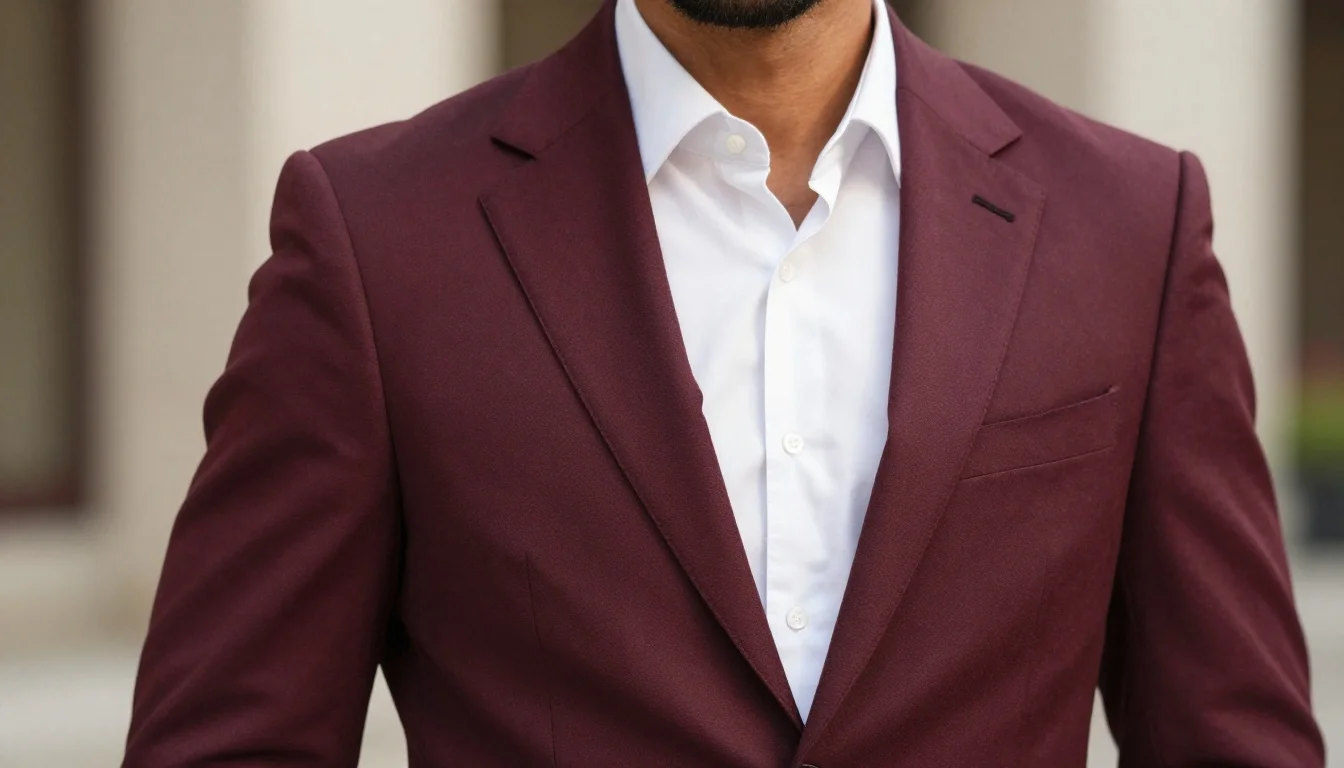
Burgundy suits work particularly well on warm-toned men because burgundy is fundamentally a warm color — its red-brown base shares temperature with golden and peachy complexions. Deep rust and brick red take this further: they are definitively warm-toned suits that look powerful and intentional on warm complexions. These are statement suits, but they make the right kind of statement on the right complexion. A burgundy suit for an evening event on a warm-toned man is one of the strongest looks in men's suiting.

Ready to see camel & cognac brown on your face?
Start my color analysisBuilding a Suit Wardrobe Around Warm Undertones
Your first suit
If you're buying a single suit, go warm charcoal or warm navy. Both are professional in any context, both work with white and blue shirts, and both are flattering across warm undertone complexions from fair to dark. Avoid the impulse to buy pure cool charcoal because it's 'safe' — warm charcoal is equally versatile and significantly more flattering on your coloring.
Shirt pairings
Warm-toned men look sharpest in shirts with warmth in them. Ivory and cream work better than stark white for most warm complexions — the slight yellow warmth harmonizes with your skin rather than creating the harsh white-versus-warm contrast that can make your face look ruddy. Pale yellow, peach, and soft pink shirts are also natural fits. Light blue works when the blue is soft rather than crisp-cool.
Tie and pocket square
Ties in warm earth tones, burgundy, gold, and terracotta are natural partners for warm-undertoned men. A cognac brown knit tie with a warm charcoal suit is a classic combination that works precisely because both elements share a warm temperature. Avoid cool grey, silver, or icy blue ties — they create the same temperature mismatch as a cool suit. Gold accents in cufflinks and tie bars complement warm skin.
Pattern choices
Warm-toned men carry earth-toned patterns particularly well. A windowpane suit in warm charcoal, a herringbone in brown-grey, or a Prince of Wales check in camel tones all lean into your coloring's strengths. When choosing patterned suits, look at the background and accent colors — if the overall effect of the pattern is warm, it works.
Suit Colors That Clash with Warm Undertones
Icy or blue-toned grey
Pure cool grey suits — particularly icy light grey or blue-grey charcoal — create a temperature mismatch with warm skin. Your complexion can look slightly ruddy or washed out next to a sharply cool grey. The fix isn't to avoid grey entirely — it's to choose grey with warm or neutral undertones (taupe-grey, warm charcoal) rather than pure blue-grey.
Bright, cool-toned navy
Some navy suits skew strongly blue-purple in certain lights. This cooler navy is better suited to men with cool undertones. If a navy suit makes your skin look reddish or tired, the suit is likely too cool. Test navy in natural light — you want a navy that reads warm or neutral, not one with a visible purple or blue cast.
Black
Black is a cool, high-contrast color. On warm-toned men — particularly those with medium or fair warm skin — a black suit can look harsh and drain warmth from the face. Dark brown and dark charcoal give you the same formality and authority as black without the cool conflict. Reserve black for occasions where convention genuinely requires it.
Cool-toned pastels
Baby blue, soft lavender, and mint suits carry a cool temperature that sits uncomfortably next to warm-toned skin. If you want a lighter suit, go with warm alternatives: stone, warm ivory, and soft camel give you the same lightness without the temperature conflict.
Stop guessing — preview every look on you
See these looks on my photoSuit Color Swaps for Warm-Toned Men
Small shifts in shade make a visible difference when your undertone is warm.
The warm cast in charcoal harmonizes with golden skin undertones, keeping the professional authority of charcoal without the temperature mismatch.
A navy that leans slightly warmer or teal avoids the purple-blue cast that competes with warm skin, making the combination look more cohesive.
Light grey in a cool tone can look sterile on warm skin. Camel creates richness and tonal harmony — your complexion and the suit work together rather than competing.
Black's cool harshness can flatten warm complexions. Burgundy and deep brown carry the same formality with warmth that complements rather than drains.
Stone and ivory carry warmth into lighter fabrics, maintaining harmony with warm undertones during warmer months.
Earth-toned patterns reinforce your coloring's natural warmth rather than introducing a cool temperature conflict into the outfit.
Which Palette Might Be Yours?
Warm undertones appear across multiple color seasons. Your specific season also depends on your depth (how dark your hair and skin are) and your overall contrast level. Identifying your season gives you the full warm-toned suit palette with maximum precision.
Warm Spring
Learn moreIf your warm undertones come with lighter, brighter coloring — golden or strawberry blonde hair, light hazel or green eyes, fair-to-medium warm skin — Warm Spring is likely your season. Your suit palette centers on camel, warm tan, and olive green. You're best in lighter, brighter warm tones; very deep or muted colors can look heavy on your coloring.
Warm Autumn
Learn moreIf your warm undertones come with rich, muted depth — warm brown or auburn hair, brown or golden eyes, medium-to-deep warm skin — Warm Autumn is your season. Your suit palette includes cognac brown, camel, deep olive, and warm charcoal. Earth tones in muted, rich shades are your territory.
Soft Autumn
Learn moreIf your coloring is warm but lower in contrast and saturation — softer hair color, muted warm skin, soft eyes — Soft Autumn may fit. Your best suit colors are similar to Warm Autumn but in more muted, blended versions. Very high-contrast suit combinations can look harsh; medium-depth earth tones keep the look harmonious.
Find Your Exact Colors
Warm undertones narrow down your suit palette significantly — but there's still variation within warm tones based on depth, saturation, and contrast. A personalized color analysis identifies exactly which end of the warm spectrum you sit on, giving you a precise list of suit colors, shirt tones, and tie combinations that make your complexion look its best in any setting.
Stop guessing — preview every color on you
Preview Yourself In Your Palette
Get my personalized paletteStop guessing — preview every color on you
Preview Yourself In Your Palette

Related Guides for Best Suit Colors for Men with Warm Undertones
Explore more personalized color advice based on your features.
Want to see these colors on you? Skin Undertone Test — free to try.
Frequently Asked Questions About Best Suit Colors for Men with Warm Undertones
What suit colors are best for men with warm undertones?
Camel, cognac brown, warm charcoal, warm navy, olive green, and burgundy are the strongest suit colors for men with warm undertones. These colors share or complement the golden, peachy warmth in warm-toned skin and create a harmonious, flattering combination. Camel and warm charcoal are the most versatile starting points.
How do I know if I have warm or cool undertones?
Look at the inside of your wrist in natural light. If your veins appear greenish, you have warm undertones. If they appear blue or purple, you have cool undertones. If it's a mix, you may be neutral. You can also try the jewelry test: if gold jewelry makes your skin look better than silver, you're warm-toned. If silver flatters you more, you're cool-toned.
Can men with warm undertones wear a grey suit?
Yes — but the undertone of the grey matters. Warm-toned men should choose grey suits with a slight brown, green, or warm cast rather than pure blue-grey or icy grey. Warm charcoal and taupe-grey are the best options. Avoid the cool blue-grey charcoals that are commonly photographed — they're better for cool-toned men.
Can men with warm undertones wear a navy suit?
Yes, but choose carefully. A warm-leaning navy — one that reads as slightly teal or warm midnight rather than sharply blue-purple — works well on warm-toned men. The issue is that many mass-market navy suits skew slightly cool or purple, which creates a subtle mismatch. Check your navy in natural daylight and look for warmth rather than blue-purple cast.
Do warm-toned men look good in black suits?
Black suits are functional but not ideal for warm-toned men. Black is a cool, high-contrast color that can look harsh next to warm skin, particularly at fair-to-medium complexions. Dark brown and warm dark charcoal provide the same formality with far better tonal harmony. If you must wear black for a specific occasion, pair it with a warm ivory or cream shirt rather than stark white.
What shirt color goes with a camel suit for warm undertones?
Ivory or cream works best — the warm tone echoes the camel fabric. White also works if you want cleaner contrast. Soft pink, peach, and warm light blue are good secondary options. Avoid stark cool-white or icy blue shirts, which create a temperature contrast with both the warm suit and your warm skin.