Best Shirt Colorsfor Men with Pale Skin
Pale skin is high-reflectivity skin — it picks up color temperature from nearby fabrics more than. Discover how to find the colors that actually flatter your coloring.
Pale skin has a reputation for being 'hard to dress' — but that's usually because men default to the wrong neutrals. Pale skin is actually one of the most contrast-capable complexions: the right dark or vivid shirt creates a genuinely striking look. The mistake is reaching for whites that match the skin tone or beiges that blend into it. This guide covers the shirt colors that look purposeful and sharp on pale skin — and the ones that flatten it.


3,000+
happy clients
Why Pale Skin Reacts Strongly to Shirt Color
Pale skin has a reputation for being 'hard to dress' — but that's usually because men default to the wrong neutrals. Pale skin is actually one of the most contrast-capable complexions: the right dark or vivid shirt creates a genuinely striking look. The mistake is reaching for whites that match the skin tone or beiges that blend into it. This guide covers the shirt colors that look purposeful and sharp on pale skin — and the ones that flatten it.
Pale skin is high-reflectivity skin — it has low melanin density, which means nearby colors cast their temperature onto the complexion more readily than medium or dark skin. A warm yellow shirt can make pale skin look sallow. A cool blue can make it look cleaner and fresher. A washed-out grey can make fair skin look dull and tired. The shirt isn't just an aesthetic choice — it's actively modifying how the complexion reads.
The other key factor with pale skin is the undertone. Pale skin isn't one thing — it splits into cool-pink (most common), neutral-fair, and occasionally warm-ivory. Cool-pink pale skin benefits from cool or high-contrast shirts. Warm-ivory pale skin can handle warmer tones without washing out. Knowing which category you're in makes the difference between a shirt that looks deliberate and one that looks like it belongs to someone else.
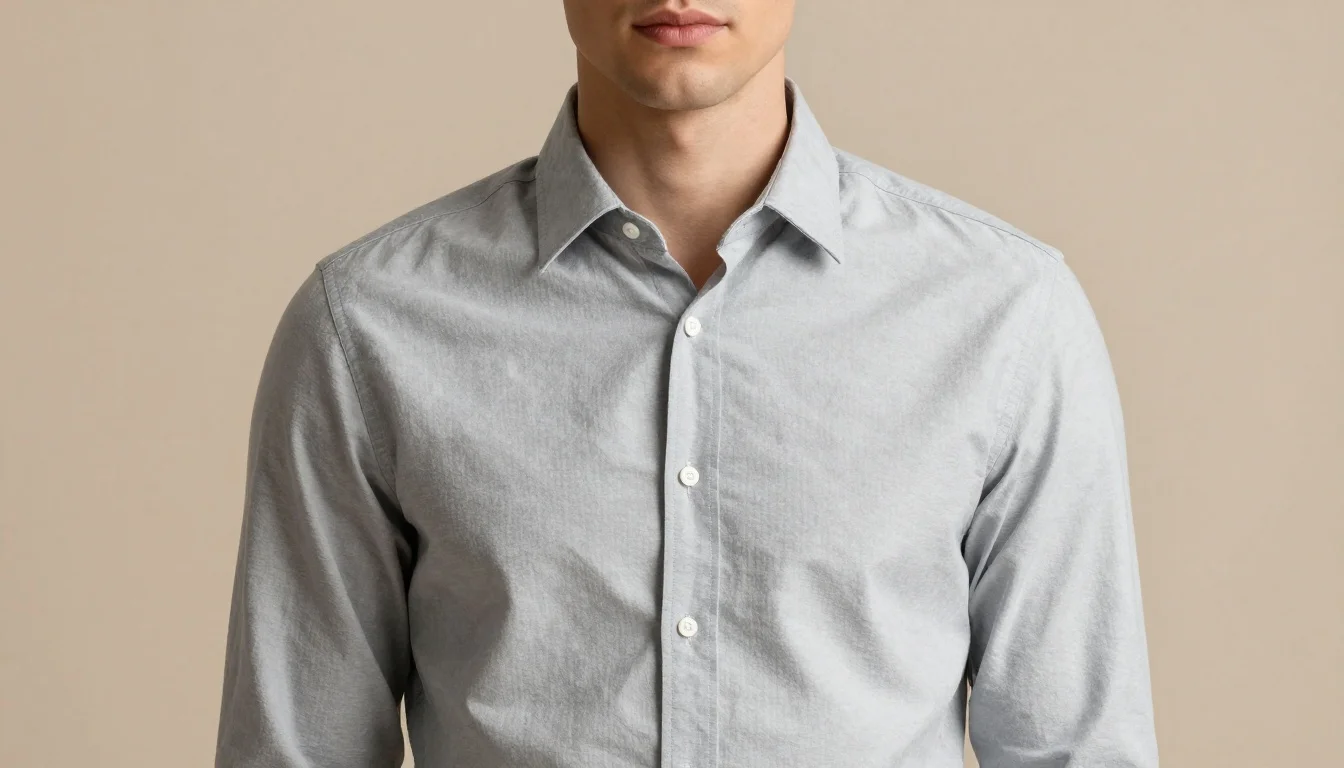
The common mistake with pale skin is retreating to mid-tone neutrals — greys, beiges, warm taupes — because they feel 'safe.' They're not safe; they're invisible. Mid-tones on pale skin create a look where skin and shirt blend into one undifferentiated neutral zone. The counterintuitive rule: pale skin looks best with shirts that commit — either deep and contrasting, or crisp and bright. Half-measures flatten.
What shirt color looks best on men with pale skin?
Navy is the most reliable shirt color for pale men — it creates clean contrast without fighting any undertone. Deep jewel tones like sapphire, teal, and burgundy are also excellent. Crisp white works for dress shirts. The key for pale skin is depth or crispness — mid-tones and pastels tend to flatten rather than flatter.
Shirt Colors That Look Best on Pale Skin
Deep Navy and Midnight Blue
Navy is the most reliable shirt color for pale skin across every context. It creates a clean, high-contrast visual frame against a fair complexion without the harshness of black. A navy OCBD on pale skin always looks intentional — the depth of the color makes the shirt feel purposeful, and it doesn't fight any undertone (cool or warm). Midnight blue and dark indigo work similarly. This is the shirt color to build the wardrobe around.
Rich Jewel Tones
Vivid, saturated colors with real depth do the most for pale skin — they create the contrast that makes fair skin look clean and luminous rather than washed-out. Sapphire blue shirts are excellent. Deep teal is particularly strong for men with cool or neutral pale skin. Burgundy is a classic choice that adds warmth. Forest green creates a striking contrast that looks striking in any setting. These are the colors to reach for when you want to stand out without a suit.
Crisp White and Cool Off-White
A crisp white dress shirt or white Oxford on pale skin works because the contrast isn't between skin and shirt — it's between the white shirt and the rest of the outfit. White shirts look clean, intentional, and universally appropriate. The key is going bright — optical or cool white, not warm ivory. Ivory and warm off-whites blend into pale skin with pink undertones and create a slightly odd visual. Cool white is always cleaner.
Charcoal and Deep Grey
Dark grey — specifically charcoal and slate — works because it creates the depth contrast that pale skin needs without black's harshness. A charcoal Oxford or deep grey linen shirt on fair skin looks serious and intentional. The key is dark — not mid-grey, not warm grey. Charcoal is closer to black on the contrast scale and delivers the same visual structure, making it a versatile choice for both casual and professional settings.

Ready to see navy & midnight blue on your face?
Start my color analysisHow to Build Shirts for Pale Skin
The daily workwear formula
For office or business-casual settings, a navy OCBD or white poplin dress shirt is the most reliable daily formula for pale skin. Both create the right contrast. Navy + grey flannel trousers is a particularly strong combination — the cool tones across all three elements create a cohesive, polished look. White dress shirt + navy suit is menswear's most reliable combination, and it works especially well on pale skin.
Smart-casual and weekend shirts
For casual settings, chambray blue, deep teal, and burgundy shirts all look strong on pale skin. A chambray shirt with dark chinos is a particularly clean casual formula. Burgundy shirts work well with grey or charcoal trousers — the warm jewel tone frames pale skin well. For autumn and winter, a deep forest green or navy flannel shirt looks excellent with darker denim or wool trousers.
Suits and formal combinations
Pale skin paired with a charcoal or navy suit and a white shirt is the sharpest formal combination — the high contrast between dark suit and white shirt, with fair skin between them, looks intentional and authoritative. If you want a colored dress shirt, pale blue is the most successful option — it's cool enough to complement fair skin without washing it out. Avoid pink and yellow dress shirts.
Linen and summer shirts
In summer, the temptation is to reach for the lightest shirts available — resist pale linen in ivory, sand, or washed-out pastels. A white linen shirt is clean and works well. Navy linen is excellent. For a more casual summer look, a deeper chambray or a lightweight teal shirt looks significantly better than a washed-out pastel or sand-colored linen.

Shirt Colors That Flatten Pale Skin
Warm beige and sand
Beige and sandy tones are the most consistently problematic shirt colors for pale skin. They sit in a similar value range to fair skin and create a washed-out, monochromatic effect where face and shirt blend together with no visual hierarchy. The warmth also casts a slightly sallow note onto pink-toned pale skin. These shirts look like a safe choice but reliably underperform.
Warm yellow and mustard
Yellow and mustard shirts introduce a warm, sallow cast to pale skin. If your pale skin has pink or neutral undertones, a yellow shirt fights that at the color temperature level — the skin can look washed out or slightly ill. The brightness of a yellow shirt also creates a visual dynamic where the shirt overshadows the face rather than framing it.
Mid-tone warm grey and greige
Mid grey — particularly the warm, greige variety — sits too close in value to pale skin without being dark enough to create contrast. It creates a flat, undifferentiated look. The common 'grey shirt with dark jeans' look that works on medium or dark complexions doesn't translate as cleanly to pale skin because the grey doesn't create enough visual separation from the face.
Chalky pastels
Pale, desaturated pastels — chalky lavender, washed-out mint, very pale pink — have no visual energy against a pale complexion. Both the shirt and the skin are low-value and low-saturation, creating nothing for the eye to land on. If you want light colors, go for shirts with enough saturation to hold their ground: chambray blue rather than baby blue, for instance.
Stop guessing — preview every look on you
See these looks on my photoShirt Swaps for Pale Skin
Trading the colors that fade fair skin for the ones that frame it.
Beige blends into pale skin. Navy creates clean contrast; chambray adds depth with a casual feel.
Sand and ivory wash out pale skin. White is crisp and works as contrast; navy stays strong in warm weather.
Mid-grey lacks contrast against pale skin. Charcoal is deep enough to frame fair skin definitively.
Mustard casts warmth onto pale skin in an unflattering way. Burgundy and teal add depth and contrast without the clash.
Greige disappears against fair skin. Rich, deep flannels create the visual structure pale skin needs.
Chalky blue has no presence against pale skin. Sapphire has the saturation to create a clean, striking contrast.
Which Color Season Are You?
Pale skin spans several seasonal palettes. Your specific season depends on whether your undertone is cool, neutral, or warm, and the contrast level between your skin, eyes, and hair.
Cool Winter
Learn moreIf your pale skin is distinctly cool — blue-pink or porcelain undertones — with high-contrast features (dark hair, vivid eyes), Cool Winter is likely your season. You can handle the deepest, most vivid shirts: true navy, deep cobalt, rich charcoal, icy blue. High contrast is your strength — the more visual structure in the outfit, the better you look.
Cool Summer
Learn moreIf your pale skin is cool but softer — muted rather than stark, with medium contrast and perhaps grey, hazel, or soft blue eyes — Cool Summer is a common fit. Your shirts work best in soft, cool-leaning shades: dusty blue, smoky teal, soft navy, muted lavender. Vivid colors can be slightly too intense; muted depth is more harmonious.
Light Summer
Learn moreIf your pale skin is fair and soft with very low natural contrast — light eyes, light or dark-ash hair — Light Summer fits the most delicate pale complexions. Your shirts should be cool and light: powder blue, soft rose, pale lavender, blush. Avoid extremes — very deep or very bright shirts overwhelm low-contrast coloring. Refined, cool, and slightly muted is your range.
Find Your Exact Shirt Colors
Pale skin is not a limitation — it's one of the highest-contrast complexions in menswear when you know which colors to pair with it. The specific shades that work best depend on whether your fair skin runs cool, neutral, or warm, and what contrast your eyes and hair bring. A personalised color analysis identifies your exact seasonal palette and gives you a precise shirt guide so you never guess again.
Stop guessing — preview every color on you
Preview Yourself In Your Palette
Get my personalized paletteStop guessing — preview every color on you
Preview Yourself In Your Palette

Related Guides for Best Shirt Colors for Men with Pale Skin
Explore more personalized color advice based on your features.
Want to see these colors on you? What Colors Look Good on Me — free to try.
Frequently Asked Questions About Best Shirt Colors for Men with Pale Skin
What shirt color looks best on men with pale skin?
Navy is the most reliable shirt color for pale men — it creates clean contrast without fighting any undertone. Deep jewel tones like sapphire, teal, and burgundy are also excellent. Crisp white works for dress shirts. The key for pale skin is depth or crispness — mid-tones and pastels tend to flatten rather than flatter.
Should pale-skinned men avoid white shirts?
No — white shirts are one of the best choices for pale men, particularly in dress shirts. The contrast between a white shirt and the rest of the outfit (dark suit, navy blazer) frames pale skin cleanly. The key is going for optical or cool white rather than warm ivory, which can blend into fair pink-toned skin.
Do dark shirts look good on pale skin?
Yes — dark shirts are among the most flattering options for pale-skinned men. Navy, charcoal, deep teal, burgundy, and forest green all create the high contrast that makes pale skin look clean and intentional. The deeper the shirt, the more visual structure it creates.
What should men with pale skin avoid wearing?
Avoid warm beige, sand, mustard yellow, mid-tone warm grey, and chalky pastels. These sit too close in value or temperature to pale skin, creating a flat, washed-out look. Mid-tones in particular are the common mistake — they're neither dark enough to contrast nor vivid enough to energize.
Can pale men wear colored dress shirts?
Yes. Pale blue is the most versatile colored dress shirt for pale-skinned men. It's cool enough to complement fair skin, works under most suit colors, and reads as polished. Deep teal and burgundy work for more casual dress shirts. Avoid yellow and warm pink dress shirts.
Do earth tones work for men with pale skin?
Generally, no — warm earth tones (beige, sand, warm tan, mustard) tend to wash out pale skin or add an unflattering warmth to cool-toned fair complexions. If you want neutrals, stick to cool or deep neutrals: charcoal, deep slate, cool white. Rich jewel tones deliver warmth without the washing-out effect.