Why Grey Makes YouLook Washed Out
Grey drains certain people and elevates others. Discover how to find the colors that actually flatter your coloring.
You put on a grey top and something feels off. Your face looks flat, tired, maybe a little sallow. But grey is supposed to be a neutral — safe, versatile, sophisticated. Why does it seem to drain you? This isn't in your head. Grey genuinely washes out specific combinations of skin tone, undertone, and coloring contrast. Understanding why it happens is the first step toward fixing it.


3,000+
happy clients
The Optical Science Behind Grey and Skin Tone
You put on a grey top and something feels off. Your face looks flat, tired, maybe a little sallow. But grey is supposed to be a neutral — safe, versatile, sophisticated. Why does it seem to drain you? This isn't in your head. Grey genuinely washes out specific combinations of skin tone, undertone, and coloring contrast. Understanding why it happens is the first step toward fixing it.
Grey is a highly reflective, neutral color with almost no chromatic content — it reflects light without absorbing or emitting any particular hue. When you wear grey near your face, it acts like a mirror for your skin's undertone. If your skin has warm undertones (yellow, peachy, golden), grey reflects those tones back in an unflattering way, making them appear sallow or muddy. If your skin has soft or muted undertones, grey can simply amplify the mutedness until there's no visible distinction between your skin and your clothing.
The washed-out effect happens specifically because grey has no chromatic energy to work against. Colors with saturation or temperature — warm, cool, vivid — provide contrast that makes skin look alive. Grey provides neither warmth nor coolness in meaningful quantity, and almost no saturation. For people with low natural contrast (fair skin and light eyes, or soft medium skin with no strong features), grey removes what little contrast exists. For people with warm undertones, it reflects those tones unfavorably rather than countering or harmonizing with them.
There is a version of grey that works for many people: very deep charcoal, which functions more like a dark neutral than true grey, creates contrast. Cool-toned mid-grey can work on high-contrast cool coloring. But the soft, warm greys — heather, greige, mid-tone stone — are the ones most likely to create a drained, featureless appearance. The fix is almost always contrast: deeper darks, richer colors, or deliberate warmth near the face.

Why does grey make me look washed out?
Grey washes you out because it lacks chromatic energy — it reflects light without providing warmth, coolness, or saturation. For warm-undertoned skin, grey reflects undertones unfavorably, making them appear sallow. For low-contrast coloring, grey removes what little contrast exists, leaving no visual definition between face and clothing. The fix is usually contrast: deeper colors, richer temperatures, or moving grey below the waist.
Colors That Solve the Washed-Out Problem
Deep Darks That Create Real Contrast
If grey washes you out, deep neutrals are the fix. Midnight navy, deep charcoal, and forest green provide the depth that grey lacks — enough visual weight to frame your face and create contrast against your skin tone. These colors work because they're essentially the opposite of grey's problem: they have darkness without washing out. Charcoal in particular is the 'safe neutral' version of this — deep enough to do its job, still versatile.
Warm, Saturated Colors for Warm Undertones
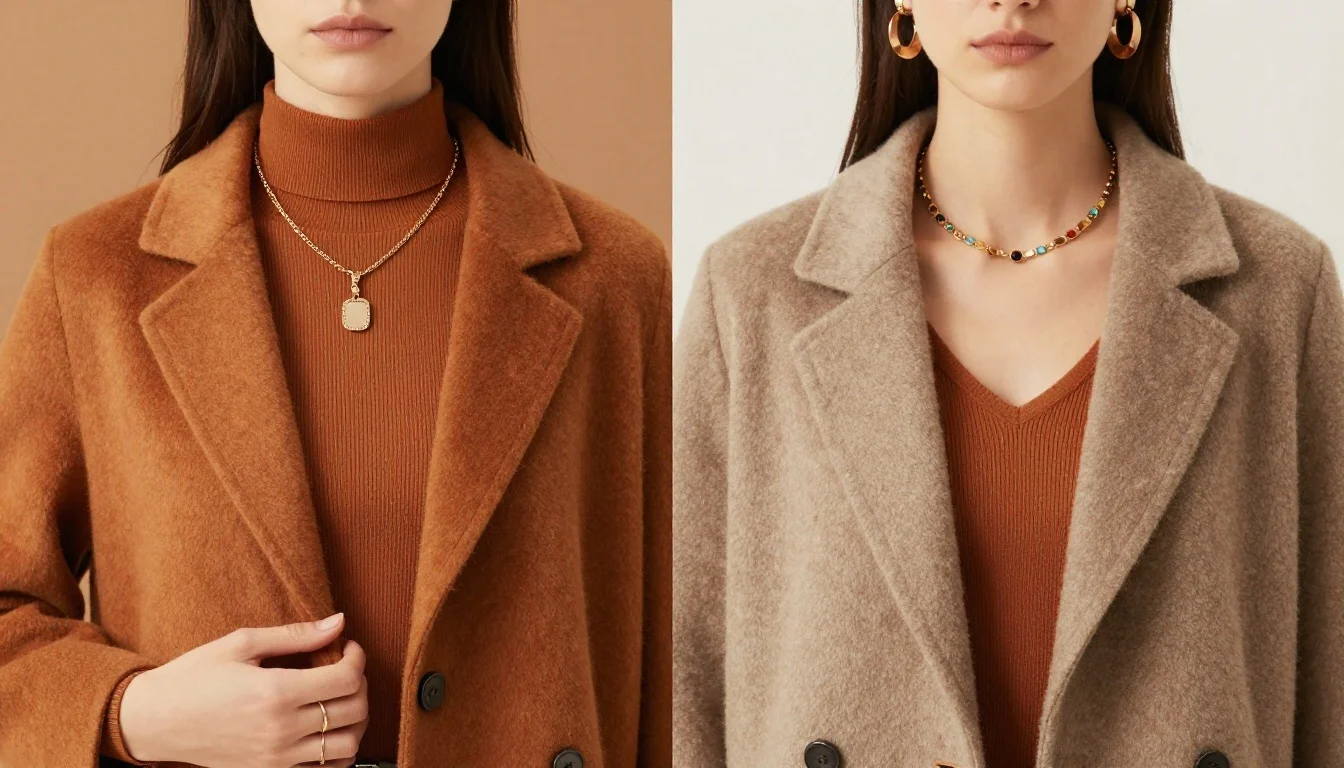
If grey washes out warm-undertoned skin, the fix is embracing that warmth rather than fighting it. Terracotta, caramel, and warm olive harmonize with yellow-golden skin undertones rather than reflecting them unfavorably. These colors have the chromatic energy that grey lacks. They make warm-undertoned skin look glowing and healthy rather than sallow and flat.
Cool Jewel Tones for Cool Undertones
Cool-undertoned skin washed out by grey responds well to cool jewel tones. Sapphire, teal, and violet provide the cool-temperature saturation that complements the skin's undertone while adding real chromatic energy. Where grey gave your complexion nothing to work against, these colors create a crisp, flattering contrast.
Rich Neutral Alternatives
For people who want the neutrality of grey without the washed-out effect, warm ivory, camel, and cognac deliver the versatility with actual temperature. These colors have enough warmth to counteract the draining effect grey has on most complexions. Burgundy works as a rich neutral-adjacent color that flatters almost universally — deep enough for contrast, warm enough to enliven skin.

Not sure yet? See it on your face
Start my color analysisThe Fix in Practice: Making Grey Work (Or Knowing When to Skip It)
Test first
The fastest way to know if grey is working for you: hold the grey garment under your chin in natural light and look in a mirror. Does your face look clearer and more defined, or flatter and more tired? If you can't tell, ask someone nearby. The effect is usually visible to others before it's fully visible to you. If the garment is going on your top half, this test is definitive.
Move grey below the waist
Grey trousers, grey skirts, grey jeans — these work for most people because grey isn't near the face. The washed-out effect is caused by proximity. Grey on the bottom half reads as a clean, sophisticated neutral while something with color, depth, or warmth at the neckline does the job of enlivening your complexion. This is the easiest grey fix: keep it below the waist.
Pair grey with depth at the neckline
If you love grey sweaters or tops, wear them with a deliberate neckline layer — a vivid scarf, a statement necklace in gold or gemstone colors, a rich-toned shirt underneath. The color nearest your face is what matters. A grey cashmere with a deep teal scarf and gold earrings reads as sophisticated and intentional. The grey is just the base.
Choose charcoal over mid-grey
Deep charcoal behaves differently from mid-tone grey. It creates contrast rather than blurring. For most people who struggle with grey, swapping from mid-grey to charcoal is the single fastest improvement. Charcoal has the depth to frame the face. It reads as dark and intentional rather than faded and neutral.
What's Causing the Washed-Out Look
Warm mid-tone grey (heather, greige, stone)
The most problematic greys are mid-tone and warm — heather grey, greige, warm stone. These shades have just enough warmth to clash with cool undertones, and just enough grey to muddy warm undertones. They sit in an awkward middle ground that flatters almost no one. The widespread washed-out reputation of grey comes almost entirely from this range.
Light grey near the face
Light grey has very low contrast against most skin tones. It creates a situation where face and clothing blur together without definition, making features appear flatter and complexion less distinct. Light grey works as a trouser or skirt color when paired with something vivid at the neckline — it should not be the garment nearest to your face.
Cool pale grey on warm undertones
Cool-toned pale grey reflects the cool quality directly against warm-undertoned skin, creating a visual dissonance where the skin's warmth reads as sallow or jaundiced rather than golden. The clash between the cool-grey reflection and the warm skin undertone is what produces the drained look. The skin has to 'fight' the color, and loses.
Monochromatic grey outfits on low-contrast coloring
If your natural coloring is soft and low-contrast to begin with — fair skin, light eyes, blonde or silver hair — wearing grey head to toe creates a completely monochromatic appearance with no focal point. Your coloring and your clothes are all the same value. There's nothing to direct the eye and nothing to make your features distinct.
Stop guessing — discover your exact palette
See myself in my colorsSwaps That Solve the Grey Problem
Trading the grey shades that drain you for colors that do what grey was supposed to do.
Heather grey has no chromatic energy. Navy and forest green provide the same casual comfort with actual depth that frames the face.
Mid-grey blurs into most skin tones. Charcoal and navy provide contrast and authority without sacrificing versatility.
Greige delivers grey's draining effect with warm undertone clashing. Camel and terracotta harmonize with warm skin tones instead of flattening them.
Pale grey near the face in winter light is particularly draining. Charcoal or camel provide warmth and depth that make the face the focal point.
Grey dress creates no contrast focal point. Teal and cobalt are sophisticated alternatives with the saturation to make skin look clear and healthy.
Grey accessories near the face extend the washing-out effect. Gold jewelry and saturated accessories counteract grey clothing's draining quality.
Which Seasonal Palettes Struggle Most with Grey
Grey is most problematic for certain seasonal palettes. Understanding which season you are helps predict your grey tolerance and shows you what to wear instead.
Warm Spring
Learn moreWarm Springs have clear, bright warm undertones that grey reflects unfavorably. The cool-neutral quality of grey directly clashes with Spring's golden-warm energy, creating a dull, sallow appearance. Springs look dramatically better in warm, clear colors — coral, warm peach, golden yellow, bright warm green.
Soft Summer
Learn moreSoft Summers have naturally low contrast and muted coloring. Grey adds to the mutedness without adding any energy, resulting in a look with no focal point and no definition. Soft Summers need their muted colors to have clear temperature — cool rose, dusty teal, soft mauve — not the achromatic non-color of grey.
Soft Autumn
Learn moreSoft Autumns have muted warm undertones. Grey's lack of temperature creates a disconnect with Autumn's inherent warmth — the skin looks muddy rather than golden, and the outfit reads as flat rather than rich. Soft Autumns thrive in muted, warm earthy tones: warm taupe, dusty terracotta, golden olive.
Find the Colors That Actually Work for You
Grey is a case study in why universal 'safe' neutrals don't exist. Whether grey works for you depends entirely on your undertone, your natural contrast level, and your seasonal palette. A personalized color analysis identifies exactly where grey sits in your palette — whether to avoid it, how to wear it strategically, or which shades of grey (deep charcoal vs. heather) actually work for your specific coloring.
Stop guessing — preview every color on you
Preview Yourself In Your Palette
Get my personalized analysisStop guessing — preview every color on you
Preview Yourself In Your Palette

Related Guides for Why You Look Washed Out in Grey
Explore more personalized color advice based on your features.
Want to see these colors on you? What Colors Look Good on Me — free to try.
Frequently Asked Questions About Why You Look Washed Out in Grey
Why does grey make me look washed out?
Grey washes you out because it lacks chromatic energy — it reflects light without providing warmth, coolness, or saturation. For warm-undertoned skin, grey reflects undertones unfavorably, making them appear sallow. For low-contrast coloring, grey removes what little contrast exists, leaving no visual definition between face and clothing. The fix is usually contrast: deeper colors, richer temperatures, or moving grey below the waist.
Does grey suit everyone?
No. Grey is often presented as a universal neutral, but it actively drains certain skin tones and coloring types. People with warm undertones, low natural contrast, or muted seasonal palettes (Soft Summer, Soft Autumn, Warm Spring) often find grey unflattering near the face. Deep charcoal is more universally wearable than mid-tone or light greys.
Which grey shades are most flattering?
Deep charcoal is the most universally flattering grey because it creates contrast rather than blurring. Cool-toned mid-greys work on high-contrast cool coloring (Cool Winter, Cool Summer). Warm greys, heathers, and greiges are the most problematic — they combine grey's draining quality with warm undertone conflicts.
Can I still wear grey if it washes me out?
Yes — keep grey below the waist (grey trousers, skirts, jeans) and put a richer, more saturated color at the neckline. The color nearest your face is what affects your complexion. Grey on the bottom half reads as a sophisticated neutral while something with depth or warmth at the top enlivens your skin tone.
What colors should I wear instead of grey?
Depends on your undertone. Warm undertones: terracotta, camel, warm olive, rich cognac. Cool undertones: midnight navy, sapphire, deep teal, cool violet. Neutral undertones: charcoal (instead of mid-grey), burgundy, forest green. All of these provide the versatility grey is supposed to offer, but with actual temperature and saturation that works with skin tone.