What Skin ToneSuits Pink?
Pink suits every skin tone — but warm pink flatters differently than cool pink. Discover how to find your perfect shade — and skip the ones that wash you out.
Pink suits every skin tone — but not every pink suits every skin tone. The gap between a pink that makes you look vivid and one that makes you look washed out is usually temperature and depth. Warm pink flatters warm skin; cool pink flatters cool skin. Vivid pink serves high-contrast coloring; dusty pink serves muted coloring. Once you know your skin tone's temperature and overall clarity, finding the right pink is simple.


3,000+
happy clients
Why Pink Varies So Much Across Skin Tones
Pink suits every skin tone — but not every pink suits every skin tone. The gap between a pink that makes you look vivid and one that makes you look washed out is usually temperature and depth. Warm pink flatters warm skin; cool pink flatters cool skin. Vivid pink serves high-contrast coloring; dusty pink serves muted coloring. Once you know your skin tone's temperature and overall clarity, finding the right pink is simple.
Pink spans a wide spectrum: from warm coral-pink (salmon, warm blush, peach-pink) to cool blue-pink (cool rose, mauve, fuchsia). This spectrum parallels the undertone spectrum in skin — warm golden undertones are flattered by warm pinks, cool pink or blue undertones are flattered by cool pinks. When temperature matches, the skin looks clear and the pink looks intentional. When they clash, the skin can look flushed, sallow, or slightly muddy.
Depth is the second variable. Vivid, saturated pinks (hot pink, vivid fuchsia, vivid coral-pink) work best on high-contrast coloring — Deep Winter, Bright Spring, clear and vivid coloring. Muted or dusty pinks (dusty rose, muted blush, soft mauve) work best on soft, muted coloring — Cool Summer, Soft Autumn, Soft Summer. The saturation level should roughly match the overall vividness of your natural coloring.
Skin depth adds a third dimension. Fair skin can carry vivid pink with dramatic impact — the contrast is naturally high. Medium skin tones may find that the depth and saturation of the pink matters more: a very pale pink disappears against medium skin, while a vivid or deep pink creates the contrast needed to look intentional. Deep skin tones are flattered by the most vivid and saturated versions of pink — hot pink, vivid fuchsia — which have the intensity to hold their own against deep pigmentation.
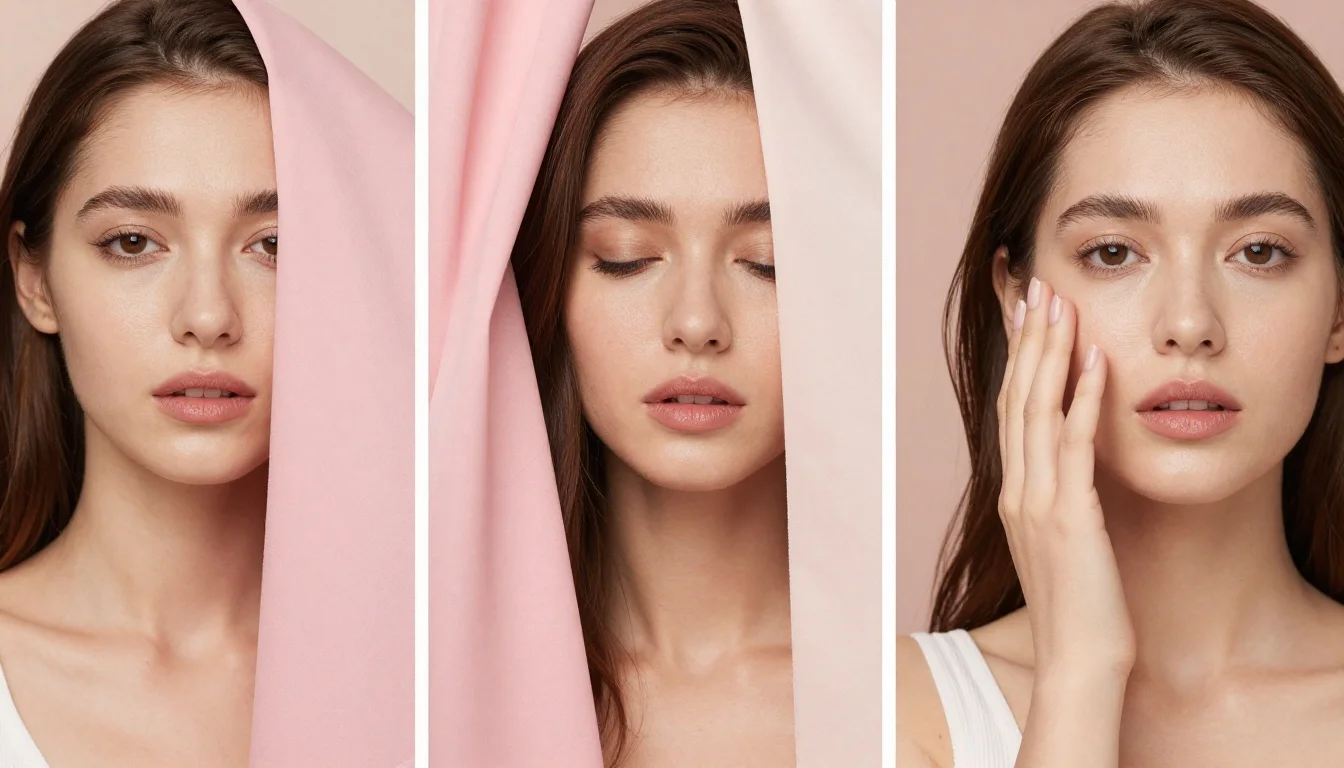
What skin tone suits pink?
Every skin tone suits pink — but the right pink depends on temperature and depth. Warm skin tones suit warm coral-pink and peach-rose. Cool skin tones suit cool rose-pink and fuchsia. Deep skin tones suit vivid, saturated pinks (hot pink, vivid fuchsia). Fair skin suits temperature-matched vivid pinks. Muted coloring suits dusty, soft pinks. The mismatch that makes pink 'not work' is usually temperature — a warm coral-pink on cool skin, or a cool mauve on warm skin.
The Right Pink for Each Skin Tone
Warm Skin Tones: Warm & Peachy Pinks
Warm skin tones — golden, olive, or peachy — are served by pinks with a warm orange or yellow-red base. Warm coral-pink sits at the intersection of coral and pink — vivid, warm, and deeply flattering on golden and tan skin. Peach-rose has a soft warmth that works for lighter warm coloring. Warm blush (with peach warmth rather than cool pink) harmonizes with warm skin's undertone. Salmon, the warmest pink, resonates with golden skin through its orange quality.
Cool Skin Tones: Cool & Vivid Pinks
Cool skin tones — pink, blue, or silver-based — are flattered by pinks with a blue or cool base. Cool rose-pink is the most broadly flattering: it has the pink register without orange warmth, harmonizing with cool skin's pink undertone. Clear fuchsia and vivid cool pink work for high-contrast cool coloring (Deep Winter, Bright Winter). Soft lilac-pink sits at the pink-purple edge and is beautiful for Cool Summer and soft cool coloring.
Deep Skin Tones: Vivid & Rich Pinks
Deep skin tones — from rich warm brown to deep neutral — require vivid, saturated pinks to create meaningful contrast. Hot pink and vivid fuchsia have the intensity to hold their own against deep pigmentation and create a striking, vivid look. The warm version of this family (warm raspberry, warm magenta) suits warm-deep skin; the cool version (vivid cool fuchsia, deep cool pink) suits cool-deep or neutral-deep skin. Pale or muted pinks disappear against deep skin.
Fair Skin Tones: Temperature-Matched Pinks
Fair skin can carry both warm and cool pinks with impact — the choice depends entirely on undertone. For warm fair skin: vivid warm coral-pink and clear warm blush create a glowing, harmonious look. For cool fair skin: clear cool rose and deep cool fuchsia create crisp, vivid contrast. The key for fair skin is choosing vivid rather than muted versions — fair skin needs saturation to create contrast, while pale muted pinks tend to disappear against light complexions.

Not sure yet? See it on your face
Start my color analysisHow to Wear Pink for Your Skin Tone
Identify your pink by temperature
The simplest way to find your pink is to hold a warm coral-pink and a cool rose-pink side by side against your face. Whichever one makes your skin look clearer and more vivid is your temperature. Warm coral-pink brightening → warm undertone. Cool rose-pink brightening → cool undertone. Once you know your pink temperature, you can apply this filter to every pink you encounter — blush, clothing, or lip color.
Match depth to your coloring's vividness
Once you know your temperature, choose the depth of pink to match your overall coloring's vividness. If your natural coloring is soft and muted (soft hair, soft eyes, medium-soft skin), choose dusty or muted versions of your temperature-matched pink. If your natural coloring is vivid and clear or high-contrast, choose saturated, vivid versions. The mismatch — wearing vivid pink on muted coloring or muted pink on vivid coloring — is often why pink 'doesn't work' for people.
Use pink as a neckline focal point
Pink placed near the face — as a blouse, scarf, or neckline detail — creates maximum interaction with your skin tone. A warm coral-pink blouse against warm golden skin looks glowing and harmonious. A cool fuchsia silk near cool fair skin creates crisp, vivid contrast. Pink below the waist has less interaction with your face's coloring. For the most effective use of your temperature-matched pink, wear it at the neckline.
Coordinate pink lip to pink clothing
Wearing pink clothing? Your lip color matters more than usual. Match the temperature (warm or cool) of your pink clothing in your lip color, or wear a nude that leans toward the same temperature. A warm coral-pink blouse with a cool rose lip creates temperature clash at the neckline. The same blouse with a warm coral-nude or warm coral-pink lip creates cohesion. Alternatively, a contrasting deep neutral lip (warm espresso or cool berry) provides definition without temperature conflict.

Pinks That Fight Your Skin Tone
Warm coral-pink on cool skin tones
Coral-pink and peachy-pink introduce warm orange quality that clashes with cool skin's pink or blue undertone. Against cool skin, warm coral-pink can make the face look slightly flushed or ruddy — the warm orange in the pink fights the cool pink in the skin. Cool rose-pink and fuchsia deliver the pink register without the temperature conflict.
Cool blue-pink on warm or olive skin tones
Cool-based pink (mauve, cool rose, blue-pink) introduces temperature that conflicts with warm or olive skin's golden undertone. The cool pink next to warm skin can create a slightly drained or sallow effect — neither the skin nor the color looks its best. Warm coral-pink and peach-rose deliver the same pink register with temperature harmony.
Dusty, muted pink on vivid or high-contrast coloring
Dusty rose and muted blush are calibrated for soft, muted coloring. On vivid or high-contrast coloring (Deep Winter, Bright Spring), these shades look washed out and underwhelming — the color lacks the intensity to hold its own against vivid natural coloring. Vivid or saturated versions of the same pink serve high-contrast coloring far better.
Very pale or icy pink on medium or deep skin
Very pale pink — icy blush, shell pink, barely-there blush — creates minimal contrast against medium or deep skin and can look slightly washed out. Medium and deep skin tones need enough saturation and depth in pink to create visible color impact. Vivid coral-pink, hot pink, or deep raspberry are far more effective than pale icy versions.
Stop guessing — discover your exact palette
See myself in my colorsFind Your Pink
The right pink is usually just a temperature adjustment from the one that hasn't worked.
Coral-pink introduces orange warmth that fights cool undertones. Cool rose-pink has the same pink register with the blue base that harmonizes with cool skin.
Cool mauve creates temperature conflict on warm golden skin. Warm coral-pink resonates with warm undertones — the skin looks vivid and the color looks harmonious.
Pale pink disappears against deep pigmentation without creating meaningful color impact. Vivid hot pink and fuchsia have the saturation to hold their own against deep skin and create the striking contrast this coloring deserves.
Dusty rose is calibrated for soft coloring and looks underwhelming on vivid coloring. Vivid or saturated pinks match the intensity of high-contrast natural coloring.
Temperature mismatch between pink clothing and pink lip looks slightly discordant at the neckline. Match the temperature or wear a nude that leans toward the same direction.
Blush is close enough to the face that temperature mismatch is visible in photographs. Warm peach-pink blush harmonizes with warm undertones; cool rose blush is for cool undertones. This is the most impactful single product temperature swap.
Your Season, Your Pink
Each seasonal palette has a signature type of pink. Your season tells you exactly which pink depth and temperature creates the most flattering effect for your individual coloring.
Cool Summer
Learn moreCool Summer's pink is soft and cool: dusty rose, muted mauve, and soft cool blush. These desaturated cool pinks make Cool Summer's soft, cool coloring look porcelain and harmonious. Vivid hot pink overwhelms; warm coral-pink creates temperature conflict. Dusty rose is Cool Summer's signature.
Warm Spring
Learn moreWarm Spring's pink is warm, clear, and fresh: vivid warm coral-pink, clear peach-rose, and warm blush. The clarity is important — muted or dusty pinks feel too heavy for Warm Spring's fresh lightness, while vivid warm coral delivers the right energy. Warm Spring is the season that makes coral-pink look most naturally beautiful.
Deep Winter
Learn moreDeep Winter's pink is intensely saturated and cool: vivid fuchsia, deep cool magenta, and icy pink. Deep Winter can carry the most dramatic, vivid pinks of any season — the depth and contrast of Deep Winter coloring demands that level of saturation. Dusty rose or pale blush look flat; vivid fuchsia creates the impact this season needs.
Find Your Exact Pink
Pink is one of the widest color families — it spans from warm peach-rose to cool blue-fuchsia, from pale icy blush to vivid hot pink. Your exact season identifies the specific temperature, depth, and saturation of pink that makes your skin look its most vivid. A personalized color analysis moves you from 'pink sometimes works, sometimes doesn't' to the exact pink that always works for your individual coloring.
Stop guessing — preview every color on you
Preview Yourself In Your Palette
Get my personalized analysisStop guessing — preview every color on you
Preview Yourself In Your Palette

Related Guides for What Skin Tone Suits Pink?
Explore more personalized color advice based on your features.
Want to see these colors on you? What Colors Look Good on Me — free to try.
Frequently Asked Questions About What Skin Tone Suits Pink?
What skin tone suits pink?
Every skin tone suits pink — but the right pink depends on temperature and depth. Warm skin tones suit warm coral-pink and peach-rose. Cool skin tones suit cool rose-pink and fuchsia. Deep skin tones suit vivid, saturated pinks (hot pink, vivid fuchsia). Fair skin suits temperature-matched vivid pinks. Muted coloring suits dusty, soft pinks. The mismatch that makes pink 'not work' is usually temperature — a warm coral-pink on cool skin, or a cool mauve on warm skin.
Does pink suit warm undertones?
Yes — warm undertones suit warm pinks: coral-pink, peach-rose, warm salmon, and warm blush. These have an orange-warm base that resonates with golden or peachy skin. Avoid cool-based pinks (mauve, cool rose, blue-pink) on warm undertones — they introduce temperature that fights the skin's warmth. The right warm pink makes golden skin look vivid and glowing.
Does pink suit cool undertones?
Yes — cool undertones are particularly well-suited to pink because the cool base in pink naturally harmonizes with the pink or blue quality in cool skin. Cool rose-pink, clear fuchsia, and vivid cool pink all work beautifully. Avoid warm coral-pink and peach-rose on cool undertones — the orange warmth fights the cool undertone. Cool skin and cool pink together create a clear, luminous look.
Can dark skin wear pink?
Yes — and vivid, saturated pinks are the most flattering for deep skin tones. Hot pink, vivid fuchsia, and deep magenta have the intensity to create vivid contrast against deep pigmentation. Pale or muted pinks don't have sufficient saturation to create meaningful color impact against deep skin. The temperature depends on undertone: warm-deep skin suits warm vivid pinks; cool-deep or neutral-deep skin suits vivid cool fuchsia and magenta.
What pink suits olive skin?
Olive skin's warm-green undertone is best served by warm pinks: warm coral-pink, warm blush, and peach-rose all create harmonious warmth. Deep, vivid versions of warm pink (vivid coral-pink, vivid warm salmon) are particularly flattering on olive skin with its medium depth. Avoid cool mauve and cool-based pink, which create temperature conflict with olive's warmth.
Is dusty rose flattering on everyone?
No — dusty rose is calibrated for soft, muted, cool-undertoned coloring (particularly Cool Summer). On warm skin, dusty rose introduces cool temperature conflict. On vivid or high-contrast coloring, it looks washed out and underwhelming. On deep skin, it disappears without creating contrast. Dusty rose is beautiful on its target audience (soft cool coloring) and unflattering on most others. The vivid cool rose version serves cool coloring better without the muting problem.